How to Get Rid of Roaches: The Method by Species
To get rid of roaches, identify the species first: small tan German cockroaches breeding in a kitchen need gel bait in cracks, no spraying, and follow-up every 2 to 4 weeks, while large American, smokybrown or Oriental roaches need the outside sealed, drains kept wet and bait at the perimeter. In a Rutgers apartment trial, one gel bait application cut German cockroach trap counts by 72 per cent in week one and 99 per cent by week four. Bug bombs produced no decline at all in a North Carolina State study of 20 homes.
Most failed roach jobs fail for one of three reasons: the wrong species was assumed, a spray was put down on top of bait, or the treatment stopped before the egg cases finished hatching. The plan below is ordered to avoid all three.
Which roach you have decides the whole plan
Two groups of cockroach turn up in US homes, and they need opposite strategies. UC IPM classes the German and brownbanded cockroaches as indoor species that breed indoors, and the American, Oriental and smokybrown as outdoor species that wander in. Texas A&M AgriLife puts it bluntly: German cockroaches spend their lives indoors. Our cockroach identification guide with the five US species drawn to scale settles which one you have in a minute.
| German cockroach (indoor breeder) | American, smokybrown, Oriental (outdoor invaders) | |
|---|---|---|
| Adult size | 13 to 16 mm, about half to five-eighths of an inch (NC State, Texas A&M) | Oriental about 1.25 in; smokybrown 1.25 to 1.5 in; American 1.5 to 2 in (Texas A&M) |
| Where you find it | Kitchen cabinets, behind the fridge and stove, bathrooms | Basements, floor drains, garages, ground floor near doors |
| Breeding speed | About 40 eggs per case, egg to adult in 70 to 100 days (NC State) | American cockroaches take an average of 600 days to reach adulthood (Texas A&M) |
| Main tool | Gel bait in cracks, plus monitoring traps and sanitation | Sealing doors, soffits and drains; granular or station bait outdoors |
| Sprays | Avoid; they repel roaches from bait and resistance is widespread | Useful outdoors at entry points and perimeters (Texas A&M) |
| Usual verdict | A breeding infestation until proved otherwise | Usually a visitor; look for nymphs and egg cases to rule out breeding |
The breeding gap is the reason one group is an emergency and the other an annoyance. A German cockroach female produces 5 to 8 egg cases holding 200 to 250 eggs in total and completes her life cycle in about 100 days, according to Rutgers fact sheet FS1322; UC IPM estimates that one female and her offspring can exceed 30,000 in a year, against about 800 for the American cockroach. Our comparison of how fast German and American cockroaches reproduce sets the two growth curves side by side.
If you saw a single large reddish roach near a drain, read whether an American cockroach in the house is a visitor or an infestation before buying anything. A small tan roach with two dark stripes behind the head in daylight is a different situation.
The order of operations for German cockroaches
Rutgers, NC State and Texas A&M agree on an integrated sequence: monitor, remove food and water, bait, then re-inspect and re-treat. The order matters because each step makes the next one work.
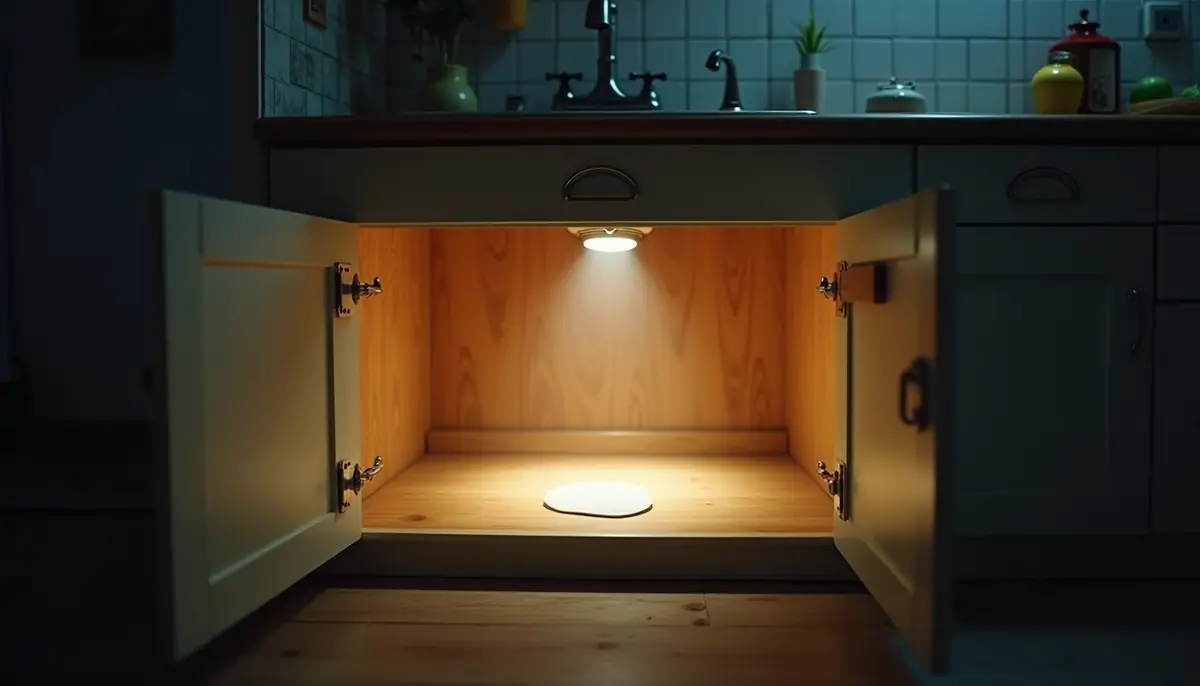
- Set sticky monitors before treating. Rutgers suggests traps inside cabinets, beside the stove and refrigerator, beside bins and behind the toilet. The Rutgers 2013 bait trial used six traps per apartment in almost exactly those spots. The catch tells you where to bait and gives a count to compare later.
- Clean and dry the kitchen. NC State lists unwashed dishes as a major food source for a kitchen infestation, and advises emptying fridge drip pans and sink strainers. Baits work best when cockroaches have few other foods, as Texas A&M notes, so this step raises bait uptake rather than replacing it.
- Vacuum what you can reach. Rutgers recommends a HEPA-filter vacuum for live and dead roaches, droppings and shed skins. Droppings carry the aggregation chemistry: NC State reports that German cockroach clustering is largely controlled by faecal compounds.
- Bait in cracks, in many small placements. NC State advises pea-sized dots in numerous locations; Rutgers estimates a typical one-bedroom apartment may need 10 to 30 grams. Our explainer on why gel bait beats spray for roaches covers the field studies behind this.
- Do not spray or clean over the bait. NC State says plainly not to apply sprays where baits are used, because sprays repel roaches. Texas A&M adds dusts to that warning.
- Dust the voids bait cannot reach. A barely visible film of boric acid in wall voids around pipes and under appliances, never on counters. Kentucky ENTFACT 614 says boric acid retains its potency almost indefinitely as long as the deposit stays dry.
- Re-inspect every 2 to 4 weeks. Rutgers advises follow-up inspections and re-treatment every 2 to 4 weeks until no roaches are seen or trapped for at least one month.
- Change the active ingredient if counts stall. Texas A&M: if a bait has not controlled the population within 2 to 3 weeks, switch to one with a new active ingredient. NC State recommends rotating modes of action at least every 3 to 4 months.
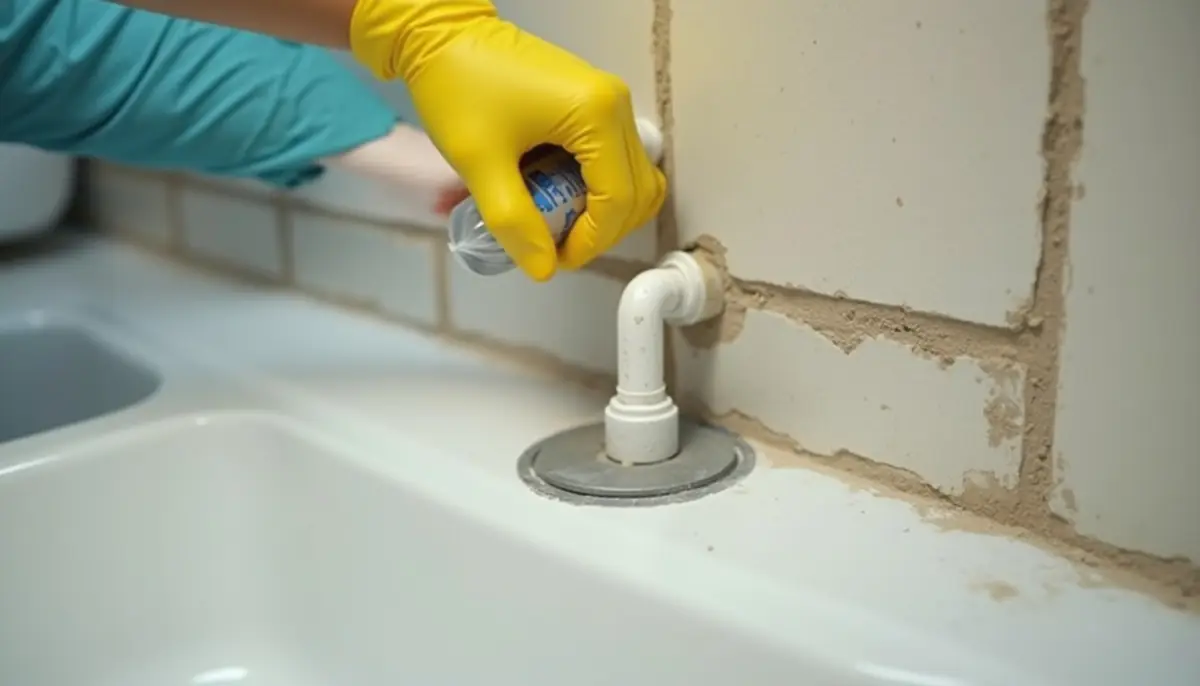
- Seal the cracks afterwards. Texas A&M records that German cockroaches spend about 75 per cent of their lives in cracks 1/32 to 3/16 of an inch wide, so caulking splash guards and pipe gaps removes the harbourage once the population is down.
Step 8 is where resistance comes in. Purdue researchers (Fardisi, Gondhalekar, Ashbrook and Scharf, Scientific Reports, 2019) treated German cockroach populations in housing in Danville, Illinois and Indianapolis for six months. A single active ingredient, abamectin bait, was the only strategy that significantly reduced numbers, and only at the site where starting resistance was low. Populations treated with a thiamethoxam plus lambda-cyhalothrin spray mixture increased at both locations despite four months of treatment, and abamectin selection unexpectedly produced cross-resistance to two unrelated classes. The authors recommend a resistance check before choosing an active ingredient after a control failure, which a homeowner cannot do but a professional can arrange. Our review of why spraying stopped working on German cockroaches covers the resistance ratios in detail.
What kills roaches, by method
The table below is compiled by The Pest Control Brief from Rutgers FS1322, NC State, Texas A&M E-359, Kentucky ENTFACT 614, UC IPM Pest Notes 7467, the Purdue 2019 field study and the DeVries 2019 fogger study. Ingredients are named by class, not brand; whatever you buy, the label is the legal limit.
| Method or active ingredient class | Speed | Exposure risk for children, pets | Limits | Evidence |
|---|---|---|---|---|
| Gel bait (abamectin, indoxacarb, fipronil, hydramethylnon, imidacloprid and others) | Roaches that feed usually die in 1 to 3 days; fewer visible after 7 days or more | Low when placed as small dots in cracks | Contaminated by sprays and cleaners; some populations refuse sugar-based baits | Rutgers 2013: 99% trap reduction by week 4; Kentucky ENTFACT 614 |
| Bait stations | Slower than gel | Low; enclosed | Must sit against edges and corners; Kentucky says stations away from edges are far less effective | Rutgers: gel usually beats stations because it goes closer to harbourage |
| Boric acid dust | Slower than bait | Low in voids; keep off surfaces and away from reach | Must stay dry; heavy deposits are avoided by roaches; not for outdoors (toxic to plants, UC IPM) | Kentucky: more effective than diatomaceous earth for cockroaches |
| Insect growth regulators (for example pyriproxyfen) | Do not kill adults; stop development and reproduction | Low | Rutgers: must be combined with faster-acting products, best with baits | Purdue 2019: an abamectin plus pyriproxyfen bait gave more satisfactory results after a spray mixture failed |
| Silica gel or diatomaceous earth dust | Slow; works by drying the insect | Low; avoid breathing dust | Humidity weakens it; NC State warns against pool-grade silica | Kentucky ranks boric acid above diatomaceous earth for roaches |
| Pyrethroid sprays | Fast on direct contact only | Moderate; residue on open surfaces | Repellent, scatters roaches; widespread resistance in German cockroaches | Purdue 2019: populations rose under a pyrethroid mixture; useful outdoors per Texas A&M |
| Non-repellent sprays (for example chlorfenapyr) | Days | Professional products | Label use by licensed applicators | Texas A&M tips for professionals for difficult cases |
| Total-release foggers (bug bombs) | No population decline measured | High: residues 603 times baseline on kitchen surfaces | Flammability risk; fire hazard with gas appliances (Rutgers) | DeVries et al. 2019: no decline at two weeks or one month in 20 homes |
| Sticky traps | Catch wanderers | Low if placed out of reach | Monitoring tool, not a cure | NC State, Rutgers, Texas A&M all use them to measure progress |
Professionals carry products homeowners cannot buy, and Rutgers notes they have access to more products as well as training. Our comparison of what pest control companies use for roaches lists the professional active ingredients and how they differ from shelf products.
What does not work, and the evidence
Bug bombs
The clearest negative result in cockroach control comes from North Carolina State. DeVries, Santangelo, Crissman, Mick and Schal (BMC Public Health, 2019) set off total-release foggers in 20 infested homes across five apartment complexes, five homes per product, and found no decline from pre-treatment counts at two weeks or one month. Ten comparison homes treated with gel bait saw significant declines. The foggers left pesticide residues on kitchen surfaces averaging 603 times baseline, and 34 per cent of swabbed surfaces were still above baseline a month later. California’s illness records point the same way: our analysis of bug bomb illness reports in California counted more cases from consumer foggers than from all professional structural pest control.
Spraying more
Extra spray is the most common reason a roach problem spreads. The Purdue 2019 study found populations under a spray mixture grew at both sites, and Rutgers notes that retail sprays, mostly pyrethroids, are weakened by resistance and repellency and may push roaches into neighbouring units. A surge in sightings after treatment has several possible causes, which our page on seeing more roaches after pest control sorts into normal and failure.
Home remedies and scents
Baking soda has almost no published testing behind it; our review of whether baking soda kills roaches found one field study, from the University of Ghana in 2025. Rutgers says essential-oil sprays sold as natural have little to no residual effect and that there is no scientific evidence for electronic repellers.
Diatomaceous earth kills insects but slowly, and our summary of what testing shows about diatomaceous earth explains why humid kitchens work against it.
Large roaches: treat the outside and the drains
American, smokybrown and Oriental cockroaches usually live outdoors and in sewers, and Texas A&M lists their habitats as compost piles, ground cover, mulch, old stumps, palm fronds, woodpiles, sewer manholes and underground water meters. The plan is exclusion first.
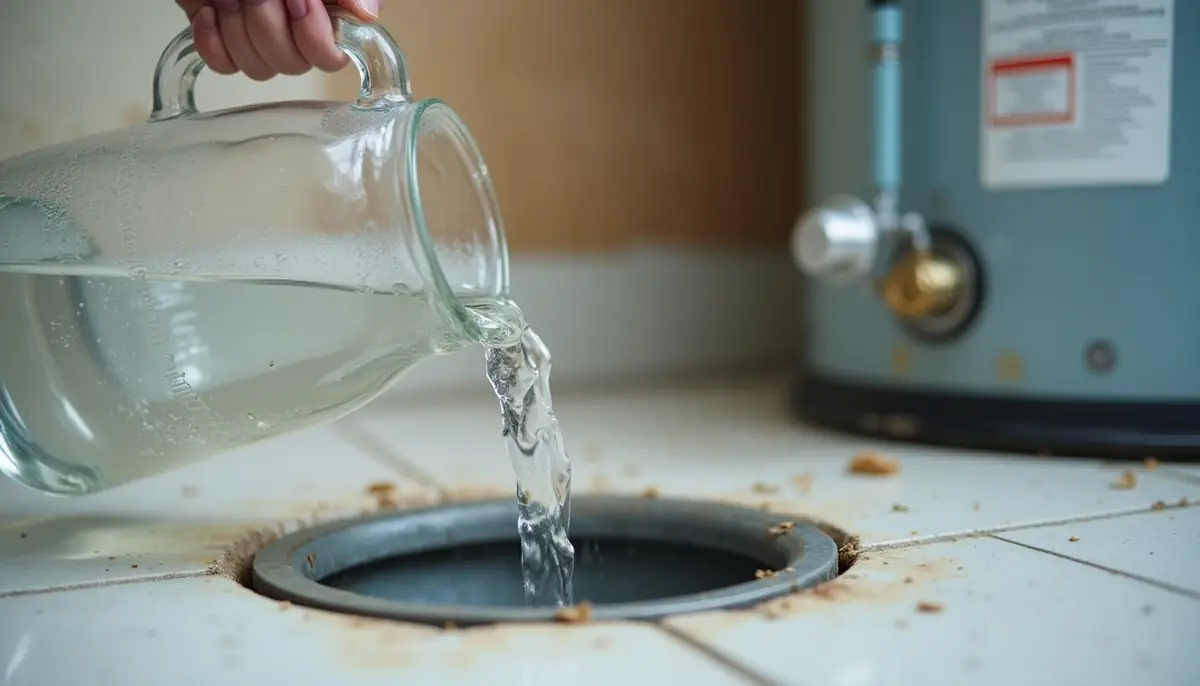
- Keep drain traps wet. Texas A&M names floor drains as common entry points for American and Oriental cockroaches and advises keeping P-traps filled with water as a barrier against the sewer. Basement floor drains and little-used showers that dry out are the obvious candidates.
- Seal the shell. Check threshold seals under doors and screen roof soffits (Texas A&M). UC IPM adds door sweeps and weather stripping.
- Dry the perimeter. UC IPM recommends a gravel strip about 6 to 12 inches wide around the building, trimmed shrubs and less dense ground cover.
- Bait outside, not in the kitchen. Texas A&M advises lightly sprinkled granular bait in ground covers and mulched beds and containerised stations against walls near doors; UC IPM suggests bait in water meter boxes and drains.
- Spray only the entry points. Texas A&M accepts insecticide sprays outdoors on perimeters, doors, soffits and water boxes, and in garages and utility rooms away from children and pets.
Readers in the Southeast often call these insects water bugs or palmetto bugs; our note on what people mean by palmetto bug, water bug and croton bug maps the names to species. In our iNaturalist records, Oriental cockroach sightings peak from May to August.
When roaches are seen, by the clock
We analysed the hour of day recorded on US research-grade iNaturalist observations of four cockroach species. Across all US records of every living thing, 7.9 per cent are logged between 8 pm and 6 am. For cockroaches the figure is 37.1 per cent (German), 42.2 per cent (American), 47.9 per cent (smokybrown) and 48.9 per cent (Oriental): roughly five to six times the baseline. These are records of when people notice and photograph roaches, not a measure of true activity, but they match NC State’s description of the German cockroach as nocturnal and appearing by day mainly when the population is crowded.
The practical use is inspection timing. A flashlight check of the kitchen an hour or two after lights out finds harbourage faster than a daytime search, and Texas A&M treats daytime sightings as a sign that there are a lot of cockroaches around. Our page on what daytime roach sightings mean reads that signal species by species.
How long it takes to get rid of roaches
Expect weeks, not days, for German cockroaches. The egg case is the reason: NC State gives an incubation of 20 to 30 days while the female carries it, so nymphs keep appearing for about a month after a good treatment. This timeline is compiled by The Pest Control Brief from the sources named in each row.
| Time after baiting | What to expect | Source |
|---|---|---|
| 1 to 3 days | Roaches that have eaten bait typically die | Kentucky ENTFACT 614 |
| Week 1 | 72 per cent mean trap reduction in the Rutgers trial; UC IPM warns it may take 7 days or longer to see fewer | Wang et al. 2013; UC IPM 7467 |
| Weeks 2 to 3 | 88 then 97 per cent reduction in the trial; if there is no control by now, change the active ingredient | Wang et al. 2013; Texas A&M E-359 |
| Week 4 | 99 per cent reduction; 6 of 8 apartments clear. Nymphs from protected egg cases may still appear | Wang et al. 2013; NC State |
| Every 2 to 4 weeks | Re-inspect and re-treat | Rutgers FS1322 |
| Finish line | No roaches seen or trapped for at least one month | Rutgers FS1322 |
| Every 3 to 4 months, if ongoing | Rotate bait modes of action | NC State |
Two caveats keep the Rutgers figures honest. The trial covered eight apartments in one high-rise in Newark, New Jersey, and it was sponsored by the bait’s manufacturer, as the authors disclose. Kentucky’s ENTFACT 614 sets the outer expectation from the other side: a substantial reduction should be apparent within a few weeks, and it should not take a full year to eliminate cockroaches. For day-by-day expectations after a professional visit, see how long after pest control roaches die.
DIY or a professional?
| Your situation | Reasonable approach | Why |
|---|---|---|
| One large roach, no nymphs or egg cases | DIY: seal, wet the drains, sticky traps | Usually an outdoor stray |
| German cockroaches in a single-family kitchen, a few per night | DIY bait plan above, with monitors | Rutgers trial cleared most apartments with one baiting |
| Roaches seen in daylight, or on walls and ceilings | Professional | Daytime sightings usually mean a large population (Texas A&M) |
| Apartment or multi-unit building | Report in writing; building-wide professional treatment | Roaches move between units; sprays push them next door (Rutgers) |
| Bait ignored or no drop after 2 to 3 weeks | Change active ingredient, then professional | Resistance or bait aversion; a resistance check needs a professional (Purdue 2019) |
| Asthma or allergies in the home | Professional, plus thorough cleaning | Allergen persists in droppings; NC State notes faeces stay on surfaces for long periods |
Renters should start with the landlord: our guide to cockroaches in your apartment and whose job they are covers the duty and what to do while you wait.
On price, the contractor-reported ranges compiled on our roach exterminator cost page run from about $100 to $600 for a single treatment, averaging about $200. These are published marketplace estimates, not measured prices.
No federal price index exists for pest control, which our pest control price benchmarks explain using Census Bureau data: payroll takes 36 per cent of industry receipts, so a quote mostly prices technician time.
Keeping roaches out once they are gone
Permanent results come from removing harbourage, food and water, not from any scent. UC IPM lists sealed food containers, fixed leaks, vacuumed crevices, door sweeps, weather stripping and decluttering. Rutgers adds daily removal of rubbish and recycling and sealing pet food at night. Keep two or three sticky monitors in place under the sink and behind the fridge: a catch tells you a new introduction has arrived before it becomes a population. Our page on what attracts roaches walks through the food, water and shelter triggers room by room.
Health is the real reason to finish the job. Cockroach allergen is a recognised asthma trigger, and our review of cockroach allergen and asthma research sets out what removing roaches does and does not do for symptoms; for medical questions, ask a doctor.
Every cockroach guide we publish
Identification
- Cockroach identification: the five US species to scale
- German vs American cockroach: how to tell them apart
- Baby cockroaches: how to identify nymphs and what they mean
- Cockroach eggs: what an egg case looks like, species by species
- Bugs that look like cockroaches but are not
- Cockroach vs water bug: what is actually in your house
- Palmetto bug, water bug, croton bug: what people mean
Signs and situations
- Found one cockroach in your house: stray or infestation?
- American cockroaches in the house: visitor or infestation?
- Roaches during the day: what daytime sightings mean
- What cockroaches smell like: the odour of an infestation
- Bugs in the kitchen sink and cabinets at night
- Cockroaches in your apartment: normal, whose job, what works
- Roaches in your car: getting rid of them without a bomb
- Roaches in electronics: consoles, TVs, microwaves and routers
Behaviour and biology
- How fast cockroaches reproduce: German vs American growth
- How long cockroaches live, by species
- What cockroaches eat, and why it matters
- What attracts roaches, and why you have them now
- Can roaches fly? Which species fly, glide or never leave the ground
- Can roaches climb walls? Glass, ceilings and beds
- Do cockroaches hibernate? What cold does to them
- Do German cockroaches live outside?
- Why cockroaches die on their backs
Control
- German cockroaches: why spraying stopped working
- Gel bait or spray for roaches: why delivery decides it
- Boric acid for roaches: how it works and where it fails
- Does baking soda kill roaches? What the evidence shows
- What smells roaches hate: repellent claims tested
- What pest control companies use for roaches
- How long after pest control roaches die
- More roaches after pest control: normal or a failed treatment?
Health
- Do cockroaches carry diseases? What the studies show
- Cockroach allergen and asthma: what the research shows
- Do cockroaches bite? What the evidence shows
- Can a cockroach crawl into your ear? What the case reports show
Costs and our data
- Roach exterminator cost 2026: what treatment really costs
- Roaches and mice in New York apartments: the violation data
Frequently asked questions
How do you get rid of roaches quickly?
For German cockroaches, gel bait placed as many small dots in cracks near where they hide is the fastest reliable method. Kentucky extension says roaches that eat bait typically die within 1 to 3 days, and a Rutgers trial recorded a 72 per cent drop in trap counts after one week and 99 per cent after four. Do not spray over the bait, and skip foggers, which produced no decline in a North Carolina State study.
What keeps roaches away permanently?
Nothing is permanent, but exclusion and sanitation come closest. Seal cracks and pipe gaps with caulk, fit door sweeps and weather stripping, keep floor drain traps filled with water, fix leaks, store food sealed and remove rubbish daily. Keep a few sticky monitors under the sink and behind the fridge so a new arrival is caught before it breeds. These steps come from UC IPM, Rutgers and Texas A&M guidance.
What smell keeps roaches away?
In published laboratory tests, citrus oils and nepetalactone, the active compound in catnip, are the scents roaches most clearly avoid. Peppermint, vinegar and bleach have weak or no published support. None has been shown to clear an infestation, and Rutgers notes that essential-oil sprays have little to no residual effect. A repellent near bait can also stop roaches from feeding on it.
Is it better to kill a roach or leave it?
Kill or trap it, then look at it. Leaving it changes nothing, and a dead specimen tells you the species, which decides the plan. A single large American cockroach is usually a stray from outside. A small tan German cockroach usually means others are breeding nearby, especially if seen in daylight, which Texas A&M links to large populations. Set sticky traps to see whether more appear.
How long does it take to get rid of roaches?
Expect at least 4 to 8 weeks for a German cockroach infestation treated properly with bait. Egg cases carried by females take 20 to 30 days to hatch, so nymphs appear for about a month after treatment. Rutgers advises re-inspecting every 2 to 4 weeks and calling it finished only after a month with no roaches seen or trapped. Kentucky says it should not take a full year.
Sources
- Rutgers Cooperative Extension, Fact Sheet FS1322, Managing German Cockroaches in Your Home.
- NC State Extension, Biology and Behavior of the German Cockroach; and German Cockroach Surveillance and Management.
- Texas A&M AgriLife Extension, E-359, Cockroaches: Biology and Management, 2012.
- University of Kentucky Entomology, ENTFACT 614, Cockroach Elimination in Homes and Apartments.
- University of California Statewide IPM Program, Pest Notes: Cockroaches, Publication 7467.
- Fardisi M, Gondhalekar AD, Ashbrook AR, Scharf ME. Rapid evolutionary responses to insecticide resistance management interventions by the German cockroach. Scientific Reports 9:8292, 2019.
- DeVries ZC, Santangelo RG, Crissman J, Mick R, Schal C. Exposure risks and ineffectiveness of total release foggers (TRFs) used for cockroach control in residential settings. BMC Public Health 19:96, 2019; and NC State University news release, January 2019.
- Wang C, Singh N, Cooper R, Scherer C. Baiting for success. Pest Control Technology, July 2013 (Rutgers study sponsored by the bait manufacturer).
- The Pest Control Brief analysis of iNaturalist research-grade records, pulled November 2026.