Bugs in the Kitchen Sink and Cabinets at Night: Who They Are
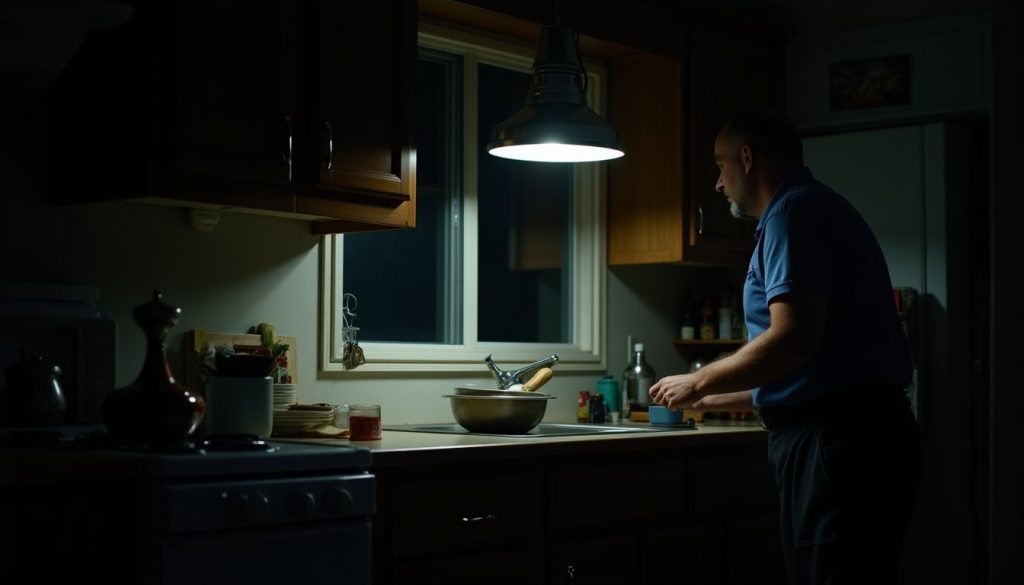
Bugs in the kitchen sink and cabinets at night are cockroaches until proven otherwise: small light brown ones with two dark stripes behind the head are German cockroaches living in the cabinets, and large reddish brown ones are American cockroaches coming up from the drains. After those, the usual night visitors are drain flies and fruit flies at the drain and disposal, ants trailing across the counter, silverfish and springtails under the sink, and house centipedes hunting all of them. A five-minute torch check after dark usually tells you which you have.
Kitchens are where food, warmth and water meet, and the space under the sink adds darkness and, often, a slow leak. Most of the animals that use it are nocturnal, which is why a kitchen can look clean at 6 p.m. and busy at midnight. The species matters because it decides whether this is a ten-minute fix or a call to a licensed professional.
Who is in the kitchen at night
| Bug | Size | Where at night | Key clue | Usually DIY? |
|---|---|---|---|---|
| German cockroach | About 1/2 inch | Cabinets, under the sink, behind the fridge and stove, in small appliances | Light brown, two dark stripes behind the head; pepper-like droppings | Established infestations usually need a professional |
| American cockroach | About 1.5 inches | Near the sink, floor drains, pipes | Large, reddish brown, pale band behind the head | Often, by closing the plumbing route |
| Drain fly | 1/16 to 1/4 inch | Wall beside the sink | Fuzzy, moth-like, short hops | Yes, clean the drain |
| Fruit fly | About 1/8 inch | Over the disposal, fruit bowl, bin | Tan front, dark rear, often red eyes | Yes, remove the source |
| Carpenter ant | 1/4 to 5/8 inch | Counter edges, sink, trailing to a wall | Large black ants active after dark | Find the nest; moisture damaged wood may need a pro |
| Silverfish | About 1/2 inch | Under the sink, in the basin | Silvery, three tail bristles, wriggling run | Yes, dry the cabinet |
| Springtail | About 1/16 inch | In the sink, on wet surfaces | Jumps when touched | Yes, dry and wash away |
| House centipede | Body 1 to 1.5 inches | Walls and floor, hunting | 15 pairs of long banded legs | Yes, remove its prey and damp |
Sizes from University of Kentucky (cockroaches, fruit flies), UF/IFAS, Clemson (drain flies), Nebraska (carpenter ants), UC IPM (silverfish, springtails) and Penn State (house centipedes).
Cockroaches first
German cockroach: the one that lives in the cabinets
University of Kentucky entomologists describe the German cockroach as by far the most common cockroach infesting homes and buildings, and one that does not occur outdoors. Adults are light brown and about 1/2 inch long with two dark stripes running lengthwise on the shield behind the head; nymphs are smaller and darker with a tan stripe down the middle of the back. Kentucky lists their preferred hiding places as cracks and crevices under sinks and toilets, behind and beneath refrigerators, dishwashers and stoves, near bins, and inside cabinets and pantries, and notes they also congregate inside clocks, toaster ovens and other warm electronics.
UC IPM adds the numbers that explain why they are hard to dislodge. They favour warm areas of 70 to 75°F close to food and water, an adult can hide in a crack 1/16 inch wide, each egg case holds about 30 young, and a single female and her offspring can produce over 30,000 individuals in a year.
American cockroach: the one from the drain
A large cockroach by the sink is a different animal with a different cause. UF/IFAS gives the American cockroach an average length of 4 cm, about 1.5 inches, reddish brown with a pale band around the edge of the shield behind the head. It lives mainly in basements, sewers, steam tunnels and drainage systems, migrates into homes from sewers via the plumbing, and rests by day near water pipes, sinks, baths and toilets. UC IPM says they forage into buildings especially where pipes are damaged or drain water traps are faulty. In houses, UF/IFAS describes them as rarely found except after events such as heavy rain. In the South they are often called palmetto bugs or water bugs; our guide to palmetto bugs untangles the names.
UC IPM also notes that the oriental cockroach, a shiny, almost black species about 1.25 inches long that prefers cool damp places, cannot climb smooth vertical surfaces, so it is sometimes found trapped in a porcelain sink after falling in or climbing up through a damaged drain pipe. Our cockroach identification guide shows all the common species to one scale.
The five-minute torch check after dark
Cockroaches are mostly nocturnal and, as UC IPM puts it, tend to scatter when disturbed. That makes a short night inspection the most informative thing you can do. Kentucky advises a bright flashlight because the insects spend little time in the open, and UC IPM suggests checking cracks, underneath counters and other dark spots with a torch and a small mirror.
- Let the kitchen go dark. Wait until the room has been unlit and quiet for a while, then go in with a torch rather than switching on the main light.
- Watch the first ten seconds. Note what runs and where it runs to: under the sink, behind the fridge, into a cabinet corner, or down the drain.
- Open the under-sink cabinet. Check the back corners, where pipes come through the wall, and the floor of the cabinet for damp.
- Look along edges, not open surfaces. UC IPM notes cockroaches travel along the edges of walls and congregate in corners. Check cabinet corners and edges, the wall behind the stove and the gap beside the dishwasher.
- Look for evidence as well as insects. Kentucky describes cockroach droppings as pepper-like specks; UC IPM adds cast skins and egg cases as signs of where they gather. Our droppings identification guide helps separate cockroach specks from other marks.
Then confirm with sticky traps. UC IPM recommends placing them at floor and wall junctions, behind large appliances and in cabinets, numbering them, and checking daily; it notes that many cockroaches are caught within the first 24 hours. The trap with the most catches points at the harbourage.
Cabinets: food or no food decides it
Small insects inside kitchen cabinets split into two groups. If they are in or around stored food, such as flour, cereal, rice, spices or pet food, you are almost certainly looking at pantry pests: small beetles, weevils or Indian meal moths that develop inside the product. That is a different problem with a different fix, covered in our pantry pests guide. If they are in a cabinet with no food in it, especially under the sink or near the dishwasher, and they run when the door opens, think cockroaches first. Kentucky notes that the brownbanded cockroach, similar in size to the German but with two pale bands across the wings, prefers upper areas of cabinets and rooms other than kitchens, so position in the cabinet is itself a clue.
At the drain and the disposal
Small flies around a kitchen sink are usually fruit flies or drain flies. Kentucky says fruit flies are about 1/8 inch long, usually red eyed, and will breed in drains, garbage disposals, empty bottles and cans, bins, mops and cleaning rags, needing only a moist film of fermenting material. Its test for inaccessible sources such as disposals and drains is to tape a clear plastic food storage bag over the opening overnight; flies breeding there emerge and are caught in the bag. The same test, and the cleaning steps that follow, apply to drain flies; our guide to bugs in the bathroom sets out the two-step version, and fruit flies, drain flies and gnats separates the three small flies.
Springtails can also gather in a kitchen sink. UC IPM names kitchen sinks among the moist indoor spots where they appear, advises simply washing them down the drain, and says never to pour or spray insecticide into drains.
Ants on the counter at night
Large black ants appearing mainly after dark are a classic carpenter ant sign. Nebraska Extension describes workers of the common species as 1/4 to 5/8 inch long, leaving the colony in late afternoon or early evening, foraging through the night and returning in the early morning; it notes that workers are attracted to water in kitchens and bathrooms and to sugary foods. Carpenter ants are also associated with moist wood, so a trail to the sink cabinet is worth following to see where it disappears into the wall. For smaller ants, UC IPM advises inspecting under sinks, in cupboards and along pipes and wires, and notes that sponging or mopping a trail with soapy water removes the scent trail. Use our ant identification guide before choosing a bait.
Silverfish and house centipedes under the sink
Iowa State says silverfish are most commonly found in moist, warm locations such as around sinks and other plumbing fixtures, are most active at night, and often fall into sinks and cannot climb out. House centipedes follow them: Penn State notes they feed on silverfish, firebrats, cockroaches and spiders, and that seeing them often means some prey insect is abundant. A centipede in the kitchen at night is less a problem in itself than a pointer to what it is eating.
The under-sink leak is usually the root cause
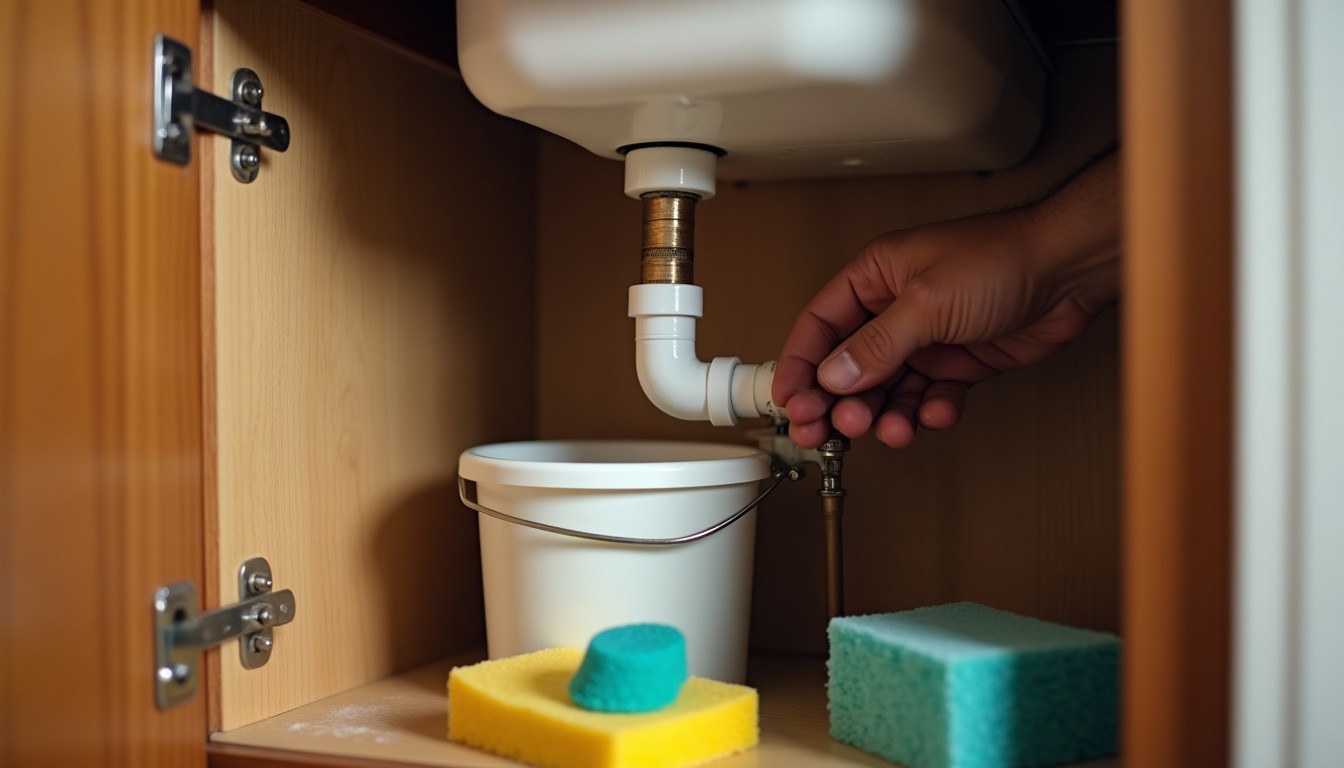
Almost every animal on this list depends on water, and the cabinet under the sink is where kitchens hide it. Kentucky says German cockroaches require warmth, moisture and food, which is why they cluster in kitchens and bathrooms. Alabama Extension lists leaking pipes as a breeding site for drain flies, Nebraska links carpenter ants to moisture damaged wood, and UC IPM ties springtails and silverfish to damp. UC IPM’s cockroach guidance includes eliminating plumbing leaks and increasing ventilation where condensation is a problem.
- Run the tap and the dishwasher, then check the trap, the supply connections and the cabinet floor with a dry paper towel.
- Look for swollen or soft particleboard at the cabinet base and rear wall, a sign of a long slow leak.
- Seal gaps where pipes pass through the cabinet wall; Kentucky notes German cockroaches travel between rooms and adjoining units along pipes and wires.
- Do not leave dishes, pet food or spills out overnight, which Kentucky lists among the basic sanitation steps.
When it is a job for a professional
Most of this list can be handled by drying, cleaning and sealing. The clear exception is a confirmed German cockroach population. UC IPM states that serious indoor infestations and other complex cockroach problems often require professional pest control, and that insecticide sprays alone will not eliminate cockroaches. Kentucky reports that baits, placed in many small amounts in the cracks and corners where cockroaches live, give most householders better results than sprays, and that foggers seldom work because very little insecticide reaches the cracks where cockroaches hide. In apartments, Kentucky notes that cockroaches also travel between units through common walls, so neighbouring units matter too. Our guide to German cockroach treatment covers what a sound programme looks like, and bait versus spray sets out the evidence. Always follow the product label.
An American cockroach from the drain is usually a plumbing fix, not a treatment: keep traps filled, repair damaged pipes and seal gaps at floor level. Carpenter ants nesting in damp wood behind the sink may need both a pest professional and a repair to the leak that softened the wood.
What the sightings data show
Our analysis of iNaturalist research-grade records shows how these kitchen visitors rise and fall through the year. The index is each group’s share of all research-grade records that month, scaled so the yearly average is 100.
German cockroach records peak at 184 in November and stay high through January (171), then drop to 36 in May. Because the species lives indoors year round, that winter rise most likely reflects people noticing and recording them when little else is about rather than more breeding. American cockroach records peak at 155 in November and are lowest in May and June (62 and 61). Drain fly records, which include outdoor sand flies in the same family, peak at 156 in October.
The Florida counts show the limits of photographs. German cockroaches are the most common indoor cockroach, yet Florida has only 183 research-grade German cockroach records against 1,475 for the American cockroach and 1,636 for the Australian cockroach. The difference is where people meet them: outdoor species are photographed on porches and paths, while German cockroaches stay behind the kitchen cabinets. These are records of where people photographed and identified animals, not infestation rates.
Frequently asked questions
What are the bugs in my kitchen sink at night?
Most often cockroaches. Small light brown ones with two dark stripes behind the head are German cockroaches living in nearby cabinets; large reddish brown ones about 1.5 inches long are American cockroaches that came from the drains. Fuzzy little flies are drain flies, tiny jumping specks are springtails, and silvery wriggling insects are silverfish that fell in and could not climb out.
Why are there bugs in my kitchen cabinets?
If they are in or around stored food, they are probably pantry pests such as beetles, weevils or meal moths developing inside the products. If they are in a cabinet without food, such as under the sink, and run from the light, suspect cockroaches. Check with a torch after dark and set sticky traps in the corners to confirm which you have.
Can cockroaches come up the kitchen drain?
American cockroaches can. UF/IFAS describes them migrating into homes from sewers via the plumbing, and UC IPM says they get in especially where pipes are damaged or drain traps are faulty. German cockroaches do not come from drains; they live inside the building, in cracks near warmth, food and moisture, such as under sinks and behind appliances.
When should I call a pest professional for kitchen bugs?
When you confirm German cockroaches that are breeding, especially in an apartment, or if sticky traps keep catching them after a couple of weeks of baiting and cleanup. UC IPM says serious indoor cockroach infestations often require professional control. Flies, springtails, silverfish and stray American cockroaches can usually be solved by cleaning drains, fixing leaks and sealing gaps.
Sources
- University of Kentucky Entomology, Cockroach Elimination in Homes and Apartments (ENTFACT-614), M. F. Potter.
- University of Kentucky Entomology, ENTFACT-621, Fruit Flies, M. F. Potter (revised 2026).
- University of California Statewide IPM Program, Pest Notes: Cockroaches; Springtails; Ants; Silverfish and Firebrats.
- UF/IFAS Featured Creatures, EENY141, American Cockroach, Periplaneta americana.
- Nebraska Extension, NebGuide G1738, Carpenter Ant Management (revised 2019).
- Clemson Cooperative Extension, Home and Garden Information Center: Moth Flies (Drain Flies).
- Alabama Cooperative Extension System, ANR-3235, Drain Flies in the Home (2026).
- Iowa State University Extension and Outreach, Yard and Garden: Silverfish and Firebrats.
- Penn State Extension, House Centipedes.
- The Pest Control Brief analysis of iNaturalist research-grade records, pulled October 2026.