What Smells Do Roaches Hate? Repellent Claims Tested
In published lab tests, the smells roaches most clearly avoid are citrus oils (grapefruit, lemon, lime) and nepetalactone, the active compound in catnip. Peppermint, eucalyptus, pine, vinegar and bleach have weak or no published evidence as cockroach repellents. Even the winners were measured over minutes in a test tube, not weeks in a kitchen, and no scent has been shown to clear an infestation. Baits do that; a repellent near a bait can work against it.
The scorecard: every popular scent against the published evidence
| Scent | Best evidence we found | Result | Verdict |
|---|---|---|---|
| Grapefruit, lemon, lime oil | Yoon et al. 2009, T-tube olfactometer, 40 roaches per oil, 5 minutes | 96.7, 92.9 and 86.7 per cent of German cockroaches chose the clean arm; 83.3 to 90.3 per cent of American | Strongest lab repellency |
| Kaffir lime oil | Thavara et al. 2007, lab and field, Thailand | 100 per cent repellency in the lab against American and German; up to 86 per cent fewer roaches in the field for about a week | Only field result we found |
| Catnip (nepetalactone) | Peterson et al. 2002, choice arena, male German cockroaches | E,Z nepetalactone significantly more active than an equal dose of DEET | Real, lab only |
| Orange oil | Yoon et al. 2009 | 71.4 per cent (German), 70.0 (American) | Moderate |
| Clove leaf oil | Yoon et al. 2009 | 70.0 per cent (German) | Moderate |
| Bay leaves | Ohio Journal of Science 1984 | Cineole, a bay leaf compound, repels American cockroaches; no test of whole leaves found | Compound works; leaves unproven |
| Eucalyptus oil | Yoon et al. 2009 | 46.7 per cent: not significant | Failed the test |
| Spearmint oil | Yoon et al. 2009 | 64.0 per cent: not significant | Failed the test |
| Peppermint oil | No peer-reviewed cockroach repellency test found | Its compound menthone is toxic as a sealed-chamber fumigant (Phillips and Appel 2010) | Unproven as a repellent |
| Pine needle oil | Yoon et al. 2009 | 40.7 per cent: not significant | Failed the test |
| Ylang-ylang oil | Yoon et al. 2009 | Only 26.9 per cent avoided it: more roaches walked towards it | Attractive, not repellent |
| Vinegar, bleach, coffee, cucumber, lavender, tea tree | No published cockroach repellency study found | None | No evidence |
Scorecard compiled by The Pest Control Brief from Yoon et al. (Journal of Pesticide Science, 2009), Thavara et al. (Southeast Asian Journal of Tropical Medicine and Public Health, 2007), Peterson et al. (Journal of Economic Entomology, 2002), Phillips and Appel (Journal of Economic Entomology, 2010) and the Ohio Journal of Science (1984). Percentages are the share of roaches that chose the untreated side among those that chose a side.
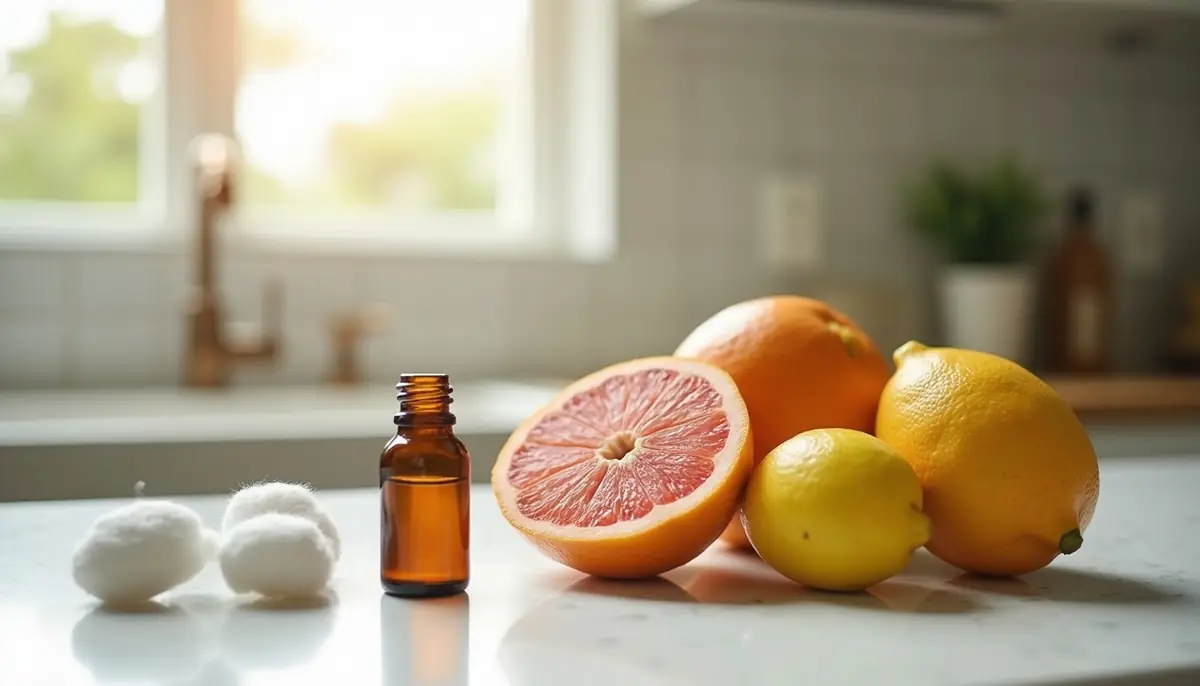
What smells do roaches hate the most?
Citrus, on the best evidence available. In Yoon and colleagues’ screen of 17 essential oils, only five repelled German cockroaches significantly, and four were citrus. The team identified limonene as the main active component. Grapefruit was the strongest against all three species tested: 96.7 per cent for German, 90.3 for American and 82.4 for smokybrown cockroaches.
Three details from the same paper matter at home. Dose counts: at one tenth of the dose (1 microlitre instead of 10), grapefruit fell from 96.7 to 69.7 per cent. The test lasted 5 minutes, in the dark, with air pushed through a tube, which is nothing like a kitchen cabinet over a week. And methods disagree: the authors note that an earlier screen of 96 herb extracts, using groups of roaches, found Japanese mint oil strongly repellent and grapefruit, lemon and lime oils not.
The one field result comes from Thailand. Thavara and colleagues formulated kaffir lime oil at 20 per cent in ethanol and recorded up to 86 per cent fewer cockroaches, mostly American, with the effect lasting about a week. That is a reduction in sightings at treated spots, not an eliminated population.
Catnip, and the headline that outran the paper
Iowa State researchers (Peterson and colleagues, 2002) found that E,Z nepetalactone from catnip oil was significantly more repellent to male German cockroaches than an equal dose of DEET. Roaches with their antennae removed did not respond, so the effect is through smell. CBS News reported the Iowa State team telling an American Chemical Society meeting that one form repels roaches 100 times better than DEET; the peer-reviewed abstract reports a significant difference but gives no such multiple.
Why the popular scents fail the test
The three scents most pest blogs put at the top of their lists are peppermint, eucalyptus and bay leaves. In Yoon’s olfactometer, eucalyptus oil scored 46.7 per cent, statistically no better than chance, and spearmint 64.0 per cent, also not significant. We found no peer-reviewed cockroach repellency test of peppermint oil at all.
The chemistry is more interesting than the lists. Cineole (eucalyptol), found in bay leaves and eucalyptus, repelled American cockroaches in a 1984 Ohio Journal of Science study, and in Auburn’s sealed-jar tests (Phillips and Appel, 2010) it was the most toxic of 12 oil compounds to German adults, with a 24-hour LC50 of 6.8 mg per litre of air for males. A sealed jar is not a room. The same study found that no compound stopped egg cases hatching: the lowest hatch rate, under menthone, was 73 per cent, and the authors concluded repeated treatments would be needed in the field.
Vinegar, bleach and pine cleaner
We found no published study measuring whether cockroaches avoid vinegar, bleach or pine-scented cleaner, so there is no evidence-based answer to how long roaches hate the smell of bleach. The nearest data point: pine needle oil scored 40.7 per cent in Yoon’s test, not significant. What cleaners demonstrably do is remove the grease, crumbs and faecal spotting that hold roaches in place; our page on what attracts roaches explains why scrubbing droppings matters. Use each cleaner as its label directs and never mix products.
Soapy water is a different matter. In a University of Florida study (Baldwin and Koehler, 2007), dishwashing liquid at 1 per cent killed 92 to 100 per cent of German cockroaches immersed in it, and the roaches sank within 30 seconds. Contact sprays were not effective against adult American cockroaches. It kills the roach you can reach, not the ones in the wall.
Why a repellent can make an infestation harder to clear
Baits work only if roaches walk into them. The University of Kentucky says cockroaches are not drawn to baits from long distances but come upon them while foraging, and UC IPM warns that foggers and aerosol sprays may repel and disperse roaches to other areas without killing them. A strong scent next to a bait placement pushes against the one tool that reaches the hidden population. Even boric acid repels when overdone: Penn State notes heavy deposits of dust may repel cockroaches. Our comparison of cockroach bait and spray covers the trials, and boric acid for roaches explains how to apply it as a barely visible film.
Many essential-oil roach sprays are sold under EPA’s minimum risk exemption, and EPA states that it does not review exempted products. Our review of natural pest control evidence shows what that means for performance claims.
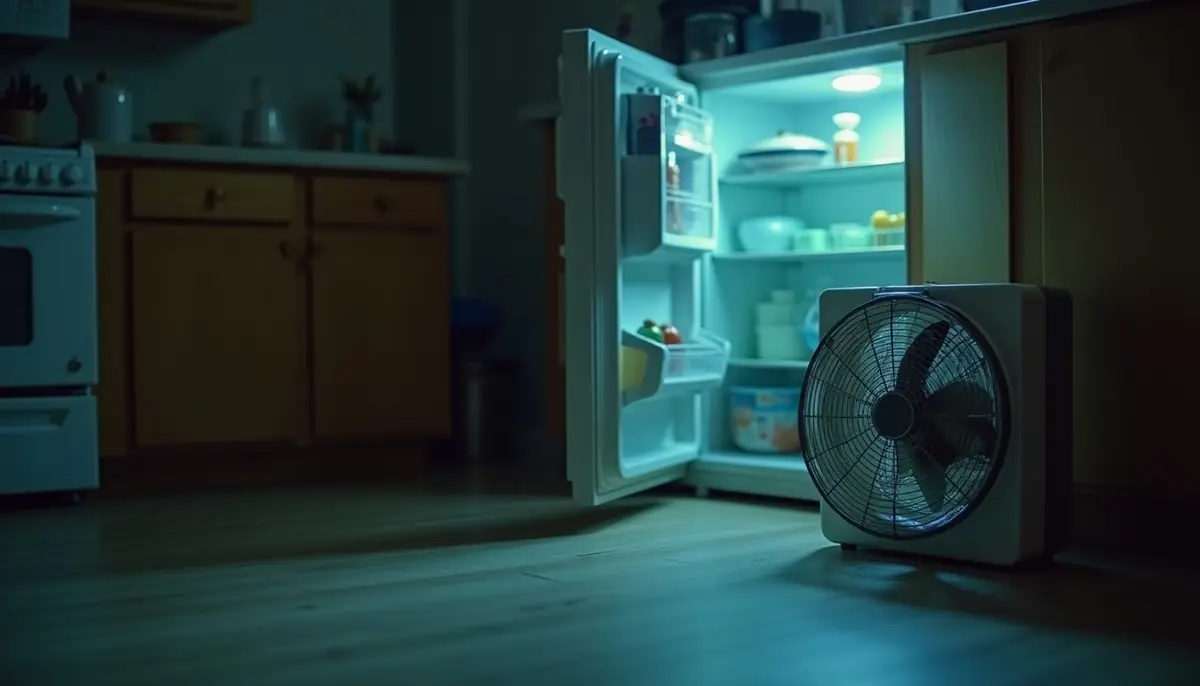
What roaches avoid that actually matters
- Light. UF/IFAS describes the American cockroach as responding negatively to light and resting by day near pipes, sinks, baths and toilets.
- Moving air. Auburn researchers (Appel, Smith and Oswalt) found every stage of German cockroach significantly repelled by air moving faster than 2.0 metres per second (about 4.5 mph), and American and smokybrown cockroaches by air above 4.0 m/s. Moving air in simulated kitchen cabinets changed where German cockroaches gathered.
- Dryness. Penn State says American cockroach adults survive two to three months without food but only about a month without water. Fixing a drip does more than any oil.
What smell do roaches hate but is safe for cats?
We found none that is both proven against roaches and documented as safe for cats. In a review of ASPCA Animal Poison Control Center records (Genovese and colleagues, 2012), 36 of 39 cats and 8 of 9 dogs exposed to plant-derived, EPA-exempt flea products containing essential oils showed adverse effects, and in 77 per cent of the 48 cases the product had been used as labelled. One cat died and one cat and one dog were euthanised. If a cat is exposed and unwell, call a vet. Enclosed bait stations placed where pets cannot reach are the usual alternative; see pet-safe pest control products.
What to use instead
For German cockroaches, the small tan species that breeds indoors, gel bait in many small placements is the extension-backed route; our German cockroach treatment guide sets out why some baits fail. For large roaches wandering in, seal gaps and keep drain traps full. If you are weighing kitchen remedies, our test of baking soda for roaches found no evidence it clears an infestation.
Frequently asked questions
What scent keeps roaches away?
Citrus oils have the best lab evidence: grapefruit, lemon and lime repelled 86.7 to 96.7 per cent of German cockroaches in a 5-minute test (Yoon and colleagues, 2009), and catnip’s nepetalactone outperformed DEET in another. No scent has been shown to keep an established population away for long, and strong odours near baits can reduce how often roaches find them.
What will kill roaches immediately?
Direct contact kills fastest. In a University of Florida study, a 1 per cent dishwashing liquid solution killed 92 to 100 per cent of immersed German cockroaches, which sank within 30 seconds. That only reaches roaches you can see. Baits work over 1 to 3 days per roach, Kentucky says, but reach the hidden population, which is what ends an infestation.
Why should you never squish a roach?
There is no rule against it, but it is a poor tool. UC IPM notes a female German cockroach carries her egg case until 1 to 2 days before it hatches, and UC IPM says American cockroaches can carry Salmonella and Shigella, so crushing one smears its contents where you prepare food. Bag it, wipe the surface, and treat the population with bait.
Do roaches go near sleeping people?
They can cross a dark bedroom at night, since they avoid light and forage after dark. Bites on sleeping people are documented but rare, almost all from ships and very heavy infestations in Roth and Willis’s 1957 Smithsonian review, as our page on whether cockroaches bite details. In an ordinary home a roach is very unlikely to bite.
How long do roaches hate the smell of bleach?
No published study has measured it, so any figure in hours or days is a guess. Bleach was not among the scents tested in the cockroach repellency studies we found. It is useful for cleaning droppings and grease that attract roaches, used as its label directs, but it should never be mixed with other cleaners and is not a cockroach control.
Sources
- Yoon, C., Kang, S. H., Yang, J. O. and others, Repellent activity of citrus oils against the cockroaches Blattella germanica, Periplaneta americana and P. fuliginosa, Journal of Pesticide Science 34(2): 77 to 88, 2009.
- Thavara, U., Tawatsin, A. and others, Repellent activity of essential oils against cockroaches in Thailand, Southeast Asian Journal of Tropical Medicine and Public Health 38(4): 663 to 673, 2007.
- Peterson, C. J., Nemetz, L. T., Jones, L. M. and Coats, J. R., Behavioral activity of catnip essential oil components to the German cockroach, Journal of Economic Entomology 95(2): 377 to 380, 2002.
- Phillips, A. K. and Appel, A. G., Fumigant toxicity of essential oils to the German cockroach, Journal of Economic Entomology 103(3): 781 to 790, 2010.
- Determining the active component in cineole that repels the American cockroach, Ohio Journal of Science 84(3): 85 to 88, 1984.
- Baldwin, R. W. and Koehler, P. G., Toxicity of commercially available household cleaners on cockroaches, Florida Entomologist 90(4): 703 to 709, 2007.
- Appel, A. G., Smith, L. M. and Oswalt, D. A., Repellency of moving air to cockroaches: a nonchemical IPM tactic, Proceedings of the 3rd International Conference on Urban Pests, 1999.
- Genovese, A. G., McLean, M. K. and Khan, S. A., Adverse reactions from essential oil-containing natural flea products exempted from EPA regulations in dogs and cats, Journal of Veterinary Emergency and Critical Care 22(4): 470 to 475, 2012.
- University of Kentucky Entomology, Entfact 614, Cockroach Elimination in Homes and Apartments.
- University of California Statewide IPM Program, Pest Notes: Cockroaches, Publication 7467.
- Penn State Extension, American Cockroaches; UF/IFAS EENY-141, American Cockroach.
- US EPA, Conditions for Minimum Risk Pesticides.
- CBS News, Cat’s bliss is roach’s blight, report on the Iowa State catnip findings presented to the American Chemical Society.