Roaches in the Dishwasher: Why They Live There and What to Do
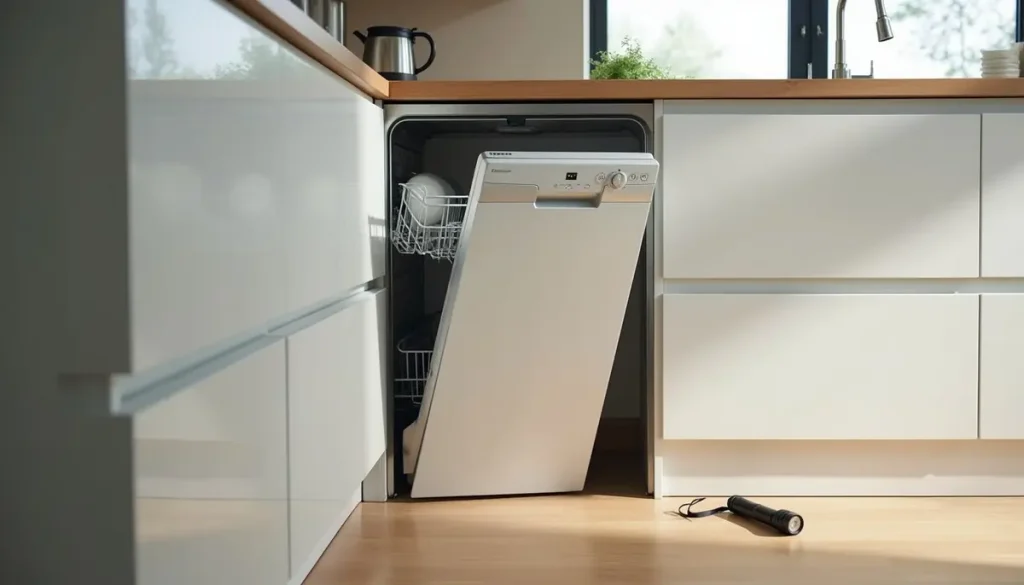
Roaches in a dishwasher are nearly always German cockroaches living in the warm, damp voids around the tub: the door, the space behind the kick plate and the insulation blanket, not the wash chamber itself. A hot cycle can kill any roach caught inside the tub, but it never reaches the ones in those voids. Clear them by cutting power, cleaning the filter and seal, baiting the gaps around the appliance as the label allows, and finding where else in the kitchen they breed.
Penn State Extension says German cockroaches are usually found in kitchens near dishwashers, stoves and sinks, and the University of Georgia describes them in and around warm appliances and water. A dishwasher offers both, plus food scraps in the filter. Work through the appliance in this order.
The cleanout, spot by spot
| Where to look | Why roaches use it | What to do |
|---|---|---|
| Filter and sump at the bottom of the tub | Trapped food and standing water | Remove and scrub the filter; clear the sump of debris |
| Rubber door seal and the lower door lip | Food film and a tight crack to hide in | Wipe with hot soapy water; check for egg cases in the folds |
| Hinge corners and the gap at the top of the door | Dark, warm entry to the door void | Torch check at night; bait the gaps outside the tub if the label allows |
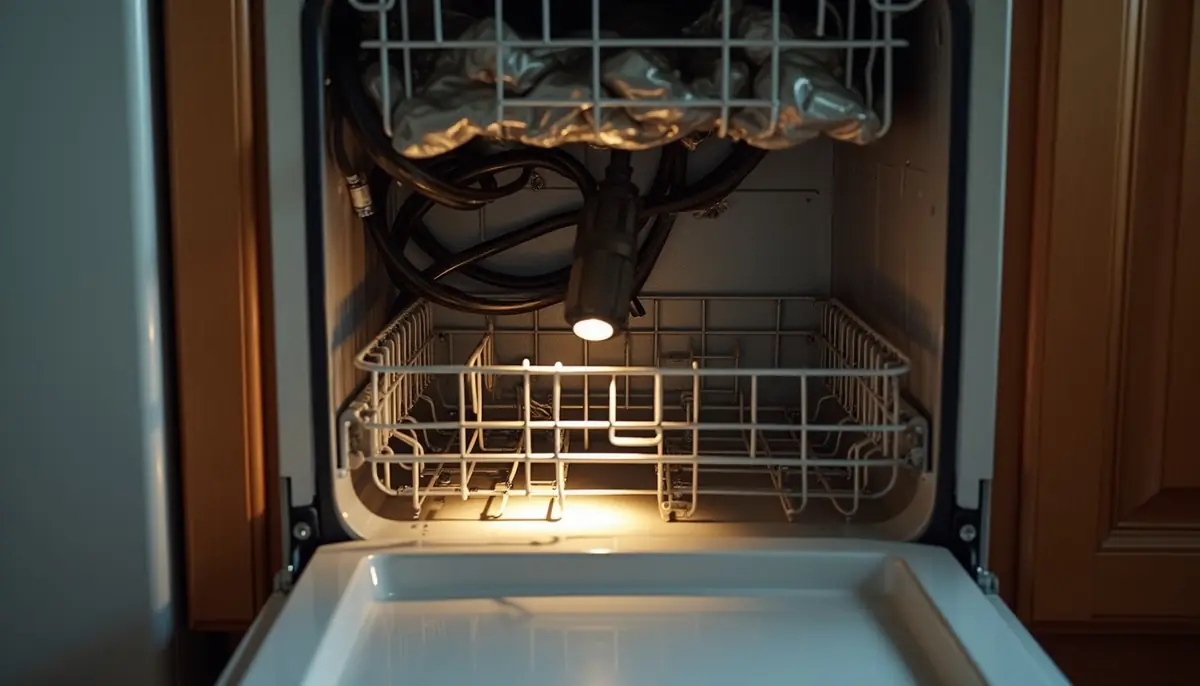
| Behind the kick plate (toe panel) | Motor heat, insulation, drips from fittings | Power off, remove the panel, vacuum, check for leaks |
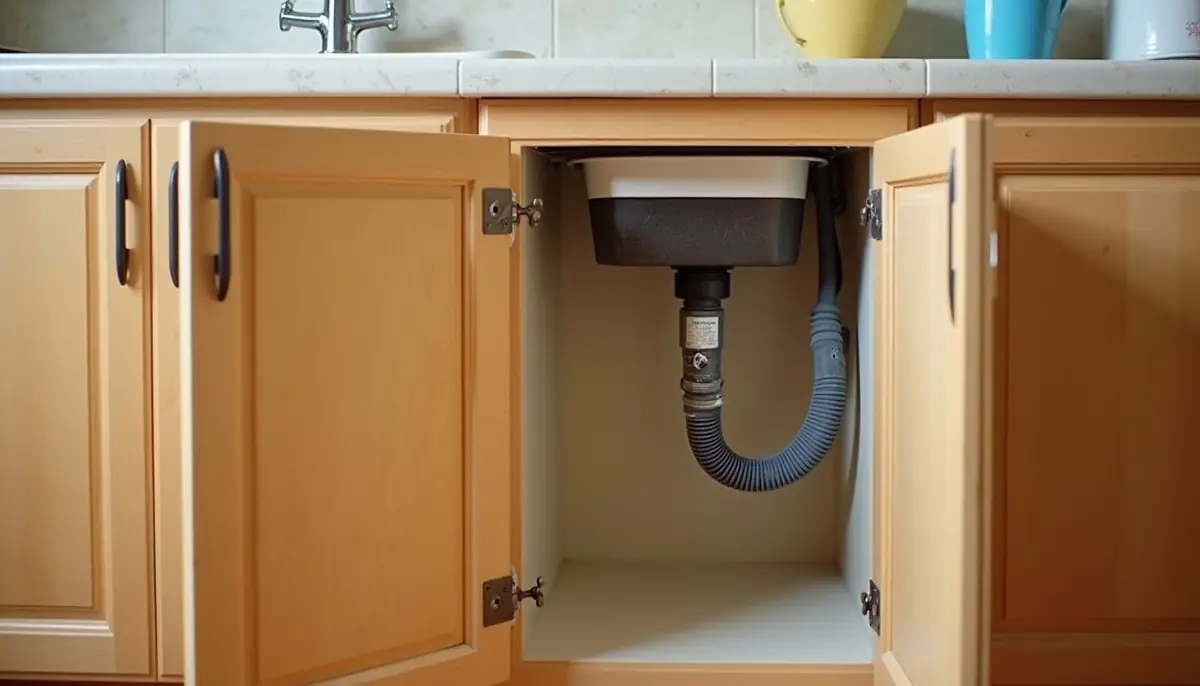
| Drain hose hole into the sink cabinet | Direct route from under the sink | Seal the gap around the hose; clean and bait the sink cabinet |
| Floor and cabinet sides next to the unit | Crumbs and grease beside the appliance | Pull out debris, set sticky monitors along the edges |
Step 1: cut the power first
Many dishwashers are wired directly to a circuit rather than plugged in. Whirlpool’s 915 Series manual says to “disconnect electrical power to the dishwasher before attempting to service,” and pressing the off button on the control panel is not the same thing. Switch off the breaker before removing the kick plate or putting a vacuum nozzle near wiring.
Step 2: clean the food out
Empty and scrub the filter, wipe the door seal and lower lip, and clear the sump. Penn State’s prevention advice starts with sanitation: clean up spilled food, including crumbs, and empty garbage each evening into a lidded container. In the dishwasher, that means not leaving dirty dishes sitting overnight in a closed, warm box. Our page on what attracts roaches into a kitchen lists the other food and water sources to remove.
Step 3: open the kick plate and look
Remove the toe panel with the power off and shine a torch behind it. Live roaches, small dark droppings, shed skins or egg cases mean the space is harbourage; German cockroach nymphs are 3 to 14 mm long, according to Rutgers, and our guide to identifying baby cockroaches shows what they look like. Vacuum everything you can reach, then empty the vacuum outside. A slow drip at a hose fitting gives roaches water and needs a repair whether or not you have roaches. German cockroach females carry the egg case until it is almost ready to hatch, so loose capsules are less common than with other species.
Step 4: bait, do not spray
Rutgers Fact Sheet FS1322 calls bait the most effective formulation and advises numerous pea-sized dots at hiding places; gel lets you place it closer to harbourage than a station can. Put it in cracks along the cabinet sides, near the hinge gaps and at the drain hose hole, never on racks, dishes or inside the tub, and only where the product label allows. Do not spray around bait: Virginia Tech Extension warns that aerosols and liquids near baits may repel cockroaches from them. Our comparison of gel bait versus spray for roaches explains the delivery difference.
Step 5: monitor for two weeks
Set sticky traps on the floor at both sides of the dishwasher and in the sink cabinet. Rutgers says to inspect them periodically to see how big the infestation is and where it sits. Rising catches in the sink cabinet, for example, tell you the dishwasher is a symptom and the breeding centre is next door; the night check in our page on bugs in the kitchen sink and cabinets covers that space.
Step 6: void dusts are a professional job
UC IPM says boric acid and desiccant dusts can be applied within hollow walls and last a long time if they stay dry, but a dishwasher’s surroundings are wet, wired and next to food. A licensed technician can dust cabinet and wall voids behind the unit with a product labelled for that use; our page on how boric acid works on roaches and where it fails explains why moisture matters. Penn State notes heavy dust deposits may repel cockroaches, so more is not better.
Can a roach survive a dishwasher cycle?
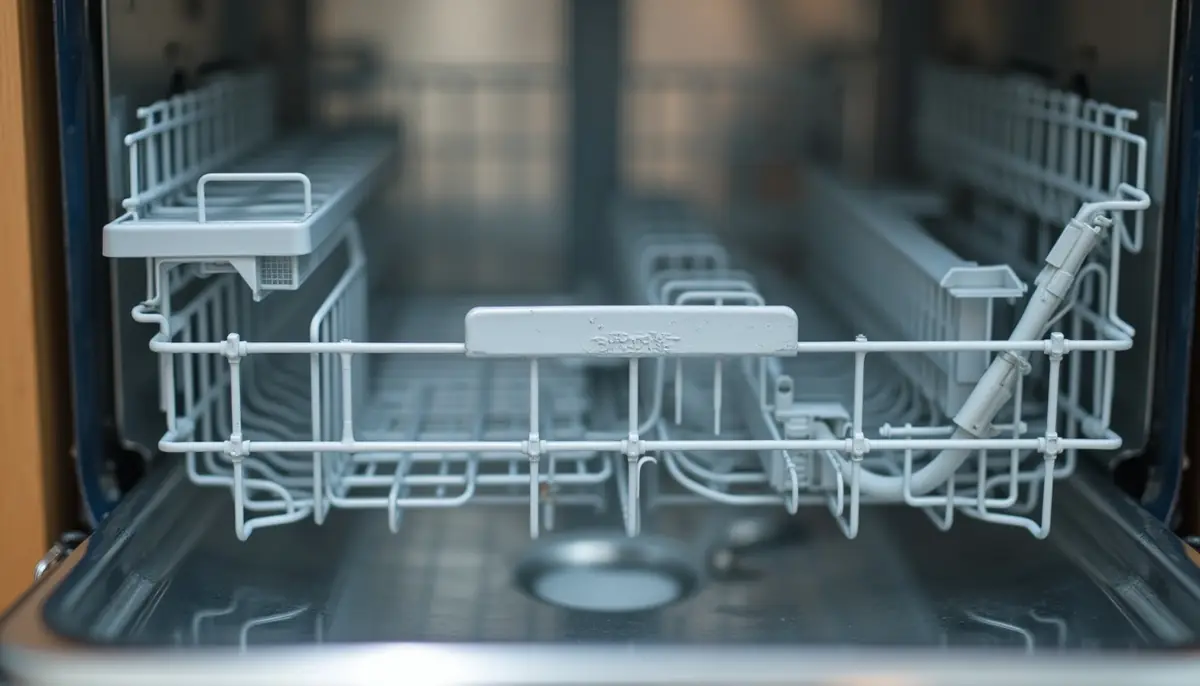
An adult caught in the tub during a hot cycle is very unlikely to survive it. GE says its NSF/ANSI 184 sanitising cycle runs until the water inside reaches about 150 °F (66 °C). In a 2017 laboratory study by Tunaz (KSU Journal of Natural Sciences), 25 minutes at 51 °C (124 °F) killed all adult German cockroaches tested, and 120 minutes at 44 °C (111 °F) did the same. Egg cases were not tested.
That heat stays inside the tub, at 150 °F only during the final rinse of a sanitising cycle. The roaches that keep coming back live in the door void, behind the kick plate and in the cabinet gap, where the wash water never goes, which is why running the dishwasher empty on its hottest setting is useful cleaning but not a cure. The same logic applies to the microwaves, consoles and TVs covered in our page on roaches living inside electronics.
Why am I getting roaches in my dishwasher?
Because the kitchen already has German cockroaches, and the dishwasher is one of the best spots in it. Three conditions draw them:
- Warmth. Rutgers says cold is the major factor limiting German cockroach survival, and below 59 °F (15 °C) nymphs stop developing into adults. A 2017 laboratory study by Xu and colleagues found survival and hatching were highest around 31 °C (88 °F).
- Water. Water left in the sump between cycles and any slow drip at the hose fittings.
- Food. Scraps in the filter and film on the seal feed them.
German cockroaches breed indoors year round, and Penn State says each egg capsule holds up to 48 eggs, usually 30 to 48. A few roaches in an appliance can become a kitchen infestation within months, which is why the dishwasher is rarely the only place they live. The full roach control plan for each species covers the rest of the kitchen.
Check at night. In our analysis of iNaturalist records, German cockroach sightings between midnight and 3 am ran at 5.9 times that slot’s share of all US records, and at about half their usual share between noon and 6 pm. These records reflect when people notice and record roaches, not a measured activity clock, but a torch check after 10 pm finds far more than a daytime look.
What not to put in the dishwasher
- No bug bomb. In a 2019 North Carolina State University study (DeVries and colleagues, BMC Public Health), total release foggers did not reduce cockroach populations in 20 homes while gel baits did, and fogger residues on kitchen surfaces rose a median 85 times.
- No insecticide in the tub or on racks. The tub holds dishes; follow the label, which governs where any product may go.
- No reliance on vinegar or bleach. They clean residue but do not reach the voids, and our review of smells roaches are said to hate found weak or no published evidence that either repels cockroaches.
When the dishwasher is not the problem
If you only see roaches at the dishwasher, it may still be the overflow from somewhere else. Apartments share walls and plumbing chases, and apartment German cockroaches often resist common sprays; our page on why German cockroach sprays stopped working covers the resistance data from infested buildings. Call a licensed professional if sticky traps still catch roaches after two to three weeks of baiting, if you see them in daylight, or if you rent and the building has a pest contract.
Replacing the dishwasher is rarely needed. None of the extension guidance reviewed here recommends discarding an appliance; sanitation, bait and sealing clear the voids. Wash or rewash any dishes roaches walked on: the University of Tennessee notes cockroaches can mechanically carry pathogens, and our summary of which diseases cockroaches carry sets out what the studies show.
Frequently asked questions
Why am I getting roaches in my dishwasher?
The dishwasher combines the three things German cockroaches need: warmth from the motor and hot water, moisture in the sump and around the tub, and food in the filter and on the door seal. They live in the voids around the tub, not in the wash chamber. Seeing them there usually means the kitchen has an established German cockroach population.
What can I put in my dishwasher to get rid of roaches?
Nothing goes inside the tub to kill roaches. Clean the filter and seal and run the hottest cycle empty to remove food, then place gel bait in the cracks around the outside of the appliance, at the hinge gaps and drain hose hole, where the label allows. Keep insecticides off racks and dishes, and skip foggers.
Can a roach survive a dishwasher cycle?
Not if it is caught in the tub during a hot cycle. A sanitising cycle heats water to about 150 °F, and a 2017 study found 25 minutes at 124 °F killed all adult German cockroaches tested. But most roaches shelter in the door and behind the kick plate, which the water never reaches, so they survive and return.
What smell do roaches absolutely hate?
In published laboratory tests, citrus oils and nepetalactone, the compound in catnip, repelled cockroaches most clearly, but only over minutes in test equipment. No scent has been shown to clear an infestation, and vinegar and bleach have weak or no published evidence. A strong smell near bait can even work against it.
Should I replace a dishwasher with roaches in it?
Usually not. German cockroaches live in voids around the tub that cleaning, baiting and sealing can reach, and extension guidance focuses on sanitation and bait rather than replacing appliances. Replacement also does nothing about the roaches in nearby cabinets and walls, which will move into the new unit.
Sources
- Penn State Extension, German Cockroaches.
- Rutgers Cooperative Extension, German Cockroach, Fact Sheet FS1322, Wang, 2020.
- Suiter, Forschler, Ames and Hoebeke, University of Georgia, Cockroaches fact sheet, 2022.
- University of California Statewide IPM Program, Pest Notes: Cockroaches, Publication 7467.
- Virginia Cooperative Extension, Cockroaches Found in Living Spaces, ENTO-528NP, 2022.
- Vail, K., University of Tennessee, The Smokybrown Cockroach, E&PP Info #841, 2022 (on cockroaches as mechanical carriers and allergen sources).
- Tunaz, H., Mortality Effect of Elevated Temperatures on Adult German Cockroach, Blattella germanica, KSU Journal of Natural Sciences 20(2): 111 to 114, 2017.
- Xu, Chen, Yang and Zhang, Development: temperature relationship and temperature dependent parameters of German cockroach, Arthropods 6(3): 78 to 85, 2017.
- DeVries, Santangelo, Crissman, Mick and Schal, Exposure risks and ineffectiveness of total release foggers (TRFs) used for cockroach control in residential settings, BMC Public Health 19: 96, 2019.
- GE Appliances, Dishwasher: Sanitization Cycle, support article.
- Whirlpool, 915 Series dishwasher manual, safety instructions.
- The Pest Control Brief analysis of iNaturalist research-grade records, pulled November 2026.