How to Get Rid of Rats: A Step-by-Step Plan That Works
To get rid of rats, cut off their food and shelter, seal every opening over 1/4 inch with metal or concrete, then trap with a dozen or more snap traps set along walls, baited but unset for the first few days. That is the order UC IPM and the CDC give, and it matters: trapping without sealing just makes room for the next rats. Rat poison, if used at all, belongs in a tamper-resistant station, and US consumer products have been limited to ready-to-use stations since 2011. Expect two to four weeks for a small infestation, and a full week with no captures and no new signs before you call it done.
Rats are harder to clear than mice because they avoid anything new: UC IPM says they often ignore traps and baits for several days, and maybe weeks, and that this wariness is stronger in roof rats than in Norway rats.
The plan in seven steps, in the order that works
- Confirm it is a rat, and which rat. Rat droppings are about the size of raisins against rice-grain mouse droppings (University of Georgia), and rat gnaw marks are about 1/6 inch (4 mm) wide against 1/12 inch (2 mm) for mice (UC IPM). A mouse will not set off a rat trap, so the wrong guess wastes the whole first week.
- Find the runways and entry points. Rub marks, burrows along the foundation, droppings near pet food and noise in the attic tell you where to work.
- Remove food and harbourage. Take in pet food at night, pick up fallen fruit, lid every bin and clear woodpiles and ivy.
- Seal entry points with rat-proof materials. Metal, concrete, hardware cloth. Not foam, caulk or plastic, which UC IPM says rats chew through.
- Trap, with many traps, after a pre-bait period.
- Use bait only where trapping cannot reach, in tamper-resistant stations, and only after the building is sealed so poisoned rats do not come in to die.
- Clean up with the CDC wet method and keep monitoring.
UC IPM explains the order: minimise entry points before baiting outside, “to prevent poisoned rats from coming inside to die.” Sanitation comes before trapping because a pea-sized dab of bait cannot compete with a bowl of dog food.
Step 1: Norway rat or roof rat decides where you work
The two commensal rats behave differently enough that the species changes where traps and sealing go. Our guide to telling roof rats from Norway rats has the full key; the short version is in the table below, compiled from UC IPM Pest Notes: Rats (Publication 74106).
| Norway rat | Roof rat | |
|---|---|---|
| Tail | Shorter than head and body; reaches mid-skull when folded | Longer than head and body; reaches the snout |
| Nests | Burrows along foundations, under rubbish and woodpiles | Shrubs, trees, ivy; indoors attics, wall and ceiling voids |
| Indoors | Basement and ground floor | Upper floors and attic |
| Nightly range | 100 to 500 feet from the nest | 300 feet or more for food |
| Litters | 4 to 6 a year; 20 or more young weaned | 3 to 5 a year, up to 8 young each |
| Where traps go | Floor, against walls, behind objects | Ledges, shelves, pipes, beams, fence tops |
| Where sealing focuses | Foundation, crawl space, drains, door bottoms | Roofline, vents, eaves, overhanging branches |
Sources differ on Norway rat range: UC IPM says 100 to 500 feet from the nest each night, the University of Georgia an area only 100 to 150 feet across. Either way, the rats eating your bird seed are nesting on your lot or the next one. If the animal has a furry tail and piles sticks and shiny objects, it is a native woodrat, and our page on pack rats and their nests covers the different approach they need.
Step 2: Read the signs before you buy anything
UC IPM lists droppings by pet bowls, smudge marks on beams and pipes, burrows under compost or bins, nests behind boxes in the garage, noise from the attic and rats running fence tops or utility lines at dusk. Our checklist of signs of rats in the house explains how to tell fresh droppings from old ones and how to use a talc tracking patch, which tells you which runway is live before you commit traps to it.
Step 3: Take away food, water and cover
UC IPM calls sanitation “fundamental” and warns that if it lapses, “rats will quickly return.” Feed pets only what they eat at one sitting, clean up pet faeces (rats eat it), pick up fallen fruit and keep compost in rigid lidded bins without meat or eggs. King County Public Health adds two measurements: stack firewood 18 inches off the ground and keep shrubs at least 3 feet from the house. Roof rats have strong nest site affinity, UC IPM notes, so if a nest site is left in place the rats come back to it. The full list of what attracts rats to a home and yard ranks the common draws.
Step 4: Seal with metal, not foam
UC IPM’s instruction is to seal all holes larger than 1/4 inch “to exclude both rats and mice.” Adult rats need more room than that, but young rats can squeeze under a door with a 1/2-inch gap, and a 1/4-inch standard covers mice too. For vents, UC IPM specifies 1/2-inch galvanised expanded metal (18 gauge) or wire cloth (16 gauge), says never to use chicken wire, and recommends screening rooftop plumbing vents more than 2 inches across. Our review of steel wool, copper mesh and what actually stops a rodent explains why steel wool is a temporary plug and why the edges of a patch fail first.
Overhanging branches are a roof rat’s bridge. UC IPM’s full Pest Note says to remove limbs within 6 feet of the roof, while its own quick-tips sheet and King County both say 3 feet; 6 feet is the safer figure where roof rats are active.
Step 5: Trap like the extension services do
UC IPM calls snap traps “the safest, most effective, and most economical way to trap rats.” The method that separates a two-week job from a two-month one:
- Numbers. “A dozen or more traps for a heavily infested home might be necessary,” spaced 10 to 20 feet apart (UC IPM). The University of Georgia suggests about a dozen per house.
- Pre-bait. Leave traps baited but unset until the bait has been taken several times. The CDC gives the same instruction “to help rats feel more comfortable with new objects.” A rat that springs a trap without being caught is, in UC IPM’s words, “very difficult to catch” again.
- Double up. If bait is taken from every trap, double the number of baited traps, and keep doubling until some bait is left untouched; then set them all (UC IPM).
- Placement. At right angles to the wall with the trigger end nearly touching it, so the rat runs over the trigger. Parallel traps go in pairs, facing opposite ways. For roof rats, fix traps to ledges, beams, pipes and fence tops.
- Bait. A pea-sized amount of nuts, dried fruit, bacon, dry pet food or peanut butter (UC IPM); chunky peanut butter by the CDC’s preference. Too much bait lets the rat feed without triggering the trap.
Rats learn their routes fast and notice changes, which is the subject of our article on what rat intelligence means for trapping.
When to set and check traps: what our data shows
Rats are recorded most heavily between midnight and 6 AM. In our analysis of 7,268 Norway rat and 3,877 roof rat iNaturalist records with a recorded hour, both species run at about 2.7 times their average share of all records in that block, and below their average share from 6 AM to 6 PM. These are sightings people recorded, mostly outdoors, and about one in five Norway rat records is a dead rat, so they show when rats are noticed rather than exact activity. The practical reading: set or re-bait traps in the early evening, and check them first thing in the morning, before children and pets are up. The hour-by-hour breakdown is on our page asking whether rats are nocturnal.
Step 6: Bait, if at all, under the 2011 consumer rules
The US EPA’s 2008 risk mitigation decision for rodenticides, which took effect for consumer products in 2011 according to UC IPM, reshaped what a homeowner can buy. Under EPA rules, products sold in consumer stores must be ready-to-use bait stations holding block or paste bait; pelleted baits are no longer permitted in consumer products; and the second-generation anticoagulants (brodifacoum, bromadiolone, difenacoum, difethialone) are registered only for professional and agricultural markets. Professional baits must go in tamper-resistant stations wherever children under six, pets or non-target wildlife could reach them, and for every outdoor above-ground placement. Burrow baiting is allowed only with pellets placed at least 6 inches down an active burrow.
California goes further. AB 1788 (Chapter 250, Statutes of 2020) prohibited most uses of the four second-generation anticoagulants, and AB 2552 (Chapter 571, Statutes of 2024) added the first-generation chlorophacinone and warfarin from 1 January 2025, according to the state Department of Pesticide Regulation. The prohibitions cover residential uses, with civil penalties of up to $25,000 per day. UC IPM now lists only bromethalin, cholecalciferol and zinc phosphide for rat control in the state. Our analysis of what California’s rodenticide ban changed shows professionals switched to other poisons rather than baiting less.
There is a practical reason to prefer traps indoors that has nothing to do with law. King County Public Health says poisons are not recommended for rat control inside buildings because poisoned rats can die in hard to reach places and cause a strong smell. Poison also brings exposure risk: our review of rat poison calls to US poison centres found children aged 5 and under were 64 per cent of single-substance rodenticide exposures in 2024.
Step 7: Clean up without stirring up dust
The CDC’s method: open doors and windows for 30 minutes and leave the area; wear rubber or plastic gloves; spray urine, droppings and nesting material with a disinfectant or a mix of 1.5 cups of household bleach per gallon of water (1 part bleach to 9 parts water); let it soak 5 minutes; wipe up with paper towels and bag it. The CDC says not to vacuum or sweep droppings or nesting material. UC IPM adds: dead rats go in a sealed plastic bag in the household trash, never touched bare-handed. The same steps are laid out with deer mouse precautions in our guide to dropping cleanup and hantavirus.
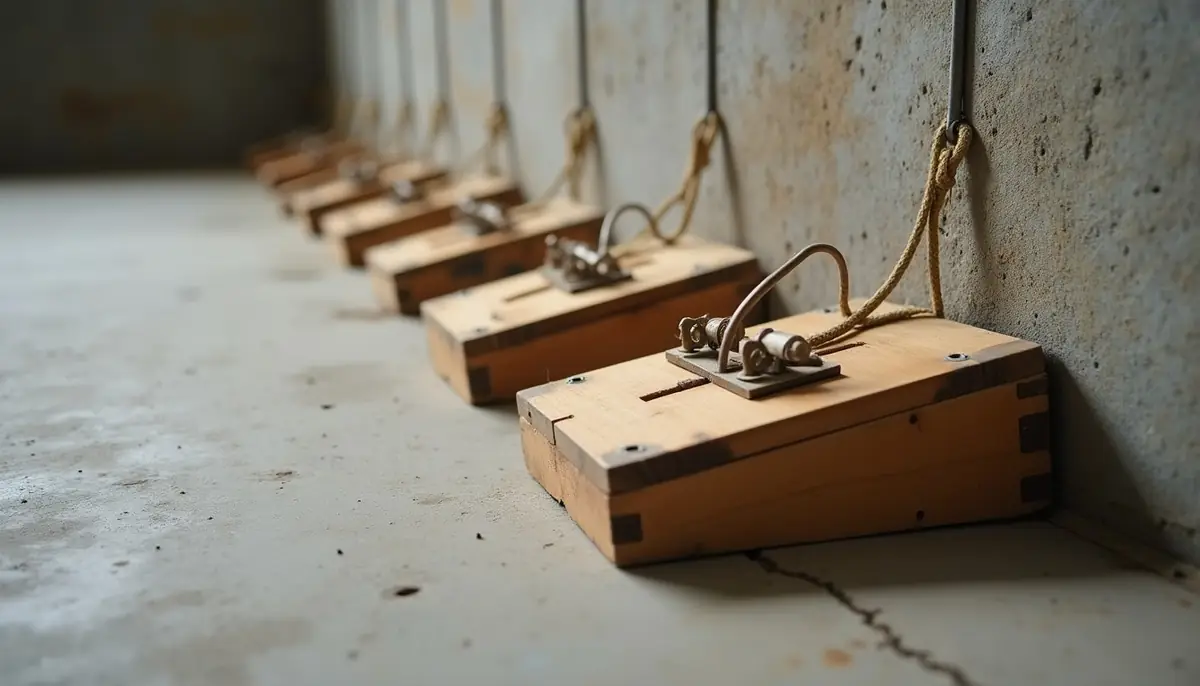
What kills rats: every method compared
This table compiles the speed, risk and legal position of each method from UC IPM Pest Notes: Rats, US EPA rodenticide restrictions, the CDC, the University of Nebraska and California DPR. No brand names; check the active ingredient on any label.
| Method | How fast | Risk to children, pets, wildlife | Legal position for a homeowner | What the sources say |
|---|---|---|---|---|
| Snap traps (rat size) | Kills when it fires; rats may avoid new traps for several days | Injury risk to pets and birds; box or cover traps where they can reach | Legal everywhere | “Safest, most effective, and most economical” (UC IPM); recommended by CDC |
| Electronic (electrocution) traps | Kills on entry; still needs pre-baiting | Low if enclosed; read the maker’s safety guidance | Legal | “Considerably more expensive”; check frequently (UC IPM) |
| Glue boards | Holds the rat alive; must then be killed humanely | Catches pets and wildlife; never outdoors (UC IPM) | Sold to consumers | Not recommended for non-professionals (UC IPM); CDC says do not use |
| Live traps | Holds the rat alive | Low | UC IPM says trapped rats must legally be euthanised or released where caught | Not recommended for non-professionals (UC IPM); CDC says do not use |
| First-generation anticoagulants (diphacinone, chlorophacinone, warfarin) | Several feedings; death 4 days to 2 weeks after feeding begins (EPA) | Antidote exists (vitamin K1, Nebraska); secondary poisoning possible | Consumer bait stations only; most uses banned in California | Effective where rats feed over several days |
| Second-generation anticoagulants (brodifacoum, bromadiolone, difenacoum, difethialone) | Can kill after one night’s feeding; death over a similar 4 to 14 days (EPA) | Highest secondary risk; a single dead rodent may poison a pet (UC IPM) | Not sold to consumers since 2011; professional and agricultural only | Persist longer in tissue than first-generation (EPA) |
| Bromethalin | Feeding over one to several days (UC IPM) | No antidote (Nebraska); secondary exposure now documented (UC IPM) | Consumer bait stations | One of three actives registered for rats in California |
| Cholecalciferol | Feeding over one to several days (UC IPM) | No antidote (Nebraska); primary poisoning of pets possible | Consumer bait stations | One of three actives registered for rats in California |
| Zinc phosphide | Death within several hours of a lethal dose (UC IPM) | Acute toxicant; needs pre-baiting | Typically unavailable to the public (UC IPM) | Not commonly used against rats |
| Smoke or gas cartridges, carbon monoxide | Fast in a burrow | Gas can enter the house; fire risk | CO devices barred within 65 feet of a structure for Norway rats; professional use | Not recommended around homes (UC IPM) |
What does not work, and why
- Ultrasonic and electronic repellers. UC IPM says rats “quickly become accustomed to repeated sounds,” making high frequency and ultrasonic devices ineffective in homes and gardens; the University of Georgia calls ultrasound devices “almost completely useless.” The full evidence is in our review of ultrasonic pest repellers.
- Peppermint oil, ammonia and other smells. UC IPM: “no repellents have been found to solve a rat problem for more than a very short time,” and there are no truly effective rat repellents registered in California. Our scorecard of smells rats are said to hate covers each scent.
- Mothballs. The National Pesticide Information Center states that mothballs “are not wildlife repellents”; they are insecticides meant for closed, airtight containers, and our page on mothball fumes and off-label use sets out the harm they do to people and pets in the open.
- A cat. UC IPM says predators “cannot significantly control” prolific colonisers like rats.
- Trapping without sealing. Without exclusion, trapped rats are replaced.
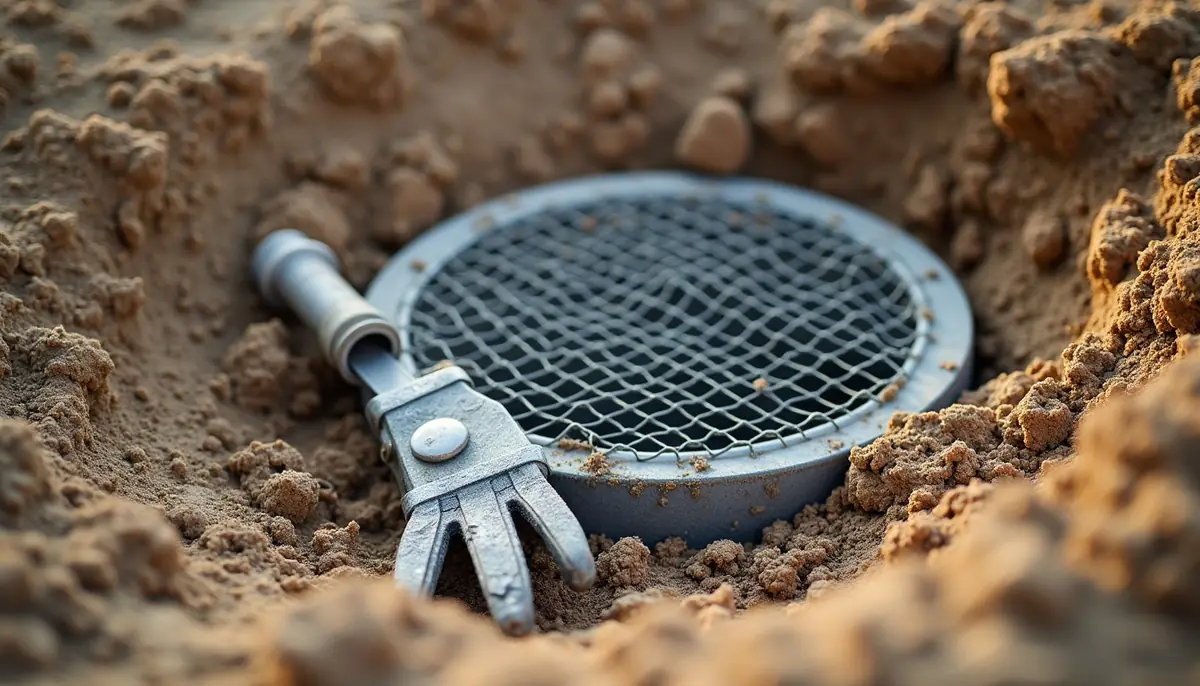
How long it takes to get rid of rats
No extension source gives a single number, since it depends on colony size and sealing. These are the markers they do give.
| Stage | Typical time | Source |
|---|---|---|
| Rats start taking bait from new traps or stations | Several days, sometimes weeks | UC IPM |
| Keep checking and refilling bait | At least 15 days | CDC |
| Anticoagulant bait takes effect | 4 days to 2 weeks after feeding begins | US EPA |
| Leave bait out no longer than | 2 to 4 weeks | University of Georgia |
| Declare the rats gone | A week with no captures and no new signs | CDC |
Put together, a small infestation in a sealed house usually takes two to four weeks from first trap to all-clear: several days of pre-baiting, a week or two of catches, then the quiet week the CDC asks for. A colony that is still getting in, or roof rats with access from trees and lines, takes longer. Rats breed fast enough that delay costs time: a Norway rat female can wean 20 or more young a year, and our page on how fast rats reproduce shows how a colony grows.
Inside the house, outside, and the places in between
Indoors, use traps rather than poison, on the floor the species prefers: basement and ground floor for Norway rats, attic and upper walls for roof rats. Our guide to rat noises at night helps place a rat in a wall by sound.
Outdoors, the work is mostly removal of food and cover: bird feeders on poles with trays rats cannot reach (King County notes that if a squirrel can reach a feeder, so can a rat), lidded bins, no meat in compost, woodpiles 18 inches off the ground. Our guide to rats in the backyard covers burrows, and after trapping, the University of Georgia advises filling burrows with rocks and soil; a reopened burrow tells you rats are still there.
Do it yourself or call a professional?
| Situation | Reasonable choice | Why |
|---|---|---|
| One or two rats in a garage or shed with an obvious gap | DIY | Snap traps plus a metal patch usually settle it |
| Norway rat burrows in the yard, none indoors | DIY first | Sanitation and trapping; fill burrows and watch for reopening |
| Roof rats in the attic or running utility lines | Professional | UC IPM advises a pest professional or the utility for lines; roofline sealing is slow work |
| Piles of droppings, several nests or dead rats | Professional | King County Public Health recommends a professional for heavy infestations |
| Rats still active after three weeks of sealing and trapping | Professional | Entry points are being missed, or the colony is larger than traps can handle |
Published estimates put rat extermination at $395 to $1,500, with a $75 to $150 inspection usually credited against the job and whole-house sealing at $1,000 to $3,000; our breakdown of what pest control for rats costs lists the line items, and these are contractor-reported estimates rather than measured prices. King County suggests asking for integrated pest management and checking the company’s licence.
Why it is worth doing properly
UC IPM names typhus, leptospirosis, food-borne illness such as salmonella, and rat bite fever as the most common rat-transmitted diseases, and notes that rats and mice do not carry or transmit rabies. UC IPM adds that rats may chew directly on gas lines. In New York, city inspectors found rat activity at 17.8 per cent of 144,314 initial inspections in 2025, according to our analysis of how often a city inspection finds rats, so a neighbour’s yard is often part of the problem. The University of Georgia advises neighbours to clean up and trap at the same time.
Every rat guide we publish
Identification
- Roof rats: how to tell them from Norway rats and keep them out
- Pack rats (woodrats): nests, car wiring and getting them out
- Do rats lay eggs? No, so what did you find?
- How long do rats live? Wild, city and pet rats
Signs
- Signs of rats in the house: 11 clues and how to read them
- Rat noises at night: what you are hearing and where
- What does a rat nest look like? Burrows, attic nests and signs
- Can rats swim up toilets? Yes, and how often it happens
Behaviour
- Are rats nocturnal? Rat activity hours and daytime sightings
- Are rats smart? What rat intelligence means for trapping
- What do rats eat? Norway and roof rat diets compared
- What attracts rats to your home and yard
- How fast do rats reproduce? Litters, gestation and colony growth
- Why do rats chew wires? Teeth, soy insulation and fire risk
- Rats in winter: where they go and why they move indoors
Where rats turn up
- Rats in the backyard: burrows, food sources and what to fix
- Rats in the garage: signs, risks and how to get them out
- Rats in the chicken coop: stopping egg and feed losses
Health and safety
- Are rats dangerous? The real risks, ranked
- Do rats bite people? Rat bite fever and real risk
- Do rats carry rabies? What the CDC and state data show
- My dog killed a rat: should you be worried?
- Mouse droppings and hantavirus: the cleanup CDC requires
Control
- Steel wool, copper mesh and what actually stops a rodent
- What smells do rats hate? Scents against the evidence
- How to get rid of mice: what works, in what order
Costs
- How much is pest control for rats? Exterminator costs explained
- Rodent removal cost 2026: trapping vs exclusion
Our data
- Rat complaints in New York and Chicago: what 311 shows
- How often a city inspection actually finds rats
- How fast does a city respond to a rat complaint?
- Does trash predict rats? New York complaints by zip code
- Rat poison calls to poison centers fell 22 percent in a decade
Frequently asked questions
What gets rid of rats the fastest?
Enough snap traps, placed on live runways after a few days of pre-baiting. UC IPM says a dozen or more may be needed in a heavily infested home, 10 to 20 feet apart, and advises using as many as practical so trapping is short. Anticoagulant baits take 4 days to 2 weeks to kill, according to the US EPA, so poison is not faster.
What smell do rats absolutely hate?
None that keeps them away. Rats show an initial aversion to some odours, but UC IPM says no repellent has solved a rat problem for more than a very short time, and no truly effective rat repellent is registered in California. Mothballs are insecticides, not wildlife repellents, according to the National Pesticide Information Center.
What keeps rats away permanently?
Exclusion, kept up. UC IPM calls sealing every hole over 1/4 inch with metal, concrete or hardware cloth the most successful and longest-lasting strategy, combined with ongoing sanitation, since rats return quickly if food and cover come back. Check the building each year, especially vents, door bottoms and pipe entries.
How can I permanently get rid of rats?
Remove the colony and the reason it came. Trap the rats already inside, seal entry points with gnaw-proof materials, remove pet food, fallen fruit and woodpiles, and keep branches back from the roof. Treat it as done only after a week with no captures and no new signs, the CDC’s test, then keep monitoring.
Can I get rid of rats in my house myself?
Often, yes, for a few rats with findable entry points: snap traps, metal patches and sanitation are the core of the extension method. King County Public Health recommends a professional where there are piles of droppings, many nests or dead rats, and UC IPM suggests professional help for roof rats travelling on utility lines.
Sources
- Quinn N. Pest Notes: Rats. UC Statewide IPM Program, UC ANR Publication 74106, 2024.
- Centers for Disease Control and Prevention. How to Trap Up to Remove Rodents; How to Seal Up to Prevent Rodents; How to Clean Up After Rodents. Healthy Pets, Rodent Control.
- US Environmental Protection Agency. Restrictions on Rodenticide Products (2008 risk mitigation decision for rodenticides).
- California Department of Pesticide Regulation. Chlorophacinone and Warfarin: Restricted Material Status, Prohibitions, Allowed Uses, and Questions and Answers (AB 2552, Chapter 571, Statutes of 2024).
- California Department of Pesticide Regulation. Addendum to ENF 20-20 on AB 1788 (Chapter 250, Statutes of 2020).
- Kohl M, Mengak MT. Rats and mice: get them out of your house and yard. University of Georgia Integrated Pest Management, 2025.
- Public Health, Seattle and King County. Preventing rodents and keeping them away.
- Vantassel SM, Hygnstrom SE, Ferraro DM. Controlling House Mice, NebGuide G1105. University of Nebraska-Lincoln Extension, revised 2012 (rodenticide antidote information).
- National Pesticide Information Center, Oregon State University. Mothballs.
- The Pest Control Brief analysis of iNaturalist research-grade records, pulled November 2026.
- The Pest Control Brief analyses of New York City rodent inspection data and US poison center rodenticide exposure data, as published on this site.