Steel Wool, Copper Mesh and What Actually Stops a Rodent
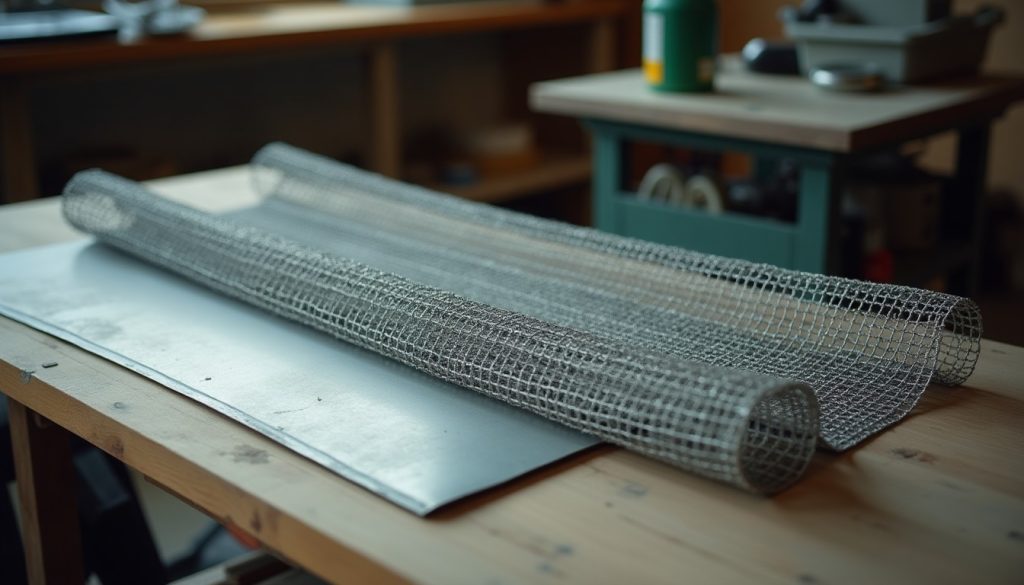
A house mouse gets through a quarter-inch gap and an adult rat through half an inch, but juvenile rats also pass a quarter inch, so a quarter inch is the only defensible standard for both. Steel wool is recommended everywhere and fails in ways the sources that recommend it describe plainly: it rusts, it is flammable, and rodents work around its edges. The more uncomfortable finding is that no controlled gnaw-resistance test data exists for any exclusion material. Every gauge and mesh specification in circulation traces back to a federal training manual from the 1950s and has been reproduced ever since, not retested.
Exclusion is the one part of rodent work that is permanent. It is also the part sold with the most confident specifications and the least evidence behind them, so it is worth separating what is measured from what is inherited.
The gap sizes, which are solid
These figures are consistent across the federal and extension literature. A house mouse requires about a quarter inch, an adult Norway rat about half an inch. The National Park Service offers the field heuristic that a gap a pencil fits through will admit a mouse, and that if a mouse can squeeze its head through, the rest of it follows.
One nuance changes the practical standard. NC State notes juvenile rats enter at a quarter inch, so sealing to the half-inch rat figure leaves a building open to young rats. The Park Service states the conclusion directly: use a quarter inch even where rats are the target.
UC IPM adds a distinction worth keeping: a quarter-inch gap height is not the same as a quarter-inch round opening, and a round hole of three eighths of an inch will pass a mouse.
What the specifications say
| Application | Specification |
|---|---|
| Hardware cloth, mice | 24-gauge, quarter-inch by quarter-inch woven mesh |
| Hardware cloth, rats | 19-gauge, half-inch by half-inch woven mesh |
| Vent screening, rats | 16-gauge half-inch wire cloth or 18-gauge half-inch expanded metal |
| Galvanized sheet metal | 24-gauge for barriers, 22-gauge for kick plates |
| Concrete | Two inches reinforced, three and three quarter inches unreinforced |
| Perforated or expanded grills | 14-gauge |
| Wall guards against climbing | 36 inches, matching a rat’s vertical jump |
Compiled from Baker, Bodman and Timm, the National Park Service rodent exclusion manual, and UC IPM. Both sources flag the same trade-off: mesh finer than half an inch significantly restricts airflow, which matters on vents.
Chicken wire is explicitly ruled out by UC IPM. It is not a rodent barrier.
Steel wool, honestly
Steel wool is the most recommended exclusion material in consumer guidance and the sources recommending it are more qualified than the advice that quotes them.
Baker and colleagues describe steel wool and copper gauze packed tight as a good temporary plug, and note that rust stains are likely. The Park Service is blunter: only 00-grade steel wool deters rodents, and it is flammable, it rusts, and rodents often work their way between the wool and the edges of the opening. Their instruction is to always caulk over it.
Copper mesh’s advantage over steel wool is narrower than usually claimed. It is that copper does not rust. The Park Service still describes copper as a soft metal that is penetrable over time and that rodents can push aside.
The material the federal manual actually prefers is galvanized lath screen, which neither rusts nor bleeds through caulk, and which appears almost nowhere in consumer guidance.
“Coarse stainless steel wool”, which turns up constantly in product listings, appears in no authoritative source we could find.
What does not work at all
UC IPM’s house mouse guidance is categorical: plastic screening, rubber, vinyl, expanding foam, wood and other gnawable materials are ineffective for plugging holes used by house mice. NC State says the same of foam against rats, which chew it easily.
That matters because expanding foam is the default fix in the field. It has one legitimate use, which is as a paintable finish over a copper mesh or metal core, and even then the Park Service notes it degrades in sunlight.
Caulk is limited to joints of a quarter inch or less with no movement. Anything larger needs wire mesh or sheet metal first, with the caulk as a finish rather than the barrier.
Why patches fail at the edge
The most useful sentence in this literature explains the failure mode. Baker and colleagues: the paired front incisor teeth of rats and mice curve slightly inward, which makes it difficult for them to gnaw into a flat, hard surface, but given a rough surface or an edge to bite into they can quickly gnaw into most materials.
That is why a patch fails at its perimeter rather than through its middle, and why packing a hole loosely with wool creates exactly the edge the animal needs. Fasteners, embedment and a flush finish matter more than the material’s hardness.
On that hardness: measured rat incisor bite force is about 31 newtons in the peer-reviewed literature. The figures circulating in trade copy of 6,000, 12,000 or 24,000 pounds per square inch have no traceable primary source, and we are not repeating them.
The order of operations
- Trap first, seal second, indoors. Baker is explicit: in occupied buildings, always trap the rodents before sealing interior walls, to avoid odours, stains and an influx of insects feeding on carcasses. The Park Service says rodents must be removed before exclusion devices are installed.
- Exterior perimeter work can start immediately. It is interior wall-void sealing that waits on trap catches reaching zero.
- Treat dermestid beetles or blowflies indoors as a signal, since both indicate a carcass, which is the predictable result of sealing a building with rodents still in it. Our guide to larder beetles covers what that looks like.
- Work the whole envelope, not the hole you found. Documented failure modes include attack around the patch perimeter, under-fastened vent screens, roll-up door tracks, rubber and vinyl door sweeps, utility penetrations, sewer vents and seismic movement joints.
- Expect maintenance. Galvanized-after-welding mesh is rated at 10 to 20 years; foam and caulk are not.
For what rodent work costs and where exclusion sits within it, see our rodent removal pricing, and for the wider building survey, pest-proofing a property.
The evidence gap worth knowing about
We went looking for controlled tests: gnaw-resistance comparisons, penetration times, anything that ranked materials experimentally. There are none in the extension, federal or peer-reviewed literature that we could locate.
The gauge and mesh specifications above trace back to the CDC’s Control of Domestic Rats and Mice training series, published in 1956 and revised in 1968 and 1977, and have been reproduced rather than retested since. That does not make them wrong. Seventy years of field use is a form of evidence. But anyone presenting these numbers as test-derived is overstating what is behind them, and a material that performs well in practice for reasons nobody has measured is a weaker basis for a product claim than the industry generally admits.
Frequently asked questions
What size hole can a mouse get through?
About a quarter of an inch, roughly the diameter of a pencil. An adult Norway rat needs about half an inch, but juvenile rats also pass a quarter inch, so a quarter inch is the working standard for both. A round opening of three eighths of an inch will also admit a mouse.
Does steel wool actually stop mice?
Only as a temporary plug, and the sources that recommend it say so. The federal guidance notes that only 00-grade steel wool deters rodents, that it is flammable and rusts, and that rodents often work their way between the wool and the edges of the opening, which is why it must be caulked over. Galvanized lath screen or hardware cloth is the durable answer.
Is copper mesh better than steel wool for mice?
Its one clear advantage is that it does not rust. Federal guidance still describes copper as a soft metal that is penetrable over time and that rodents can push aside, so it is not a permanent barrier on its own. Use it as a filler behind a mechanical barrier rather than as the barrier.
Can mice chew through expanding foam?
Yes. UC IPM lists expanding foam alongside plastic screening, rubber, vinyl and wood as ineffective for plugging holes used by house mice, and NC State says rats chew it easily. Foam’s legitimate use is as a paintable finish over a metal or copper mesh core, and it degrades in sunlight.
Sources
- Baker, Bodman and Timm, Rodent-Proof Construction and Exclusion Methods, B-137, University of Nebraska Extension and USDA APHIS, 1994.
- National Park Service, Rodent Exclusion Manual, 2019.
- University of California Statewide IPM Program, Pest Notes: House Mouse and Rats.
- NC State Extension, rodent exclusion guidance.
- Cox and colleagues, rat incisor bite force, PLOS ONE 7:e36299, 2012.
- CDC, Control of Domestic Rats and Mice, 1956, revised 1968 and 1977, the origin of the gauge specifications.