Roof Rats: How to Tell Them From Norway Rats and Keep Them Out
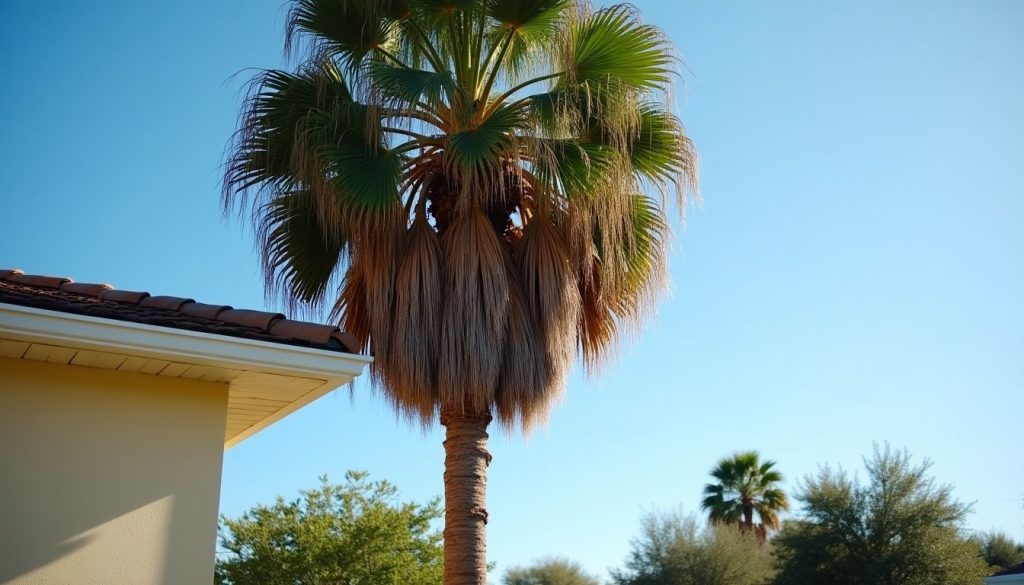
Roof rats (Rattus rattus) are slim, agile climbing rats with a tail longer than their head and body, and they nest high up, in attics, palms, dense ivy and trees, rather than in burrows like the heavier Norway rat. They are mainly a problem of the Pacific coast, the Gulf states, Florida, the lower East Coast and Hawaii. Getting rid of them is usually a matter of sealing gaps of about half an inch or larger at the roof line, cutting back branches and vines that touch the house, and setting snap traps where they travel above the ground, not on the floor.
Most rat advice is written for the burrowing Norway rat. Roof rats behave differently enough that floor-level traps, ground bait stations and a foundation-only inspection can all miss them.
What is the difference between a roof rat and a regular rat?
The “regular” rat most people picture is the Norway rat, also called the brown or sewer rat. Both are introduced species that live alongside people, and the two cannot interbreed. The quickest field test, used by UC IPM, is the tail: pulled back over the body, a roof rat’s tail reaches at least to the snout, while a Norway rat’s reaches only to the middle of the skull.
| Roof rat | Norway rat | |
|---|---|---|
| Build | Sleek, agile, pointed muzzle | Large, robust, blunt muzzle |
| Weight | 5 to 10 oz (about 150 to 250 g) | 7 to 18 oz (about 200 to 500 g) |
| Body length | About 5 to 8 in, sources differ | Larger and stockier |
| Tail | Longer than head and body, uniformly dark | Shorter than head and body, dark above, pale below |
| Ears | Reach the eyes when folded over | Do not reach the eyes |
| Droppings | About 1/2 in (13 mm), pointed ends | About 3/4 in (19 mm), blunt ends |
| Nests | Attics, wall and ceiling voids, palms, ivy, trees | Burrows by foundations, woodpiles, rubbish |
| Indoors | Upper floors and roof spaces | Basements and ground floors |
| US range | Coastal and southern states, Pacific coast, Hawaii | All 48 contiguous states |
Body length is where sources disagree: the Internet Center for Wildlife Damage Management gives 6 to 8 inches and about 16 inches in total, the University of Arizona 5 to 7 inches and about 12 inches with the tail. The tail test and weight are more reliable than a guess at an animal glimpsed for a second.
When both species share a building, UC IPM notes that Norway rats typically hold the basement and ground floor while roof rats take the upper floors. Roof rats also tend to carry food away to eat elsewhere. Our guide to identifying droppings shows the size and shape differences to scale.
Where roof rats live in the US
The Internet Center for Wildlife Damage Management describes the range as the lower half of the East Coast, the Gulf states up into Arkansas, the whole Pacific coast and Hawaii, with most interior states free of them apart from isolated infestations that probably arrive with cargo. UC IPM adds that the range is expanding. To test that against real sightings, we counted research-grade iNaturalist records of Rattus rattus in each state per 10,000 observations of anything there, so busy recording states do not win by volume.
The pattern matches the textbook range closely. Of 3,918 US roof rat records, California holds 40.9 per cent, Florida 17.6 per cent and Texas 17.1 per cent. Adjusted for recording effort, Hawaii (1.28), Florida (1.23) and Oregon (1.17) lead. Twenty-seven states, including New York, Illinois, Ohio and Pennsylvania, have no research-grade records at all, so a rat in the Midwest or Northeast is almost certainly a Norway rat. These are photographed sightings, mostly outdoors, not counts of infested homes.
How do I know if I have roof rats?
The Internet Center for Wildlife Damage Management makes a point that changes how you inspect: roof rats can be present outdoors with little sign of tracks, droppings or runs, and indoors you are less likely to find droppings on the floor because they live overhead. Look up, not down.
- Noises overhead at night. Sounds in the attic are often the first sign of roof rats in a house, heard when the house is quiet.
- Greasy rub marks from oil and dirt in the fur along beams, rafters and pipes. UF/IFAS notes new rub marks smear, old ones flake, and rafters may show the swing marks of roof rats.
- Hollowed fruit on the tree. Roof rats often eat the pulp of oranges while the fruit is still hanging, leaving an empty rind, and with lemons may eat the rind and leave the flesh.
- Rats on wires and fence tops at dusk, a sign UC IPM lists.
- Droppings in the attic, on ledges or near pet food, spindle-shaped and up to about half an inch long.
- Shredded insulation and gnawed wiring. UC IPM puts rat gnaw marks at about 1/6 inch (4 mm) wide against a mouse’s 1/12 inch (2 mm).
When are roof rats active?
Roof rats are nocturnal. The Internet Center says rats usually begin searching for food shortly after sunset, and UF/IFAS says they are busiest in the first half of the night when food is plentiful. Rats seen in daylight usually mean a large population, disease or poisoning.
They are also active all year. Relative to everything else people record on iNaturalist, roof rats peak from October to January (192 in November) and dip in late spring (49 in May), and Norway rats follow the same shape. But the raw monthly count of roof rat records only ranges from 271 in December to 405 in October, so most of that winter peak is rats staying just as visible while insects and flowers fade. The practical reading matches UC IPM: rats are active throughout the year, so check for signs periodically.
Do roof rats come in the house?
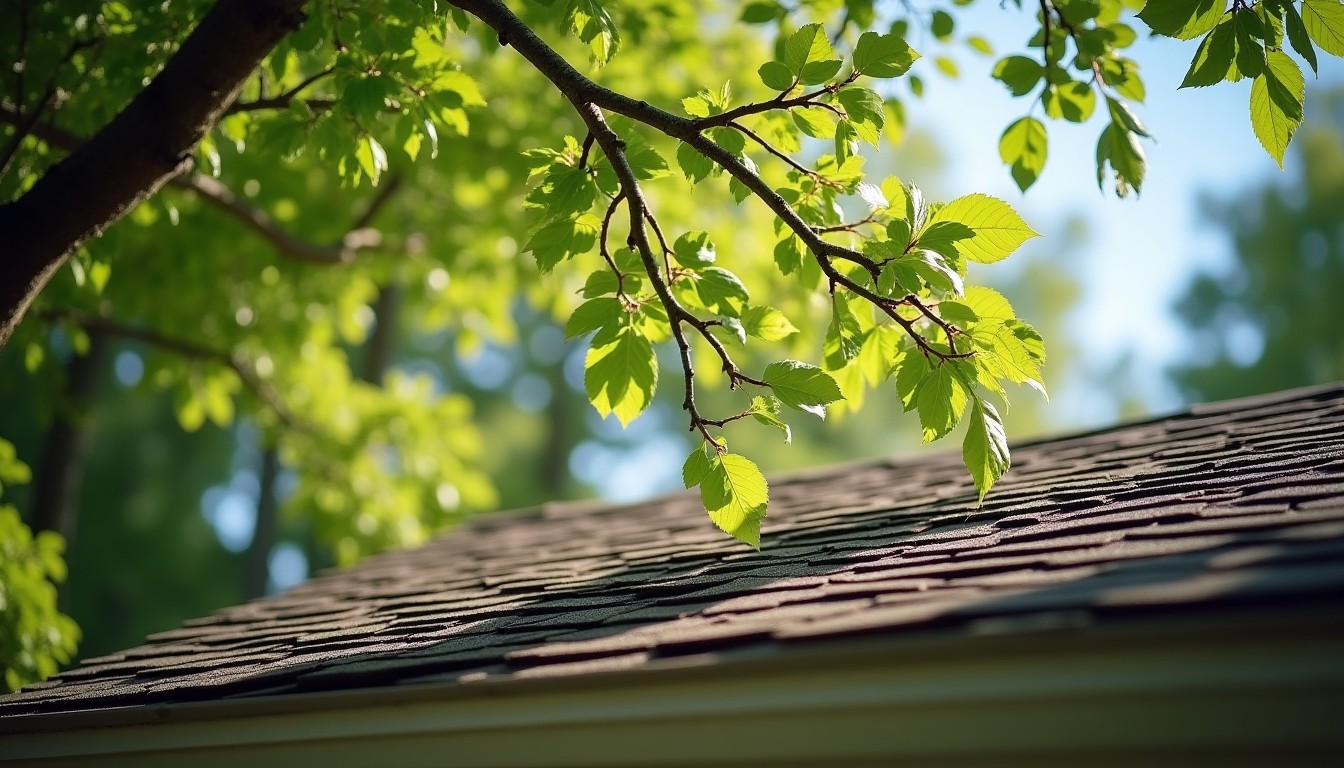
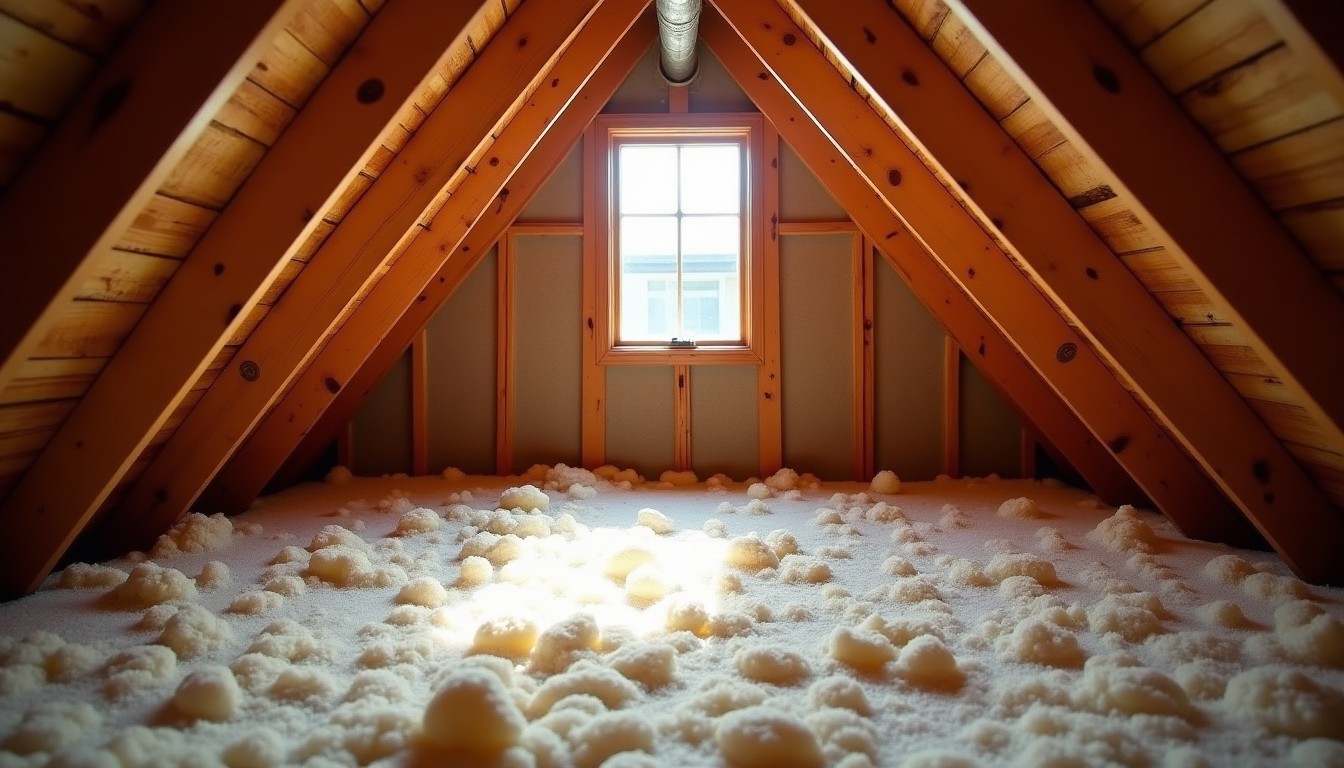
Yes. They nest in enclosed, elevated spaces: attics, wall voids, ceiling voids and cabinets, according to UC IPM, and UF/IFAS adds palm trees and ornamental shrubbery outside. They often enter from the roof or along overhead utility lines and breed readily once inside. Because roof rats routinely travel up to 300 feet or more for food, a colony can live in one yard and feed in another, so a neighbour’s fruit trees or dogs fed outdoors can matter as much as your own yard.
Are roof rats dangerous?
They are a health and property risk rather than an aggressive animal. UC IPM lists the most common rat-transmitted diseases as typhus, leptospirosis, food borne illnesses such as salmonella, and rat bite fever, and says plague is very rarely found in these rats and that they do not carry rabies. If you think you have been bitten or exposed, talk to a doctor.
The property risk is often bigger. UC IPM warns that roof rats in an attic can cause electrical sparks and fires through gnawing and nest building, may chew gas lines, and commonly chew engine wiring in cars.
For cleanup, the CDC says to ventilate for 30 minutes, wear rubber or plastic gloves, never sweep or vacuum droppings or nesting material, and soak them with 1 part bleach to 9 parts water, or an EPA-registered disinfectant, for 5 minutes before wiping up. Our cleanup guide walks through it.
How to get rid of roof rats
UC IPM calls exclusion, or “building them out”, the most successful and longest-lasting strategy, and the Internet Center warns that control must cut numbers very low or the population quickly rebounds. Work in this order.
1. Find and seal the entry points
The published gap sizes differ for a reason. UF/IFAS says rats can squeeze through cracks half an inch wide and mice through a quarter inch, and the roof rat chapters from the Internet Center and the California Department of Food and Agriculture say to seal openings larger than half an inch. UC IPM says a quarter inch, because that excludes mice too. Half an inch stops rats; a quarter inch also stops the mice that often arrive with them.
With roof rats, the roof line comes first: eaves, soffit and attic vents, pipe and cable entries, and rooftop plumbing vents more than 2 inches wide, which UC IPM says should be screened. For vents it specifies 18-gauge galvanized expanded metal or 16-gauge galvanized wire cloth with 1/2 inch (13 mm) mesh, never chicken wire. Our guide to rodent exclusion materials covers which patches hold.
2. Cut the aerial highways
The common advice is to trim branches 3 feet from the roof, and UC IPM’s summary says exactly that. Its detailed section goes further: remove overhanging limbs within 6 feet of a roof. The longer figure is safer, because UF/IFAS records that rats can jump 48 inches horizontally, and 8 feet from a tree to a house if the branch is 15 feet above the roof. A 3-foot gap is within a rat’s leap.
- Remove vines from walls and fences; UC IPM names Algerian and English ivy, star jasmine and honeysuckle.
- Leave at least 2 feet between shrubs, and between shrubs and the house.
- Pick up fallen fruit and nuts, and store pet food and bird seed in sealed containers.
- If rats run along overhead utility lines, contact the utility company or a professional.
3. Trap above the ground
Snap traps are, in UC IPM’s words, the safest, most effective and most economical way to trap rats. For roof rats, put them on ledges, shelves, fences, pipes and overhead beams; in homes, attic and garage rafters near the activity are the best sites. Traps can be nailed to beams or wired to pipes, set at right angles to the runway as UF/IFAS advises.
- Bait: a pea-sized amount of nuts, dried fruit, bacon or dry pet food (UC IPM). UF/IFAS lists raisins or grapes for roof rats.
- Prebait: roof rats avoid new objects more than Norway rats do, so leave traps baited but unset until the bait has been taken several times.
- Numbers: about 10 to 20 feet apart; a heavily infested home might need a dozen or more.
- Skip glue boards and live traps, which UC IPM does not generally recommend for homeowners.
Ultrasonic devices and repellents are not a fix: UC IPM says rats quickly get used to repeated sounds and no repellent has solved a rat problem for more than a very short time.
4. Rodenticides: what the rules allow
Under federal rules, rat and mouse baits sold to the general public must be block, gel or paste baits in or with ready-to-use bait stations. In California, most uses of first and second generation anticoagulants are now prohibited, leaving bromethalin, cholecalciferol and zinc phosphide, according to UC IPM. Follow the label exactly and keep bait away from children and pets.
Bait boxes have a roof rat problem: UC IPM reports research showing roof rats may not enter bait stations even on established runways, and poisoned rats can die in wall voids, where UF/IFAS says the smell can last two to four weeks. For homes, traps are usually the better tool. Our data on rodenticide poisoning calls shows why bait around children and pets needs care.
When to call a professional
A single rat in a shed with an obvious gap is a reasonable DIY job. Roof rats in the attic usually are not: the Internet Center says finding their entry points takes longer than for Norway rats because of their climbing, and much of the work is on ladders at the roof line. Call a licensed professional if you hear rats in the attic night after night, find gnawed wiring or gas lines, cannot find the entry points, or keep catching rats after sealing. See when to call pest control and what rodent removal costs, and if the noise is daytime scrabbling, squirrels in the attic. If the rat has a furry tail and you find a pile of sticks, it is probably a native woodrat; see pack rats.
How we did this
Guidance comes from UC IPM Pest Notes: Rats (74106, updated 2025), the Internet Center for Wildlife Damage Management, UF/IFAS ENY-224, the University of Arizona, the California Department of Food and Agriculture and the CDC. We left out the figure, common on pest control sites, that a roof rat produces up to 40 young in its life, because we could not match it to an extension source; the California handbook gives about 20 young weaned per female per year.
Frequently asked questions
Is it possible to get rid of roof rats?
Yes, but trapping alone rarely lasts. Extension guidance puts exclusion first: seal openings larger than about half an inch at the roof line, cut back branches and vines that touch the house, and remove fallen fruit and pet food. Then trap with snap traps placed above the ground on beams and ledges. The Internet Center for Wildlife Damage Management warns that numbers must be cut very low or rats rebound quickly.
What time of day are roof rats most active?
Roof rats are active at night. They usually begin searching for food shortly after sunset, and UF/IFAS says rats are busiest in the first half of the night when food is plentiful. They are often seen running along utility lines and fence tops at dusk. Rats seen in daylight usually indicate a large population, disease or poisoning, which is worth treating as a sign of a bigger problem.
Do roof rats come in the house?
Yes. Roof rats nest in enclosed, elevated spaces such as attics, wall voids, ceiling voids and cabinets, and they often enter from the roof or along overhead utility lines. Noises in the attic at night are often the first sign. Where both rat species share a building, roof rats usually occupy the upper floors and Norway rats the basement and ground floor.
How big do roof rats get?
Adult roof rats weigh about 5 to 10 ounces, according to UC IPM, with a body of roughly 5 to 8 inches, as extension sources differ, and a tail at least as long again. The Internet Center for Wildlife Damage Management gives a total length of about 16 inches. They are slimmer and lighter than Norway rats, which can weigh up to 18 ounces.
Sources
- University of California Statewide IPM Program, Pest Notes: Rats, UC ANR Publication 74106, N.M. Quinn, updated 2025.
- Internet Center for Wildlife Damage Management, Roof Rats: identification, biology, damage identification and prevention and control methods, based on R.E. Marsh, Prevention and Control of Wildlife Damage, 1994.
- Internet Center for Wildlife Damage Management, Norway Rats, based on R.M. Timm, Prevention and Control of Wildlife Damage, 1994.
- UF/IFAS Extension, Rat and Mouse Control, ENY-224, P.G. Koehler and W.H. Kern Jr., revised 2013.
- University of Arizona Cooperative Extension, How to Identify and Discourage Roof Rats, D.H. Gouge, 2024.
- California Department of Food and Agriculture, Vertebrate Pest Control Handbook: Roof Rat.
- Centers for Disease Control and Prevention, How to Clean Up After Rodents, 2024.
- The Pest Control Brief analysis of iNaturalist research-grade records, pulled October 2026.