What Do Rats Eat? Norway and Roof Rat Diets Compared

Rats are omnivores that eat almost anything, but the two US house rats prefer different foods: Norway rats go for grain, meat, fish and nuts, while roof rats go for fruit, tree nuts, berries, snails and bird eggs. An adult rat eats roughly 10 per cent of its body weight a day, about 15 to 50 grams (half an ounce to under 2 ounces) depending on species and size, and unlike a mouse it needs to drink. Around homes that means pet food, birdseed, rubbish, fallen fruit, compost and even dog droppings. Rats are wary of any new food, which is why bait and traps often sit untouched for days.
Knowing which rat you have tells you what it is eating, where it is eating it, and what will tempt it into a trap. This guide covers each species’ diet, how much a rat eats and drinks, why rats ignore new food, pet rat diets and the baits extension services recommend. What draws rats to a yard in the first place, such as woodpiles and ivy, is covered in our guide to what attracts rats.
Norway rat and roof rat diets compared
| Norway rat | Roof rat | |
|---|---|---|
| Preferred foods | Cereal grains, meat, fish, nuts, some fruit, insects such as cockroaches | Fruit, tree nuts, berries, slugs, snails, young birds, bird eggs |
| Grains it favours | Corn, oats, wheat and barley | Will eat stored grain and animal feed, but fruit and nuts come first outdoors |
| Typical feeding sign | Gnawed feed sacks, rubbish bags, pet food bowls at ground level | Hollowed oranges still on the tree, lemon rinds eaten and flesh left |
| How it eats | Often feeds where it finds food | Carries food away to eat somewhere hidden |
| Body weight | 7 to 18 oz (200 to 500 g) | 5 to 10 oz (150 to 250 g) |
| Food a day (about 10% of weight) | About 20 to 50 g | About 15 to 25 g |
| Water | Half to 1 fl oz a day on dry food, less on moist food | Usually needs water daily unless its food is juicy |
| Where it forages | 100 to 500 feet from the nest, mostly on the ground | Up to 300 feet or more, often in trees and along fences and wires |
Sources: UC IPM Pest Notes: Rats (2025), the Internet Center for Wildlife Damage Management (ICWDM) species accounts and Nebraska extension G1737; daily food is our arithmetic from Nebraska’s 10 per cent figure.
The species split matters more than any list of foods: clearing bins does little for a roof rat living on a neighbour’s avocado tree. Our guide to roof rats covers that species in depth, and rat vs mouse helps if you are not yet sure the animal is a rat at all.
In our analysis of iNaturalist research-grade records, roof rats make up 90.3 per cent of Florida’s rat records and 86.3 per cent of Texas’s, against none at all in New York, Illinois, Massachusetts or Pennsylvania. California sits at 69.9 per cent. In the Northeast and Midwest the rat in your rubbish is almost certainly a Norway rat; along the Gulf Coast and in Hawaii it is more often a fruit-eating roof rat. These are photographed sightings, not infestation rates.

What do most rats eat?
Whatever is abundant and reliable. UC IPM says Norway rats eat a wide variety of foods but “tend to accept whatever food is abundant and readily available to them, such as food waste around untidy properties or commercial dumpsters.” The ICWDM account adds that rats eat nearly any type of food, but “when given a choice they select a nutritionally balanced diet and fresh items over stale or contaminated foods.”
The appetite for protein is old. A 2018 study in Proceedings of the Royal Society B used stable isotopes in the bones of 41 urban and 45 rural brown rats from 19th century Toronto and found the city rats had regular access to higher quality animal protein and far less varied diets than country rats.
What do rats eat in the wild?
Neither US house rat is native, so “wild” usually means yards, parks, farms, riverbanks and sewers.
- Norway rats eat grain, nuts, some fruit, meat, fish and insects, and on farms they eat livestock feed. Nebraska extension notes they will eat cockroaches. In sewers, the ICWDM account says domestic sewage from an average community provides enough food to sustain a large number of rats, a problem it links to the spread of kitchen garbage disposals.
- Roof rats feed more like tree squirrels, the ICWDM account says, on a wide variety of fruit and nuts plus leaves and stems of ornamental and native plants. UC IPM lists slugs, snails, young birds and bird eggs, and says they eat avocados and citrus while the fruit is still on the tree.
If your rat has a furry tail, it is a native woodrat; see pack rats.

What do rats eat in your house and yard?
| Food source | Which rat | What to do |
|---|---|---|
| Dry pet food, especially fed outdoors | Both | Feed only what the pet eats at one meal; store food in metal or heavy rodent-proof containers |
| Dog and cat droppings | Both | UC IPM says rats will eat faeces; pick up daily, with gloves |
| Birdseed and spilled seed | Both | Store seed in metal cans; clean up spillage under feeders |
| Household rubbish | Mainly Norway rat | Tight lids, bins cleaned of grease films, frequent collection |
| Compost with meat, fish or eggs | Mainly Norway rat | Keep those scraps out; use a rigid, lidded bin |
| Fallen fruit and nuts, ripening citrus and avocados | Mainly roof rat | Pick up fallen fruit and nuts; harvest promptly |
| Pantry goods and animal feed | Both | Store in sealed metal, glass or heavy containers off the floor |
Indoors, rats eat what people eat, plus pet food and stored feed, and UC IPM notes they damage the containers too. The ICWDM estimate is that one rat eats about 20 to 40 pounds of feed a year and probably contaminates 10 times that amount with urine and droppings, so the food spoiled usually matters more than the food eaten.
Rubbish matters, though less neatly than assumed: in New York’s 311 data, much of the link between dirty conditions and rat complaints reflects some neighbourhoods reporting everything more, as we show in does trash predict rats.
Do rats eat cheese?
They will, as they eat most human food, but cheese is not a recommended bait: none of the extension bait lists we read mentions it. Grain, meat, nuts and fruit are what rats choose when they can choose, and those are what UC IPM and Nebraska suggest for traps.
How much do rats eat a day?
Nebraska extension says rats eat about 10 per cent of their body weight a day. On UC IPM’s weights, that is about 20 to 50 grams for an adult Norway rat and 15 to 25 grams for a roof rat. The ICWDM’s annual estimate of 20 to 40 pounds of feed per rat works out at about 25 to 50 grams a day, so the two sources agree. In energy terms, the ICWDM account puts one Norway rat’s need at about 110 calories a day.
Water is where the sources diverge. The ICWDM account says rats need half to 1 ounce of water a day on dry food, and less when moist food is available; Nebraska’s G1737 gives 1 to 2 ounces, depending on conditions. Either way, rats need to drink, while house mice can get by on very little free water, as our guide to what mice eat explains. A dripping tap, pet bowl or pond can matter as much to a rat as the food.
What do rats eat every day, and when?
Rats feed mostly at night, from around dusk. The ICWDM account says a Norway rat travels an area about 100 to 150 feet across daily and seldom goes more than 400 feet from its burrow for food or water, so its daily food is usually close to home.
Rats also hoard. The ICWDM roof rat account says caches may turn up in a woodpile, an attic or behind boxes in a garage, so a stash of nuts or pet food pellets is a rat sign in its own right.
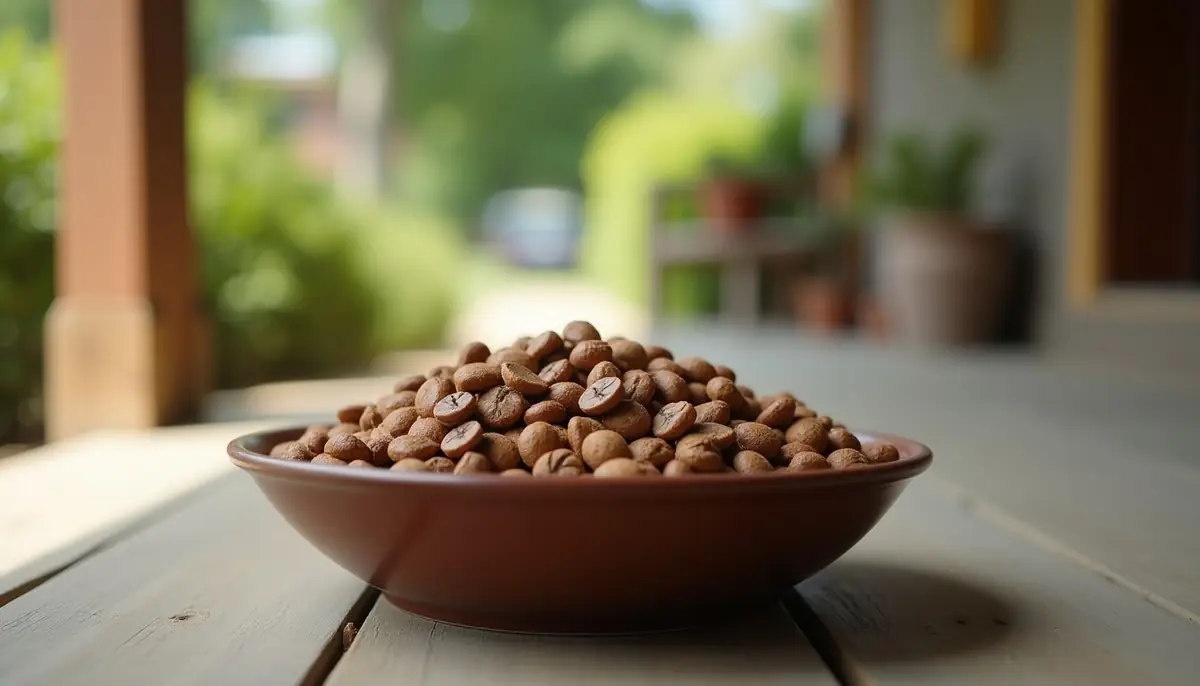
Why rats ignore new food
Rats are neophobic. UC IPM says they “quickly detect and tend to avoid new objects and new foods,” so they often avoid traps and baits for the first several days and maybe weeks, and the trait is thought to be stronger in roof rats. Nebraska says it is common for rats to wait two weeks before interacting with traps and toxicants. The ICWDM account adds that rats first eat very small amounts of a new food, and whether they return depends on its flavour and how they feel afterwards; a food that makes them ill without killing them gets avoided, which is the origin of bait shyness.
Young rats learn what to eat from their mother. The ICWDM roof rat account says that by the time they stop nursing, at about 4 or 5 weeks, young rats “have learned what is good to eat by experimenting with potential food items and by imitating their mother.” A colony raised on dog food and birdseed is predisposed to dog food and birdseed.
What do rats like to eat, to catch them?
The food the rats are already eating, offered where they already travel. The ICWDM account says baits similar to foods rats are accustomed to eating are often a good choice, that preference varies between populations and individuals, and that where rats have plenty of grain, meat or canned fish-flavoured cat food may work as a substitute. Corn, oats, wheat and barley are the grains it names for Norway rats; for roof rats, nuts and dried fruit make sense.
| Bait | Recommended by | Best for |
|---|---|---|
| Nuts, nutmeat | UC IPM; Nebraska | Both, especially roof rats |
| Dried fruit | UC IPM | Roof rats |
| Bacon, hot dog, pepperoni | UC IPM (bacon); Nebraska | Norway rats |
| Dry pet food | UC IPM | Rats already feeding on pet food |
| Peanut butter | UC IPM; Nebraska | Both; use a pea-sized amount |
| Marshmallow | Nebraska | Both |
UC IPM advises a pea-sized amount, tied to the trigger if the bait is dry, and leaving traps baited but unset until the bait has been taken several times. Placement matters as much as bait: rat-sized traps go along walls and runways between shelter and food.
What kills rats quickly?
Rat-sized snap traps, set in enough numbers along runways, are the quick method extension services describe for homes. Poison is slow: the ICWDM account says rats eating first-generation anticoagulant bait daily may die by the third or fourth day. Any rodenticide must be used exactly as its label directs. Our guide to how long rats live covers trapping numbers and why a colony refills quickly.
What do rats eat as pets?
Pet, or fancy, rats are a domesticated form of the brown (Norway) rat and need a balanced diet rather than scraps. The Merck Veterinary Manual says commercially prepared rat food contains the vitamins and minerals they need and comes as pellets hard enough to wear down their growing incisors. It advises avoiding pellet and seed mixes, because rats pick out the seeds, and changing diets gradually, because rats may avoid new foods. Vegetables, fruit and sunflower seeds are limited treats; fatty treats are best avoided. A vet who treats small mammals can advise beyond that.
What do rats hate most?
Nothing they hate reliably drives them out. UC IPM says rats have an initial aversion to some odours and tastes, “but no repellents have been found to solve a rat problem for more than a very short time.” The ICWDM account agrees that chemical repellents are seldom practical. What rats cannot cope with is the loss of food and shelter: food sealed away, fallen fruit and droppings gone, gaps over a quarter inch sealed. Materials that hold up to gnawing are covered in rodent exclusion materials.
Will a rat go near a sleeping human?
Rarely, and usually while searching for food in a heavily infested home. A Philadelphia study of 622 confirmed rat bites found most happened in bedrooms between midnight and 8 AM, mostly to young children in buildings in poor condition. Keeping food out of bedrooms removes the reason a rat would be there; our guide to whether rats bite covers the evidence and when to see a doctor.
Rats in walls, ceilings or attics, burrows under a slab, or rats in a multi-unit building are usually jobs for a licensed pest control operator.
Frequently asked questions
What do rats eat the most?
Whatever is most reliably available near their nest. Norway rats prefer cereal grains, meat, fish and nuts and readily eat rubbish, pet food and livestock feed; roof rats prefer fruit, tree nuts, berries, snails and bird eggs. Both choose fresh food over spoiled food when they can, so a steady supply of pet food or fallen fruit matters more than one dropped meal.
How much does a rat eat a day?
About 10 per cent of its body weight, according to Nebraska extension. For an adult Norway rat weighing 7 to 18 ounces that is roughly 20 to 50 grams, close to the ICWDM estimate of 20 to 40 pounds of feed a year; a roof rat eats roughly 15 to 25 grams. Rats also need half an ounce to 2 ounces of water a day, depending on the source and how moist their food is.
Do rats eat their own droppings or pet waste?
Rats do eat faeces. UC IPM advises cleaning up droppings from dogs, cats and other animals “since rats will eat feces,” and recommends wearing gloves and avoiding breathing in dust from it, because faeces can carry pathogens. Picking up after pets daily removes one of the food sources that keeps rats around a yard, alongside pet food and birdseed.
Can rats survive on rubbish alone?
Yes. The ICWDM Norway rat account says food discarded in household garbage offers a well-balanced diet and satisfies a rat’s need for moisture, and that sewage from an average community can sustain a large number of sewer rats. That is why bins with tight lids, cleaned of grease films, and frequent collection are central to every extension rat control guide.
Sources
- University of California Statewide IPM Program, Pest Notes: Rats, UC ANR Publication 74106, updated June 2025.
- Internet Center for Wildlife Damage Management, Norway Rat Biology and Norway Rat Damage Prevention and Control Methods, based on R.M. Timm, Norway Rats, in Prevention and Control of Wildlife Damage, 1994.
- Internet Center for Wildlife Damage Management, Roof Rat Biology, based on R.E. Marsh, Roof Rats, in Prevention and Control of Wildlife Damage, 1994.
- University of Nebraska-Lincoln Extension, Controlling Rats, G1737.
- Guiry, E. and Buckley, M., Urban rats have less variable, higher protein diets, Proceedings of the Royal Society B 285, 2018.
- Merck Veterinary Manual, Providing a Home for a Rat (pet owner version).
- Origins of the domesticate brown rat (Rattus norvegicus) and its pathways to domestication, Animal Frontiers 11(3), 2021.
- Hirschhorn, R.B. and Hodge, R.R., Identification of risk factors in rat bite incidents involving humans, Pediatrics 104(3): e35, 1999.
- The Pest Control Brief analysis of iNaturalist research-grade records, pulled October 2026.
- The Pest Control Brief, Does Trash Predict Rats?, analysis of NYC 311 service requests, 2026.