How Long Do Rats Live? Wild, City and Pet Rats

Wild rats usually live less than a year, typically 5 to 12 months, while pet rats live 1.5 to 3 years. Nebraska extension gives the 5 to 12 month figure for wild Norway rats, and a classic US public health review put annual mortality in wild Norway rat populations at about 95 per cent. Pet rats, protected from predators, disease and competition, average 18 to 36 months, according to the Merck Veterinary Manual. Short lives do not mean small problems: a female can become pregnant again while still nursing a litter.
Lifespan is the question people type, but for anyone with rats near the house the better question is how fast they are replaced. This guide covers both, using extension, veterinary and public health sources, plus our own analysis of when US rats are recorded.
How long rats live, by type and setting
| Rat | Usual lifespan | Upper end | Source |
|---|---|---|---|
| Wild Norway rat | 5 to 12 months | About 5 in 100 survive a full year | Nebraska G1737; McDavid and Mood 1972 |
| Wild roof rat | No separate figure in the sources we read | Breeding biology similar to Norway rat | Tennessee Wildlife Resources Agency |
| Pet rat | 18 to 36 months on average | Up to 3 years usual maximum | Merck Veterinary Manual |
| Wild house mouse, for comparison | 9 to 12 months | Up to 3 years | UC IPM Pest Notes 7483 |
The wild rat and the pet rat belong to the same genus, and the gap between them is environment rather than biology. Remove predators, disease, fighting over food and shelter, and traps, and a rat lives roughly three times as long.

How long do wild rats live?
Nebraska extension’s guide to controlling rats states that individual Norway rats usually live 5 to 12 months. A 1972 review in the US public health journal HSMHA Health Reports, by McDavid and Mood of the Yale School of Medicine, cited an estimated annual mortality rate of 95 per cent in Norway rat populations, drawing on a 1953 review of rat populations by David Davis.
Applied evenly across a year, 95 per cent annual mortality means a rat has roughly a 78 per cent chance of surviving any given month. The chart shows what that does to a group of rats born at the same time. The arithmetic is ours and assumes a constant death rate, which real populations do not have, but the shape is the point: half are gone within about three months.
For roof rats, the sources we read give reproduction figures but no separate wild lifespan, so we have not invented one. Our guide to roof rats covers how they differ from Norway rats in habitat and behaviour.
Why are rats so short-lived?
Mostly because the world kills them young, not because their bodies wear out. McDavid and Mood list three forces that drive rat mortality: predation, disease and competition. In cities the main predators are dogs and cats. Disease outbreaks thin populations but rarely wipe them out; the review notes that survivors usually restore the population to its original density within about a year.
Competition is the least obvious and possibly the most important. Rats rank themselves through fighting. The strongest hold the burrows nearest food and shelter, and weaker rats are pushed to the edge of the colony, where they travel farther, eat less and are more exposed to disease and predators. In crowded populations, the review reports that infant mortality can jump from 30 to 40 per cent to 90 to 100 per cent as habitat and social conditions change.
Captivity removes all of that, which is why the same animal can live three years in a cage and a few months in an alley. Even then, Merck puts the usual pet rat lifespan at 1.5 to 3 years: rats are small mammals that mature fast and age fast.

How fast do rats breed?
Quickly enough that lifespan barely matters. The sources agree on the broad shape and differ on the details:
| Measure | Norway rat | Roof rat | Source |
|---|---|---|---|
| Pregnancy | 21 to 23 days (Nebraska, Merck); 21 to 26 days (Tennessee) | 21 to 29 days | Nebraska G1737; Merck; Tennessee Wildlife Resources Agency |
| Litter size | 6 to 12 (Nebraska); usually 7 to 11 (Tennessee); 8 to 18 in pets (Merck) | 6 to 12, average 8 | As above |
| Litters a year | 4 to 6 on average (Nebraska); up to 7 (Tennessee) | Up to 5 | As above |
| Weaning | About 3 weeks | 3 to 4 weeks | Merck; Tennessee |
| Able to breed | About 90 days (Nebraska); 6 months (McDavid and Mood); 6 to 12 weeks in pets (Merck) | 3 to 5 months | As above |
| Breeding season | Year-round, peaks in spring and autumn | Year-round, peaks summer and autumn | Nebraska; McDavid and Mood; Tennessee |
McDavid and Mood add two numbers that show the scale. On average, they report, a female Norway rat produces 35.7 offspring a year, and a population can grow by 50 per cent in a month. A rat can also become pregnant while still nursing a litter.
You will also see much bigger claims: one state wildlife page says a pair and their offspring can produce more than 1,500 young in a year. That figure assumes every rat survives and breeds, which the 95 per cent mortality figure shows does not happen. The realistic message is less dramatic and more useful: losses are replaced fast, so a rat problem left alone tends to persist rather than explode or fade.
When rats are most active through the year
Nebraska extension says Norway rats mate mainly in spring and autumn, and McDavid and Mood describe year-round breeding with spring and autumn peaks. Our analysis of US iNaturalist research-grade records fits that shape: Norway rat records rise from about 400 a month in winter to 710 in April and 718 in May, dip slightly in June, and reach their highest month, 760, in September.
Raw counts partly reflect how many people are out recording, and these are mostly outdoor sightings, not infestation counts. City complaint data shows a similar warm-season pattern: in our analysis of New York and Chicago 311 rodent complaints, both cities peak in July.
How long do rats live in your house?
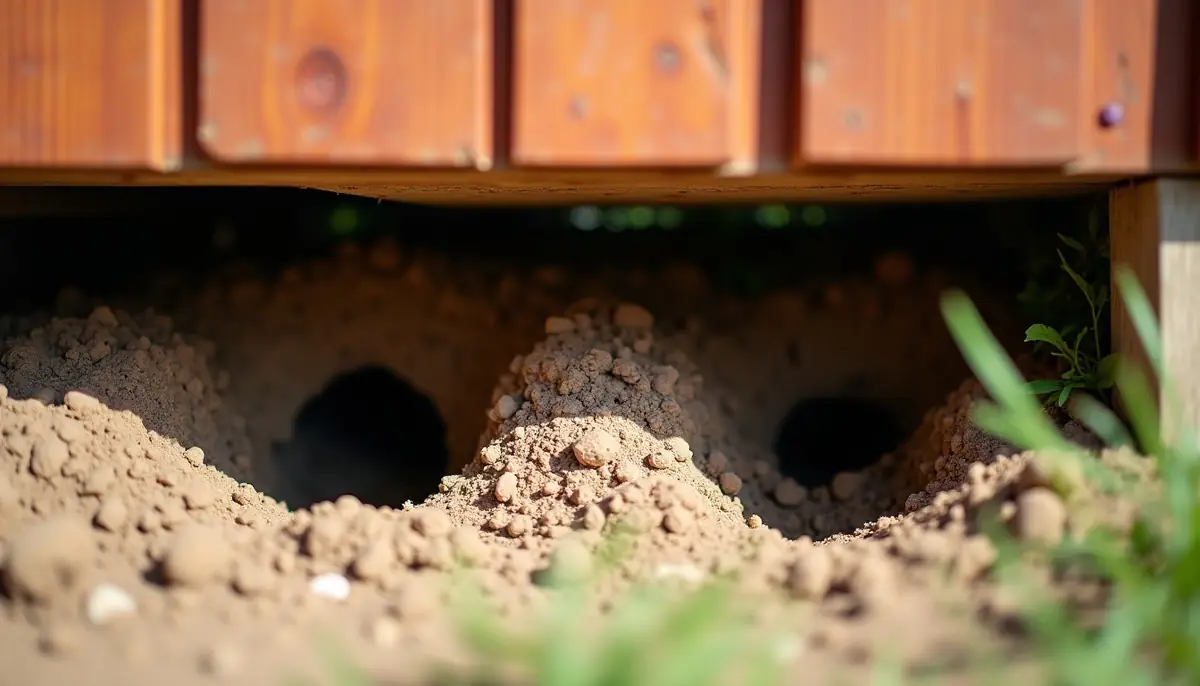
No study we found has measured the lifespan of rats living inside occupied homes. The best evidence is indirect. Rats that nest indoors have warmth and food but still face the same competition, disease and control efforts, and McDavid and Mood note that rats spend more than 20 hours a day in their harbourage. An individual rat in your walls or loft will probably live months rather than years, but it will be replaced if food, water and entry points remain. What draws them in, and how to remove it, is in what attracts rats.
How long do rats live without food or water?
Water is the tighter limit. Nebraska extension says rats, unlike house mice, need to drink, consuming 1 to 2 ounces a day, and that they require water daily. McDavid and Mood give an adult Norway rat’s needs as 3/4 to 1 ounce of dry food and 1/2 to 1 ounce of water a day, so the two sources differ on water; either way it is a daily need. We found no verified figure for complete starvation, so we have not given one. The foods that draw rats to a home are covered in what attracts rats.
How long do pet rats live?
The Merck Veterinary Manual gives an average lifespan of 18 to 36 months for rats kept as pets, and describes the usual life span as about 1.5 to 3 years. Merck lists white among the ordinary colour varieties of pet rats, and we found no source giving white rats a different lifespan. Merck’s figure for comparison puts pet mice at 18 to 24 months.
How long do rats live in captivity compared with mice?
Somewhat longer. Rats in captivity average 18 to 36 months against 18 to 24 for mice, according to Merck, and in the wild both usually die within a year. The full mouse comparison, including a field study of farm mice, is in how long do mice live.
What kills rats quickly?
Snap traps, set in the right places in enough numbers. UC IPM says trapping can be an effective way to control rats in and around homes, that finding the right locations matters more than trap style, and that a heavily infested home may need a dozen or more traps set 10 to 20 feet apart. Rats are wary of new objects, so UC IPM suggests leaving traps baited but unset until the bait has been taken several times; a rat that sets off a trap without being caught becomes very hard to trap again.
Poison is not fast. Nebraska extension notes that rats may feed on anticoagulant baits several times before dying, and that even single-feeding cholecalciferol baits take several days to kill. UC IPM says no repellent has been found to solve a rat problem for more than a very short time. Live traps are not recommended for homeowners. Burrows, rats in walls, or rats in a multi-unit building are reasons to call a licensed professional.
Will a rat go near a sleeping human?
It can happen, though it is uncommon. In a Philadelphia health department study of 622 confirmed rat bites from 1974 to 1996, most bites occurred in the bedroom between midnight and 8 AM, mostly on the face and hands of children aged 5 and under, in buildings in poor physical condition. That is a picture of heavy infestation in poor housing, not of rats seeking out people. Our guide to whether rats bite sets out the evidence and what to do after a bite.
Frequently asked questions
What is the average lifespan of a rat?
It depends on where the rat lives. Wild Norway rats usually live 5 to 12 months, according to Nebraska extension, and a US public health review estimated that about 95 per cent of a wild population dies each year. Pet and laboratory rats average 18 to 36 months, according to the Merck Veterinary Manual. The difference reflects predators, disease and competition, not a different animal.
Can a rat live for 5 years?
Not in any source we read. The Merck Veterinary Manual gives 1.5 to 3 years as the usual lifespan for pet rats and an average of 18 to 36 months, and none of the extension or veterinary sources we used gives a figure anywhere near five years. A wild rat reaching even its second year is unusual, given estimated annual mortality of about 95 per cent.
How many babies can one rat have in a year?
Nebraska extension gives 4 to 6 litters a year of 6 to 12 young, which multiplies out to roughly 24 to 72. A 1972 public health review gave an average of 35.7 offspring per female per year. Most of those young die early, which is why populations grow fast but do not grow without limit. Larger figures of 1,500 or more assume every rat survives.
Do rats die in winter?
Not in large numbers from cold alone. Norway rats breed year-round, with peaks in spring and autumn, and they live in burrows, sewers and buildings that shelter them from weather. Our iNaturalist analysis shows fewer records in winter, about 400 a month against 760 in September, but that partly reflects fewer people out recording.
Sources
- University of Nebraska-Lincoln Extension, G1737: Controlling Rats, Vantassel, Hygnstrom and Ferraro, 2007.
- McDavid, C.G. and Mood, E.W., Biological aspects of urban rat control, HSMHA Health Reports 87(1): 17 to 24, 1972, citing Davis, D.E., The characteristics of rat populations, Quarterly Review of Biology 28, 1953.
- Merck Veterinary Manual, Mice and Rats as Pets; Rats at a Glance; Description and Physical Characteristics of Rats.
- Tennessee Wildlife Resources Agency, Roof Rat and Brown Rat species profiles.
- University of California Statewide IPM Program, Pest Notes: Rats, UC ANR Publication 74106, N. Quinn, 2025.
- University of California Statewide IPM Program, Pest Notes: House Mouse, UC ANR Publication 7483, 2025.
- Hirschhorn, R.B. and Hodge, R.R., Identification of risk factors in rat bite incidents involving humans, Pediatrics 104(3): e35, 1999.
- The Pest Control Brief, Rat Complaints in New York and Chicago, analysis of 311 service requests, 2026.
- The Pest Control Brief analysis of iNaturalist research-grade records, pulled October 2026.