What Does a Rat Nest Look Like? Burrows, Attic Nests and Signs
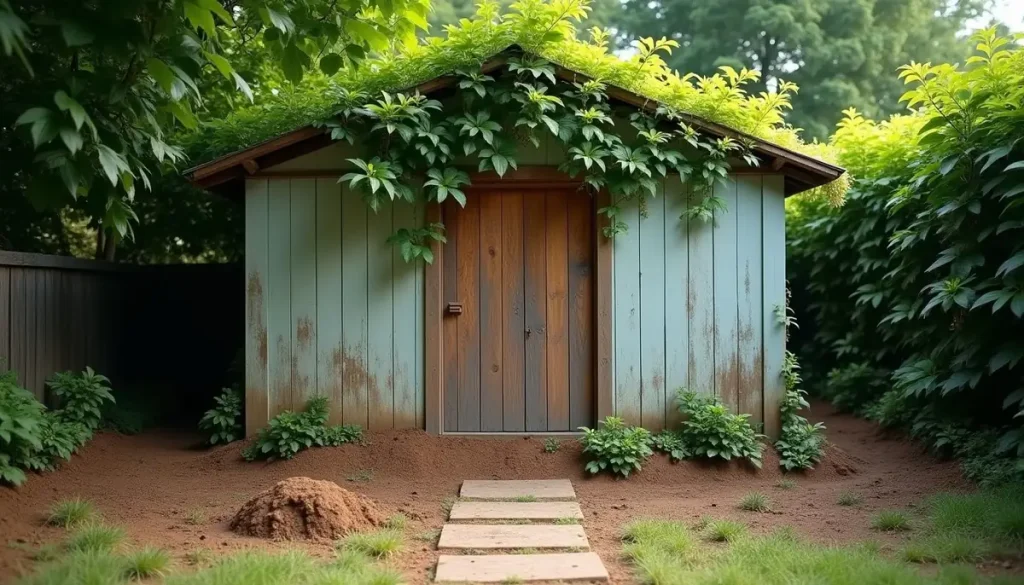
A rat nest is a loose, untidy mass of shredded paper, cloth, insulation, leaves or grass, tucked out of sight, and with Norway rats it usually sits in a chamber at the end of an underground burrow whose opening is 2 to 3 inches across, smooth and packed hard from use. Roof rats nest off the ground instead: in attics, wall voids, palm fronds, ivy and dense shrubs. Nests are seldom seen, so most people find the burrow, the droppings or the runway first. Do not fill an active burrow until the rats are dealt with.
Usually the question starts with a hole by the foundation or a noise in the attic at night. The two point to different rats, with different homes.
What does an actual rats nest look like?
The nest itself is not much to look at. UC IPM says Norway rat nests may be lined with leaves, shredded paper, cloth or other fibrous material. Alberta’s agriculture department describes rat nests as made of almost any material, usually food remains and items such as paper, straw, cardboard, rags or shredded plastic bags, and notes that rats often cache food nearby. Indoors, UC IPM notes that rats shred insulation in walls and ceilings for nesting.
| Norway rat | Roof rat | Woodrat (pack rat) | House mouse | |
|---|---|---|---|---|
| Nest location | Chamber in a burrow, or at ground level | Off the ground: attics, wall voids, trees, palms, vines | Base of cactus, shrubs, trees or rocks; sheds, old vehicles | Wall voids, cabinets, behind appliances |
| What you usually see | Burrow holes 2 to 3 in across with packed, smooth edges | Shredded insulation, nesting debris in roof spaces or fronds | Large, messy pile of twigs and plant material | Loose ball of fine shreds about 4 to 6 in across |
| Materials | Leaves, paper, cloth, fibrous material, food remains | Insulation, paper, plant material | Sticks, plant material, upholstery stuffing | Finely shredded paper and fabric |
| Floor of a building | Basement and ground floor | Upper floors and roof space | Seldom used buildings | Any floor near food |
| Main nearby sign | Runways, rub marks by the hole, blunt droppings to 3/4 in | Swing marks on rafters, pointed droppings about 1/2 in | Stick pile, chewed furniture | Scattered droppings 1/8 to 1/4 in |
A house mouse nest, as our guide to what a mouse nest looks like explains, is a ball of fine shreds about 4 to 6 inches across. Our extension sources give no standard rat nest size, so we quote none; the holes and droppings around it are the giveaway. If you are unsure which animal you have, our guide to rat vs mouse walks through the body, droppings and hole tests.
What does a rat burrow look like?
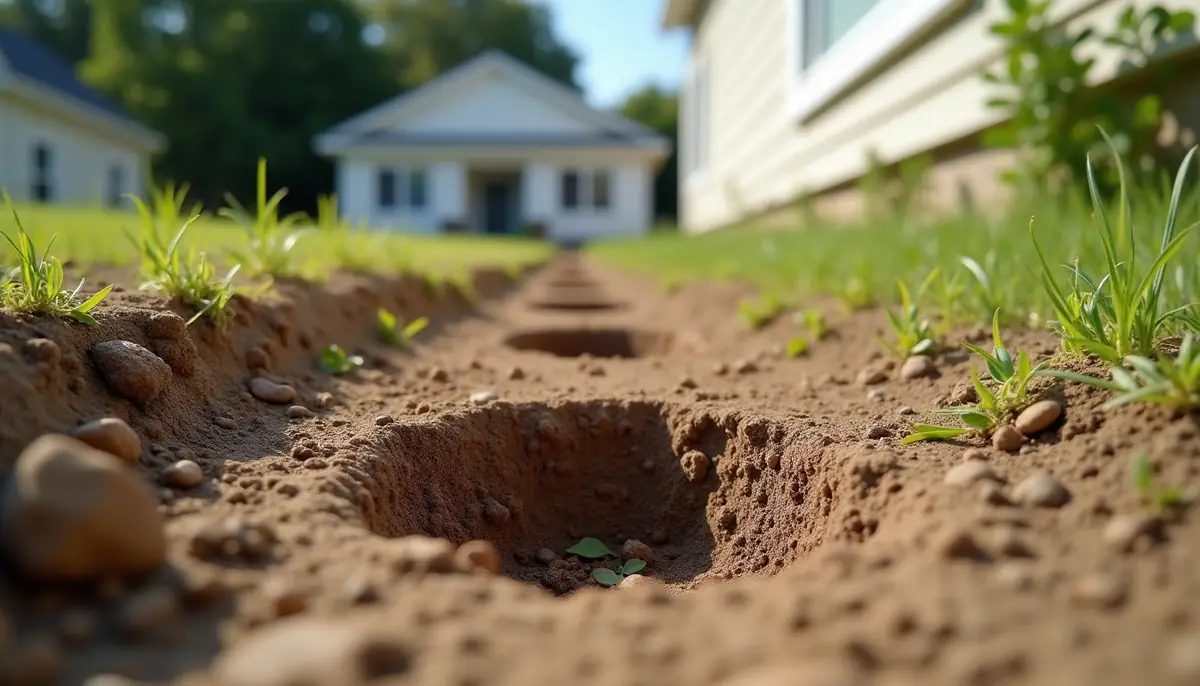
For Norway rats, the burrow is what you will actually find. Extension and health department sources agree closely on the main features:
- Size. Entrances are usually 2 to 3 inches across, according to the Internet Center for Wildlife Damage Management (ICWDM), the University of Nebraska and UC ANR. The NYC Health Department gives a wider range of 1 to 4 inches, in dirt or concrete.
- Smooth, worn edges. Nebraska says the ground at the entrance is worn smooth by frequent use; the New Mexico Department of Health says earth will be packed around active burrows.
- More than one opening. Rats dig extra escape openings, called bolt holes. NYC Health says burrows often have an entrance and an exit.
- Length. UC ANR’s Niamh Quinn gives burrow lengths of 1.5 to 6.5 feet, with a nest chamber and additional exits that are used less often.
- Runways and rub marks. Packed earth paths about 2 inches wide lead to the hole, often with greasy rub marks beside it.
Sources differ on one point. Alberta’s guidance says a rat burrow entrance is clean of debris and excavated soil, unlike those of native rodents, while the Cooperative Extension’s Pests in the Home resource lists fresh dirt fanned out around the opening as a common sign. Both can be true: an established burrow is kept clean, while a newly dug one may still have a spray of loose soil.
Where do rats nest?
Which rat you have decides where to look. UC IPM puts it simply: Norway rats build burrows along building foundations, beneath rubbish or woodpiles, and around gardens and fields, and indoors they tend to stay in basements or on the ground floor. Roof rats usually live and nest above ground and, indoors, favour attics, walls, false ceilings and cabinets.
Norway rats: low and underground
ICWDM lists burrows under buildings, beneath concrete slabs, along stream banks and in dumps, and Utah State University calls Norway rats very common under slabs. In cold climates, ICWDM notes, Norway rats prefer nests near heat sources. UC IPM warns that their burrowing can undermine foundations and slabs, which is the structural reason not to ignore holes beside a house.
Roof rats: high and hidden
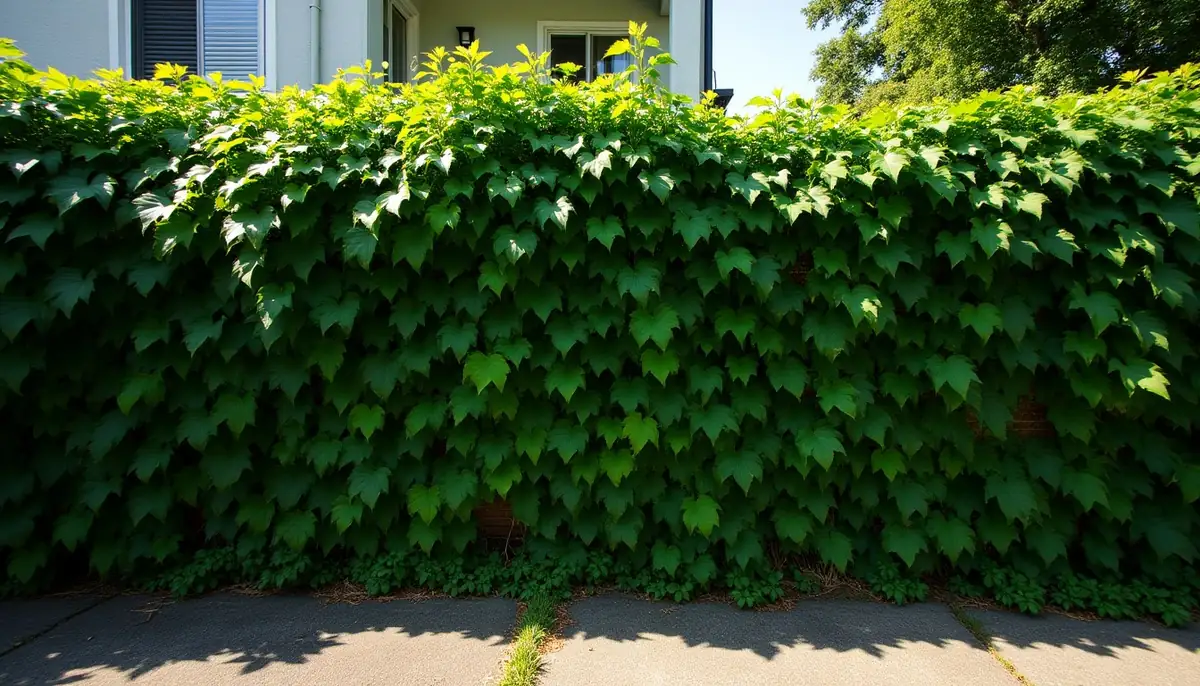
ICWDM says roof rats prefer to nest off the ground and rarely dig burrows if above-ground sites exist. UC ANR’s training material lists the dead fronds of unmanaged palm trees, fence ledges behind thick ivy and vines, wood piles, lumber stacks, the cavities under garden sheds, and, in buildings, attics, soffits, ceiling and wall voids, overhead electrical junction boxes and the tops of structural beams. CDC’s urban rodent survey manual flags ivy, honeysuckle, pyracantha, dense shrubs, vines and palm trees as roof rat harbourage. Our roof rat guide covers their range and control in detail.
Woodrats: the big stick piles
If what you found outdoors is a large heap of sticks, it is probably not a Norway or roof rat at all. The University of Arizona describes pack rat nests as large, messy piles of twigs and other plant material, often at the base of cactus, small trees, shrubs or rock outcrops, and notes that pack rats tear up upholstered furniture and mattresses for nesting and often move into abandoned vehicles. UC IPM’s quick test: woodrats have furry tails, the introduced rats have scaly, mostly hairless ones.
Our analysis of iNaturalist records shows how much the likely answer depends on where you live. New York has 6.9 Norway rat records per 10,000 observations and no research-grade roof rat or woodrat records at all. In Florida the roof rat leads at 1.23. In Oregon, woodrats are recorded at 5.22 per 10,000, well ahead of either introduced rat, and Arizona shows the same pattern at 1.89. These are mostly outdoor sightings, but they suggest where to start looking.
Where do rats live in a house?
When both species share a building, UC IPM says Norway rats usually hold the basement and ground floor and roof rats the upper floors. Common nest sites are wall and ceiling voids, attics, crawl spaces and the voids inside appliances and furniture.
Attic nests are where most of the damage happens. UC IPM warns that roof rats nesting in an attic can cause electrical sparks and fires through gnawing and nest building, and may chew gas lines. If you hear movement overhead, the noise could also be squirrels; our guide to squirrels in the attic explains how to tell.
Signs of a rats nest in the house
You will find the signs before the nest. UC IPM’s checklist includes:
- Noises from the attic or drop ceilings at night.
- Droppings near pet food, in recycling bins, or in drawers and boxes in the garage.
- Smudge marks from fur rubbing on beams, rafters, pipes and walls. The New Mexico Department of Health notes that roof rats leave swing marks beneath beams where they meet the walls.
- Nests behind boxes or in drawers in the garage, and in woodpiles.
- Rats running along utility lines or fence tops at dusk.
- Something digging under a shed or doghouse, or burrows beneath compost or bins.
Our droppings guide shows each species’ droppings to scale.
How to find a rat nest
- Watch after dark. NYC Health suggests watching after sunset to see where rats go for food.
- Follow the runway. Rats use the same routes nightly. Outdoors these show as packed earth paths, and along walls as greasy rub marks. Follow them away from the food.
- Search within the foraging range. Norway rats usually travel an area 100 to 150 feet across and seldom go more than 300 feet from their burrow, according to the New Mexico Department of Health. Roof rats travel 300 feet or more, so the nest may be next door.
- Look low for Norway rats along foundations, under slabs, steps, sheds, decking, woodpiles and dense planting.
- Look high for roof rats in the attic, soffits, palms and ivy, and where branches or cables touch the roof.
Is the burrow active? A simple test
CDC’s survey manual gives the basic rule inspectors use: active burrow entrances do not have cobwebs or other blockages. The New Mexico guidance and UC ANR agree that unused burrows may have cobwebs across the entrance or be covered by vegetation, and NYC Health says inactive burrows often have leaves, cobwebs or other debris around the entrance.
You can use that rule as a test. A technical bulletin on burrow baiting distributed by the Allegheny County Health Department describes the method some professionals use: push a sheet of paper a few inches into the entrance, and if the burrow is still active a rat will push it out or pull it in for nesting material. Check it again over the next few days. A cleared or missing plug means something is using the hole; it does not by itself prove it is a rat, so check the size, the smooth edges and the runway too.
| What you see | Most likely meaning |
|---|---|
| Smooth, packed edges, clear entrance, runway leading in | Active |
| Paper plug pushed out or gone next day | Active, confirm it is a rat |
| Fresh fan of loose soil | Newly dug or being enlarged |
| Cobwebs, leaves or growing plants across the hole | Inactive |
| Plug still in place after several days | Probably inactive |
How many rats usually live in a nest?
There is no fixed number, and the figures quoted online are seldom sourced. What the biology supports: ICWDM says each Norway rat female has her own nest chamber, but females may share a burrow and raise their young together. Litters are 6 to 12 young, born 21 to 23 days after mating, and females can mate again within a day or two of giving birth. So one burrow system can hold several adults plus litters.
Roof rats have litters of 5 to 8 young, according to ICWDM, and UC ANR’s training slides describe them foraging in family groups of about ten. ICWDM notes that young roof rats generally cannot be trapped until about a month old.
When rats are recorded through the year
All three rats are active all year, but our iNaturalist analysis shows different calendars: roof rat records peak in October (405) and November (385), woodrat records in April (614). ICWDM adds that Norway rat breeding often peaks in spring and autumn and can stop in winter, depending on habitat.
Should you destroy a rats nest?
Yes, but in the right order. Removing a nest or filling a burrow while rats are still using it usually backfires:
- Deal with the rats first. The Cooperative Extension’s Pests in the Home resource says to close up the holes after the rats are eliminated, through trapping or baiting, ideally with a pest management professional, and warns that rats sealed inside will cause a strong odour as they decompose. The Allegheny County bulletin adds that caving in burrows during baiting makes rats relocate or kick the bait out.
- Then close the burrows. NYC Health says to fill burrows in soil with sand or gravel and tamp them down hard, or collapse them with a shovel; holes in broken paving get stainless steel mesh topped with cement.
- Remove indoor nests safely. Wear gloves and do not sweep or vacuum dry droppings or nest material. Follow the CDC method in our guide to cleaning up rodent droppings and nests.
- Take away the nest site. UC IPM notes that roof rats have very strong nest site affinity: if nest sites are not removed, rats return. Thin ivy, clear dead palm fronds, raise woodpiles, and cut back branches near the roof.
- Seal the building. UC IPM says to seal all holes larger than a quarter of an inch to exclude both rats and mice. Our guide to rodent exclusion materials covers what rats cannot chew through, and what attracts rats covers the food and cover to remove.
Any rodenticide must be used exactly as the label directs, and in New York only a pest professional may bait commercial or multi-unit properties. Burrows under a slab, rats in the attic or gnawed wiring are jobs for a licensed professional.
Frequently asked questions
What is a rat’s biggest enemy?
There is no single one. House cats, dogs and other predators do kill rats, but University of Nebraska extension says they do not give effective control in most circumstances, and rats often live close to pets because of the food and shelter around them. Hawks and other birds of prey also eat rodents, which is why poisoned rats matter: our rodenticide wildlife exposure data covers the evidence.
Can a rat burrow damage my foundation?
It can. UC IPM states that Norway rats can undermine building foundations and slabs with their burrowing, and ICWDM lists beneath concrete slabs among their usual nest sites. Burrows against a foundation, under a patio or under steps are usually a job for a licensed professional, who can treat the rats before the burrows are closed.
What does a roof rat nest look like?
Usually you see shredded material rather than a neat nest: torn insulation in the attic, debris in soffits, or nesting material among dead palm fronds or behind ivy. Look for pointed droppings about half an inch long and dark swing marks under rafters nearby. ICWDM says roof rats rarely burrow when above-ground sites exist.
Do rats nest in the same place every year?
Often, yes, if the site is still there. UC IPM notes that roof rats have very strong nest site affinity and return to sites that were not removed during clean-up. NYC Health says inactive burrows should be closed because they attract rats and other pests over time. Removing the cover and sealing the burrows is what stops reuse.
Sources
- University of California Statewide IPM Program, Pest Notes: Rats (Publication 74106).
- Quinn, N., Rodent ID, Biology and Behavior, UC Agriculture and Natural Resources training presentation, hosted by Texas A&M AgriLife Extension, 2022.
- Internet Center for Wildlife Damage Management, Norway rat identification and biology; roof rat biology; ground hole identification.
- University of Nebraska-Lincoln Extension, NebGuide G1737, Controlling Norway Rats.
- Centers for Disease Control and Prevention, Integrated Pest Management: Conducting Urban Rodent Surveys, 2006.
- NYC Department of Health and Mental Hygiene, Preventing Rats on Your Property: A Guide for Property Owners and Managers.
- New Mexico Department of Health, Domestic Rats and Mice.
- Cooperative Extension, Pests in the Home: How can I get rid of rat burrows and holes around my house?
- Utah State University Extension, IPM notes: Norway rat.
- University of Arizona Cooperative Extension, Commensal Rodents, Bulletin 12, 1997.
- Alberta Agriculture, Recognizing Rat Presence: What to Look For.
- Burrow Baiting for Norway Rat Control, technical bulletin (Liphatech, 2018), distributed by the Allegheny County Health Department.
- The Pest Control Brief analysis of iNaturalist research-grade records, pulled October 2026.