What Does a Mouse Nest Look Like, and Where to Find One
A mouse nest looks like a loose ball of shredded paper, fabric, insulation or dry plant material, usually 4 to 6 inches across, about softball size or a little larger, tucked into a dark, undisturbed space. It is usually within 10 to 30 feet of food, often near a source of warmth such as a water heater, oven or refrigerator. Look for droppings and food scraps close by, but rarely inside it. If you find one, do not sweep or vacuum it; wet it with disinfectant first, as the CDC advises.
Most people find their first mouse nest by accident: a drawer of shredded napkins, a garage box turned to confetti, a fluffed-up patch of insulation. Here is what a nest looks like, where to look in a house, yard and car, and what to do next.
What a mouse nest looks like, at a glance
| Feature | House mouse nest | What it rules out |
|---|---|---|
| Shape | A rounded ball or loose mound of material “loosely woven together” | Piles of cached food nearby are stash sites, not the nest itself |
| Size | 4 to 6 inches (10 to 15 cm) across | Much bigger masses point to rats, squirrels or woodrats |
| Material | Finely shredded paper, cardboard, cloth, furniture stuffing, wool, insulation, grass | A large heap of twigs suggests a woodrat; deer mice may add twigs to small nests |
| Openings | Several access points, so a mouse can bolt if a predator comes | A single neat hole is not a reliable mouse sign |
| Nearby signs | Droppings 1/8 to 1/4 inch long, a musky smell, gnawed packaging, food caches | Fresh droppings nearby suggest the nest is in use |
| Distance to food | Usually 10 to 30 feet | Rats range 100 to 500 feet, so their nest may be far from the damage |
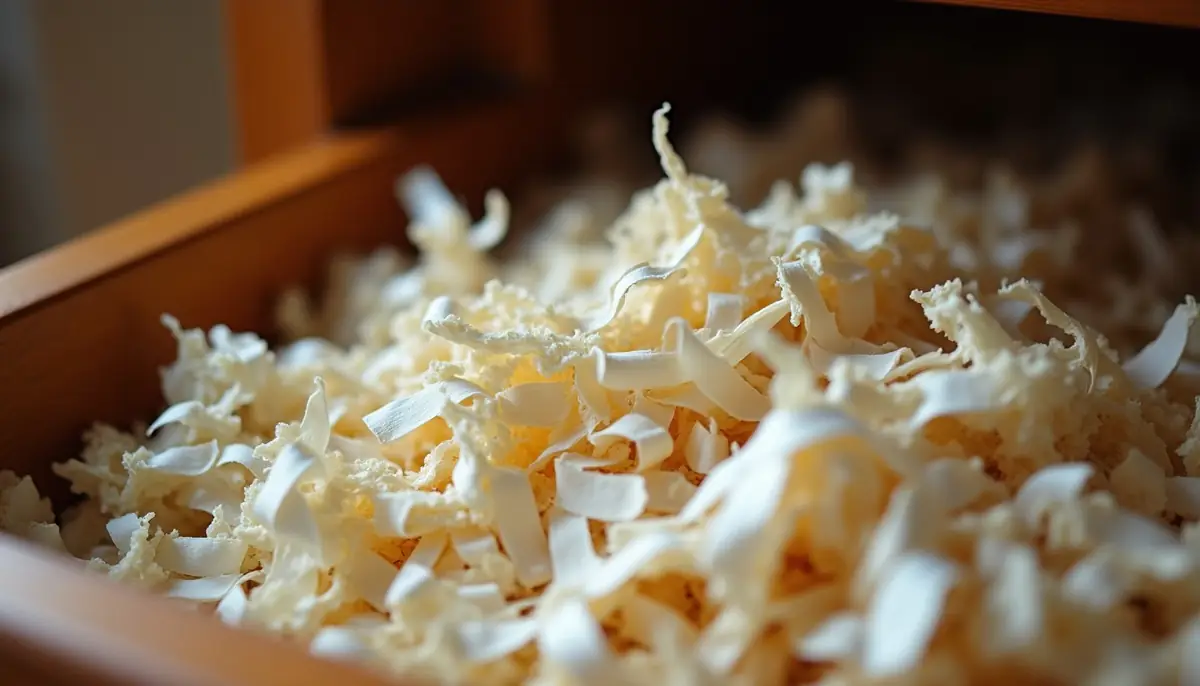
The 1994 University of Nebraska wildlife damage handbook says nests “generally have the appearance of a ‘ball’ of material loosely woven together,” usually 4 to 6 inches in diameter, and University of Arizona entomologists give the same size. UC IPM stresses how fine the shredding is: “finely shredded paper or other fibrous material.”
What does a mouse nest look like inside?
Inside, a mouse nest is bedding rather than architecture. UC IPM describes deer mouse nests of grass, twigs, leaves and roots that “may be lined with fur, feathers, or shredded cloth”; indoors, house mice use whatever the house offers.
Three things inside or beside a nest tell you how active it is:
- Pups. Newborn house mice are hairless with their eyes closed. They are furred with eyes open after about two weeks and begin short trips out of the nest at about three weeks, according to the Nebraska handbook. A nest with pink, hairless pups holds a litter less than about two weeks old.
- Droppings. Arizona extension notes that house mice defecate “at or near where they feed and near, but not in their nest.” Droppings clustered a few feet away, rather than in the bedding, are normal.
- Food stashes. House mice hoard food within their small travel range. Arizona entomologists say caches of pet food, scraps and even rodenticide bait are common finds in infested homes, and pantry beetles and moths can be traced back to a mouse stash or nest.
One correction: a nest is often described online as a dome with one exit hole. NC State Extension says a nest has several access points, “providing a quick exit if a predator comes around.” Do not rule out mice because you cannot find a single neat entrance.
How long a nest stays busy
A nest is a nursery as much as a bed. NC State notes female house mice often live in extended family groups that share a nest and raise young together, so one nest can hold several adults and more than one litter.
Sources differ on litter size. UC IPM and the Nebraska handbook give litters of about 5 or 6 pups, with 5 to 10 litters a year, while NC State gives an average of 10 to 12. Either way, a nest that has been in use since late summer has probably produced more than one litter by October. More on breeding speed is in our guide to how long mice live.
Where do mice usually nest in a house?
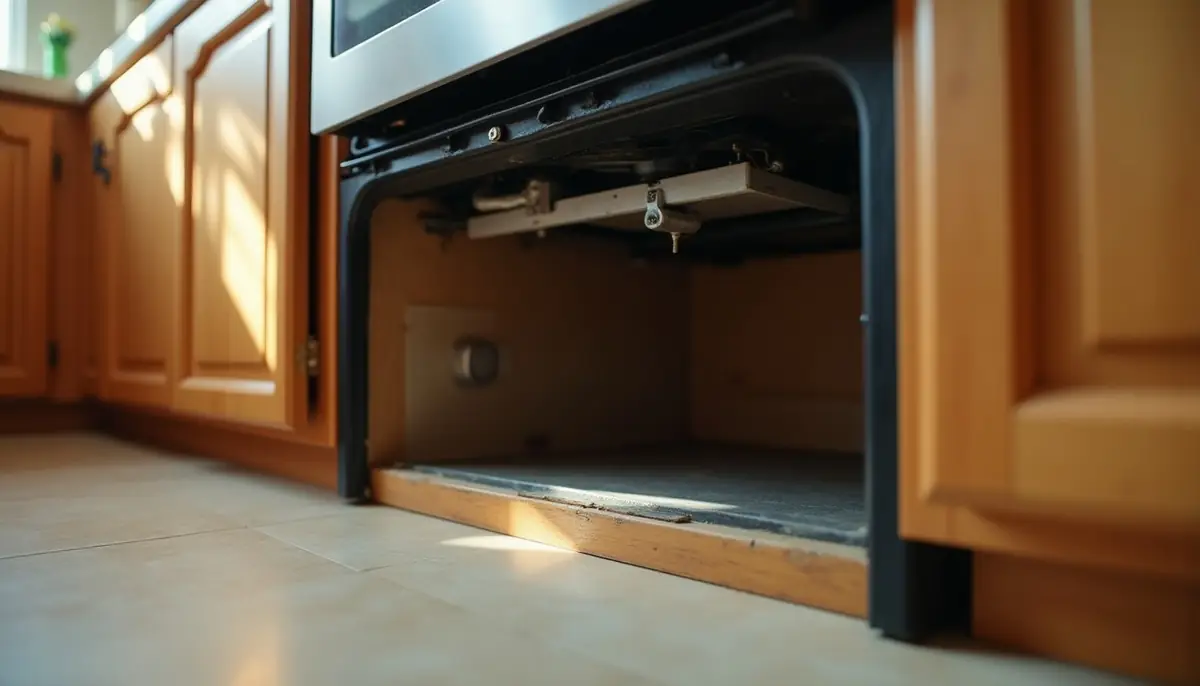
Nebraska extension says nests are found “in sheltered locations in proximity to heat sources (e.g., water heaters, ovens, refrigerators),” and advises starting inspections within 50 feet of food in places that also offer warmth and protection from predators.
| Location | What draws mice there | Usual nest material | How to check |
|---|---|---|---|
| Behind and under the refrigerator, stove or dishwasher | Warmth from motors and pilot lights, crumbs | Insulation, paper, food packaging | Pull the appliance out; check the kick plate and motor area with a torch |
| Kitchen and bathroom cabinets | Food, pipe gaps through the cabinet back | Paper towels, napkins, bags | Empty the cabinet under the sink; look where pipes enter |
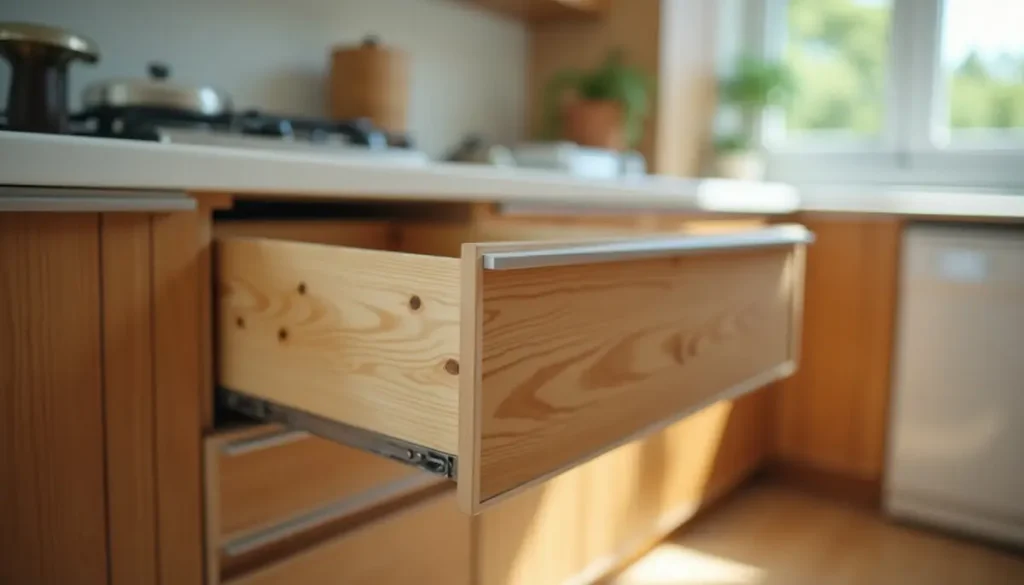
| Drawers and stored boxes | Undisturbed space, ready-made paper | Shredded documents, tissues, clothing | Open drawers you rarely use; lift boxes rather than sliding them |
| Wall voids and ceilings | Enclosed, warm, near travel routes | Insulation, chewed drywall paper | Listen at night; see our guide to mice in walls |
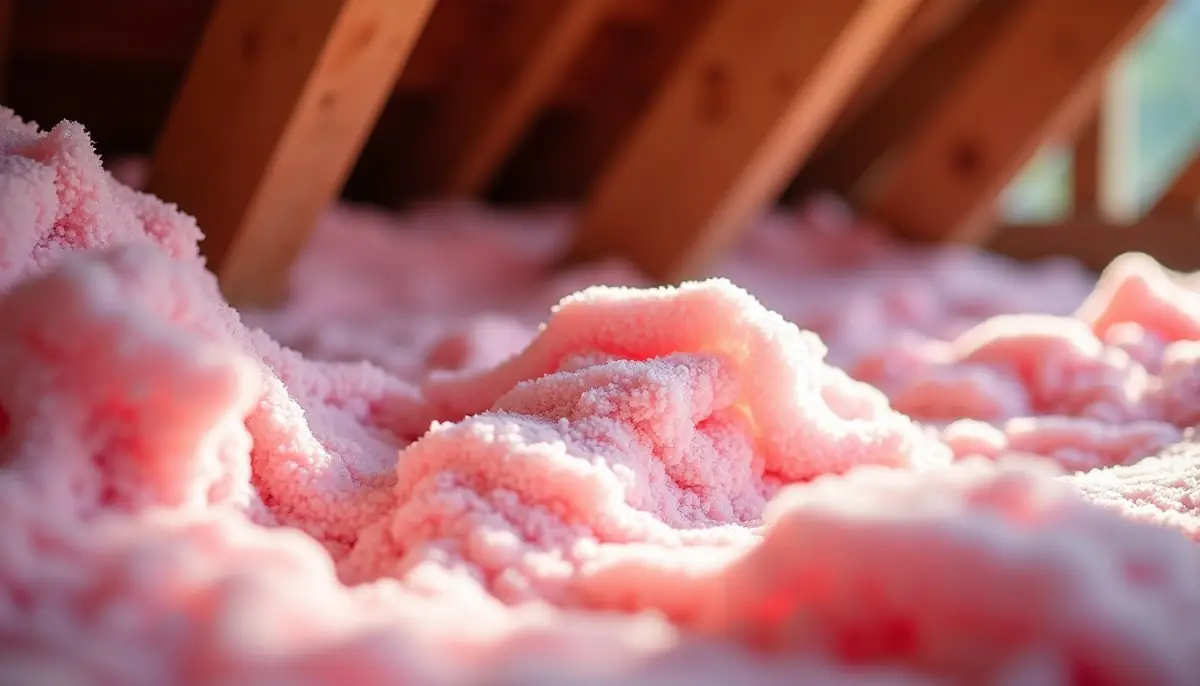
| Attic and loft insulation | Loose fill and batts are nest material in place | Fibreglass, cellulose, rigid foam | Look for tunnels, fluffed patches and droppings on joists |
| Upholstered furniture and mattresses in storage | Stuffing to shred, dark cavity | Batting, foam, fabric | Check the underside of sofas and stored mattresses |
| Garage, shed and cabin | Clutter, birdseed and pet food, little disturbance | Rags, cardboard, grass, insulation | Check behind stored items, in drawers and under workbenches |
| Vehicles | Sheltered engine bay, cabin air filter | Engine insulation, filter material, leaves | See the vehicle section below |
Insulation deserves a mention: Arizona extension notes that mice nest within insulation and carry it to other nest sites, and the Nebraska handbook calls mice “very destructive to rigid foam, fiberglass batt, and other types of insulation.”
How to find a mouse nest in your house
The single most useful fact is range. The Nebraska handbook reports that a house mouse usually travels an area averaging 10 to 30 feet across and “seldom” goes further for food or water, and UC IPM says house mice “seldom venture more than 30 feet from their nest sites and food supply.” UC rodent specialist Niamh Quinn notes that mice in very tidy environments can travel 75 feet or more, so the 30 foot rule is a starting point, not a boundary.
- Start at the freshest damage. Find the spot with the newest droppings or gnawing, then search everything enclosed within about 30 feet of it.
- Follow the warm spots. Check the backs and undersides of appliances, the water heater closet and the furnace area first.
- Look for the material, not the mouse. Chewed paper towels, a box corner gnawed open or a missing chunk of insulation shows where nest material came from; the nest is usually nearby.
- Map the activity. The handbook suggests flour or talc patches at 20 to 30 foot intervals: the number of patches with tracks after 24 hours shows where mice are busiest.
Our checklist of signs of mice covers droppings, rub marks and sounds. Many nests sit inside walls and are never found; trapping along the routes between nest and food works whether or not you see it.
What does a mouse nest look like in the ground?
House mice are not only indoor animals. The Nebraska handbook notes they live in fields and agricultural land and “may burrow into the ground in fields or around structures when other shelter is not readily available,” with nests in the ground or “in any sheltered location.” Outdoors, expect the same ball of shredded fibre, made from dry grass and plant material, in a burrow, a woodpile or under debris.
Deer mice, which are native, nest in tree hollows, stumps and roots, under rocks and logs, and sometimes in abandoned squirrel and bird nests, according to UC IPM. A burrow opening 2 to 3 inches wide along a foundation, with smooth, worn earth, is more likely a Norway rat; see what a rat nest looks like for the comparison.
What does a mouse nest look like in a car?
Public Health Seattle and King County says rodents nest in vehicles, especially ones not used often, in the engine compartment and its insulation, the heating and air conditioning ducts and filter, the trunk and spare tyre well, the headliner, glovebox and seats, and the light housings. Under the bonnet, nests are commonly between the battery and the frame, near the wiper motors, or under the air intake ducting and in the air filter.
A car nest is a pad of whatever was to hand: leaves, grass, engine bay insulation, chewed filter material. King County notes that nest material in the air intake system can cause odours inside the passenger compartment and, in bad cases, weaken engine performance or stop the vehicle starting. King County advises opening the bonnet outdoors and airing the engine compartment for 20 minutes, disconnecting the battery before removing nest material, not using a pressure washer to dislodge nests, and replacing a nest-filled air filter. Where an infestation is extensive, hoses, ductwork, filters or fans may need replacing, which is a job for a mechanic.
Deer mouse nests in sheds, cabins and garages
If the building has been shut up for months, as a cabin, shed or summer house often is, assume the nest could be a deer mouse nest. UC IPM notes deer mice “often enter vacated homes, cabins, and other structures where they build nests and store food,” and that their nests and droppings look similar to those of house mice. Deer mice shed hantavirus in saliva, urine and droppings, and UC IPM lists breathing contaminated dust after disturbing droppings or nests among the ways people are exposed.
Our analysis of iNaturalist records shows where deer mice are most often recorded relative to all wildlife sightings: Vermont, Montana, Oregon and Massachusetts lead, at 2.7 to 4.3 records per 10,000 observations. These are mostly outdoor sightings, not counts of nests in buildings. The full cleanup protocol is in our guide to hantavirus and mouse dropping cleanup; it applies to any nest in a closed building.
What happens if you disturb a mouse nest in your house?
Two things. First, dust. CDC advises against vacuuming or sweeping rodent urine, droppings or nesting material because “this can cause tiny droplets containing viruses to get into the air.” Second, the mice do not leave. They live within about 30 feet of the nest, and removing it takes their bedding, not the animals. If you can, leave it, trap along the runs nearby, and remove it once catches stop.
How do I get rid of a mouse nest?
- Deal with the mice first. Trap along walls and near the nest; our guide to how to catch a mouse covers trap choice and placement.
- Ventilate. CDC says to open doors and windows for 30 minutes before cleaning.
- Glove up and wet it down. Wear rubber or plastic gloves. Spray the nest and surrounding area with a 1 to 9 bleach solution (1.5 cups of bleach to a gallon of water) or an EPA-registered disinfectant until soaked, and leave it 5 minutes or as long as the label says.
- Bag and bin it. Lift it with paper towels into a plastic bag, seal it, and put it in a covered bin. Disinfect the area again and wash your hands.
- Close the gap. UC IPM notes house mice can squeeze under gaps a quarter inch tall and through openings 3/8 inch wide. Seal gaps on the outside of the house, or the next nest will be in the same place.
Large nests in attic insulation, heavy droppings, or nests in a closed cabin where deer mice are likely are reasonable jobs for a licensed pest professional, who can also do the exclusion work.
Mouse nest or something else?
- Rat nest: bigger, often in burrows along foundations, under woodpiles or rubbish (Norway rats) or in attics, trees and dense ivy (roof rats). UC IPM says Norway rats forage 100 to 500 feet from nests, so the nest may be far from the damage.
- Squirrel nest: far larger, with noise mostly by day; see squirrels in the attic.
- Pack rat midden: in the arid West, Arizona extension describes woodrat nests as “large, messy piles of twigs and other plant materials,” far bigger than any mouse nest.
Frequently asked questions
How do you know if there is a mouse nest?
The nest itself is often hidden, so you usually infer it. Fresh droppings 1/8 to 1/4 inch long, gnawed packaging, shredded paper or fabric, a musky smell and scratching at night all mean a nest is probably within about 30 feet. Material missing from a box, a roll of paper towels or a patch of insulation usually points straight to it. Pups, warmth or fresh droppings nearby mean the nest is in use.
What happens if you disturb a mouse nest in your house?
Disturbing a dry nest can put dust from urine and droppings into the air, which is why CDC advises never sweeping or vacuuming nest material. The mice also stay put: they live within about 30 feet of the nest and will rebuild with whatever is nearby. Trap first, then ventilate, soak the nest with disinfectant, bag it and seal the entry gaps.
How do I get rid of a mouse nest?
Remove the mice with traps first, then open windows for 30 minutes. Wearing rubber or plastic gloves, soak the nest and surrounding area with a 1 to 9 bleach solution or an EPA-registered disinfectant, wait 5 minutes or as the label directs, lift it with paper towels into a sealed bag and bin it. Disinfect again and seal any gaps a quarter inch or larger.
Where do mice usually nest in a house?
Close to food and warmth. Nebraska extension lists sheltered spots near water heaters, ovens and refrigerators; the commonest finds are behind and under kitchen appliances, in cabinets under sinks, in rarely opened drawers and stored boxes, inside wall voids, and in attic insulation. In garages, sheds and cabins, mice nest among clutter, in stored furniture and in boxes, particularly where birdseed or pet food is kept.
Sources
- Timm, R.M., House Mice, in Prevention and Control of Wildlife Damage, University of Nebraska Cooperative Extension, USDA APHIS and Great Plains Agricultural Council, 1994.
- University of Nebraska-Lincoln Extension, G1105: Controlling House Mice, Vantassel, Hygnstrom and Ferraro, revised 2012.
- University of California Statewide IPM Program, Pest Notes: House Mouse, UC ANR Publication 7483, Quinn and Frye, revised July 2025.
- University of California Statewide IPM Program, Pest Notes: Deer Mouse, UC ANR Publication 74161.
- University of California Statewide IPM Program, Pest Notes: Rats, UC ANR Publication 74106.
- Nair, S. and Li, S., Keep House Mice Away This Winter, Department of Entomology, University of Arizona, in Pests and Pesticides in Child-serving Facilities: An IPM Newsletter, December 2023.
- University of Arizona Cooperative Extension, Commensal Rodents.
- NC State Extension, Biology and Behavior of Common Structure-Invading Mice, and Surveillance and Management of Common Structure-Invading Mice, Hayes and Alder, 2024.
- Quinn, N., Rodent identification, biology and behaviour, presentation hosted by Texas A&M AgriLife Extension Entomology, 2022.
- Public Health Seattle and King County, Cleaning rodent-infested vehicles.
- US Centers for Disease Control and Prevention, How to Clean Up After Rodents.
- The Pest Control Brief analysis of iNaturalist research-grade records, pulled October 2026.