Pack Rats (Woodrats): Nests, Car Wiring and Getting Them Out
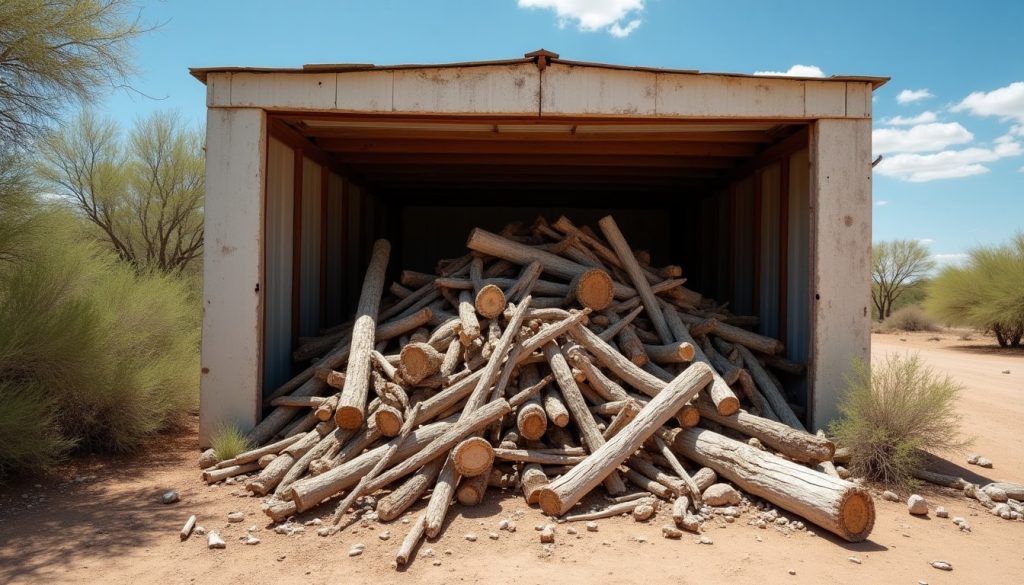
Pack rats are native North American woodrats (genus Neotoma): soft-furred, big-eared rats with a furry tail that build large stick nests, called middens, and carry off small shiny objects. They are commonest in the West and Southwest, where they move into sheds, cabins, attics and the engine bays of parked vehicles and chew wiring. Unlike roof and Norway rats they show little fear of new objects, so snap traps usually work quickly; the lasting fix is sealing gaps over half an inch and clearing nests with the CDC’s rodent cleanup precautions.
Pack rats are not the city rats most people know. They are wild native rodents, they behave differently around traps, and in parts of the country some are legally protected, which changes what you can do about them.
What is the difference between a rat and a packrat?
The rats that live in and around buildings across the US, the Norway rat and the roof rat, are introduced Old World species. Pack rats are native woodrats. The Internet Center for Wildlife Damage Management says they are about the size of a Norway rat but are distinguished by a hairy rather than scaly tail, soft, fine fur and large ears, usually with light-coloured feet and bellies. UC IPM gives the same quick test: woodrats have furry tails, while the introduced rats have scaly, mostly hairless ones.
| Pack rat (woodrat) | Roof rat | Norway rat | |
|---|---|---|---|
| Origin | Native to North America | Introduced | Introduced |
| Tail | Furred, like a short-haired squirrel tail | Scaly, longer than head and body | Scaly, shorter than head and body |
| Size | Body 6 to 7 in; 12 to 14 in with tail | Body about 5 to 8 in | Largest of the three |
| Ears and eyes | Large, rounded, hairy ears; large dark eyes | Large ears, pointed muzzle | Smaller ears, blunt muzzle |
| Nest | Stick house or midden, up to 3 to 5 ft across | Attics, palms, ivy, trees | Burrows by foundations |
| Around traps | Little fear of new objects, easy to trap | Strongly wary of new objects | Wary of new objects |
| Typical setting | Rural edges, cabins, sheds, parked vehicles | Coastal and southern towns | Towns and farms nationwide |
| Legal status | Native wildlife; some species protected | Not protected | Not protected |
The University of Arkansas describes a male woodrat as about the size of a small squirrel, with females slightly smaller. The Internet Center covers eight North American species; UC IPM names the dusky-footed woodrat and the desert woodrat as the most common in California, and Arizona Extension lists six species commonly met in Arizona and the desert Southwest.

Why are they called pack rats?
Because they pack things away. The Internet Center says woodrats collect food and objects, particularly shiny ones, and the collections on or near their dens are called middens. Montana Fish, Wildlife and Parks explains the other nickname: when a woodrat finds an interesting object it drops or trades what it is carrying for the new item, hence “trade rat”. Arizona Extension lists coins, small jewellery, bits of mirror and metal spoons, with sticks, nuts or cactus pieces left behind in exchange. The Internet Center adds can tabs and cooking and eating utensils.
Where pack rats live
Montana’s wildlife agency says woodrats are found throughout most of the United States, from hot deserts to cold rocky slopes above the timberline, according to the Internet Center. To see where they are actually met, we counted research-grade iNaturalist records of the genus Neotoma per 10,000 observations of anything in each state.
Of 5,612 US woodrat records, California holds 49.6 per cent and Oregon 20.8 per cent. Adjusted for recording effort, Oregon leads by a wide margin (5.22), followed by Nevada (2.71), Arizona (1.89) and California (1.70), with the Great Plains states of Nebraska, Montana and Kansas next. Woodrats were recorded in 35 states. These are photographed sightings, mostly outdoors, so they show where woodrats are seen, not where they cause the most damage.
Signs of pack rats
- A stick nest. Montana’s wildlife agency describes beaver-dam-shaped structures of branches, twigs and debris up to 4 feet across; Arizona Extension gives ground dens of 3 to 5 feet in height and diameter. They turn up at tree bases, on ledges, under cactus, and in attics, wood sheds and parked vehicles.
- Missing small objects replaced by sticks, nuts or debris.
- Latrines. Woodrats pile droppings in one place, often on a rock or ledge, with a smelly, sticky, black tar-like substance. For telling droppings apart, see our droppings identification guide.
- Trails to the outside. When woodrats nest in buildings they usually keep feeding outdoors, and the Internet Center says trails 3 to 4 inches wide from the building to the outside may be visible.
- Shredded upholstery and mattresses used as nest lining, and clipped twigs or debarked fruit trees and saplings outside.
- Chewed wiring in vehicles, equipment and occasionally homes.
Woodrats are nocturnal and active year-round, feeding in winter on vegetation stored the previous autumn, according to Montana’s wildlife agency. In our iNaturalist analysis their share of all records peaks in November and December (178 and 177) and bottoms out in June (44), the same shape as roof rats. Raw monthly records vary much less, from 381 in February to 614 in April, so the winter peak mainly reflects woodrats staying visible while insects and plants fade. In practice that means there is no safe month to leave a nest alone.
Pack rats in the car engine
Parked vehicles are one of the most expensive places to find a woodrat. The Internet Center says woodrats may take up residence in parked vehicles, gnawing on wires and other mechanical components, and Montana’s agency adds farm equipment and vehicles parked for long periods, where they also build large nests. Arizona Extension says pack rats occasionally damage vehicles and wiring in homes.
- Check under the hood of anything that sits for days: sticks, leaves, cactus pieces or shiny items on the engine, and droppings or chewed insulation.
- Remove nest material and move the vehicle regularly. Montana’s agency says removing nesting materials and periodically moving equipment will discourage woodrats, and trapping can eliminate them. Wear gloves and wet the material down first, as below.
- Use a weighted car cover. UC IPM says the cover must touch the ground, forming a seal all round the vehicle, and warns that managing rodents in the wider landscape will still be needed.
- Seal the garage so the car is parked inside a rodent-proof space; see step 2 in the next section.
- Get chewed wiring checked by a mechanic before relying on the vehicle, since UC IPM notes rodent chewing of engine wiring leads to significant malfunctions.
Are pack rats dangerous?
Not aggressive, but their nests deserve respect. The Internet Center says woodrats can be an important factor in transmitting plague where the disease occurs, and that dead or dying woodrats should not be handled. UC IPM notes plague occurs in California in wild ground squirrels, chipmunks and sometimes woodrats. Arizona Extension adds that white-throated pack rats are reported to carry arenaviruses that occasionally infect people who breathe the virus in when droppings or nest material are disturbed, that nests harbour mites, ticks and fleas, and that middens are common breeding sites for kissing bugs, which can crawl indoors from a midden built against a house.
Hantavirus is the question most people ask. The CDC names the deer mouse as the carrier of the most common hantavirus causing illness in the US; woodrats are not on its list of main hosts. But you rarely know which rodents have used an old shed or cabin, so treat every nest and latrine the same way. The CDC says to air the space for 30 minutes, wear rubber or plastic gloves, never sweep or vacuum droppings or nest material, soak it with 1 part bleach to 9 parts water or an EPA-registered disinfectant for 5 minutes, then bag it. Our hantavirus cleanup guide has the full sequence. If you feel ill after cleaning out a nest, tell a doctor about the exposure.
How to get rid of pack rats
1. Trap first
Here pack rats are easier than city rats. The Internet Center says most woodrat problems in structures can be dealt with using one or several traps, because woodrats show little fear of new objects and are easily trapped. The standard rat snap trap works well, with bait wedged into or tied to the trigger; good baits include nuts, bacon rind, peanut butter and oatmeal, prunes, raisins and dried fruit. Put traps on the trails and near the nest or entry point, out of reach of children, pets and other animals.
Live trapping and moving the animal is not recommended: the Internet Center says release may be against local wildlife regulations and that relocated animals often die. The Internet Center says that in most states woodrats are nongame animals that can be controlled when they threaten or damage property, but rules vary. In Arizona, native rodents are nongame mammals protected by state law, although controls can be used when they cause significant property damage or disease carriers infest buildings. Some subspecies are protected outright, such as the Key Largo woodrat, federally listed as endangered in 1991. Check your state wildlife agency’s rules first.
2. Seal the building
The Internet Center calls exclusion the most effective way to stop damage around buildings and says no hole larger than 1/2 inch (13 mm) should be left unsealed. Woodrats climb, so attic vents, broken shingles and gaps at the eaves count as much as the foundation. Coarse steel wool, wire screen and sheet metal hold; plastic and wood are likely to be gnawed. Our guide to rodent exclusion materials covers what lasts.
Make sure no woodrat is shut inside. The Internet Center suggests a temporary one-way gravity door of sheet metal or rigid mesh, hinged at the top, over the entry hole: the animal can push out but not back in.
3. Remove the midden
Once the animals are gone, take the nest apart using the CDC precautions above. The Internet Center says destroying nests before control is time-consuming and of limited value, but afterwards may reduce invasion by other woodrats. Arizona Extension advises checking cactus and dense plants for new nests, keeping yards free of fallen fruit and debris, and fixing irrigation leaks.
4. Leave poison out of it
Poison is a poor tool for homeowners here. Montana’s wildlife agency says most rat poisons should be used only under professional supervision, and the Internet Center warns that woodrats carry pellet bait off to cache in the nest and fill bait boxes with sticks, which wastes bait and puts other animals at risk. With pets, children and protected native wildlife nearby, snap traps are usually the better choice. Repellents are no answer either: the Internet Center says none are registered for woodrats.
When to call a professional
One woodrat in a shed or engine bay is usually a DIY job with a couple of snap traps. Call a licensed wildlife or pest control professional if nests are inside walls or the attic, if more keep arriving after you have trapped and sealed, if a large midden needs clearing from a crawl space, or if you are unsure whether the species is protected. Our guide to wildlife removal costs explains what that work usually includes.
Frequently asked questions
Are pack rats hard to get rid of?
Not usually, compared with city rats. The Internet Center for Wildlife Damage Management says woodrats show little fear of new objects and are easily trapped, so one or several snap traps settle most problems. The hard part is keeping them out: sealing every gap over half an inch, including at roof level, and clearing the nest so others do not move in. Vehicles and open outbuildings are the hardest to protect.
Are pack rats good for anything?
Yes, to science. Their middens preserve plant and animal remains so well that, according to the US Geological Survey, scientists can reconstruct plant communities from as long ago as 50,000 years, which makes them a valuable record of past climate. That value does not extend to a nest in your car.
How big are pack rats?
Arizona Extension gives a body of 6 to 7 inches and 12 to 14 inches including the tail. The Internet Center for Wildlife Damage Management says woodrats are about the size of a Norway rat, and the University of Arkansas compares a male to a small squirrel. The furry tail, big ears and soft fur make them look larger and cleaner than introduced rats.
Do pack rats carry hantavirus?
The CDC names the deer mouse as the carrier of the most common hantavirus that causes illness in the US, and woodrats are not among its main hosts. Woodrats can carry other problems, including plague where it occurs, arenaviruses in white-throated woodrats, and parasites. Because you cannot tell which rodents used a nest, clean any midden with the CDC’s wet-cleaning method.
Sources
- Internet Center for Wildlife Damage Management, Woodrats: identification, biology, damage identification, prevention and control methods and handling, based on T.P. Salmon and W.P. Gorenzel, Prevention and Control of Wildlife Damage, 1994.
- University of Arizona Cooperative Extension, School and Home IPM: Pack Rats, S. Nair and D.H. Gouge, July 2023.
- University of California Statewide IPM Program, Pest Notes: Rats, UC ANR Publication 74106, N.M. Quinn, updated 2025.
- Montana Fish, Wildlife and Parks, Living With Woodrats (Pack Rats).
- University of Arkansas Cooperative Extension Service, Musings on Nature: Pack Rats.
- Centers for Disease Control and Prevention, How to Clean Up After Rodents, 2024; and About Hantavirus.
- US Geological Survey, Prehistoric Packrats Piled Up Clues to Climate Change, Fact Sheet 2008-3053, K.L. Cole, 2008.
- The Pest Control Brief analysis of iNaturalist research-grade records, pulled October 2026.