What Attracts Mice to a House, and What Keeps Them Coming

Mice are attracted to a house by shelter first and food second: a warm, undisturbed space reachable through a gap of about a quarter of an inch, close to seeds, grain, pet food or crumbs, with soft material to nest in. UC IPM notes that house mice frequently enter homes in autumn as night temperatures fall. They prefer seeds and grain over cheese, can live without drinking water, and seldom range more than 30 feet from their nest, so a clean house with an open gap can still get mice.
Most lists treat every attractant as equal. The extension research does not: a gap, a sack of birdseed or a box of old clothes matters far more than water or cheese, and the idea that clean homes do not get mice is wrong. This guide ranks them, goes room by room, and adds our own analysis of when mice are seen.
What attracts mice, ranked by how much it matters
| Attractant | Why it draws mice | How much it matters | What to do |
|---|---|---|---|
| Gaps of a quarter inch or more | House mice squeeze under gaps a quarter inch tall and through openings 3/8 inch wide | Highest: without a way in, nothing inside matters | Seal with metal, mortar or hardware cloth |
| Warm, undisturbed shelter | Cold autumn nights push outdoor mice into buildings | Very high in autumn | Declutter storage areas, keep boxes off the floor |
| Seeds and grain | The house mouse’s preferred food | High | Store birdseed, grass seed, cereal and pet food in metal or hard plastic with tight lids |
| High-fat, high-sugar food | Bacon, chocolate, butter and nuts may be preferred even when grain is present | High where it is left out | Seal containers, clear crumbs and dirty dishes at night |
| Nesting material | Nests are balls of shredded paper, burlap and fabric | High for breeding females | Swap cardboard boxes for lidded plastic tubs |
| Dense vegetation, woodpiles, debris | Cover and a staging area close to the wall | Moderate | Trim shrubs, move woodpiles and compost away from the house |
| Water | House mice get most of their moisture from food | Lower than for rats | Fix leaks anyway: it helps with rats and insects |
| Cheese | Not on the extension list of preferred foods | Low: a cartoon myth | Nothing specific |
The ranking follows the University of Nebraska wildlife damage handbook and UC IPM, which calls exclusion “the most successful and permanent form of house mouse control.”
Shelter and warmth: why mice arrive in autumn
UC IPM states that where outdoor populations of house mice exist, they “frequently enter homes in autumn when nighttime temperatures become colder.” The Nebraska handbook, written by Robert Timm of the University of California, says the onset of cold weather each fall in temperate regions may cause mice to move into structures in search of shelter and food. Shelter comes first in that sentence for a reason: a mouse that has found a warm wall void will find food from there.
Our analysis of iNaturalist research-grade records shows the pattern. US house mouse records climb from 235 in June to 443 in October, their highest month, then ease to 393 in November. Deer mice, which live mostly outdoors and which UC IPM says are only sometimes found in homes and outbuildings, peak much earlier, at 1,015 records in May. The house-dwelling species is the one whose sightings climb into autumn.
These are photographs people took, mostly outdoors, so they show when mice are noticed rather than how many homes are infested, but they match the extension guidance. Our guide to mice in walls covers the autumn noises in detail.
Food: what mice actually want to eat
The Nebraska handbook is specific: house mice “eat many types of food but prefer seeds and grain.” It adds that foods high in fat, protein or sugar “may be preferred even when grain and seed are present,” and lists bacon, chocolate candies, butter and nutmeats. UC IPM says the species arrived in North America with European settlers and keeps close to people because of “our habit of storing their preferred food sources, cereals and grains.”
The cheese myth
Cheese is not on either list. Neither extension source names it as a preferred food, and the trap baits extension services recommend (peanut butter, nutmeats, bacon, cotton wool) do not include it. A mouse will eat cheese, as it samples almost anything, but grain, seed and fatty or sugary foods are what draw it.
Why small amounts of food are enough
A house mouse eats about 3 grams of food a day, according to the Nebraska handbook, and UC IPM says it eats in about 200 small meals each night. So a few crumbs or a split bag of birdseed can support mice for weeks, and cutting off one food source rarely starves them out.
Seed, pet food and the garage
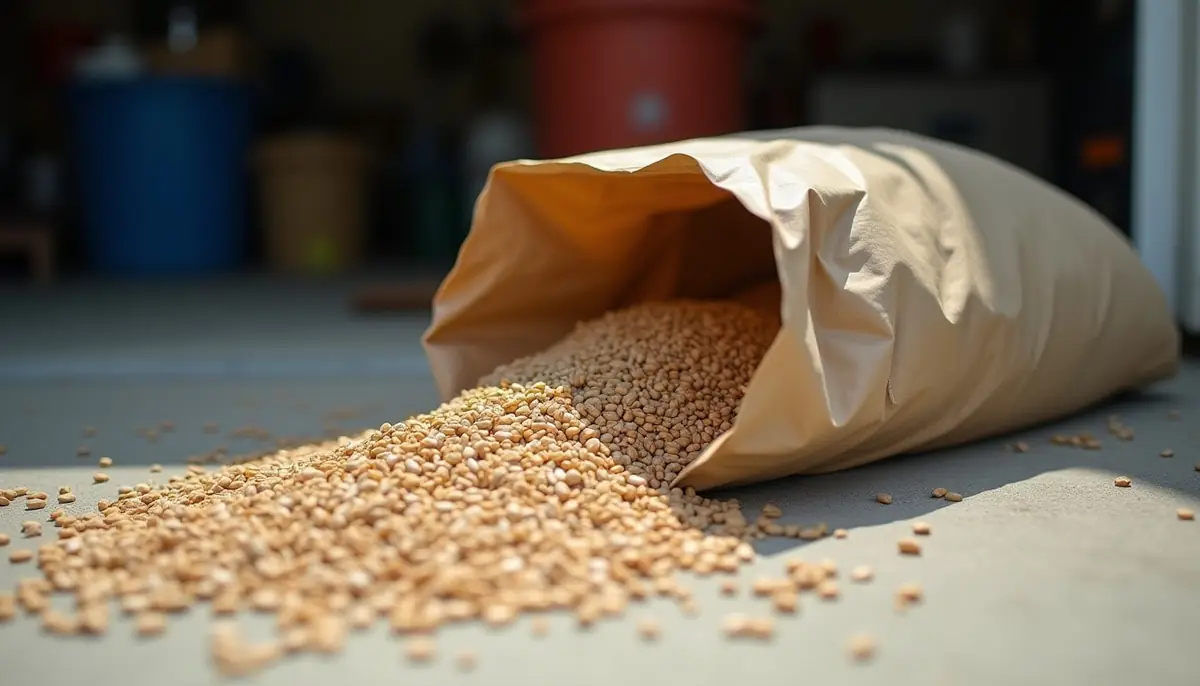
The biggest food store in many homes is in the garage. Los Angeles County’s environmental health bulletin names bird seed, fallen fruit, nuts and dog droppings as rodent foods, and says to store pet food in metal containers with tight-fitting lids and not leave it out overnight. Paper sacks of seed and dry pet food are an open buffet for a species that prefers seed.
Water matters less for mice than you have been told
Many lists put leaks near the top. For house mice the evidence says otherwise. UC IPM states that house mice “do not need to drink water to survive” and will seek liquids only if they are not getting enough moisture from their food or live somewhere hot and dry. The Nebraska handbook agrees: unlike Norway and roof rats, house mice can survive with little or no free water, although they readily drink when it is available.
Fix leaks anyway, because rats do need water. Just do not expect a dry kitchen to keep mice out. Water is a real attractant for rats, one of several differences we set out in what attracts rats.
Nesting material: paper, fabric and insulation
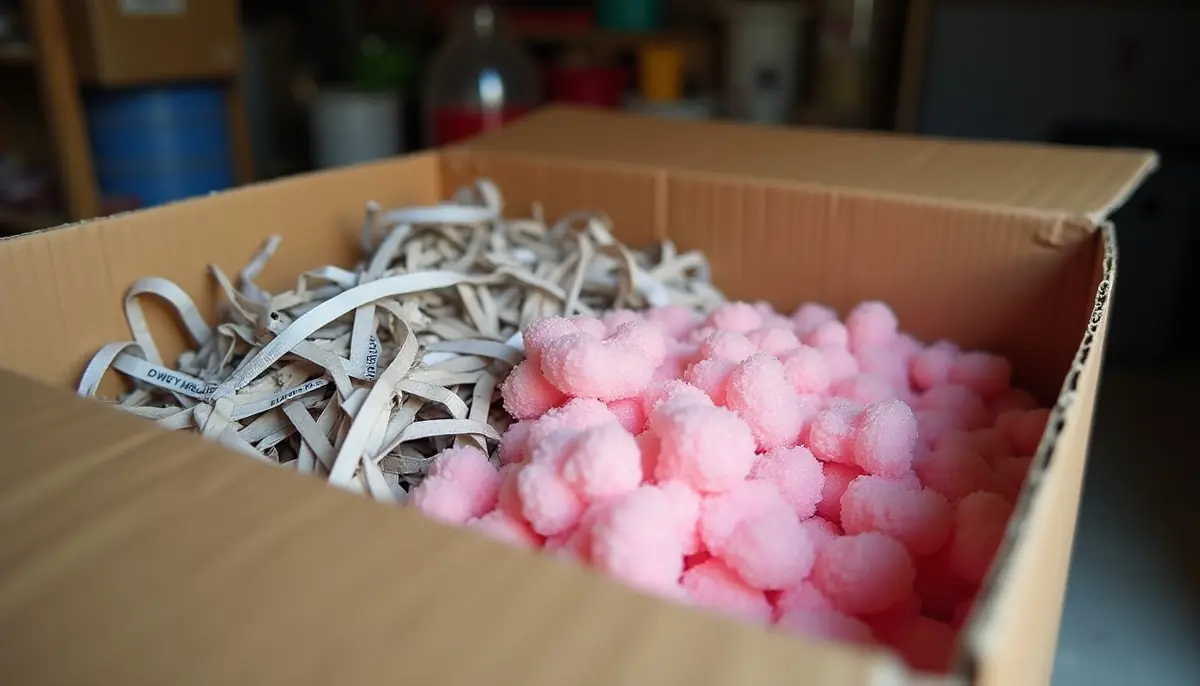
House mouse nests are built in sheltered spots from finely shredded paper or other fibrous material, UC IPM says. The Nebraska handbook describes them as a ball of shredded paper, burlap or similar material, usually 4 to 6 inches across, and notes that mice can quickly damage insulation inside walls and attics. Cardboard boxes of papers and old clothes in a basement or attic offer shelter and nest material in the same place.
Nest material is attractive enough to work as bait. UC IPM notes that reproductive females are highly motivated to build nests, so a ball of cotton wool or dental floss on a trap trigger can be an effective bait.

Do mice like clean houses?
Mice do not seek out clean houses, but a clean house does not keep them away. UC IPM’s wording is careful: good sanitation, achieved through cleaning and decluttering, “will seldom completely control house mice,” while poor sanitation can attract them and “will permit them to thrive in greater numbers.” The same Pest Notes say house mice can survive in very small areas with limited amounts of food.
A spotless kitchen with an unsealed gap behind the stove still gets mice in autumn, because shelter is the main draw. Cleanliness decides how many mice a home supports, not whether the first one arrives.
What attracts mice to each room
| Room | What draws mice there | Check first |
|---|---|---|
| Kitchen | Crumbs, open cereal and grain, pet bowls, warmth behind appliances | Gaps around pipes under the sink and behind the stove and dishwasher |
| Pantry | Paper and cardboard packaging of grain, rice, seeds, nuts | Gnawed packets, droppings on shelves |
| Bedroom | Snacks and wrappers, clothes piles, quiet, warmth | Behind furniture against outside walls, inside closets, under the bed |
| Garage | Birdseed, grass seed, pet food, stored clutter, door gaps | The bottom seal of the garage door, sacks of seed |
| Basement and crawl space | Cardboard storage, insulation, pipe and utility openings | Where pipes and cables pass through the foundation |
| Attic | Insulation, stored boxes, warmth | Eaves, soffits and vents |
| Laundry room | Lint, warmth, dryer vent | The dryer vent flap and the gap around the duct |
| Yard | Bird feeders, weeds, woodpiles, compost, dense shrubs | Plants touching the house, seed spilled under feeders |
What attracts mice to your bedroom?
Usually the same three things as anywhere else, in a quieter room: food (snacks, wrappers, a pet’s dish), nest material (clothes, paper, bedding stored on the floor) and undisturbed cover behind furniture against an outside wall. Mice are mostly active at night and tend to run along walls, so a bedroom on the route between an entry gap and the kitchen gets visited. Mice do not seek out sleeping people.
What attracts mice outside
CDC’s Seal Up guidance gives the clearest distances: keep compost bins at least 100 feet from the house, move woodpiles 100 feet or more away and raise the wood at least a foot off the ground, keep grass and shrubbery within 100 feet of the home trimmed, and keep bird feeders away from the house. Los Angeles County adds that stored items and firewood should sit at least 18 inches off the ground and 12 inches from walls and fences, and that shrubs should have at least 12 inches of open space beneath them.
The reason distance helps is the mouse’s small range. The Nebraska handbook says a mouse normally travels an area averaging 10 to 30 feet across and seldom goes farther for food or water. Rats are a different scale.
New York City’s complaint records show how often the trigger is the setting rather than the animal. In our analysis of the city’s 311 data, conditions attracting rodents, meaning rubbish, harbourage and food waste, account for 44,901 complaints, more than double the 17,278 mouse sightings. The full figures are in our rodent complaint analysis.
Entry gaps: the attractant you cannot see
CDC says mice can fit through a hole the width of a pencil, about a quarter inch or 6 mm. UC IPM gives the detail: under gaps a quarter inch tall and through openings 3/8 inch wide. Los Angeles County tells residents to close all openings greater than a quarter inch and use quarter-inch galvanised hardware cloth on vents and crawl spaces. UC IPM lists plastic screening, rubber, vinyl, expanding foam and wood as ineffective for plugging mouse holes, because mice gnaw through them.
Which materials hold, and why steel wool is only a temporary plug, is in our guide to rodent exclusion materials.
Where house mice are recorded most
Adjusted for how much people record in each state, Oklahoma leads for house mouse records at 1.79 per 10,000 iNaturalist observations, followed by Nebraska, Utah and Hawaii. Several states rest on small counts (Nebraska 38 records, Montana and Idaho 32 each), so treat this as where mice turn up in front of a camera, not an infestation map.
How to attract mice out of hiding, and into a trap
To draw a hiding mouse out, use what already attracts it. UC IPM says the best bait is often the food the mice are already eating, and that peanut butter is popular because it is easy to use and very attractive. CDC recommends a small amount of chunky peanut butter or mutton fat. The Nebraska handbook adds that mice quickly detect new objects and, unlike rats, do not fear them, so they will almost immediately investigate a new trap.
- Place traps where mice travel, along walls and behind objects, within a few feet of droppings or gnawing.
- Space traps no more than about 10 feet apart, the UC IPM spacing, because mice seldom venture more than 30 feet from the nest.
- Use a pea-sized amount of bait, or a twist of cotton wool for breeding females.
- Keep scented repellents away from traps.
Trap types, placement diagrams and a step-by-step routine are in our guide on how to catch a mouse. If you are unsure whether you have mice at all, start with the signs of mice in the house and our droppings identification guide.
When attractants are not the problem any more
Removing attractants prevents mice; it does not remove mice already inside. UC IPM says an infestation almost always needs some form of population reduction. A few mice in one room is usually a DIY trapping job. Droppings in several rooms, mice in a multi-unit building, or gnawed wiring are reasons to call a licensed professional, and our guide on when to call pest control for mice sets out the thresholds. Before cleaning up droppings, read our dropping cleanup guide.
Frequently asked questions
What attracts mice immediately?
Accessible food with a strong smell, especially seeds, grain, nuts, peanut butter and fatty or sugary foods, plus a sheltered route to reach it. The Nebraska wildlife damage handbook notes that mice quickly detect new objects and, unlike rats, do not fear them, so they will almost immediately investigate and sample new foods. That curiosity is why a well-placed, lightly baited snap trap often catches a mouse on the first night.
What is the 5 day rule with mice?
It is an informal rule of thumb that an infestation is over after five straight days with no catches and no new signs. No extension service or health agency publishes a five day rule. The nearest official standard is CDC’s: if no rodents are captured for a week and there are no new signs, they are gone. CDC also advises checking bait and traps for at least 15 days.
What smell will attract mice?
Food smells, above all grain, seeds, nuts, peanut butter, bacon, butter and chocolate. The Nebraska handbook says mice prefer seeds and grain and may prefer foods high in fat, protein or sugar even when grain is available. For trapping, UC IPM says the best bait is often whatever the mice are already eating. Breeding females are also drawn to nest material such as cotton wool.
What do mice hate most?
No scent has been shown to keep mice out of a house. Peppermint oil stopped working within a week in the only controlled mouse study, as our review of whether peppermint oil repels mice explains, and UC IPM says mice quickly get used to repeated sounds, which is why ultrasonic devices have very limited use. The conditions mice avoid are sealed gaps, food in hard containers and no clutter to nest in.
Sources
- University of California Statewide IPM Program, Pest Notes: House Mouse, Publication 7483, Quinn and Frye, revised 2025.
- Timm, R. M., House Mice, in Prevention and Control of Wildlife Damage, University of Nebraska Cooperative Extension, 1994 (Internet Center for Wildlife Damage Management).
- Centers for Disease Control and Prevention, How to Seal Up to Prevent Rodents and How to Trap Up to Remove Rodents.
- Los Angeles County Department of Public Health, Environmental Health, Are You Attracting Rats and Mice to Your Yard?
- The Pest Control Brief, Rat Complaints in New York and Chicago: What 311 Shows, analysis of NYC 311 service requests, 2026.
- The Pest Control Brief analysis of iNaturalist research-grade records, pulled October 2026.