Mice in Your Stove or Oven: Signs, Smell and Safe Cleanup
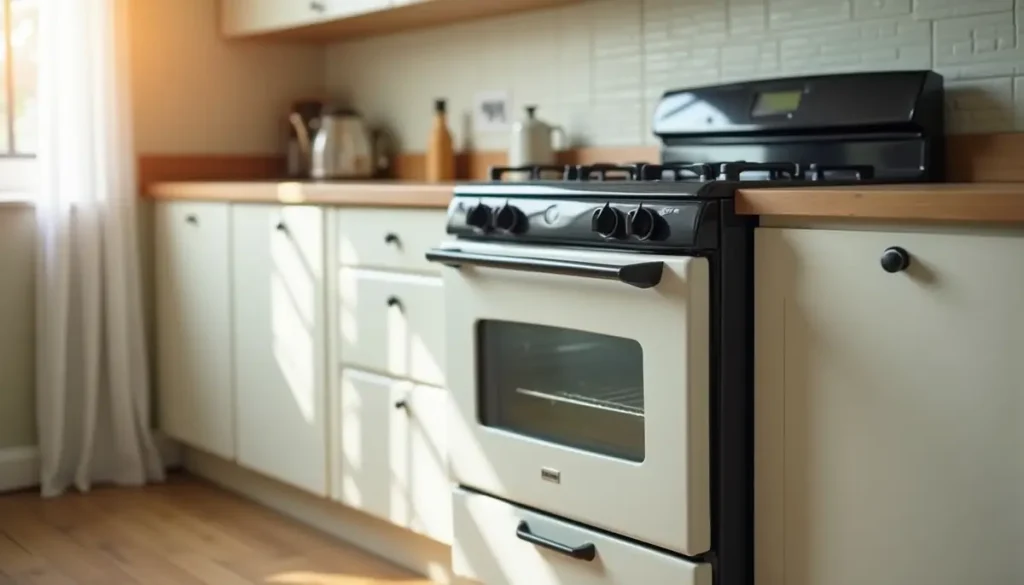
If you have mice in your stove, stop using it, turn off the power and gas, set snap traps behind it, then wet-clean the droppings the way CDC directs. Droppings in the storage drawer are usually a job for you. Chewed wiring, a burning smell or a nest inside the insulation needs an appliance technician, because range manuals reserve that servicing for one. Do not run the oven to drive mice out.
| What you found | What it points to | Who deals with it |
|---|---|---|
| Black droppings, 1/8 to 1/4 inch, in the drawer or under the range | Mice using the stove or the space behind it | You: traps, then CDC cleanup |
| Shredded paper or fibre in the drawer | A nest you can reach | You: soak it, then double bag it |
| Burnt or urine smell when the oven heats | Possible nesting material or urine inside the body | Technician, with the stove off |
| Nest behind a panel or in the insulation | Material you cannot reach without dismantling | Technician, after trapping |
| Chewed cord or wire | Shock and fire risk | Technician. Do not power it up |
| Gnawed gas line or a smell of gas | Possible leak | Leave the building, then call the gas supplier from outside it |
Not sure the droppings are mouse? Check them against our guide to the signs of mice in a house, and compare any material you find with what a mouse nest looks like.
Power and gas off, and leave the oven cold
- Electric or gas, cut the electricity. Use the circuit breaker or fuse box, as one range manual advises, or the plug if you can reach it safely.
- Gas ranges: close the manual shutoff valve. One gas range installation manual says it should be in the same room but external to the range.
- If you smell gas, stop. That manual says not to touch any electrical switch or light any appliance, to leave, and to call the gas supplier from a neighbour’s phone, or the fire department if you cannot reach them.
- Do not heat it to clear it. Some web advice says to turn on the oven and broiler so mice flee into traps. CDC, UC IPM and Nebraska Extension do not recommend this in the guidance we read, and it heats whatever is in there.
The fire concern is real but unmeasured. Range manuals warn that flammable materials, including paper, plastic and cloth, should not be stored in an oven or near burners, and UC IPM describes mouse nests as finely shredded paper or other fibrous material. UC IPM also says many fires of unknown origin are believed to be caused by rodents gnawing on wires. We found no agency figure for stove fires caused by mice.
What three public sources say, side by side
No CDC or extension document we found gives a stove protocol, so the numbers have to be assembled.
| Question | CDC | UC IPM (2025) | Nebraska G1105 (2012) |
|---|---|---|---|
| Smallest gap | 1/4 inch hole, the width of a pencil | Under gaps 1/4 inch tall, through openings 3/8 inch wide | Slightly larger than 1/4 inch across |
| Range from the nest | Not given | Seldom over 30 feet | Seldom over 50 feet |
| Trap spacing | On the floor, against the wall, including behind the stove | No more than about 10 feet apart; pairs 1 to 2 inches apart | No more than about 10 feet apart |
| Small holes | Steel wool, held with caulk or spray foam | Metal or concrete. Foam is ineffective as a plug; steel wool may rust | Under 1/2 inch around pipes: sealant or mortar. Larger: copper mesh |
| Poison | Only for infestations that persist | Trapping may be best | Trapping preferred in homes |
Compiled by The Pest Control Brief from the named CDC, University of California and University of Nebraska publications.
How to get rid of mice in a stove, in order
1. Trap before you dismantle or clean
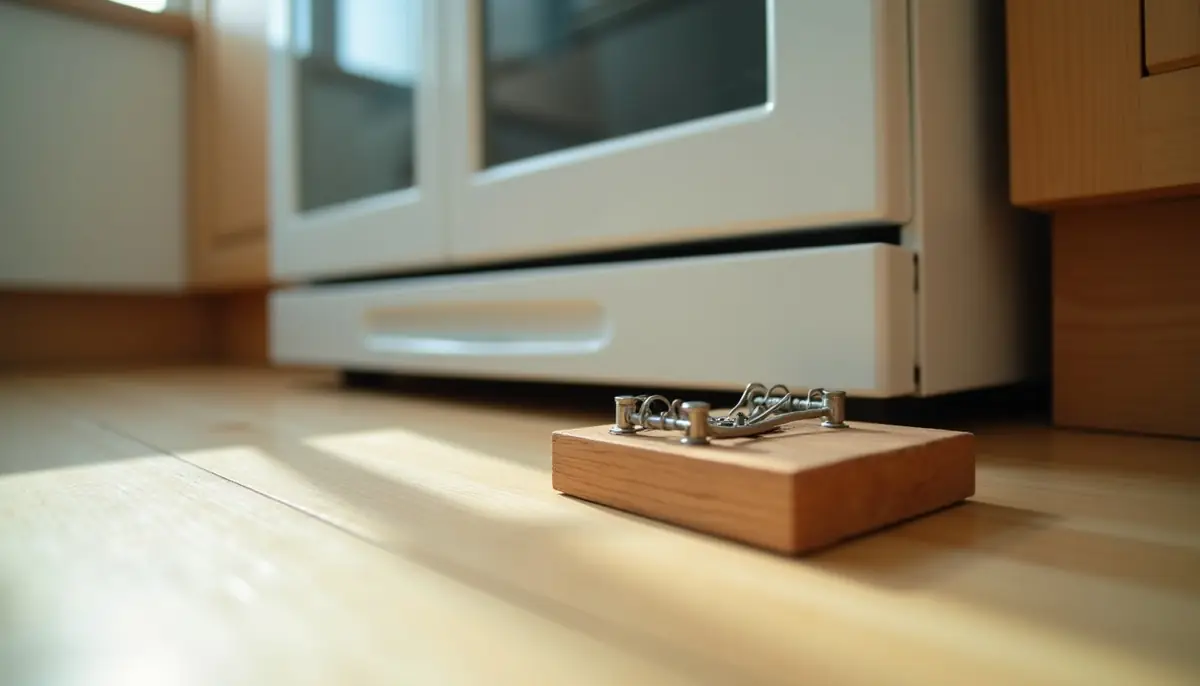
Set snap traps on the floor behind the stove and along the wall, with the baited end against the wall, as CDC describes. CDC says chunky peanut butter works best. Keep traps out of reach of children and pets. Nebraska Extension says mice leave the nest up to 40 times a day and are most active before dawn and after dusk, so check traps each morning. See how to catch a mouse for the routine and how to tell if mice are gone for when to stop.
Skip poison in a kitchen: UC IPM warns it often means mice dying inside the structure. CDC also advises against glue and live traps, because frightened rodents urinate, which can increase your chance of getting sick.
2. Move the range without damaging it
Let it cool and empty the top. A gas range manual warns not to kink or damage the flexible metal tubing when moving the range, and limits connectors to 3 feet, so there may be little slack. If the connector looks damaged or will not allow movement, leave the move to a technician. The same manual warns that a child or adult can tip the range and be killed, so the anti-tip bracket matters when it goes back.
3. Clean it wet, never dry
CDC’s numbers, with the power and gas off:
- Open doors and windows for 30 minutes and leave the room.
- Wear rubber or plastic gloves. Do not vacuum or sweep droppings, urine or nests.
- Mix 1.5 cups of household bleach into 1 gallon of water fresh, or use an EPA-registered disinfectant by its label.
- Spray until very wet and soak for 5 minutes.
- Wipe up with paper towels. Double bag nests and dead mice, and knot each bag.
- Clean all hard surfaces, including floors, cabinets and drawers.
Spray the drawer, floor and wall, not the wiring or controls. CDC does not mention appliances, so check your manual before putting bleach inside an oven cavity, and wash racks and pans separately with soap and water. For heavy contamination, protective gear changes: read our guide to hantavirus and mouse dropping cleanup before you start.
4. Seal behind the stove
CDC’s list of places to check includes behind appliances, under and behind kitchen cabinets, and around all electrical, water, gas and sewer lines. Look where the gas pipe or cable passes through the wall or floor, and pack any gap of 1/4 inch or more. Do not stuff material around a flexible connector, and do not move the pipe. CDC accepts foam holding steel wool in place; UC IPM calls foam ineffective as a plug. Our rodent exclusion materials guide compares the options.
5. Put it back and test the bracket
Slide it back until the rear foot engages the bracket. CPSC’s check is to grasp the back of the range and try to tilt it: if it tilts more than an inch, it is not engaged or the bracket is not attached properly. Restore gas and power only if you found no chewed wires.
How to get rid of mice living in stove insulation
Trap first, then call an appliance technician. Two range manuals carry the same rule: do not repair or replace any part unless specifically recommended in the manual, and leave all other servicing to a qualified technician. Taking panels off to reach insulation usually falls outside that. Ask for a check of wiring and gas components, replacement of soiled insulation if parts exist for your model, and a price to compare with a new range.
One major maker’s gas and electric range warranties exclude damage “caused by accidents, pests and vermin”. Another’s covers defects in materials or workmanship, which a chewed wire is unlikely to be. Wiring damage raises similar questions in vehicles, covered in our report on mice in cars.
How to get rid of mouse smell in a stove
UC IPM describes a musky odour as common in large or long-term infestations. If the smell survives CDC’s cleaning of everything you can reach, the source is probably somewhere you cannot, most likely soiled insulation or a nest behind a panel. A smell of decay rather than urine is a different problem, covered in our guide to dead mouse smell. Before you reach for a scent, read our review of peppermint oil and mice.
Why do mice hide in stoves?
The likeliest answer is shelter close to food. Nebraska Extension says mice are attracted to buildings by openings and escaping heat, and names appliances that run constantly (refrigerators, water heaters and furnaces) as favourite den sites. It does not name stoves. UC IPM says outdoor mice frequently enter homes in autumn as nights turn colder. Our data fits: US research-grade records of house mice peak in October at 443, against a June low of 235. Deer mice, by contrast, peak in May. These are records of where people photographed mice, mostly outdoors, not indoor infestation rates.
Is food cooked in that stove safe?
We cannot give you a verdict, because we found no CDC, FDA or extension document that tests food cooked in a stove with mice inside. UC IPM does say house mice carry leptospirosis, salmonella and lymphocytic choriomeningitis, and CDC treats droppings and nests as material to disinfect rather than disturb. So stop cooking in it until it is clean and checked, wash anything stored in the drawer, and throw out opened or gnawed food. If anyone is unwell, see a doctor and mention the mice.
Frequently asked questions
How to get rid of mice in stove?
Turn off the power and gas and stop using it. Set snap traps behind the stove with the bait against the wall, no more than about 10 feet apart. Once catches stop, air the room for 30 minutes and soak droppings for 5 minutes in fresh bleach solution before wiping. Then seal gaps of 1/4 inch or more behind it.
How do mice get in the stove?
Usually from behind or below. CDC says mice fit through a hole 1/4 inch wide and lists gaps behind appliances and around gas and electrical lines as places to check. UC IPM says they climb rough vertical surfaces and jump 12 inches onto a flat surface, so a drawer gap or an open rear panel is well within reach.
Do mice live in stoves?
They can nest in or behind them, although we found no count of how often this happens. CDC tells people to set traps behind the stove because rodents favour closed spots. Nebraska Extension calls appliances that run constantly favourite den sites, without naming stoves. Droppings of 1/8 to 1/4 inch and shredded fibre in the drawer are the usual evidence.
How to get rid of mice living in stove insulation?
Trap the mice first, then have an appliance technician open the panels. Range manuals say not to repair or replace parts unless the manual recommends it, and to leave other servicing to a qualified technician. Ask them to check wiring and gas components, deal with soiled insulation where parts exist, and compare the repair with replacing the range.
Can I keep using my stove until the mice are gone?
It is safer not to. UC IPM says mice gnaw electrical wires and gas lines, and range manuals warn against flammable materials such as paper and cloth in an oven or near burners. Until you have trapped the mice and checked for chewed wires and nesting material, keep the stove off. If you smell gas, leave and call the supplier.
Sources
- CDC, Healthy Pets, Healthy People: How to Clean Up After Rodents; How to Seal Up to Prevent Rodents; How to Trap Up to Remove Rodents.
- University of California Statewide IPM Program, Pest Notes: House Mouse (7483), updated July 2025.
- University of Nebraska-Lincoln Extension, G1105, Controlling House Mice, revised March 2012.
- US Consumer Product Safety Commission, Tips on Checking your Range’s Stability.
- Range manufacturer documents, read for safety and warranty wording only: WFG361LV gas range installation instructions; CGEF302TPF electric range use and care guide; LG gas and electric range limited warranties; MER8800DS limited warranty.
- The Pest Control Brief analysis of iNaturalist research-grade records, pulled October 2026.