Mouse in the Toilet: How It Got There and What to Do
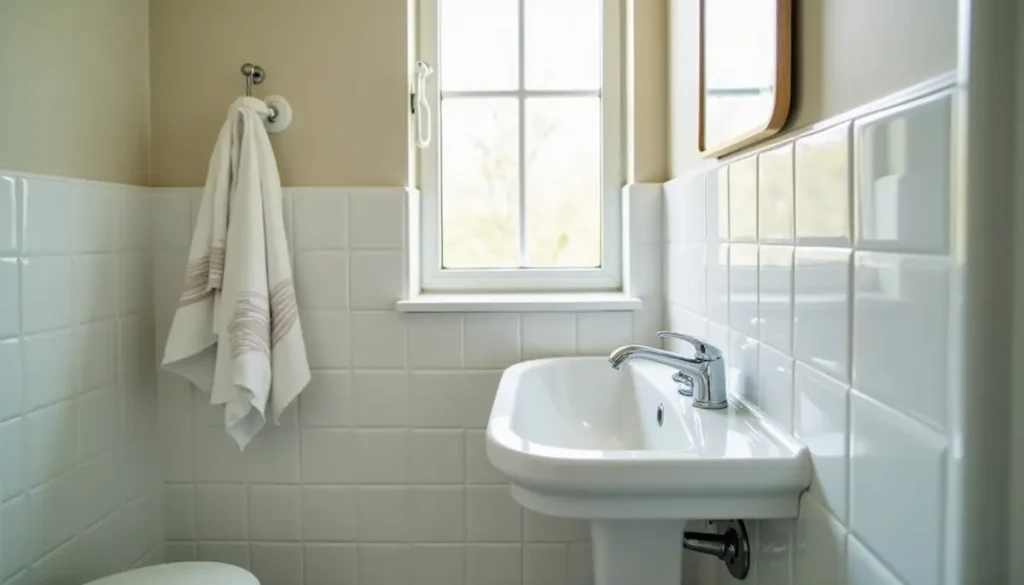
A mouse in the toilet most likely climbed or fell in from the room rather than swimming up the pipes, so close the lid, put on gloves, lift it out and then find its way in. Extension guidance lists diving through plumbing traps as a rat ability, not a house mouse one. Do not flush a dead mouse: CDC says to double-bag it for the bin. Then disinfect the bowl with 1 part bleach to 9 parts water.
| What you see | Most likely route | Check next |
|---|---|---|
| Small animal, about 1/2 oz and 5 to 7 in including the tail (UC IPM); lid was up; droppings in the room | Fell or climbed in from the bathroom | Gaps around pipes behind the toilet and under the sink |
| Same animal, lid closed | Still probably the room: UC IPM says mice squeeze under gaps 1/4 in tall, so look at the gap the seat bumpers leave | Whether a mouse could pass under the lid; droppings on the tank or vanity |
| Heavier animal: roof rats start at 5 oz, Norway rats at 7 oz (UC IPM); tracks and water on the rim | A rat up the trap: Baker (1994) names rim tracks and water as the sign | Our pages on rats swimming up toilets and rat vs mouse; your sewer utility |
| Dead at the bottom of the bowl | The body cannot tell you; it may have failed to climb out | Droppings, gnaw marks and rim tracks |
| Second or third mouse in a few weeks | A nest close by: UC IPM says house mice tend to stay within 30 ft of it | Our guide to signs of mice in the house |
| Bowl had run dry in an unused bathroom | The toilet’s water seal was gone, which opens the pipe route | Flush to refill; keep the lid down when the room is unused |
What each source actually says about mice and plumbing
Several top results say mice live in sewers and swim up through toilets, without a source. One gives a house mouse several hours of paddling, another a 3-minute breath hold; we found neither figure in a primary source. The published record reads differently.
| Source | House mice | Rats |
|---|---|---|
| Nebraska Extension G1530 | List covers jumping 18 in, hanging upside-down from screen wire, travelling 1.5 miles. No plumbing entry | Climb inside 1.5 to 4 in vertical pipes; swim half a mile; dive through water traps; travel in sewer lines |
| Baker and colleagues, Prevention and Control of Wildlife Damage, 1994 | “Both rats and mice use drainage pipes or sewage systems”; but mice “often enter under entry doors, through holes beside water pipes and electrical conduit” and via cold air return ducts | “Rats occasionally enter buildings through toilet traps,” usually in areas 20 years or older with poorly kept sewers |
| University of Kentucky ID-115 | “do not take to water as well as rats do” | Swim as far as 1/2 mile |
| UC IPM house mouse and rat notes | Excellent climbers on rough surfaces; no toilet route given | Swim through sewers and enter “through toilets or broken drains” |
| Public Health, Seattle and King County | Not addressed | Come up via sewer pipes; kitchen pipes are too small, so they use the toilet |
| CDC, Seal Up | Fit through 1/4 in holes; seal around plumbing lines and pipes under sinks | Not addressed |
Compiled by The Pest Control Brief from the named documents, read November 2026.
Baker’s sentence means nobody can say a mouse never uses a drain. But the specific trick that gets an animal into a bowl from below, diving a water trap, is credited to rats, and no document we read records a mouse doing it. No study has counted mice in toilets by route, so “fell in” is the best reading of the evidence, not a measurement.
Why a mouse ends up in the bowl at all
Getting up there is easy for it. UC IPM gives a 12 in jump from floor to a flat surface; Nebraska and Baker say 18 in. For scale, the ADA sets accessible toilet seats at 17 to 19 in. Mice also run up any rough vertical surface (UC IPM), and a supply pipe, a towel or the vanity beside the bowl all help.
Water may be part of the draw. UC IPM says mice do not need to drink to survive but will seek liquids if their food lacks moisture or the environment is hot or dry. Once in, the walls are the trap: the sources credit mice with climbing rough surfaces, and glazed porcelain is not one. A bathroom is also often where the pipework gaps are, and CDC lists the pipes under sinks among its places to seal.
Timing fits too. UC IPM says outdoor house mice frequently enter homes in autumn as nights turn cold, and our records rise the same way. These are photographed sightings, mostly outdoors, not counts of mice in homes. The deer mouse line matters for a different reason: Washington State’s health department names deer mice as the main carriers of hantavirus there, which is one more reason to follow the cleanup steps below exactly.
A live mouse: the options, stated plainly
- Close the lid and the bathroom door. King County gives this first step for rats, and it keeps a wet animal from reaching the rest of the house.
- Put on rubber or plastic gloves. UC IPM says not to touch mice with bare hands. If you are bitten, wash the wound and call your doctor.
- Lift it out in a lidded container or call a pest control company. King County’s fallback for a rodent that will not flush is to keep the lid closed and call one. A trap set along the wall handles any that get away.
- Do not count on releasing it nearby. UC IPM says house mice moved as far as half a mile can navigate back to their nest, and that moving them off the property without a permit is illegal in California. Check your state’s rules. UC IPM’s own advice for live-caught mice is humane euthanasia.
King County’s soap-and-flush method, which degreases the fur so the animal cannot float, was written for a sewer rat that goes back the way it came. No health agency we found publishes it for mice, and a mouse from the room has no sewer to return to.
A dead mouse: the CDC sequence, adapted to a bowl
- Open doors and windows for 30 minutes before you start.
- Wear rubber or plastic gloves. Use a plastic bag turned inside out over your hand, or tongs you can disinfect, to lift the body out.
- Spray the body and the area with disinfectant and let it soak for 5 minutes or as the label directs. Washington State’s health department gives 10 minutes for a 10 per cent bleach solution, so the longer soak costs you nothing.
- Seal it in a knotted plastic bag, put that inside a second bag, and place it in a covered bin that is regularly emptied.
- Wash gloved hands before removing the gloves, then wash again with soap and warm water.
Clean the rim, seat, lid, tank and nearby floor with 1.5 cups of household bleach per gallon of water, which is CDC’s 1 to 9 ratio, or an EPA-registered disinfectant. Wipe with paper towels and bin them. CDC says not to sweep or vacuum droppings. It also warns never to mix bleach with other cleaners, which rules out adding it to a bowl that still holds toilet cleaner. Our guide to hantavirus and mouse dropping cleanup covers larger jobs.
Why not flush it?
We found no agency that addresses a mouse carcass in a sewer specifically, so the answer rests on two general rules. CDC’s disposal instruction is the double bag. EPA’s septic guidance is not to flush anything besides human waste and toilet paper. UC IPM agrees on the garbage route, or burial. If one has already gone down, flush normally and call a plumber if the drain slows.
What it says about your entry points
A mouse in the bowl is a mouse in the house, and the bathroom is a good place to start looking. Mice use openings of 1/4 in, about the width of a pencil (CDC).
- Behind the toilet and under the sink: check where the supply and drain pipes pass through the wall or floor. Those gaps lead into the wall cavity. CDC suggests steel wool with caulk for small holes; UC IPM suggests metal or concrete around pipes.
- Doors and ducts: Baker names gaps under entry doors and cold air return ducts.
- The roof vent stack: UC IPM says to screen rooftop plumbing vents over 2 in across. A mouse that fell down a stack would still have to pass the toilet’s trap from behind, the rat ability again, so this is a lower priority for mice. Baker wants 1/4 in openings to stop mice at vents generally, but Nebraska warns mesh under 1/2 in significantly reduces airflow. Plumbing vents must breathe, so ask a plumber which cap suits yours.
- Keep the lid down: King County advises it as a habit.
Then set traps close to walls where you find droppings, as UC IPM advises. It also estimates that 5 per cent of US house mice carry LCM virus, which spreads through fresh urine, droppings, saliva and nesting material, so clean up with gloves on.
Frequently asked questions
What to do if mouse in toilet?
Close the lid, put on gloves and decide by whether it is alive. Lift a live mouse out in a lidded container or call a pest control company. Double-bag a dead one for the bin, as CDC advises. Disinfect the bowl and seat with 1 part bleach to 9 parts water, then look for gaps around the pipes.
Why is there a mouse in my toilet bowl?
Most likely it fell or climbed in while exploring the bathroom. House mice jump 12 to 18 in and climb rough surfaces, and UC IPM says they seek liquids when food is dry. Getting out is the hard part. Extension guidance credits rats, not mice, with diving through plumbing traps, though Baker’s chapter says mice do use some drains.
Can mice drown in toilet?
Yes, given enough time. Kentucky calls house mice capable swimmers that take to water less well than rats. In a standard lab swim test, mice alternately swim and float for 6 minutes in water of about 74°F (23.5°C), and endurance tests run until they can no longer surface. We found no timing for a mouse in a toilet.
How to get a dead mouse out of a toilet?
Wear rubber or plastic gloves and lift it with a plastic bag turned inside out or with tongs. Spray with disinfectant, wait 5 minutes or as the label says, knot it in a bag, put that in a second bag and bin it. Do not flush it: CDC’s method is the double bag.
Can mice come out of the toilet?
Coming up through the pipes is not documented for house mice in the sources we read, though it is for rats. A mouse already in the bowl has a smooth glazed wall to climb, and the sources describe mice climbing rough surfaces. Do not assume it will stay put, though: keep the lid down and the door shut until you have dealt with it.
Sources
- CDC, Rodent Control clean-up guidance; How to Seal Up to Prevent Rodents; Cleaning and Disinfecting with Bleach.
- Baker, Bodman and Timm, Rodent-Proof Construction and Exclusion Methods, in Prevention and Control of Wildlife Damage, 1994.
- University of Nebraska Extension, G1530, Rodent-Proof Construction: Structural, revised 2009.
- University of California Statewide IPM Program, House Mouse; Rats; and Pest Notes Publication 74106, Rats.
- University of Kentucky Cooperative Extension, ID-115, Managing Commensal Rodent Problems in Kentucky (Barnes and Potter).
- Public Health, Seattle and King County, Keep Rats Out of Your Toilet and Sewer Pipes, and the Rats in Toilets information sheet.
- Washington State Department of Health, Rodents.
- US EPA, How to Care for Your Septic System.
- US Access Board, ADA Accessibility Standards, section 604.4.
- Validation of video motion-detection scoring of forced swim test in mice, published in PubMed Central (PMC4315190); Effects of Swimming at Different Water Temperatures on Muscle and Adipose Tissue Adaptation in Diet-Induced Obese Mice, PubMed Central (PMC12964579).
- The Pest Control Brief analysis of iNaturalist research-grade records, pulled October 2026.