Mice in Your Car: Signs, Wiring Damage and Getting Them Out

Mice get into cars for shelter and warmth, nest in the engine bay, air intake or cabin air filter, and chew wiring, so the fix is to trap them with snap traps, clean the nest using CDC precautions, replace the cabin filter and have chewed wires checked by a mechanic. Leave poison out of the car: a poisoned mouse can die somewhere inside the vehicle. Rodent wiring damage is usually refused under the manufacturer’s warranty, and court filings show owners claiming on their car insurance instead, paying a deductible. Keep food out of the car, and move it often.
A parked car is a dry, dark box with soft insulation and a warm engine, and UC IPM notes that house mice damage vehicles by gnawing electrical wires. Below: where they hide, what repairs cost according to court records, how the soy wiring lawsuits ended, and how to get them out safely.
Where do mice hide in cars?
The CDC lists ducting, rusted areas and cable conduit as ways in, and UC IPM says mice squeeze under gaps a quarter of an inch tall, so no car is sealed against them. Work through the vehicle with this table.
| Where to look | What you find | What it usually means | What to do |
|---|---|---|---|
| Engine bay: on the engine, under plastic covers, near the battery | Shredded insulation, leaves, droppings | Active nest; wiring at risk | Disconnect battery, disinfect, remove nest, trap |
| Engine air intake and filter box | Nest material in or on the filter | Nest blocking the engine’s air supply | Soak, remove nest and filter, fit a new filter |
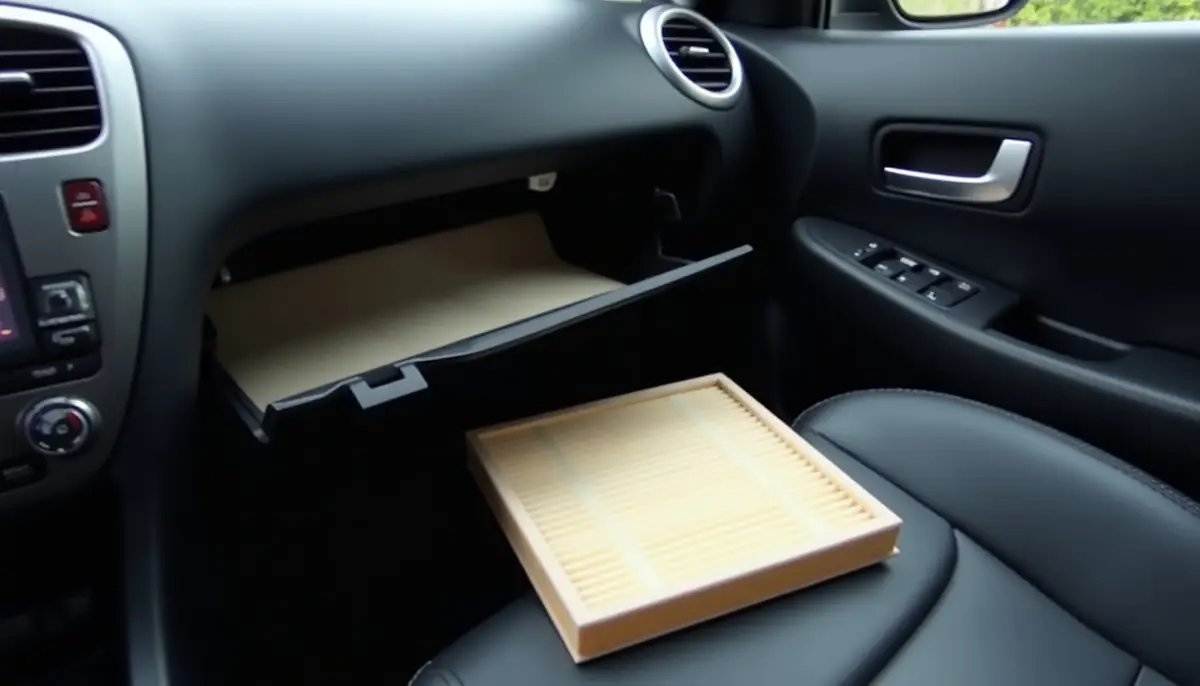
| Cabin air filter (pollen filter), usually behind the glovebox | Nest in the filter; musty or urine smell from the vents | Mice using the ventilation system | Do not run the fan; disinfect, replace the filter |
| Vents and blower housing | Debris blown out of vents; rotting smell | Nest or a dead mouse in the ducting | Mechanic or dealer job if not reachable |
| Under seats, glovebox, trunk, spare wheel well | Droppings, chewed paper, seat foam | Mice feeding or nesting in the cabin | Clean with CDC steps; remove food; trap |
| Dashboard warning lights, car will not start | Check engine, ABS or traction warnings | Chewed sensor wires or harness | Do not drive until inspected |
The cabin air filter is where Consumer Reports’ test fleet found a nest: its technician told 6abc that floor debris and a slight smell led them straight to the pollen filter, and that a car with chewed wires may not be safe to drive until checked.
Why are there mice in my car?
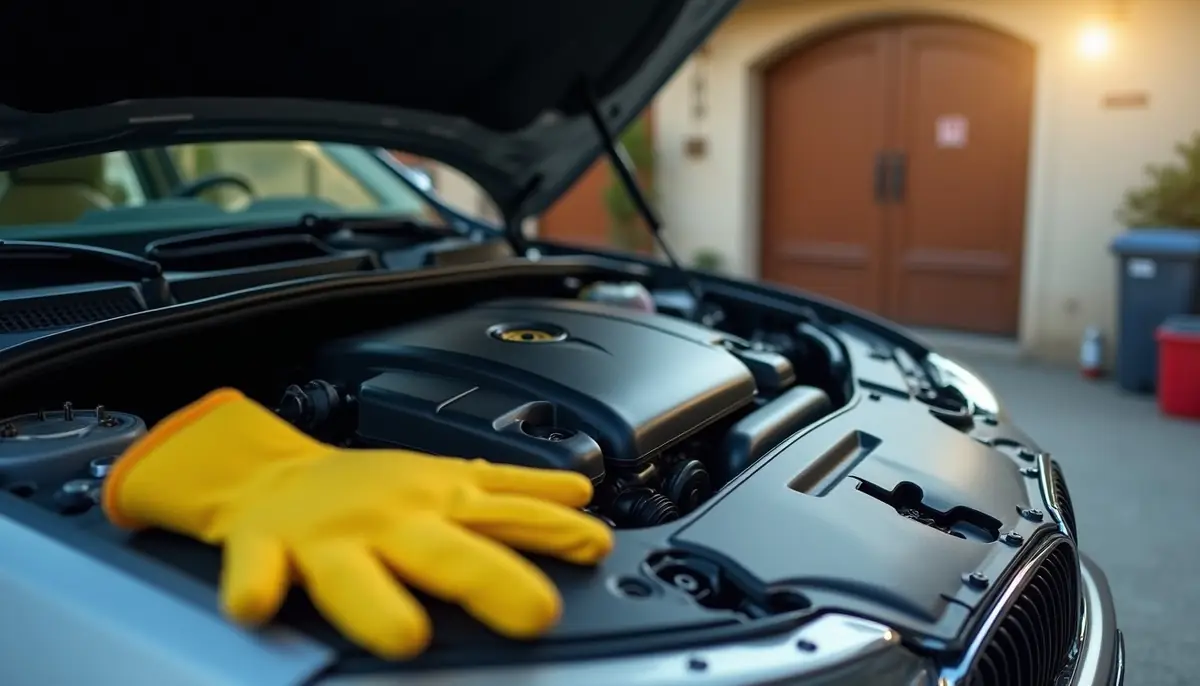
Usually because the car is the best shelter near an existing mouse population. UC IPM says house mice seldom venture more than 30 feet from their nest and food, so a mouse in your car usually lives in the garage, shed or house beside it. Risk factors:
- Long periods parked, and food inside. The CDC singles out vehicles used infrequently and advises keeping food out.
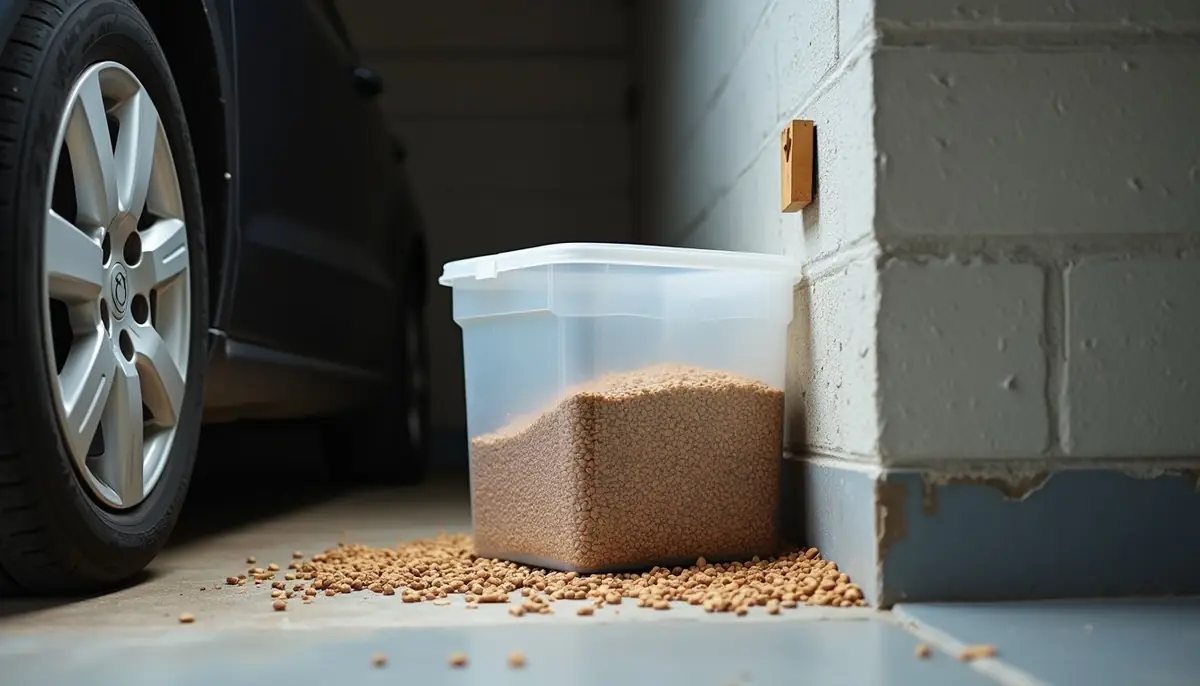
- Food in the garage. Pet food and birdseed stored where the car is parked give mice a reason to be there; keep them in sealed containers.
- Autumn. UC IPM notes outdoor house mice frequently move indoors as nights get colder, and our iNaturalist data below show house mouse sightings rise to a peak in October.
In the West, the animal in your engine bay may not be a mouse at all. Woodrats are notorious for moving into parked vehicles, which we cover in our guide to pack rats.
Signs of mice in your car
- Droppings, gnaw marks and tracks, the main signs UC IPM lists, on mats, in the trunk or on the engine.
- A musky or urine smell, strongest when the fan runs; UC IPM notes the musky odour of larger infestations.
- Nest material or stored food: shredded paper, insulation, seat foam, seeds or pet food.
- Electrical faults: warning lights, a dead horn or headlight, or a no-start.
- A rotting smell from the vents that will not air out, which usually means a dead mouse in the ducting; our dead mouse smell guide explains how long it lasts.
How many mice are in my car?
Usually only a few, but droppings will not tell you. UC IPM says a female house mouse can have 5 to 10 litters a year of about 5 or 6 pups each, so one nest can hold a litter and the nearby population can be much larger. The practical test is the one in how to tell if mice are gone: clean everything, set traps, and keep going until a full week passes with no captures and no fresh droppings.
What wiring damage costs: what the court records show
There is no representative public survey of rodent repair bills, but court filings record them. The Toyota plaintiffs’ consolidated complaint (January 2021) sets out each owner’s repair history, and the Honda court’s 2018 order records two invoices. These are allegations and dealer estimates, not findings, but they are the most detailed public record available.
| Owner (state), vehicle | Miles at damage | What was chewed | Repair cost | Warranty paid? | Insurance paid? |
|---|---|---|---|---|---|
| Powell (CA), 2016 RAV4 | 3,776 | Main engine harness | About $4,500 | No | Yes, $250 deductible |
| York (GA), 2014 Highlander | 31,690 | ABS wire | $310.35 | No | Paid out of pocket |
| Heber (IN), 2012 Tundra | 3,441 (first rodent repair) | EVAP tube, harnesses, fuel vapour hose | $1,183.82 (EVAP tube); $1,738.76 (hose) | No | Hose only, $250 deductible |
| Lesko (IN), 2016 Tundra | 3,426 | Knock sensor wires | $599.67 | No | Yes, $250 deductible |
| Porter (NE), 2014 RAV4 | 8,468 | Wiring harnesses | $1,680 | No | Yes, $500 deductible |
| Donoghue (NJ), 2013 Tacoma | About 42,000 | Wiring harnesses | $3,900 | No | Yes, $750 deductible |
| Cochrane (OK), 2016 Corolla | 273 | Junction block wires | $623.97 | No | Paid out of pocket |
| Browder (TX), 2015 Avalon Hybrid | 26,209 | Engine and transmission harnesses | $5,600 to $6,000 estimated | No | Yes, $500 deductible |
| Preston (IL), 2015 Accord | Not stated | Wiring, power steering parts | $2,146.16 | No | Not stated |
| Turgeon (IL), Civic Hatchback | Not stated | Power steering harness, twice | $313.28 (first invoice) | No | Not stated |
Compiled by The Pest Control Brief from the Consolidated Class Action Complaint in Grammer et al. v. Toyota Motor Sales, U.S.A. (C.D. Cal. 8:16-cv-01525, ECF 134, January 2021) and the Order Granting Motion to Dismiss in Preston v. American Honda Motor Co. (C.D. Cal. 2:18-cv-00038, ECF 77, May 2018). The filings say rodents; the species was not identified.
Every one of these owners was refused warranty cover, and the damage was not confined to old cars: a Corolla was chewed at 273 miles and three more vehicles before 4,000 miles.
The soy wiring lawsuits: how they actually ended
Many articles state as fact that soy-based insulation attracts rodents. That claim drove two federal lawsuits, and neither produced a court finding that it is true.
| Date | Toyota (Heber, later Grammer, v. Toyota Motor Sales) | Honda (Preston v. American Honda) |
|---|---|---|
| 2016 to 2017 | Filed in 2016 in California; owners allege a switch from vinyl chloride to soy-based harnesses drew rodents | Filed in May 2017 in Illinois for Illinois Honda buyers and lessees, later transferred to California |
| 2018 | Dismissed without leave to amend; the express warranty did not cover a design defect | Dismissed in May: “Properly functioning wires are not rendered defective simply because rodents enjoy chewing on them” |
| 2019 to 2020 | Ninth Circuit, August 2020: fraud claims stay dismissed; implied warranty claims revived | Ninth Circuit, August 2019: affirmed in part, reversed in part, remanded |
| 2021 to 2022 | May 2021: implied warranty claims proceed. August 3, 2022: stipulated dismissal with prejudice of the named plaintiffs’ individual claims | Reopened and transferred to another federal district in April 2022; we found no public record of the final outcome |
The Ninth Circuit’s 2020 point was narrow: the alleged defect was the wiring, not the rats, so it existed at sale. It did not decide whether soy insulation attracts rodents. The Toyota case never reached a certified class: the 2022 filing still described the classes as putative, the dismissal covered the named owners’ individual claims, and no terms between the parties were stated in it. In the Honda case, the court also rejected the idea that Honda’s use of rodent-deterrent tape was an admission of a defect, offering an obvious alternative explanation: good customer service. The defensible summary: rodents chew vehicle wiring of many kinds, and no court ruled that soy insulation makes it worse.
How to get rid of mice in a car
- Air it out and disconnect the battery. The CDC says to open the hood, doors and trunk for 20 minutes, wear plastic gloves and long sleeves, and reconnect the battery only once everything is dry.
- Set snap traps. UC IPM calls them a great first step; use enough to make trapping short. Set them near droppings in the engine bay, trunk and footwells, and remove every trap before driving. Bait and placement are in our guide to how to catch a mouse.
- No poison in the car. The CDC lists baits among prevention options, but UC IPM warns rodenticides often mean mice die inside the structure; in a car, that can be inside the dash or ducts.
- Clean the nest the CDC way (below), and have a mechanic check chewed wiring.
- Keep trapping for a week after the last catch, and deal with the mice in the garage or yard.
UC IPM says high frequency electronic devices are not effective; see our review of ultrasonic pest repellers for why.
Mice in car air vents and the cabin air filter: the hantavirus question
A nest in the ventilation system matters most for health, because the fan can blow dried droppings and nest dust into the cabin. Hantavirus pulmonary syndrome is rare: as we report in our hantavirus and mouse dropping cleanup guide, the CDC counted 890 US cases of hantavirus disease from 1993 to the end of 2023, and 35 per cent of reported cases were fatal. The main US carrier is the deer mouse, not the house mouse, so cars stored in rural garages, barns and cabins are the higher-risk case. The CDC’s vehicle steps:
- Do not vacuum or use a high-pressure sprayer on droppings or nest material until disinfected; for the same reason, do not run the fan.
- Soak it with disinfectant for 5 minutes (CDC bleach mix: 1.5 cups of household bleach in 1 gallon of water), pick it up with paper towels and disinfect the area.
- If nest material is in the air intake system, remove it along with the filter and install a new filter.
- Wash gloved hands, remove gloves, and wash your hands with soap and warm water.
A nest deep in the blower or ducts is a job for a mechanic. If anyone develops fever, aches or breathing trouble in the weeks after a cleanup, see a doctor and mention the rodent exposure.
Does car insurance cover mouse damage?
Often, under comprehensive cover, but check your policy. The Texas Department of Insurance describes comprehensive (other than collision) coverage as paying if your car is damaged by fire, flood, vandalism or something other than a collision; liability cover pays for damage you cause to others. The court records show how this plays out: in six of the eight Toyota owners’ accounts in the table, insurance paid for the rodent repair, with deductibles of $250 to $750, while the manufacturer’s warranty paid nothing. A repair cheaper than your deductible gets nothing back.
The warranty is unlikely to help: the Honda court noted it covered only defects in “materials and workmanship.” Homeowners policies treat rodents in the house differently again; see our guide to homeowners insurance and pest damage.
Preventing mice in your car
- Remove food, wrappers and napkins from the cabin and trunk.
- Use or check stored cars regularly, opening the hood to look for nests.
- Fix the garage. UC IPM calls exclusion the most successful and permanent house mouse control; seal gaps over a quarter inch with metal or concrete (see our rodent exclusion materials guide).
- Keep traps set along garage walls near the car.
- Be sceptical of scent repellents. In the one controlled mouse study of peppermint, the effect had gone within a week.
If mice keep returning despite trapping, the source is usually in the house or garage structure, and a licensed pest professional can find and seal the entry points.
Frequently asked questions
Why are there mice in my car?
Cars offer dry, dark shelter, soft nesting material and, in cold weather, a warm engine. House mice seldom travel more than about 30 feet from their nest and food, according to UC IPM, so a mouse in your car usually lives in the garage, shed or yard beside it. Cars that sit unused or hold food are most at risk.
Where do mice hide in cars?
The usual spots are the engine bay (on top of the engine, under plastic covers and near the battery), the engine air filter box, the cabin air filter behind the glovebox, the ventilation ducts, under seats and in the trunk or spare wheel well. The CDC tells owners to check air intakes and filters before starting a car that has been parked for a long time.
How to get rid of mice in car?
Air the car out for 20 minutes, disconnect the battery and set snap traps in the engine bay, trunk and footwells, removing them before driving. Avoid poison, because mice may die inside the car. Clean nests the CDC way: soak with disinfectant for 5 minutes, wipe up, never vacuum. Replace contaminated filters and have a mechanic check chewed wiring.
What to do about mice in car air vents?
Stop using the fan until the nest is removed, because it can blow droppings and nest dust into the cabin. Check and replace the cabin air filter, where nests are often found, after soaking any nest material with disinfectant for 5 minutes as the CDC advises. If there is a smell of rot or the nest is deep in the ducts, have a mechanic remove it.
How many mice are in my car?
Often only a few, but one nest can hold a litter of 5 or 6 young, and the wider population is usually in the garage or yard nearby. Droppings will not give a count. Clean the car, set several traps and keep trapping until a week passes with no catches and no fresh droppings.
Sources
- Centers for Disease Control and Prevention, How to Clean Up After Rodents, including How to Inspect and Disinfect a Vehicle (2024).
- University of California Statewide IPM Program, Pest Notes: House Mouse.
- US Court of Appeals for the Ninth Circuit, Heber v. Toyota Motor Sales, U.S.A., No. 18-55935, memorandum, August 19, 2020.
- US District Court, Central District of California, Grammer et al. v. Toyota Motor Sales, U.S.A., 8:16-cv-01525, Consolidated Class Action Complaint (ECF 134, January 22, 2021) and Stipulation of Dismissal with Prejudice (ECF 155, August 3, 2022), via CourtListener RECAP.
- US District Court, Central District of California, Preston v. American Honda Motor Co., 2:18-cv-00038, Order Granting Motion to Dismiss (ECF 77, May 24, 2018) and docket, via CourtListener RECAP.
- CarComplaints.com reporting on the Toyota soy wiring rulings, 2018 and 2021.
- Texas Department of Insurance, Auto Insurance Guide (updated December 2025).
- 6abc Philadelphia, interview with Consumer Reports’ vehicle technician on mice in cars.
- The Pest Control Brief, Hantavirus and mouse dropping cleanup (CDC case data through 2023) and Does peppermint oil repel mice.
- The Pest Control Brief analysis of iNaturalist research-grade records, pulled October 2026.