Mice Keep Coming Back? Why, and How to Stop the Cycle
Mice keep coming back because a gap of about a quarter inch is still open, autumn has pushed a new wave indoors, a few survivors are breeding, food is within reach, or trapping ended too early. Repellents rarely explain a return, because UC IPM finds little evidence they drive mice out in the first place. Sealing is the only permanent step; the table below tells you which cause to fix first.
Which cycle are you in?
| What the comeback looks like | Probable reason | Test it | Fix |
|---|---|---|---|
| Same room, same droppings, every few weeks | An entry point never sealed | Slide a pencil into gaps at pipes, the dryer vent, door corners and garage seals | Close everything over 1/4 inch with hardware cloth, sheet metal or concrete |
| Quiet all summer, mice again in October | The autumn move indoors | Did it start when nights turned cold? | Seal in late summer, before the first cold nights |
| Small mice appearing after adults were caught | Survivors bred | Only small, young mice turning up in traps or on glue boards | Restart trapping with more traps, spaced closer |
| Droppings near bird seed, dog food or pantry boxes | An open food store | Gnawed bags and corners in the garage or pantry | Move feed and pet food into metal or glass with tight lids |
| Mice ignored the plug-in or the scent | A repellent that never worked | Activity continued beside the device | Remove it and trap instead |
| Catches stopped, then restarted within a month | Traps came up too soon | Were traps out a full week with zero catches and no new droppings? | Keep traps out at least a week past the last catch |
Compiled by The Pest Control Brief from UC IPM Pest Notes: House Mouse (Publication 7483, 2025), the Internet Center for Wildlife Damage Management (ICWDM) house mouse pages and the CDC.
A quarter inch is all the opening a mouse needs
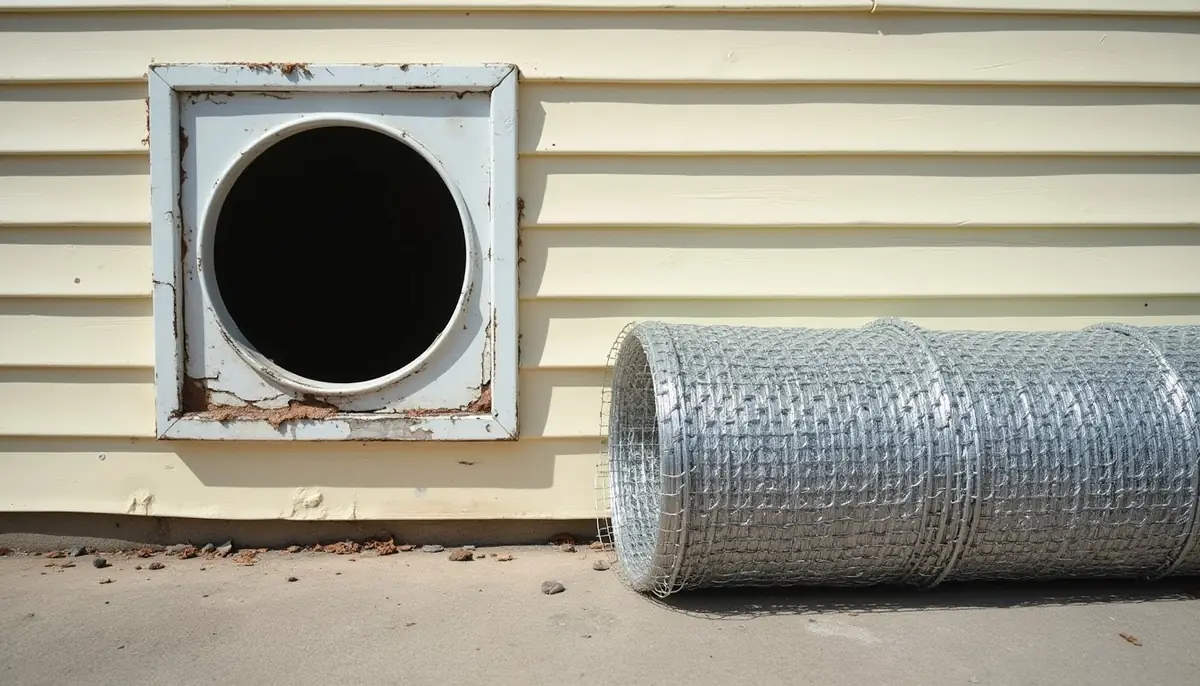
UC IPM says house mice squeeze under gaps 1/4 inch tall and through openings 3/8 inch wide, and the CDC compares the gap to the width of a pencil. That is smaller than most people look for, which is why a house that “was sealed” still lets mice in.
Material is the second failure. UC IPM lists plastic screening, rubber, vinyl, expanding foam and wood as ineffective for plugging holes used by house mice, and notes that steel wool pads make good temporary plugs but may rust. ICWDM adds that expanding foam reduces heat loss but will not prevent rodent entry. Our comparison of steel wool, copper mesh and what actually stops a rodent covers which materials hold and why patches fail at the edges.
Sealing works when it is thorough. The National Park Service’s exclusion manual reports a 1994 study with the CDC in which one round of repairs to entry points cut rodent infestations by more than 90 per cent against unrepaired buildings, with no activity detected in most of them.
Autumn brings a fresh wave every year
A house cleared in spring can be reinvaded in autumn by different mice. UC IPM says outdoor house mice frequently enter homes in autumn when nighttime temperatures become colder, and the National Park Service manual says competition for food and nest sites rises with the onset of cold weather, which is when rodents seek access to buildings. Our analysis of iNaturalist records shows US house mouse records rising from 235 in June to 443 in October; the month-by-month chart is on our page about why mice move indoors in autumn rather than hibernate.

Two survivors are enough to restart it
UC IPM gives the arithmetic: young are born 18 to 21 days after conception, a female may have 5 to 10 litters a year of about 5 or 6 pups, and house mice are sexually mature 5 to 6 weeks after birth. A pair left behind in a wall void can produce a litter inside three weeks, and those young can breed within two months. Our guide to how fast mice reproduce runs the numbers with its assumptions shown.
Glue boards are a common reason survivors are adults. UC IPM says adult mice often detect and avoid glue before getting stuck, so the boards catch mostly juveniles, leaving the breeders.
Food in the garage and the pantry
UC IPM notes that good sanitation alone will seldom completely control house mice, but poor sanitation attracts them and lets them thrive in greater numbers, and mice survive in very small areas on little food, which is why our ranking of what attracts mice to a house puts shelter ahead of crumbs. ICWDM names leftover food in pet dishes as a common source around homes and says to store bulk and pet food in metal containers with tight lids.
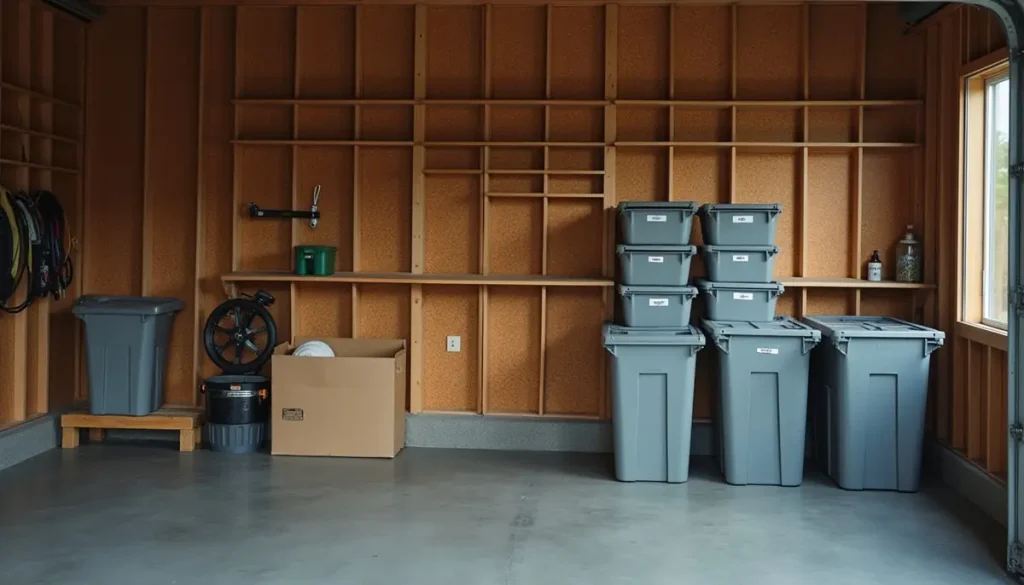
Bird seed, grass seed and dog kibble in paper sacks are the usual garage culprits, as our guide to mice in the garage shows.

The repellent was never doing the work
If a plug-in device or a scent was the main defence, the mice did not come back; they never left. UC IPM says there is little evidence that sound, magnetic or vibrational devices of any kind will drive established mice or rats from buildings, and ICWDM notes that ultrasound is directional, does not travel around corners and loses intensity quickly. Our scorecard of every common mouse repellent against the evidence covers peppermint, pouches and mothballs.
Trapping that ended a week too soon
UC IPM says to use enough traps to make the trapping period short and decisive, spaced no more than about 10 feet apart where mice are active, because mice seldom venture more than 30 feet from their nest. ICWDM recommends no more than 6 feet apart. Pairs set 1 to 2 inches apart catch mice that jump obstacles, according to UC IPM.
The common mistake is pulling traps after a few quiet nights. A quiet spell can mean the mice moved to another room, since ICWDM says one mouse uses an area only 10 to 30 feet across. Our step-by-step test for how to tell if mice are gone uses at least a week with no catches and no fresh droppings.
When to check the traps
We analysed the hour of day of 3,650 US research-grade iNaturalist records of house mice and compared them with every research-grade US record. Between 9 PM and 6 AM house mice make up more than twice their usual share of what people record: 12.9 per cent of mouse records fall in those hours, against 6.1 per cent of all records.
These are moments when people noticed and recorded mice, not a measure of activity, but they match ICWDM’s description of mice as mainly nocturnal. Set and bait traps in the evening and check them first thing in the morning. Our page on whether mice are nocturnal, and what a daytime mouse means covers sightings in daylight.
Why do I have so many mice all of a sudden?
Usually because two things happened at once: nights turned cold, and an entry point opened or a food source appeared. ICWDM adds a less obvious trigger: after rats are controlled at a site, mouse numbers may increase through immigration and reproduction, since habitat that suits rats suits mice. Scratching behind drywall in October is the classic pattern covered in our guide to mice in the walls.
Why do mice keep coming back to the same place?
Because they learn it. ICWDM says mice leave and return to their nests up to 40 times a day and memorise pathways, obstacles, food, water and shelter. UC IPM reports that house mice moved as far as half a mile from their home range navigated back to their nest site, which is one reason it calls relocation ineffective.
What is the 5 day mouse rule?
It is an online rule of thumb that five quiet days means the mice are gone, and no extension source we read defines it. After baiting it proves little: ICWDM says cholecalciferol kills 3 or 4 days after a lethal dose, so dying mice can still be in the walls on day five. Use at least a week with no catches and no fresh droppings.
How to get rid of mice that keep coming back?
- Work out which cycle you are in from the table above.
- Seal exterior gaps over 1/4 inch now, using hardware cloth, sheet metal or concrete rather than foam.
- Move pet food, bird seed and pantry staples into rodent-proof containers the same day.
- Trap with enough snap traps, 6 to 10 feet apart along walls, baited with a small amount of the food mice are already eating.
- Seal interior holes after catches stop, so mice do not die inside walls.
- Keep traps out a week past the last catch, then repeat the check every autumn.
Our full plan on how to get rid of mice, in order covers each step.
Mice in several units of a building, in ductwork or returning after professional treatment usually call for a licensed technician, and our guide on when to call pest control for mice sets out the signs.
Frequently asked questions
Do mice come back to the same house?
Often, yes. ICWDM says mice memorise pathways, food and shelter, and UC IPM reports mice moved as far as half a mile from home navigating back to their nest site. New mice also arrive each autumn as nights cool. Sealing gaps over 1/4 inch is what stops the same house being reused.
Is it possible to get rid of mice forever?
From one building, largely, but it needs upkeep. UC IPM calls exclusion the most successful and permanent form of house mouse control, and a 1994 National Park Service and CDC study found one round of repairs cut rodent infestations by more than 90 per cent. Outdoor mice remain, so seals need checking every autumn.
My house is clean, so why do I have mice?
Cleanliness limits numbers but rarely prevents entry. UC IPM says good sanitation will seldom completely control house mice because they survive on small amounts of food, while a quarter-inch gap lets them in. Pet food, bird seed and garage storage feed mice even in a spotless kitchen.
Will mice keep coming back if I seal the holes?
Far less often, provided the seals are metal, concrete or hardware cloth rather than foam, rubber or wood, which UC IPM lists as ineffective. Mice can still be carried in inside boxes, and gnawing can enlarge new gaps, so check the outside of the house each autumn.
Sources
- University of California Statewide IPM Program, Pest Notes: House Mouse, UC ANR Publication 7483 (N. M. Quinn), 2025.
- Internet Center for Wildlife Damage Management, House Mouse Biology; House Mouse Damage Prevention and Control Methods.
- Centers for Disease Control and Prevention, How to Seal Up to Prevent Rodents.
- National Park Service, Rodent Exclusion Manual: Mechanical Rodent Proofing Techniques (Badzik, DiSalvo, Buttke and Chase), Natural Resource Report NPS/NRSS/EQD/NRR 2014/863.
- University of Nebraska Extension, G1530 Rodent-Proof Construction: Structural.
- The Pest Control Brief analysis of iNaturalist research-grade records, pulled November 2026 (hour of day) and October 2026 (month).