Mice in the Dishwasher: How They Get In and Is It Safe?
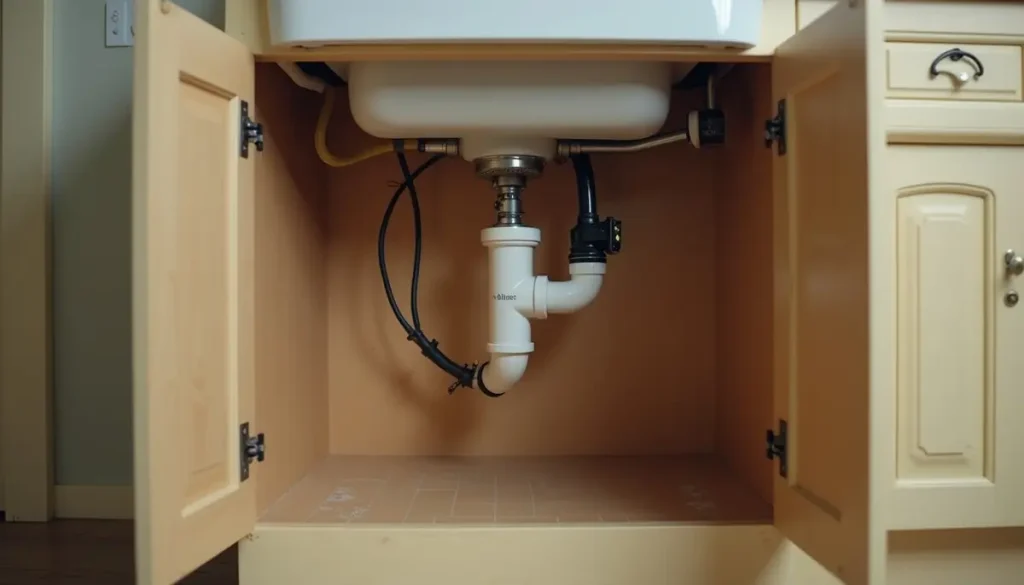
Mice can and do get into dishwashers, almost always from the sink cabinet or the open space behind the kick plate, not through the closed door. They follow the drain hose and water line through pipe gaps as small as 1/4 inch, nest in the insulation blanket wrapped round the tub, and chew hoses and wiring. Droppings inside the tub mean a mouse got in while the door was open or through a damaged vent or hose. Clean droppings wet, never by vacuuming, seal pipe gaps with metal, and trap under the sink.
Where the signs are, and what each one means
| Sign | Where you find it | What it usually means | First fix |
|---|---|---|---|
| Droppings on the cabinet floor | Under the sink, beside the drain hose and supply pipe | Mice using the pipe gap as a route | Wet clean (CDC method below), then seal round the pipes |
| Droppings or a musky smell behind the kick plate | Floor under the front of the dishwasher, behind the removable toe panel | Mice travelling or nesting under the tub | Remove the panel with power off, clean, set traps |
| Shredded fibre or a nest | In the insulation blanket on top of or round the tub | An established nest | Bag the soiled insulation after disinfecting; replace it |
| Droppings inside the tub or on the racks | Tub floor, filter, cutlery basket | Entry while the door was ajar, or a gap at the vent or drain | Disinfect the tub, run an empty hot cycle, rewash dishes |
| Water on the floor, a slow leak | Under the unit or in the sink cabinet | A chewed drain or fill hose | Turn off the water and power; have the hose replaced |
| Error codes, a dead control panel, a burning smell | Wiring at the front, behind the kick plate | Gnawed wiring | Switch off at the breaker; appliance technician |
Compiled by The Pest Control Brief from UC IPM Pest Notes 7483 and CDC clean-up guidance. To confirm the droppings, use our guide to telling mouse, rat and cockroach droppings apart.
How do mice get in the dishwasher?
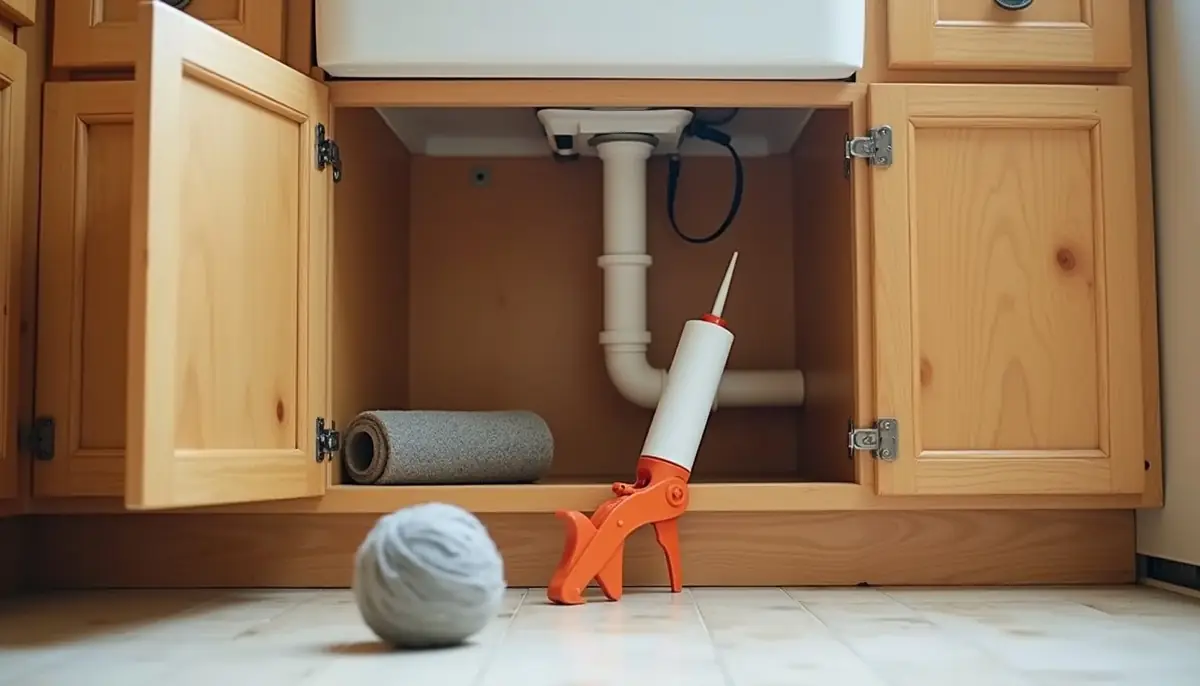
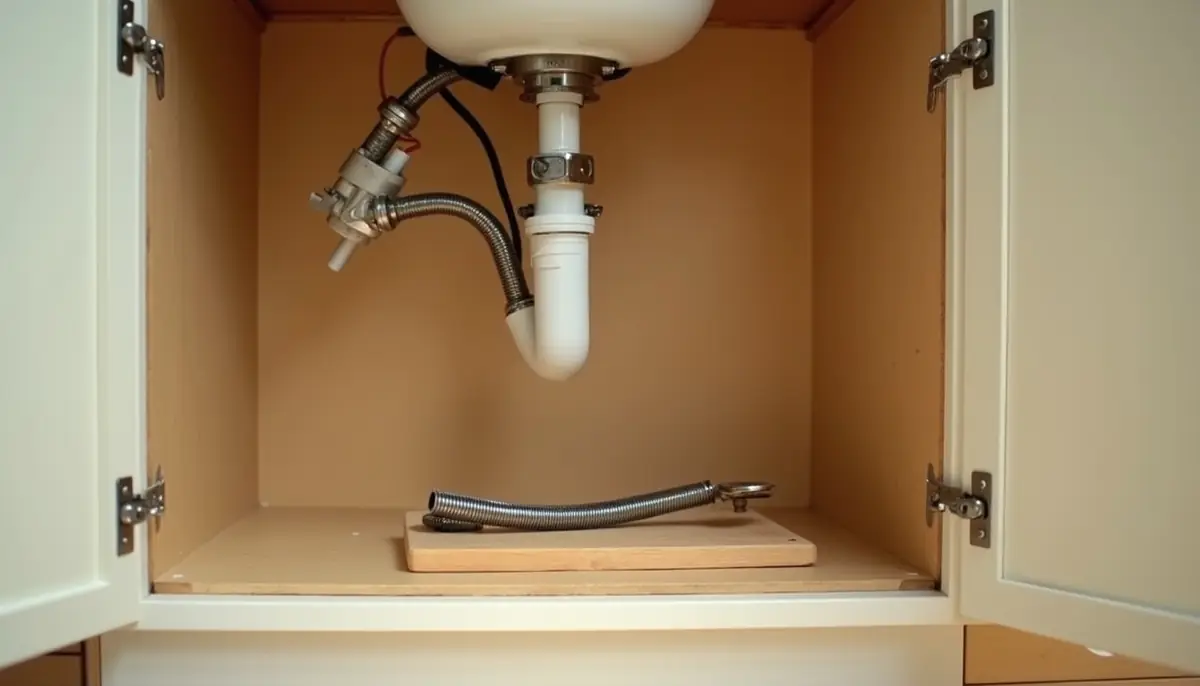
By the plumbing. A built-in dishwasher connects to the house through a drain hose that runs into the sink cabinet, a hot water line and an electrical supply, and each of those passes through a hole drilled in the cabinet side or the wall behind. Installers rarely seal those holes. UC IPM says house mice squeeze under gaps a quarter inch tall and through openings 3/8 inch wide, so a cabinet hole cut even slightly larger than the hose it carries is wide enough.
From the sink cabinet a house mouse follows the hose under the tub, which is open at the front behind the kick plate. The pipe holes at the back of the cabinet often lead into the wall cavity, the route described in our guide to mice living in the walls.
The insulation is the reason they stay. Most dishwashers have a fibre or felt blanket wrapped round the tub to deaden noise, and UC IPM describes house mouse nests as made of finely shredded paper or other fibrous material. A blanket next to a warm tub is ready-made nesting.
Can mice live in dishwashers?
They live in the cavity round the dishwasher, not in the tub. The tub floods with hot water every cycle, so a mouse inside it is usually a visitor after scraps on the filter; UC IPM notes that house mice will seek liquids when food gives them too little moisture. UC IPM also notes that house mice seldom travel more than 30 feet from their nest and food, so a mouse at the dishwasher is almost certainly nesting somewhere in that run of cabinets.
Do mice go in dishwashers more at certain times?
Yes, by month and by hour. In our analysis of US iNaturalist research-grade records, the house mouse’s share of all records climbs from 40 in June to 203 in November, against a yearly average of 100. UC IPM says outdoor house mice frequently move indoors in autumn as nights get colder.
The hour data points the same way as the biology. House mouse records are logged at 2.3 times their expected share between midnight and 3 am, and at about 0.7 times in late morning, after adjusting for when people record anything at all. That shows when people notice mice, not a measured activity clock, but it fits UC IPM’s statement that house mice are active mostly at night. Our guide to what a mouse seen in daylight means covers the exceptions.
Is it safe to use the dishwasher after mice?
Usually yes, once the tub and cabinet are cleaned the CDC way and the dishes rewashed. CDC’s guidance does not mention dishwashers, so the steps below apply its general rules. Two hazards come first:
- Droppings and urine. CDC says people get hantavirus from contact with rodent urine, droppings and saliva, and that the most common hantavirus causing illness in the US is spread by the deer mouse. In rural or wooded areas, assume the mouse could be a deer mouse. Our mouse droppings and hantavirus cleanup guide sets out the case numbers and who carries what.
- Chewed wiring and hoses. UC IPM notes that mice chew appliance cords as well as wires in walls. A gnawed wire next to a water connection is a shock and fire risk, so switch the circuit off at the breaker before you reach behind the kick plate.
Cleaning the tub, cabinet and dishes
- Turn the dishwasher off at the breaker and shut the water valve under the sink.
- Open nearby windows and doors and leave the kitchen for 30 minutes. That is the CDC ventilation time for homes before clean-up.
- Put on rubber or plastic gloves. Mix 1.5 cups of household bleach in 1 gallon of water, which CDC also gives as 1 part bleach to 9 parts water, or use an EPA-registered disinfectant.
- Spray droppings, urine stains and nest material until soaked, and leave for 5 minutes or the time on the disinfectant label.
- Wipe up with paper towels and bag them. CDC is explicit: do not vacuum or sweep rodent urine, droppings or nesting materials.
- Disinfect the cabinet floor, the tub, the door seal, the racks and the filter. CDC lists countertops, cabinets and drawers among the surfaces to disinfect after rodents.
- Bag soiled insulation for removal, as CDC advises, and replace it with the part specified for your model.
- Run the empty dishwasher on its hottest cycle, then rewash anything that was in it or in the cabinets around it.
The same CDC sequence, plus the gas and power steps, is set out for ranges in our guide to mice in a stove or oven.
How to get rid of mice in dishwasher cavities, step by step
Trap first, then seal, so mice are not shut inside the cabinet run.
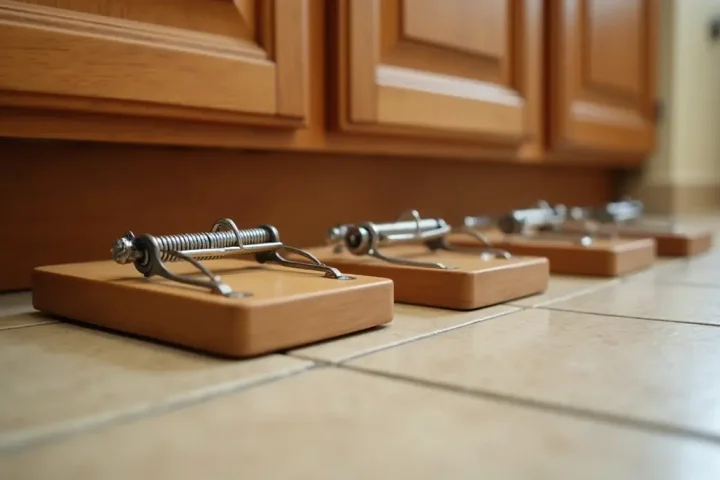
- Set snap traps under the sink and behind the kick plate. Place them against the cabinet back and beside the hose, where droppings are. UC IPM spaces traps no more than about 10 feet apart where mice are active. Our guide to trap placement that actually works covers baits and setting.
- Take away the reasons to visit. Clean the filter, do not leave dirty dishes in the machine for days, and keep pet food and cereals in hard lidded containers. Our ranking of what attracts mice to a house puts kitchen food sources first.
- Seal the pipe penetrations with metal. Pack the gaps round the drain hose, water line and cable with copper mesh or steel wool and finish with sealant, or fit a cut metal plate. UC IPM says to seal openings for water pipes, vents and utility cables with metal or concrete, and lists plastic screening, rubber, vinyl, expanding foam and wood as ineffective for house mouse holes. Steel wool rusts over time, UC IPM adds, which is why our comparison of steel wool, copper mesh and what actually stops a rodent favours copper or metal plates under a sink.
- Check the other appliance holes. Within UC IPM’s 30 foot range, the same mice are usually using the holes behind the fridge and stove too.
How to get rid of mice behind or under the dishwasher
Trap at the kick plate first. If catches continue after the sink cabinet is sealed, have a technician pull the unit, which means disconnecting water, drain and power, and close the wall hole with metal plate.
How to get a mouse out of the dishwasher tub
Leave the door open with a snap trap baited with peanut butter on it, and leave the room. Never run a cycle with a mouse inside or handle it bare-handed; CDC advises gloves for any contact.
When this is a job for a professional
Call a licensed pest professional if traps keep catching mice after the cabinet is sealed or droppings turn up in several cabinets; wiring damage needs an appliance technician either way. Published estimates on our mouse exterminator cost page put a trapping programme at $150 to $550, after a $75 to $150 inspection that is usually credited.
The full order of work, from trapping through exclusion, is in how to get rid of mice.
Frequently asked questions
How to get rid of mice in dishwasher?
Set snap traps under the sink and behind the kick plate, against walls and beside the drain hose, no more than about 10 feet apart as UC IPM advises. Clean droppings wet with bleach solution, never by vacuuming. Once catches stop, seal the gaps round the hose, water line and cable with copper mesh or metal, because UC IPM rates foam, rubber and wood as ineffective.
Can mice get in dishwashers?
Yes. They reach the cavity round the tub through unsealed holes where the drain hose, water line and power cable enter the sink cabinet or wall. UC IPM says house mice pass gaps a quarter inch tall. They nest in the insulation blanket and under the unit; the tub itself is entered mainly when the door is open or a vent or hose is damaged.
Do mice go in dishwashers?
They go round them far more than into them. The warm cavity, fibrous insulation and food residue on the filter attract mice, and the sink cabinet beside it is a common route; our room by room signs checklist covers the kitchen. Our analysis of iNaturalist records shows house mouse records peaking in November, which fits UC IPM’s account of mice moving indoors as autumn nights cool.
Can mouse damage make a dishwasher dangerous?
It can. UC IPM notes that mice chew appliance cords, and a chewed fill or drain hose can leak next to live wiring. If you see error codes, a dead panel, scorch marks or water under the unit, switch it off at the breaker, close the water valve and have an appliance technician inspect it before reuse.
Sources
- University of California Statewide IPM Program, Pest Notes: House Mouse, UC ANR Publication 7483.
- Centers for Disease Control and Prevention, How to Clean Up After Rodents (Healthy Pets, rodent control).
- Centers for Disease Control and Prevention, About Hantavirus.
- The Pest Control Brief analysis of iNaturalist research-grade records, pulled October 2026 (b19 to b30 files) or November 2026 (b35/b36 hour files).