Mice in an RV or Camper Over Winter: Keeping Them Out
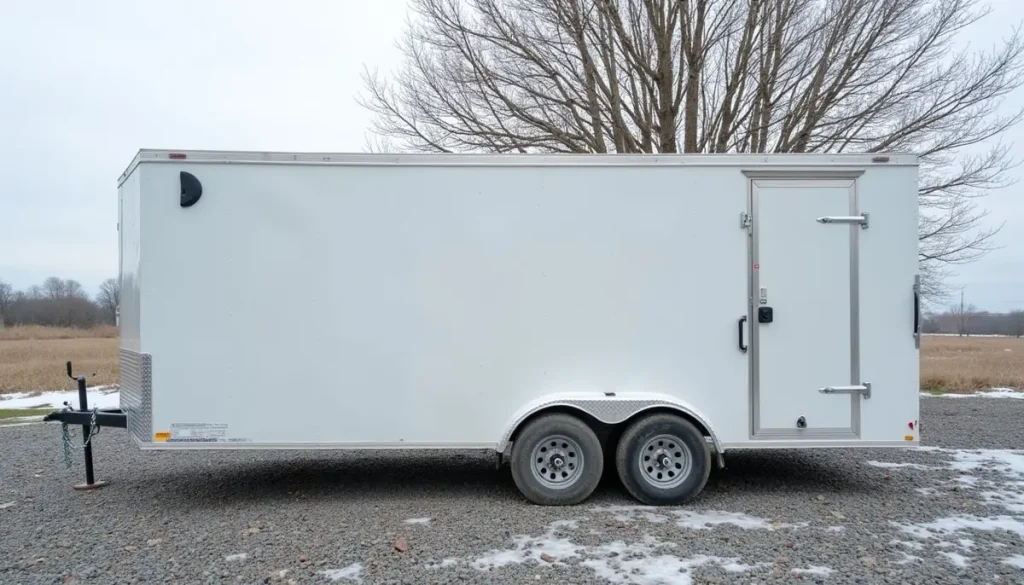
To keep mice out of an RV in winter storage, take out every scrap of food, seal floor and wall openings over 1/4 inch with metal, and leave snap traps you check at least monthly. Mice get in mainly where plumbing, wiring and the propane line pass through the floor. No repellent has held up in published research: dryer sheets, peppermint oil and scented soap are untested or failed on mice, and mothballs are a label violation in a living space.
Where mice get into an RV, and the fix for each
| Entry point | Why mice use it | Fix |
|---|---|---|
| Plumbing holes through the floor (fresh, grey and black water lines) | Holes are often larger than the pipe and left open behind cabinets | Pack with copper mesh, cap with sealant; metal plate on large holes |
| Wiring and cable runs through the floor or frame | CDC lists cable conduit as a rodent route into vehicles | Copper mesh round the cable, sealant over it |
| Propane line and furnace or water heater openings | Gaps round the line where it enters the coach | Metal mesh only; keep sealant and foam away from flue and burner parts |
| Slide-out seals | Worn or folded wiper seals leave a gap at the corners | Retract slides for storage; replace damaged seals |
| Generator and storage compartments | Open to the underbelly, cluttered, dark | Empty them; mesh any hole into the coach; set a trap inside |
| Wheel wells and the underbelly cover | Torn coroplast or rusted panels open the floor cavity | Repair tears; CDC lists rusted areas as an entry route |
| Furnace, water heater and roof vents | Openings to the outside by design | Fit manufacturer screens rated for the appliance; never block a combustion vent |
Compiled by The Pest Control Brief from CDC vehicle inspection guidance, UC IPM Pest Notes: House Mouse (7483) and Deer Mouse (74161) and the Internet Center for Wildlife Damage Management (ICWDM).
The 1/4 inch figure is the one to work to. UC IPM says house mice squeeze under gaps a quarter inch tall, and its deer mouse guidance says openings larger than 1/4 inch should be sealed because mice gnaw to enlarge them. UC IPM rates expanding foam, rubber, vinyl and wood as ineffective for plugging house mouse holes, so foam belongs only as a cap over copper mesh, never on its own.
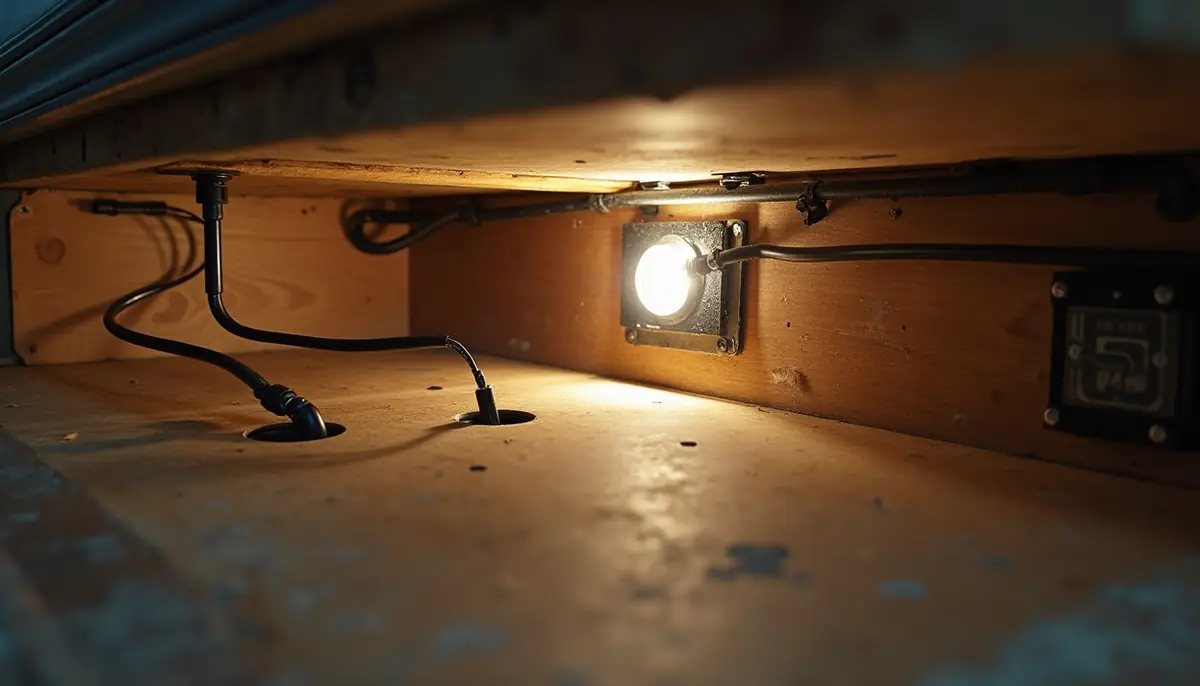
How to keep mice out of RV during winter storage?
- Remove all food. Empty cupboards, the fridge, the pantry drawer, pet food and any bird seed in outside compartments. CDC’s vehicle guidance is simply not to leave food in the vehicle.
- Remove or stand up nesting material. ICWDM advises, for cabins left empty, removing padded cushions and storing them on edge, separate from one another, and reinserting empty drawers upside down. The same works for dinette cushions and RV drawers. Take paper towels, tissues and spare bedding home: UC IPM says deer mouse nests may be lined with shredded cloth.
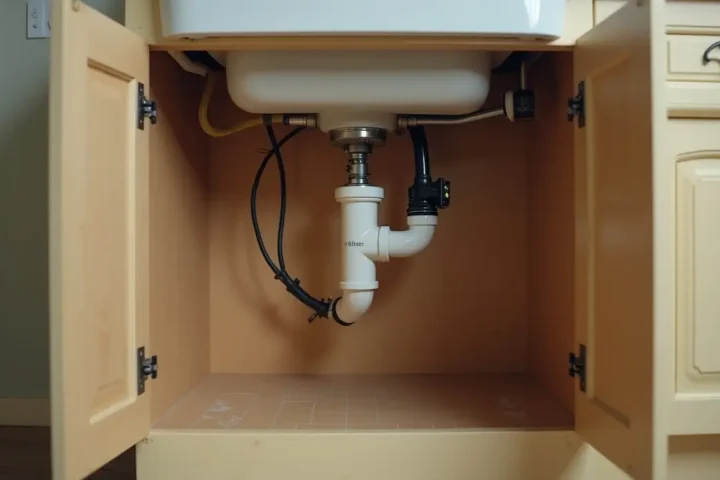
- Seal the floor and wall penetrations using the table above, starting under the kitchen sink and the bathroom, where the plumbing comes through.
- Retract slides and close every vent and window.
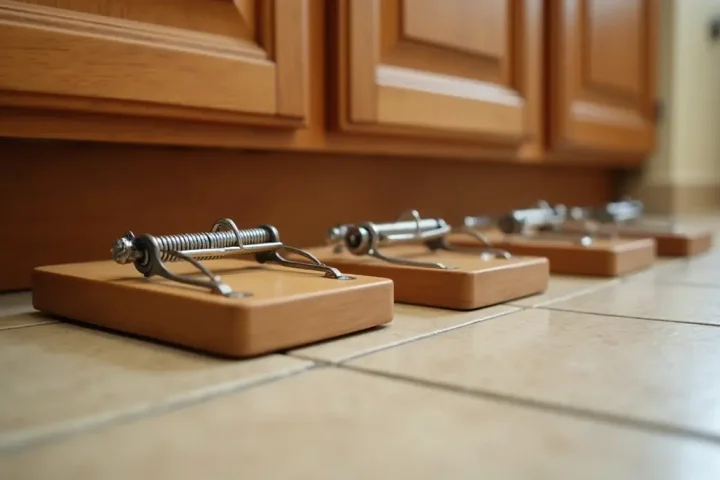
- Set snap traps. Put several inside the coach along walls and in cupboards, plus one or two in outside compartments. ICWDM advises using several traps even if only a single mouse is believed to be present. UC IPM says peanut butter, or peanut butter mixed with oats, is usually an effective bait, and advises against glue boards for deer mice. Our guide to trap placement that actually works covers setting.
- Check the RV at least monthly. A set trap in an unvisited RV for four months will hold a decomposing mouse; our guide to telling whether mice are gone explains how to read the traps and droppings on each visit.
- Disconnect the battery. CDC advises disconnecting a vehicle battery before inspecting an engine compartment for rodents; the tow vehicle needs the same care, as our guide to mice in a car and wiring damage explains.
Does where you store it matter?
It does. UC IPM says deer mice prefer forests, grasslands and agricultural crops, and often enter vacated cabins and other structures to nest and store food. An RV parked on grass at a field edge or beside woodland is in deer mouse habitat; a paved lot away from long grass and hedgerows puts more ground between the coach and the mice.
Is it common for RVs to get mice?
No survey counts how many stored RVs get mice, but CDC names campers specifically: its clean-up guidance says rodents may build their nests in cars, trucks, campers and other vehicles. The season matters too. In our analysis of US iNaturalist research-grade records, the share of records that are deer mice and white-footed mice rises from 69 in August to 154 in November, and house mouse records rise from 40 in June to 203 in November, against a yearly average of 100. That is exactly when most RVs are parked for the winter.
These records show when people notice mice, mostly outdoors, not infestation counts, but they match UC IPM’s account that house mice move indoors in autumn.
What the repellent advice is worth
| Remedy | What the evidence shows |
|---|---|
| Dryer sheets | No published test on mice; the soft sheets are fibrous nest material. Our review of whether dryer sheets repel mice covers the one gnat study behind the idea. |
| Peppermint oil | Avoidance in a short laboratory maze test that was gone by one week; our analysis of what the peppermint oil studies actually found gives the numbers. |
| Irish Spring and other scented soap | No controlled study on mice; our review of whether Irish Spring soap repels mice found the soap research was on deer. |
| Ultrasonic plug-in devices | ICWDM: there are no methods known for keeping deer or white-footed mice out of structures by means of sound. Our review of ultrasonic pest repellers covers the trials. |
| Mothballs | NPIC: they have little or no effect as repellents, and should not be used against animals unless the label describes that use. |
| Any registered repellent | ICWDM: no repellents are registered for deer or white-footed mice. |
Compiled by The Pest Control Brief from ICWDM, the National Pesticide Information Center (NPIC) and the studies reviewed on the linked pages. The wider comparison is in our guide to every mouse repellent against the evidence.
Why mothballs in a camper are a bad idea
Mothballs are a pesticide, and NPIC says the label of any pesticide tells you exactly where and how it may be used. NPIC explains that the vapour is meant to build up inside airtight containers to kill clothes moths; used in the open, NPIC says, the gas is released into the environment, and if you can smell it you are breathing the pesticide. An RV is a small sealed living space that you will sleep in next spring, with fabric that absorbs the odour. Our guide to mothball fumes and off-label use covers naphthalene and paradichlorobenzene in detail.
What is the 5 day rule for mice?
It is an informal rule of thumb, not a published standard: the idea that mice are gone once 5 days pass with no catches and no fresh droppings. We found no extension service or health agency that sets a 5 day rule, and a stored RV is not checked daily anyway. Clean all droppings on one visit, then judge the next visit by whether any new droppings or catches appear on the cleaned surfaces.
Opening up in spring: the hantavirus step
Deer mice, the mice most likely to use a rurally stored RV, are the principal reservoir of Sin Nombre virus, according to UC IPM, and CDC says the most common hantavirus causing illness in the US is spread by the deer mouse. CDC has two airing times. For vehicles, including campers, it says to open the doors to let the interior air out for 20 minutes. For homes and outbuildings it gives 30 minutes. A camper is both a vehicle and a small closed room, so 30 minutes with the door and every window open covers both.
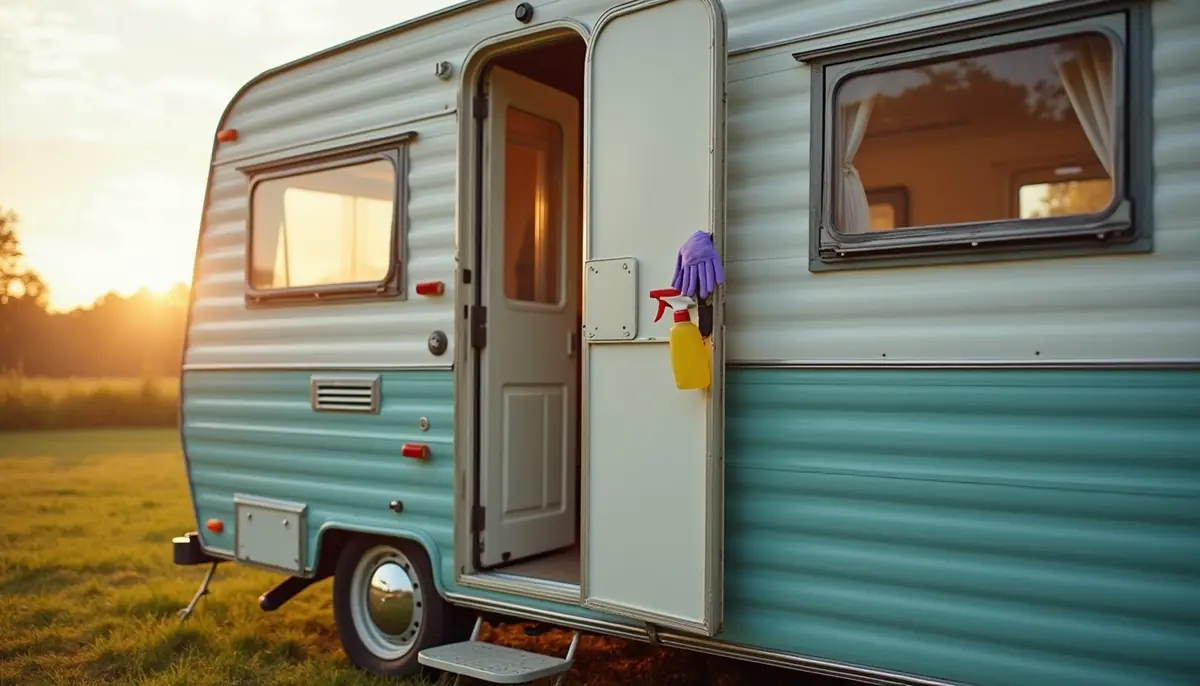
- Open the door, windows and roof vents and walk away for 30 minutes.
- Put on rubber or plastic gloves. Mix 1.5 cups of household bleach in 1 gallon of water, or use an EPA-registered disinfectant.
- Soak droppings and nests and leave for 5 minutes or the label time. CDC says not to vacuum or sweep rodent urine, droppings or nesting materials.
- Wipe up with paper towels, bag the waste, and disinfect counters, cupboards and drawers.
- Launder bedding and curtains in hot water and detergent, as CDC advises for potentially contaminated fabrics.
- Before running the furnace, generator or air conditioner, check intakes and filters for nest material, as CDC advises before starting a vehicle that has been idle.
Heavy contamination, with several nests or droppings through insulation, is beyond a wipe-down; our CDC hantavirus cleanup guide explains when to bring in professional help.
Frequently asked questions
How to keep mice out of RV during winter storage?
Remove all food, stand cushions on edge, seal floor and wall openings over 1/4 inch with copper mesh or metal, retract slides, disconnect the battery and set snap traps inside the coach and compartments. ICWDM advises several traps even for one mouse. Store on paving away from field edges, and check the RV at least monthly so traps are emptied.
How do I know the mice are gone from my RV?
CDC’s trapping guidance gives the test: if no rodents are captured for a week and there are no new signs, they are gone. In storage you cannot check daily, so judge by visits. Clean every dropping on one visit, reset the traps, and if the next monthly visit shows no fresh droppings, no catches and no new chewing, activity has stopped. Any new sign means mice are still getting in, so recheck the floor openings over 1/4 inch.
Is it common for RVs to get mice?
No survey measures how often, but CDC names campers among the vehicles rodents nest in. Risk rises in autumn: our iNaturalist analysis shows deer mouse and house mouse records peaking in November, when most RVs go into storage. Coaches parked beside grassland or woodland, the deer mouse habitat UC IPM describes, are the most exposed.
Does Irish Spring Soap keep mice out of campers?
No published study shows that it does. The soap research behind the idea was done on deer browsing, not mice, and ICWDM states that no repellents are registered for deer or white-footed mice, the species most likely in a stored camper. Bars of soap are also something mice can gnaw. Sealing openings over 1/4 inch and trapping are what the extension evidence supports.
Sources
- Centers for Disease Control and Prevention, How to Clean Up After Rodents, including How to Inspect and Disinfect a Vehicle.
- Centers for Disease Control and Prevention, About Hantavirus.
- University of California Statewide IPM Program, Pest Notes: House Mouse (UC ANR Publication 7483) and Pest Notes: Deer Mouse (UC ANR Publication 74161).
- Internet Center for Wildlife Damage Management, Deer and White-footed Mouse Damage Prevention and Control.
- National Pesticide Information Center, Oregon State University, FAQ: Mothballs.
- The Pest Control Brief analysis of iNaturalist research-grade records, pulled October 2026 (b19 to b30 files) or November 2026 (b35/b36 hour files).