Does Bar Soap Repel Mice? The Evidence Behind the Hack
No: no published study shows that scented deodorant bar soap repels house mice, in a house, a cabin or a camper. The idea is borrowed from deer, where Cornell researchers found tallow soap bars cut browsing within a short range of each bar. The same researchers noted that soap-treated apple trees seemed more prone to damage from voles, which are rodents. Sealing gaps over a quarter inch and trapping are what remove mice.
The bar soap hack circulates in camping groups, RV forums and gardening threads. What it lacks is a test on mice. Here is what each claim behind it rests on.
The claims against the evidence
| Claim | Tested on house mice? | What the evidence shows | Source |
|---|---|---|---|
| Scented bar soap keeps mice out | No | No controlled study found on mice or rats | Our search of PubMed and the wildlife damage literature |
| Soap bars repel deer | Deer only | Tallow soap bars and soap sprays significantly reduced deer browsing; the effect shrank with the small sphere of influence of each bar | Fargione and Richmond, Cornell, 1991 |
| Soap keeps rodents off plants | No, and the one observation runs the other way | Field observation suggested soap-treated apple trees were more susceptible to vole damage | Fargione and Richmond, 1991 |
| Predator smell scares mice | Yes, laboratory mice | Mice reduced visits to boxes with cat body odour and cat urine | Adduci and colleagues, PLOS ONE, 2021 |
| Natural oils such as mint repel mice | Products are sold | Little information is available on their effectiveness against mice | Internet Center for Wildlife Damage Management (ICWDM) |
| Chemical repellents solve infestations | General review | Seldom practical for mouse infestations | ICWDM |
| Ultrasonic plug-ins drive mice away | Yes | Generally not effective; not recommended for infestations | ICWDM |
Compiled by The Pest Control Brief from the sources named in each row.
Where the soap idea came from: deer, not mice
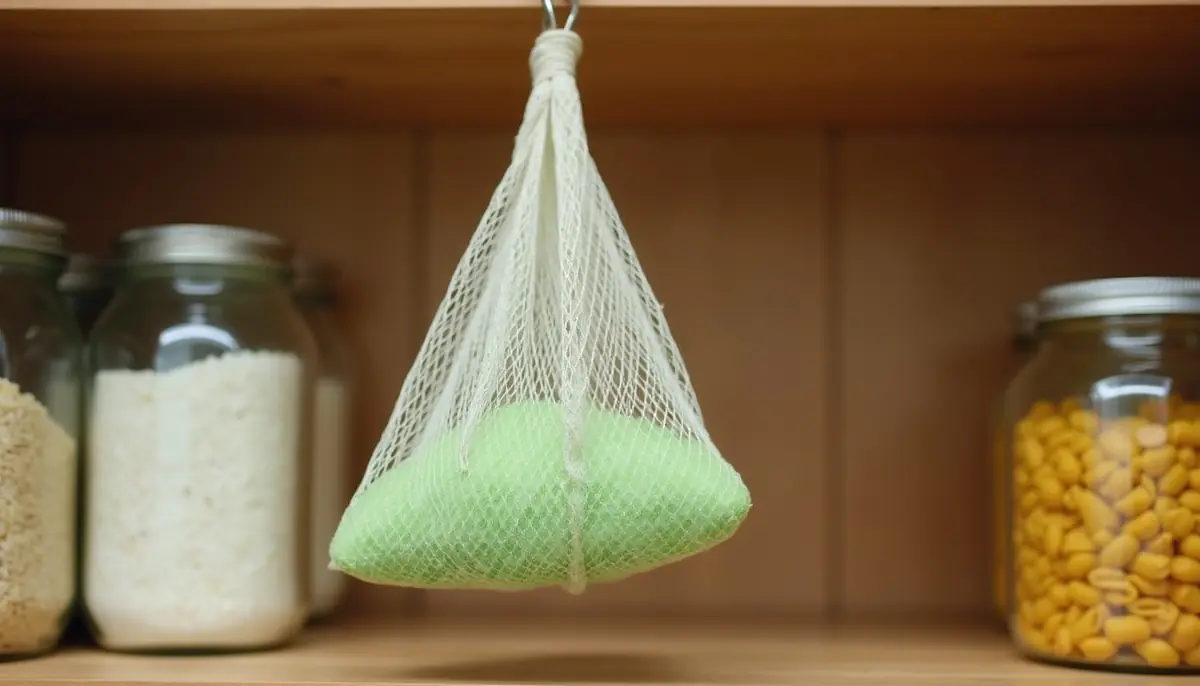
The soap trick has a real research history, but it belongs to deer. Michael Fargione of Cornell University’s Hudson Valley Laboratory and Milo Richmond of the New York Cooperative Fish and Wildlife Research Unit ran a series of bioassays for the 1991 Eastern Wildlife Damage Control Conference. Sweet corn plots protected with tallow-based soap bars, non-tallow bars or a commercial spray all had significantly less browsing than untreated plots. Two soap spray applications protected native vegetation as well as bars over a 126-day period.
Two details from the Cornell work matter for anyone hanging soap in a mouse problem. First, tallow fatty-acid soap reduced deer damage significantly more than coconut fatty soap, and the authors concluded tallow appeared to be a major component of the repellent effect; the perfume added nothing to soap sprays. Second, soap bars lost cost-effectiveness after the first season because each bar protected only a small sphere around itself. A strongly perfumed bar is therefore not even the best soap for deer, and the effect it has is local.
White-tailed deer are large browsers sampling twigs in the open. A house mouse, Mus musculus, is a small omnivore that lives inside the walls and eats what it finds. Our guide to keeping deer out of the yard covers soap as one deer option; the result does not transfer to rodents.
Can soap attract mice instead?
Possibly, and the only published observation points that way. The same Cornell paper warned growers using soap to practise aggressive vole management, because field observation suggested soap-treated trees were more susceptible to vole damage. The authors did not test why. Bar soap is made from fats, and the Cornell team compared tallow, an animal fat, with coconut fat. UC IPM describes house mice as omnivorous animals that eat whatever food is available, and our guide to what mice actually eat sets out their real diet. We found no controlled study of mice eating bar soap, so treat reports of gnawed bars as anecdote rather than measurement.
What does draw mice indoors is well documented: food, shelter and warmth, and the autumn move into buildings. Our breakdown of what attracts mice to a house lists the sources worth removing first.
How long does bar soap repel mice?
Nobody has measured it, because nobody has shown it repels mice at all. The 126-day figure that sometimes circulates comes from the Cornell deer work, measured on native vegetation browsed by white-tailed deer. For mice, the closest published evidence on smells is short-lived. Mice in the 2021 PLOS ONE study by Laura Adduci and colleagues reduced their visits to boxes holding cat body odour and cat urine, but that was a three-box laboratory set-up with predator-inexperienced animals, not a kitchen with food in it. Our review of whether peppermint oil repels mice found the same pattern: an early effect that fades.
When mice move in
Soap gets hung in cabins, campers and garages in autumn, which is when mouse sightings rise. In iNaturalist research-grade records, US house mouse records climb from 235 in June to 443 in October. Deer mice, the usual mouse in rural cabins, make up a larger share of all records from October to January than in summer. CDC says the most common hantavirus that causes illness in the United States is spread by the deer mouse, so the clean-up rules are strict: follow the CDC method in our guide to cleaning up mouse droppings safely.
These are raw monthly record counts, 3,666 house mouse records in all, which show when people notice and log mice. We plot raw counts rather than our seasonality index because mice are active year round, and their share of winter records rises only because insects and plants vanish from them.

Is soap legal to sell as a mouse repellent?
Soap sold for washing makes no pest claim, so it is not a pesticide. A product sold to repel mice must either be registered with EPA or meet the minimum risk exemption in 40 CFR 152.25(f), which limits active ingredients to a fixed list. That list includes peppermint oil, cedarwood oil and sodium lauryl sulfate, a common detergent, and it forbids false and misleading labelling. Exemption is not evidence of effect. ICWDM notes that natural oils including mint oil and balsam fir oil are sold as mouse repellents and that little information is available on how well they work. Our scorecard on whether mouse repellents work covers each registered type.
What works instead
ICWDM, the federal and university wildlife damage resource, lists three parts to house mouse control: rodent-proof construction, sanitation and population reduction. In practice:
- Seal every opening wider than a quarter inch. ICWDM advises hardware cloth for larger openings and stainless steel or copper wool for small gaps, and notes that expanding foam will not prevent rodent entry. Our guide to which exclusion materials stop rodents compares them.
- Store food, birdseed and pet food in sealed metal or heavy plastic containers, in the house and in the camper.
- Trap with snap traps set close to walls. UC IPM advises spacing them no more than about 10 feet apart where mice are active, and using enough traps to make the trapping period short and decisive.
- In a vehicle or RV, a bar of soap on the dashboard does nothing for the engine bay or the vents; our page on mice in cars shows where they nest and how to clear them.
The full order of work, including when to call a professional, is in our guide to getting rid of mice.
Frequently asked questions
What smell do mice hate the most?
The best laboratory evidence is for predator odour. In a 2021 PLOS ONE study, house mice reduced their visits to boxes containing cat body odour and cat urine. The peppermint evidence is weaker and short-lived. No smell has been shown to keep mice out of a home, and the rat version of the question gets the same answer in our guide to smells rats hate.
How do the Amish get rid of mice?
We found no published study of Amish rodent control, so any specific claim is anecdote. The methods extension services recommend for farms and homes alike are traps, sealed feed storage and, in barns, cats. ICWDM notes that cats may not eliminate an existing mouse population, though in some situations they may prevent reinfestation, so traps and sealing still do the main work.
Does scented bar soap repel critters such as chipmunks, rats or deer?
Only deer have published evidence. Cornell trials found tallow soap bars and sprays reduced deer browsing over a limited radius. We found no controlled test on chipmunks, squirrels, rats or mice, and the same Cornell study observed that soap-treated apple trees seemed more susceptible to vole damage. For rodents, soap is not a tested option.
What is the number one mouse repellent?
No repellent has earned that title. ICWDM says chemical repellents are seldom practical for mouse infestations and that ultrasonic devices generally are not effective. The measure that keeps mice out is a physical one: sealing openings wider than a quarter inch with hardware cloth, metal or mortar, then trapping the mice already inside.
What happens if a mouse eats bar soap?
There is no published study on mice eating soap, so the effect is unknown. Soap is not a registered rodenticide, and leaving it out will not reliably kill or deter mice. If you find gnawed soap, treat it as a sign of mouse activity and check nearby for droppings, then seal and trap.
Sources
- Fargione MJ, Richmond ME. The Effectiveness of Soap in Preventing Deer Browsing. Proceedings of the 5th Eastern Wildlife Damage Control Conference, 1991 (DigitalCommons@University of Nebraska-Lincoln).
- Adduci LB, León VA, Schlötelburg A, Busch M, Fraschina J. Avoidance behaviour in laboratory house mice (Mus musculus) and Norway rats (Rattus norvegicus) towards predator odours. PLOS ONE 16(1):e0245441, 2021.
- Internet Center for Wildlife Damage Management. House Mouse Damage Prevention and Control Methods.
- Code of Federal Regulations, 40 CFR 152.25(f), exemptions for pesticides of a character not requiring FIFRA regulation (minimum risk pesticides).
- US Environmental Protection Agency. Minimum Risk Pesticides.
- The Pest Control Brief analysis of iNaturalist research-grade records, pulled October 2026.