Are Mice Nocturnal? What a Mouse Seen in Daylight Means

Yes, house mice are mainly nocturnal: they are most active from dusk to dawn, with the busiest spells just after dark and before first light. The rule is loose, though. The wildlife damage handbook says considerable activity may occur during the day, and UC IPM says mice can be seen occasionally in daylight when food is available. A mouse seen at noon is not proof of a large infestation, but it is worth reading the circumstances.
Why a mouse is out in daylight: causes and what each suggests
| What you see | Likely reason | What it suggests | Source |
|---|---|---|---|
| A quick dash along a wall in a quiet house | Normal flexibility; mice forage when it is quiet, not only when it is dark | One or a few mice; check for droppings before assuming more | ICWDM: “considerable activity may occur during the day” |
| A mouse at an open food source by day | Easy food draws mice out | Remove the food; set traps along that route | UC IPM Publication 7483 |
| Mice seen by day repeatedly, in several rooms | Crowding pushes low-ranking mice out of nest areas | A breeding group that has outgrown its shelter | Klimstra 1972 enclosure study |
| A mouse appearing after building work, a clear-out or a flood | Disturbed nest | A nest nearby has been opened or moved | Klimstra 1972: disturbed mice soon reappeared in the open |
| A slow, unsteady mouse in the open after bait was laid | Possible poisoning | Keep pets and children away; dispose of it with gloves | Cox and Smith 1992 (rats): anticoagulants upset the light and dark rhythm |
| A mouse in a garage, shed or cabin by day in a rural area | Possibly a deer mouse rather than a house mouse | Treat droppings with the CDC cleanup method | SUNY ESF; CDC |
Compiled by The Pest Control Brief from the Internet Center for Wildlife Damage Management (ICWDM), UC IPM Pest Notes: House Mouse (2025), Klimstra (1972) and Cox and Smith (1992) in the Proceedings of the Vertebrate Pest Conference, and SUNY ESF.
The handbook makes a point most pest company pages get backwards. Seeing mice during the day “does not necessarily mean that a large population is present,” ICWDM says, while for Norway rats it notes that some become active by day when populations are high. Daylight is a much stronger warning sign for rats than for mice, which is one reason rat noises at night deserve a different reading from mouse noises.
The rule: night, with peaks at dusk and dawn
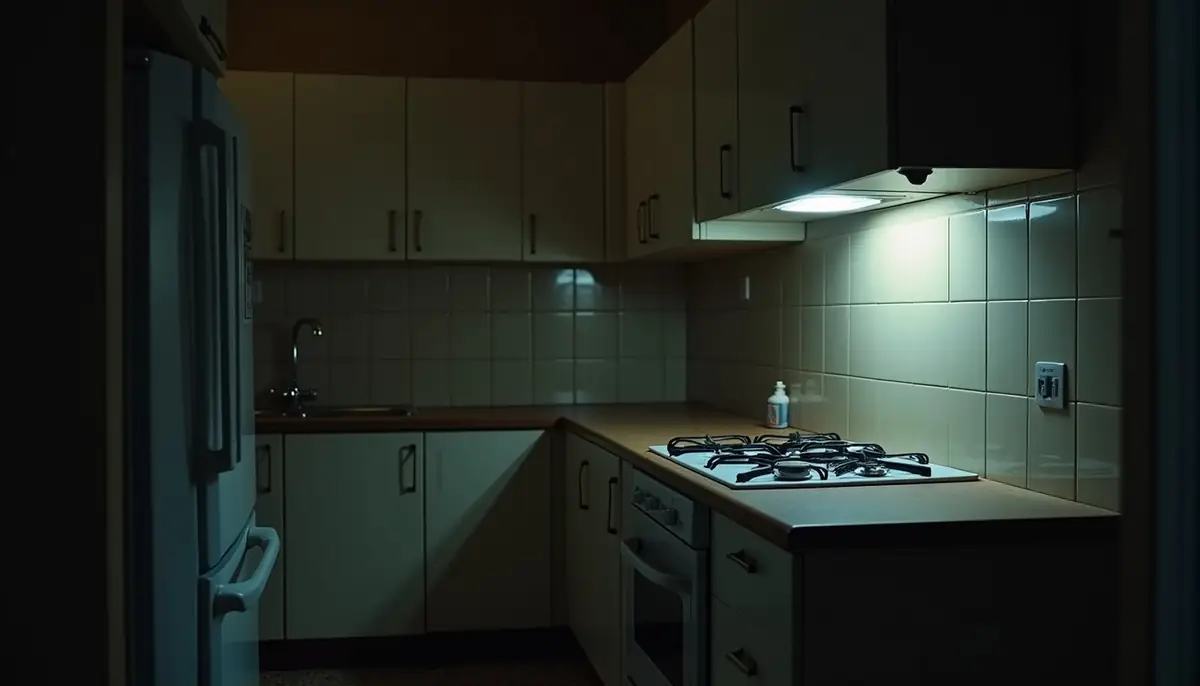
UC IPM puts it plainly: house mice are active mostly at night. University of Kentucky entomologist Michael Potter writes that mice are nocturnal and therefore rarely seen, and that they are nibblers that may make 20 to 30 visits to different food sites each night. ICWDM adds that mice leave and return to their nests up to 40 times a day.
The dusk and dawn peaks are the reason some sources call mice crepuscular. In a 2024 Oxford study in BMC Biology, Steel and colleagues gave laboratory mice dark nestboxes, much like a burrow or wall void. The mice cut their exposure to light to an average of just 0.8 hours in 24, and their brief trips into the light peaked at dawn and dusk. The timing vanished in mice without a working circadian clock, so it is driven by the body clock, not by chance.
So the accurate answer to “nocturnal or crepuscular” is both: active through the dark hours, with the sharpest bursts around the light changes. Mice are not alone in this; our explainer on why so many bugs come out at night covers the same predator and moisture logic in insects.
The exceptions, and how a house bends the rule
Light and quiet, not the clock, set the timetable
Klimstra’s 1972 study for the Vertebrate Pest Conference kept wild-strain house mice in continuously, dimly lit arenas. Without a day and night signal, he found “some activity at almost any time,” and the lowest activity fell between 6 pm and 1.30 am. His conclusion: a constantly lit environment disrupts the normal nocturnal and diurnal pattern. A basement, a warehouse or a kitchen with the lights left on is closer to his arena than to a field.
Crowding pushes mice into the open
In the same arenas, 5 founding mice grew to an estimated 69 and 80 in about six months. As numbers rose, Klimstra saw “social outcasts” forced out of the nesting pallet, foraging openly across the floor. These were the mice most often seen and, he noted, the ones most exposed to traps and bait. This is the grain of truth behind the daytime-means-infestation claim: repeated daytime sightings in several places fit a crowded group.
Cold sends them back in
Klimstra also recorded a five day drop from 75°F to 30 to 35°F, during which about 70 per cent fewer mice were seen. UC IPM says outdoor mice frequently enter homes in autumn when nighttime temperatures become colder, which matches when people report mice.
Our analysis of iNaturalist research-grade records shows the same seasonal turn. US house mouse records rise from 235 in June to a peak of 443 in October, while deer mouse records peak at 1,015 in May and fall to 507 by December. These are photographed sightings, mostly outdoors, not infestation counts, but they show house mice being noticed most in autumn, when they move in.
What the night schedule means for you
- Noises: scratching and scurrying in walls and ceilings are loudest after dark and again before dawn. Our guide to telling mice in the walls from other noises covers how to separate them from squirrels, which are active by day.
- Not every night sound is a mouse. A steady chirp or tick at night is more often an insect; our list of bugs that make noise at night covers the usual suspects.
- Trap checks: set traps in the evening and check them first thing in the morning, before the household is moving and while any catch is fresh. Our routine for where to place mouse traps covers spacing.
- Evidence: because you rarely see the animal, droppings, gnawing and grease marks do the work. Our room by room checklist of signs of mice in the house sets them out.
- Confirming they have gone: a quiet night is not proof. The CDC standard is a week with no captures and no new signs, and our page on how to tell if mice are gone lists the checks.
Deer mice and other species
The “field mice” that move into cabins, sheds and garages in much of the US are usually deer mice or white-footed mice (Peromyscus). SUNY ESF’s Adirondack Ecological Center describes the deer mouse as nocturnal and most active at twilight, and Utah State University Extension says deer mice move indoors when it gets cold outside. ICWDM says both species do not hibernate but may become torpid for a few days in severe winter weather.
The difference matters for cleanup, not timing. Utah State lists the deer mouse as a known carrier of hantavirus pulmonary syndrome, which is why droppings in a cabin or shed need the wet cleanup method the CDC requires rather than a broom or vacuum.
Deer mouse records are densest in the Northeast and the Northwest. Vermont leads at 4.33 records per 10,000 iNaturalist observations, followed by Montana (3.25), Oregon (2.76) and Massachusetts (2.73).

Frequently asked questions
Will mice go near sleeping humans?
They can. Mice forage wherever the house is quiet at night, and a bedroom with crumbs or a pet bowl is quiet. They avoid people who are moving, and bites are rare; our page on whether mice bite covers when they happen. Keep food out of bedrooms and seal gaps over 1/4 inch around pipes and radiators, the size UC IPM says a house mouse can squeeze under.
What scares mice out of the house?
Nothing reliably. UC IPM says house mice are easily frightened by strange noises but quickly become accustomed to them, and that there is little evidence sound, magnetic or vibrating devices drive established mice out of buildings. Our review of ultrasonic pest repellers covers the tests. Trapping and sealing gaps over 1/4 inch are what work.
Does one mouse mean an infestation?
Not necessarily. ICWDM says a mouse seen in daylight does not necessarily mean a large population is present. Look at the evidence instead: droppings in one spot suggest one or two mice, while droppings in several rooms, gnawed packaging and noises in more than one wall suggest a breeding group. A female can give birth 18 to 21 days after mating, so act on a single sighting.
Where do mice go during the day?
Back to the nest. ICWDM says nests can be in any sheltered spot, are 4 to 6 inches across, and are preferably next to heat such as compressors, pilot lights and hot water heaters. Wall voids, cabinet bases and the space under appliances are typical. Our guide to what a mouse nest looks like shows where to look.
Sources
- University of California Statewide IPM Program, Pest Notes: House Mouse, UC ANR Publication 7483 (N. M. Quinn and M. Frye), updated July 2025.
- Internet Center for Wildlife Damage Management, House Mouse Biology; Norway Rat Biology; Deer and White-footed Mouse Biology.
- Potter, M. F. Control of Mice, ENTFACT-617, University of Kentucky College of Agriculture.
- Steel, L. C. E., Tam, S. K. E., Brown, L. A., Foster, R. G. and Peirson, S. N. (2024). Light sampling behaviour regulates circadian entrainment in mice. BMC Biology.
- Klimstra, W. D. (1972). House mouse behavior and its significance to control. Proceedings of the Vertebrate Pest Conference 5.
- Cox, P. and Smith, R. H. (1992). Rodenticide ecotoxicology: pre-lethal effects of anticoagulants on rat behaviour. Proceedings of the Vertebrate Pest Conference 15.
- SUNY College of Environmental Science and Forestry, Adirondack Ecological Center, Deer Mouse.
- Utah State University Extension, Urban Pest Guide: Deer Mouse.
- Centers for Disease Control and Prevention, How to Trap Up to Remove Rodents.
- The Pest Control Brief analysis of iNaturalist research-grade records, pulled October 2026.