Rat Noises at Night: What You Are Hearing and Where
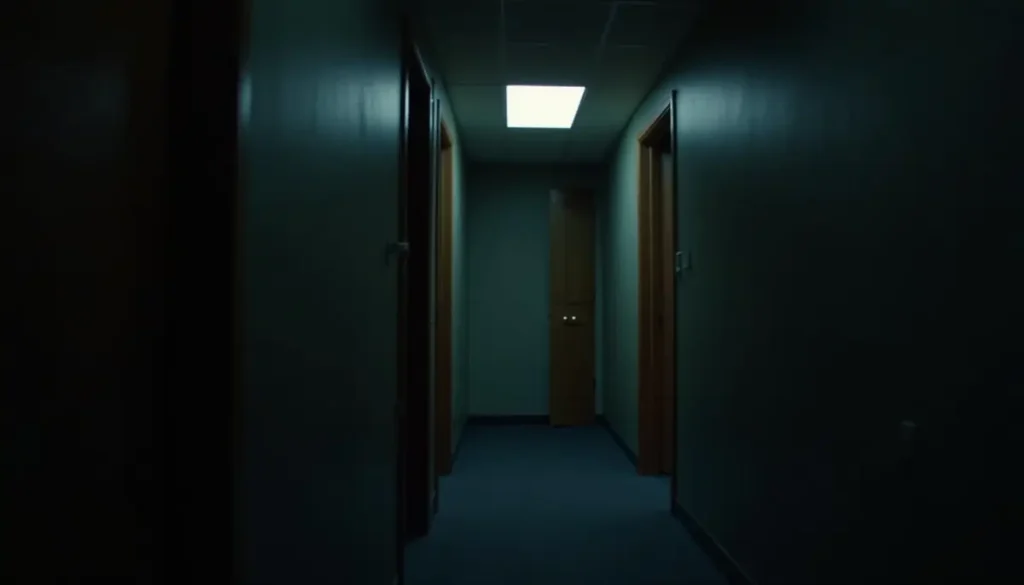
Rat noises at night are mostly movement, not voices: scratching, fast scurrying, gnawing and rustling in a ceiling, wall or floor, starting around dusk. Most rat calls are ultrasonic, so the squeak you can hear usually means a fight, a trap or a cornered animal. Rats overhead in the attic are usually roof rats; sounds low in walls, under floors or in a crawlspace point to Norway rats. A flour tracking patch confirms it in one night.
Match the sound to the source
| What you hear | Usually | Where it comes from | When | Quick check |
|---|---|---|---|---|
| Light, rapid scratching | Rat or mouse climbing | Inside walls, along rafters, on insulation | Dusk onward | Rub marks on beams or pipes along the route |
| Quick footsteps that stop and start | Rats travelling a fixed route | Ceiling above a hallway, top plate of a wall | After dark, again through the night | Flour patch on the route shows footprints and a tail drag |
| Steady grinding or crunching | Gnawing | Joists, wall corners, around pipe and wire holes | Night, in bouts | Fresh shavings or chewed insulation below |
| Rustling, shuffling | Nest building | Attic eaves, wall voids | Night | Tunnels in attic insulation |
| Short, sharp squeaks or a shriek | Fighting rats, or a rat caught in a trap | Anywhere | Irregular | Check traps; look for droppings in clumps |
| Rolling, running and thumping | Tree squirrels | Attic | Daytime | Watch the roofline in daylight |
| Heavy walking, dragging | Raccoon or opossum | Attic, chimney | Night | Torn vents, displaced shingles |
| A regular tick or knock | Mechanical: pipes, ducts, a smoke detector, siding | Fixed spot | Same time daily, or with wind or heat | Does it repeat on a rhythm? Then it is probably not an animal |
The Internet Center for Wildlife Damage Management (ICWDM) tells inspectors to ask first whether a noise is consistent and repetitive: one that keeps a rhythm, or only comes with wind or hot siding, is likely mechanical. It also warns that noise alone does not reliably name the species, because hearing differs and insulation changes what reaches you.
What noises do rats make at night?
ICWDM lists the audible set for the Norway rat plainly: a variety of high-pitched squeaks, plus noises from fighting, gnawing and climbing. In a house, movement sounds dominate, and because rats reuse the same routes, the scurry repeats along the same stretch of ceiling.
The vocal part is mostly out of your range. A 2007 review by Christine Portfors in the Journal of the American Association for Laboratory Animal Science describes three ultrasonic call types in rats: pups give a 40 kHz call when separated from their mother, adults give a 22 kHz call when anticipating something aversive, and adults give 50 kHz calls in non-aversive, positive situations. ICWDM defines ultrasound as sound above the upper limit of human hearing, about 20 kHz. Stefan Brudzynski’s 2021 review in Brain Sciences adds that 22 kHz calls work as predator alarms and that, when a cat was nearby, alarm calls held back eating for up to 2 hours.
So a colony can call constantly while you hear nothing, and baby rat noises are the same: a pup’s 40 kHz call is ultrasonic. What you can hear is a fight, a rat caught but not killed in a trap, or one cornered.
Why do rats make noise at night?
Because night is their working day. ICWDM states that Norway rats are nocturnal and usually become active around dusk, when they seek food and water. For roof rats it says they usually begin searching for food shortly after sunset, and UC IPM notes they are often seen running along utility lines or fence tops at dusk or soon after.
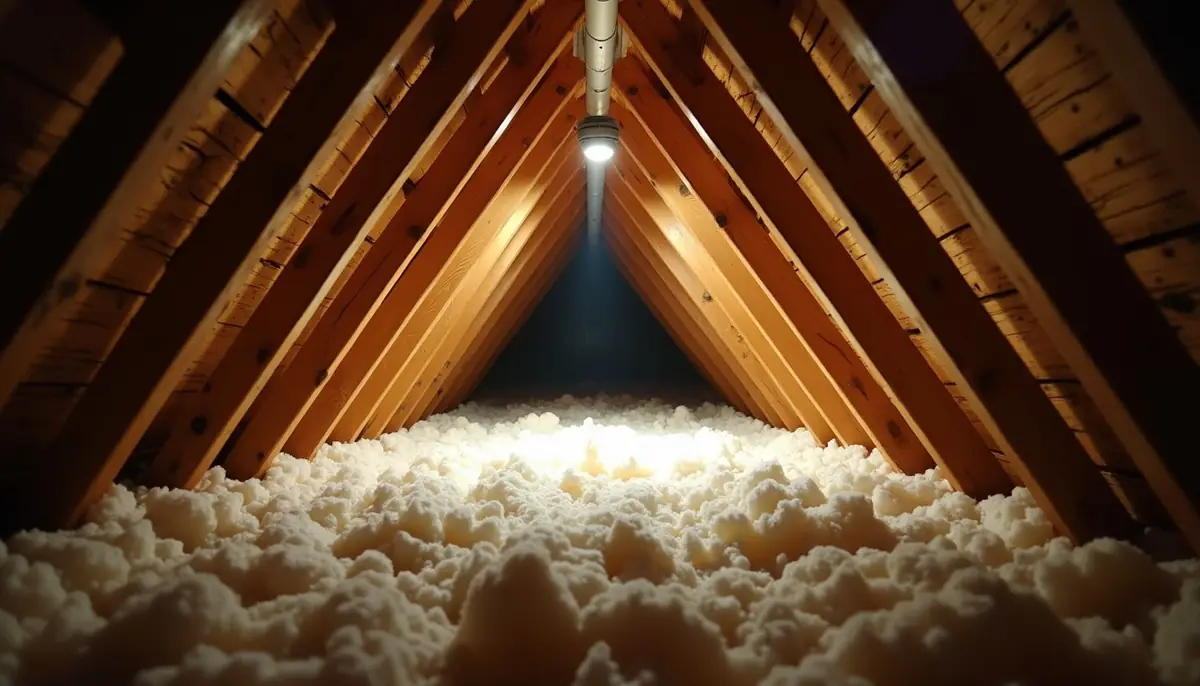
Gnawing is the second reason, and it is not optional for the rat. Norway rat incisors grow continuously at about 5 inches a year, according to ICWDM, and rats keep them worn down on hard surfaces. UC IPM adds nest building, which in houses means shredding insulation in walls and ceilings. That is the rustle you hear above a bedroom ceiling.
A Norway rat covers an area about 100 to 150 feet across each day (ICWDM), and UC IPM gives a nightly foraging range of 100 to 500 feet from the nest for Norway rats and 300 feet or more for roof rats. Indoors that covers the whole floor plan, so the noise seems to move between rooms.

Above the ceiling or under the floor: which rat is it?
UC IPM says that when both species share a building, Norway rats typically occupy the basement and ground floors and roof rats the upper floors. Roof rats are agile climbers that favour attics, walls, false ceilings and cabinets indoors; Norway rats are burrowers that nest at or below ground level. Our roof rat guide covers the attic species in detail, and the rat vs mouse comparison covers telling a young rat from a mouse once you have one in hand.
Where you live shifts the odds. In our analysis of iNaturalist research-grade records, roof rats are most often recorded, relative to everything people photograph, in Hawaii, Florida, Oregon, Louisiana and California, while Norway rat records are concentrated in New York, Massachusetts, Rhode Island and Washington.
Rat, mouse, squirrel, raccoon or bat?
The time of night narrows it quickly. This table is compiled by The Pest Control Brief from ICWDM species accounts and UC IPM Pest Notes.
| Animal | Adult weight | Active | What the sound tends to be |
|---|---|---|---|
| Roof rat | 5 to 10 oz (UC IPM) | From shortly after sunset | Scurrying and gnawing high in the house: attic, top of walls |
| Norway rat | 7 to 18 oz (UC IPM); 12 to 16 oz average (ICWDM) | From around dusk | Gnawing and movement low: basement, crawlspace, under floors |
| House mouse | 0.4 to 0.9 oz (ICWDM) | Mainly night, some daytime | Lighter scratching and squeaks; on drop ceilings it can still be loud (ICWDM) |
| Tree squirrels | Not compared here | Daytime | Running and rolling in the attic in daylight |
| Flying squirrels | Not compared here | Night | Night scurrying in the attic that is easily blamed on rats |
| Raccoon | Not compared here | Night | Heavy walking in the attic; chirping in a chimney |
| Bats | Not compared here | Leave the roost at dusk | Noise near the roost exit around dusk |
ICWDM states that flying squirrels are active at night and all other North American squirrels mainly by day, so night noise in the attic is not automatically rats; see our squirrels in the attic guide and the flying squirrel page for the difference. Mice sound lighter, but ICWDM notes that size is unreliable by ear because their movements on drop ceilings can be loud; mice in walls covers that case. If the night noise is a chirp, a buzz or a click with no scratching, it is more likely an insect: bugs that make noise at night sorts those out.
Do rats go near sleeping people?
Usually not. ICWDM notes rats are nocturnal and wary of humans. The exception is a heavy infestation. ICWDM states that rats may bite infants and adults who are unable to defend themselves in areas with high numbers of rats, and that bites typically occur where there are food odours, such as on the hands and mouth. If someone in the house has been bitten, contact a doctor; rat bite fever is one of the diseases ICWDM lists for Norway rats.
Confirm it in three nights
- Night one: map the sound. Note the times and the spot on the ceiling or wall. Dusk onward fits rats; daylight thumping fits squirrels.
- Night one: lay a flour patch. ICWDM’s method is a tracking patch of flour rolled smooth, placed overnight in a pathway such as the attic hatch edge, along a basement wall or behind the fridge. Footprints with a tail drag mean rodents.
- Night two: look for the hard evidence. Rat droppings run up to 3/4 inch long and 1/4 inch across with blunt ends, in clumps; ICWDM puts output at about 40 to 50 droppings a day. Check for greasy rub marks on beams and pipes, fresh shavings below gnawed wood, and tunnels in attic insulation.
- Night three: count. ICWDM’s rule of thumb: old droppings and gnawing, or one or more rats seen at night with none by day, means moderate numbers; fresh droppings, tracks and gnawing, three or more rats seen at night, or any rat seen in daytime means a large population.
- Daylight: walk the outside. UC IPM advises sealing any opening larger than 1/4 inch and notes that young rats can squeeze under a door with a 1/2 inch gap.
What noises do rats hate at night?
No sound keeps them away for long. UC IPM states that rats are easily frightened by unfamiliar noises but quickly become accustomed to repeated sounds, which makes frightening devices, including high-frequency and ultrasonic ones, ineffective in homes and gardens. ICWDM cites Howard and Marsh, whose rodent work found ultrasonic control programmes were about as successful with the units switched off.
What to do next
One or two rats in a garage or a single wall void, with an entry hole you can find, is often a DIY job: seal the openings with hardware cloth, sheet metal or steel wool as UC IPM recommends, then set snap traps at right angles to the wall along the route your flour patch revealed. Our rodent exclusion materials guide lists what rats cannot chew through. Roof rats also need traps on beams and ledges.
Call a licensed professional when you see rats in daylight, when the noise comes from several parts of the house, when there is gnawing near wiring, or when the attic insulation is tunnelled and fouled. UC IPM notes that roof rats in an attic raise safety concerns from gnawing, including electrical sparks and fires.
Frequently asked questions
What are three signs that you have a rat infestation?
Droppings, gnaw marks and noise are the three most people find first. UC IPM’s list also includes greasy smudge marks where fur rubs along beams, rafters and pipes, and rats seen on utility lines or fence tops at dusk. Rat droppings are up to 3/4 inch long with blunt ends and usually clumped, which ICWDM contrasts with other rodents, whose droppings tend to be scattered.
How noisy are rats at night?
Loud enough to wake light sleepers, but the volume depends on the house more than the rat. ICWDM notes that insulation thickness and building materials change what you hear, and that even mice can sound loud on drop ceilings. Most of what reaches you is scratching, scurrying and gnawing, because adult rat calls at 22 and 50 kHz are ultrasonic.
What does a rat screaming sound mean?
An audible shriek or loud squeal usually means a rat in distress or conflict: a fight between rats, an animal caught but not killed in a trap, or one cornered by a pet. ICWDM lists high-pitched squeaks and fighting noise among Norway rat sounds. Check any traps you have set and handle trapped animals only with gloves.
Are rats active during the day?
Some are, and it is a warning sign. ICWDM says some Norway rats are active by day when populations are high or to avoid people at night, and its estimating rules treat any rat seen in daytime as a sign of large numbers. Daytime thumping in an attic is more often a tree squirrel, which is active in daylight.
Sources
- University of California Statewide IPM Program, Pest Notes: Rats (Publication 74106).
- University of California Statewide IPM Program, Pest Notes: Bats and Pest Notes: Tree Squirrels.
- Internet Center for Wildlife Damage Management: Norway Rats, Norway Rat Biology and Norway Rat Damage Identification, based on Timm, Prevention and Control of Wildlife Damage, 1994.
- Internet Center for Wildlife Damage Management: Roof Rat Biology, House Mice, Tree Squirrel Biology, Raccoon Biology, Identifying Noises Caused by Wildlife in Structures, and Ultrasound as a Repellent for Wildlife.
- Portfors, C.V. Types and functions of ultrasonic vocalizations in laboratory rats and mice. Journal of the American Association for Laboratory Animal Science 46, 2007.
- Brudzynski, S.M. Biological functions of rat ultrasonic vocalizations, arousal mechanisms, and call initiation. Brain Sciences 11(5):605, 2021.
- The Pest Control Brief analysis of iNaturalist research-grade records, pulled October 2026.