Squirrel in the Wall: How to Tell and How to Get It Out
A squirrel in the wall usually announces itself with scratching and scurrying in daylight, loudest in the early morning and late afternoon, and it almost always got in through a gap at the roofline and climbed down from the attic. Noise that runs all night points to mice, rats or a flying squirrel instead. Constant frantic scratching in one spot means an animal may be trapped and needs help the same day. Never seal the outside hole until you know the wall is empty.
What the sound tells you
| What you hear | When | Most likely | Next step |
|---|---|---|---|
| Scurrying, scratching, rolling or thumping that moves up and down the wall | Early morning and late afternoon, quiet at night | Gray or fox squirrel using the wall void from the attic | Find the entry at the roofline and plan exclusion |
| Same sounds plus faint chirping or squeaking in March to April or July to August | Daytime | A nest with young | Wait for the young to move before sealing |
| Frantic clawing and chewing that stays in one spot for hours | Any time, often round the clock | An animal that fell into the void and cannot climb out | Same-day help; do not wait it out |
| Light pattering and gliding thumps | After dark | Southern flying squirrel | Treat as a squirrel, not a rodent |
| Fast, light scratching and gnawing | Mostly after dark | House mouse or rat | Trap indoors and seal small gaps |
Compiled by The Pest Control Brief from UC IPM Pest Notes 74122, the Internet Center for Wildlife Damage Management, SUNY ESF and the Missouri Department of Conservation.
The night test is the strongest single clue. In our analysis of iNaturalist records, only 2.9 per cent of eastern gray squirrel records are logged between 8pm and 6am, against 17 per cent for house mice and both rat species. Scratching at 2am is very rarely a gray squirrel, and our guide to rat noises at night and where they come from covers that side of the diagnosis.
What do squirrels in walls sound like?
A gray squirrel is many times the weight of a mouse, so the sound is a definite scurry or thud rather than a faint tick. SUNY ESF describes the gray squirrel as diurnal and most active in the two to three hours after dawn and before dusk; UC IPM says early morning and late afternoon, and Indiana DNR says early morning and late evening. That is the schedule to listen for.
Do squirrels squeak in walls?
Yes, sometimes. The Internet Center for Wildlife Damage Management lists squirrel calls as churrs when angry, barks as warnings and squeals when a squirrel is terrorised or in pain. A high squeal from a wall is worth taking seriously: it is the call an injured or stuck animal makes. Thin, repeated chirping in spring or late summer is more often young in a nest.
Mice are the usual mix-up
Mice are far lighter, keep night hours and live in walls full time; our page on telling mice in the walls apart by sound and sign covers that case.
The Missouri Department of Conservation describes the southern flying squirrel as nocturnal, 8 to 11.25 inches long and 1.5 to 5 ounces, so it is easily taken for a rodent. Our guide to flying squirrels in the attic and walls explains how to confirm one.
How to tell if a squirrel is in your walls?
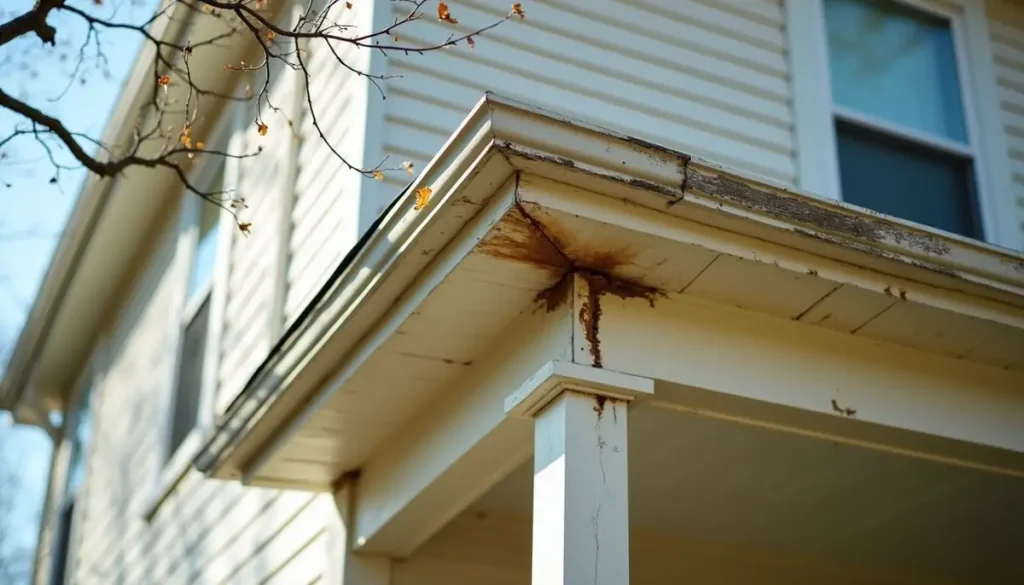
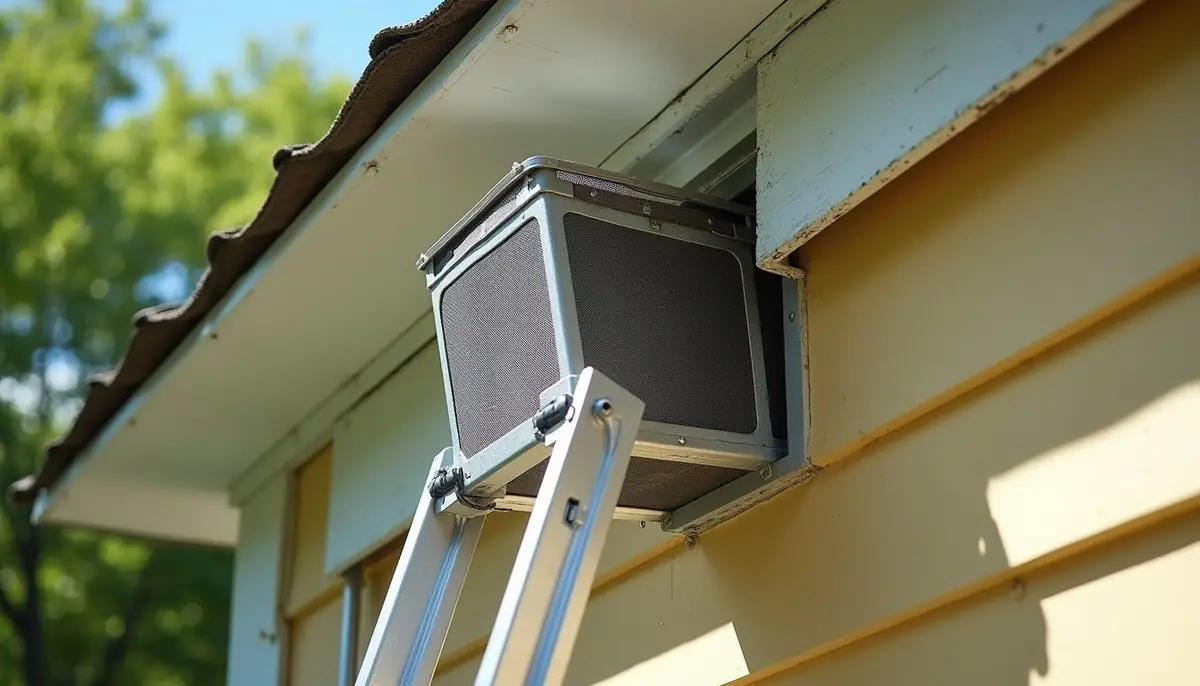
Go outside and look up. Squirrels do not enter at ground level the way mice do. UC IPM notes they chew into wooden buildings or come into attics through gaps or broken vent screens, so check these places with binoculars:
- Roof returns and the corners where the fascia meets the soffit, where a fresh chewed hole is easiest to spot.
- Gable vents and ridge vents with bent or torn screens.
- Gaps around chimneys, plumbing stacks and where a lower roof meets a wall.
- Branches within 6 to 8 feet of the roof, the jumping distance the Internet Center for Wildlife Damage Management advises trimming back to.
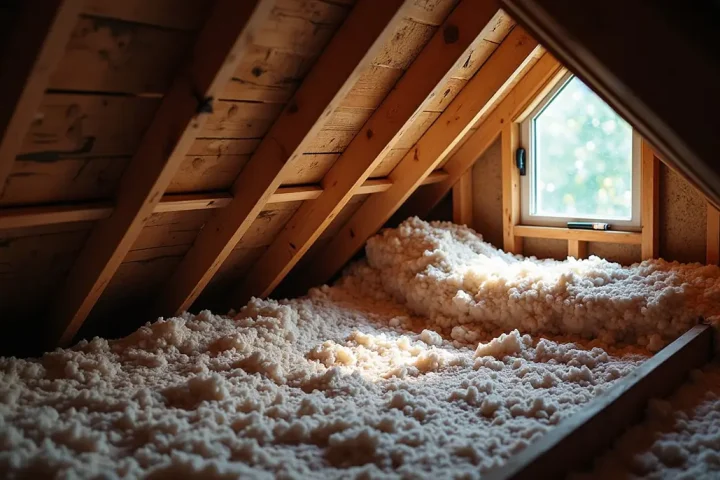
Inside the attic, look along the top plates of the walls for droppings, shredded insulation and leaf material. Droppings settle the question quickly, and our comparison of squirrel poop against rat droppings shows the difference in size and shape.
Will squirrels live in walls?
They nest in attics far more than in walls, but the void between studs is a short climb down from the attic floor, and a female will use it. The timing matters more than the location. SUNY ESF records two breeding periods for gray squirrels, with litters born in March to April and July to August, an average of 2 or 3 young. The young open their eyes at 28 to 35 days, start leaving the nest at 42 to 49 days and are weaned at 56 to 70 days. The Internet Center for Wildlife Damage Management puts the period when young may be present at February through August.
Our page on squirrels in the attic, the two breeding seasons and the law covers attic nests. For walls, assume young are possible from February to August.
Moving around, or trapped?
A squirrel using the wall as a route comes and goes: noise at dawn, quiet at midday, noise before dusk. A trapped one stays in one place, often low in the wall, scratching and chewing for hours. The Internet Center for Wildlife Damage Management notes that many squirrels become trapped in chimneys because they cannot grip smooth flue tiles; a wall void lined with smooth sheathing and no foothold works the same way. Chimneys are their own problem, and our guide to a bird or animal stuck in the chimney covers what the law says there.
How long can a squirrel survive in a wall?
No extension source we could find gives a survival time, so treat it as urgent rather than waiting to see. SUNY ESF notes that gray squirrels can stay in a den for several days in severe cold, but those animals have stored nuts and can leave; a trapped one has no food or water. If one-spot scratching has gone on for more than a day, call a licensed wildlife control operator, who will usually reach down from the attic or open a small hole in the wall at the spot. The hole is far cheaper to patch than a dead animal is to find later.
Getting a squirrel out of the wall, in order
- Check the calendar. Between February and August, look and listen for young before doing anything that blocks the exit.
- Test the entry. UC IPM suggests plugging the hole loosely with a wad of newspaper. A squirrel still inside will push it out to leave.
- Fit a one-way door. The Internet Center for Wildlife Damage Management says one-way doors can be effective when young are not a concern.
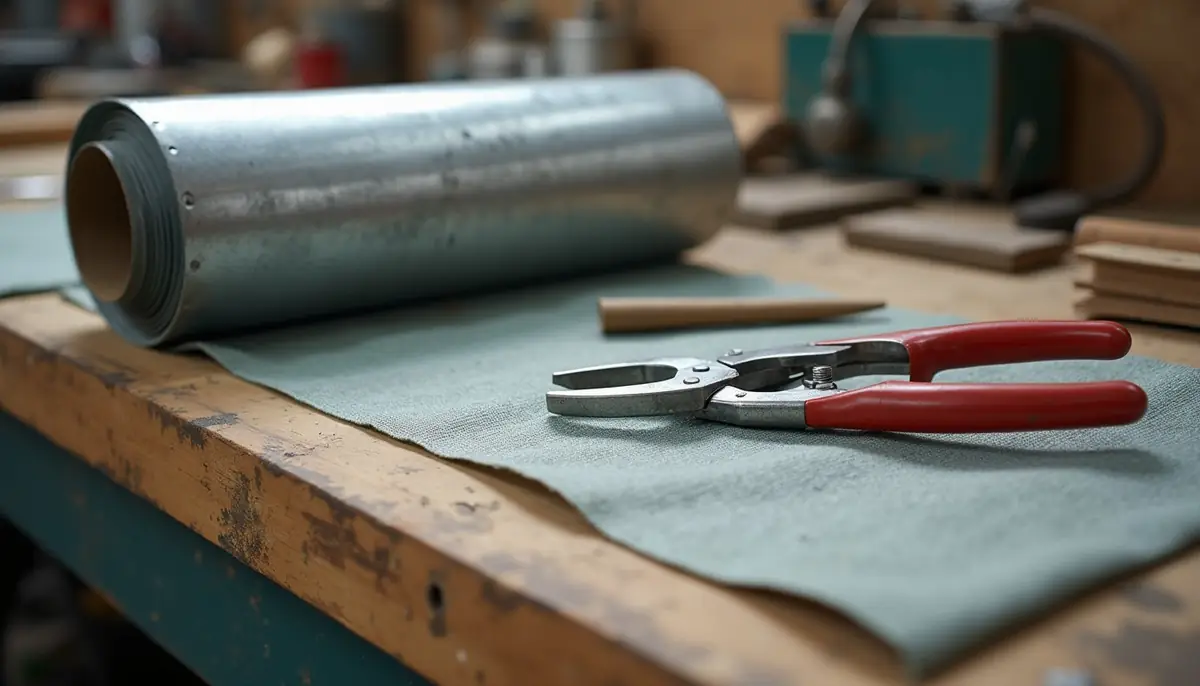
- Seal with metal. UC IPM names sheet metal or quarter-inch hardware cloth; the Internet Center for Wildlife Damage Management says heavy half-inch wire mesh or aluminium flashing. Wood and plastic get chewed, and our page on which exclusion materials actually hold compares the options.
- Trim the trees back 6 to 8 feet from the roof so the next squirrel cannot jump on.
The Internet Center for Wildlife Damage Management is direct: close external openings, but do not seal animals inside.
Can squirrels in walls cause damage?
Yes, and gnawing is the reason. In a wall void a squirrel can reach framing, the paper face of insulation and anything running through it. UC IPM notes that squirrels sometimes gnaw on telephone cables, and the Internet Center for Wildlife Damage Management records vehicle wiring damage costing $500 to $1,000 to replace, which our page on squirrels chewing car wiring covers. Have a licensed electrician check any wiring run a squirrel has been living beside.
What to do if a squirrel died in your wall
The smell usually makes the decision for you. An Ask Extension expert advised that dead animal odour in a wall usually goes away within a week or two depending on the size of the animal, and a squirrel is many times the size of a mouse, so expect the longer end or beyond. Follow the smell to its strongest point and watch for flies gathering. Our guide to how long a dead animal smell lasts and how to find it sets out when cutting the drywall is worth it. Wear disposable gloves to handle the body, bag it, and wash your hands afterwards.
Trapping and moving it: the rules vary
| Where | What the agency says |
|---|---|
| Most states | Fox and gray squirrels are classified as game species in most states (Internet Center for Wildlife Damage Management); check before trapping |
| California | Tree squirrels are game mammals; gray squirrel control needs a CDFW permit; releasing any tree squirrel elsewhere is illegal without a permit; poison baits are illegal for any tree squirrel (UC IPM, citing the Fish and Game Code) |
| Indiana | Landowners and tenants may live-trap a gray squirrel causing damage on their property without a DNR permit, but it must be euthanised or released within the county of capture (Indiana DNR) |
| Flying squirrels | It typically is not legal to kill flying squirrels (Internet Center for Wildlife Damage Management) |
A one-way door avoids most of this, because nothing is caught or moved.
Frequently asked questions
Will a squirrel in the wall leave on its own?
Not for good. A squirrel using the wall leaves each morning to feed and returns while the entry stays open, and a trapped one cannot leave at all. The fix is at the entry: a one-way door once you are sure no young are inside, then a repair in sheet metal or quarter-inch hardware cloth as UC IPM advises.
Is a squirrel in the wall at night a gray squirrel?
Rarely. Gray squirrels are daytime animals, and only 2.9 per cent of their US iNaturalist records are logged between 8pm and 6am. Night noise is more likely mice, rats or a southern flying squirrel, which the Missouri Department of Conservation describes as nocturnal. A trapped gray squirrel is the exception, because it keeps scratching around the clock.
Can I just seal the hole while it is out?
Only if you are sure the wall is empty. UC IPM suggests a loose newspaper plug as a test: if it stays in place for a few days, no squirrel is pushing out. Sealing while young are inside leaves dead animals in the wall and a mother chewing a new hole to reach them.
How much does it cost to get a squirrel out of a wall?
Published estimates on our wildlife removal cost guide put squirrel removal at $250 to $600 and an animal in the attic at $500 to $1,500, with an inspection at $100 to $300, usually credited against the job, and $225 to $400 for each extra exclusion door. Opening and patching drywall is a separate cost.
Sources
- University of California Statewide IPM Program, Pest Notes: Tree Squirrels, Publication 74122.
- Internet Center for Wildlife Damage Management, Tree Squirrels species account and Tree Squirrel Damage Prevention and Control Methods.
- SUNY College of Environmental Science and Forestry, Adirondack Ecological Center, Gray Squirrel (Sciurus carolinensis).
- Indiana Department of Natural Resources, Living with Wildlife: Gray Squirrel.
- Missouri Department of Conservation, Field Guide: Southern Flying Squirrel.
- Ask Extension (eXtension Foundation), expert answer on dead animal odour in walls.
- The Pest Control Brief analysis of iNaturalist research-grade records, pulled October and November 2026.