Squirrels in Your Car Engine: What Draws Them and How to Stop It
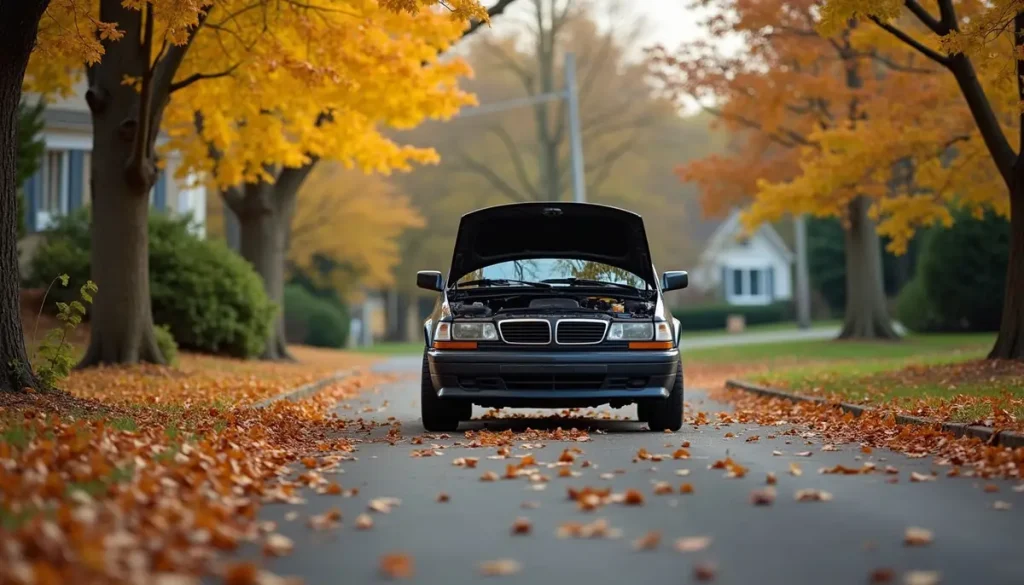
Squirrels are attracted to a car by three things: a sheltered engine bay to nest in, a hidden spot to stash nuts, and wiring and hoses to gnaw, because their incisors never stop growing. A car that sits for days under oak, walnut or hickory trees, or near a bird feeder, is the usual target, and autumn caching season is the worst time. No published study shows that soy-based wire coatings draw squirrels in. What keeps them away is removing the food and shelter, not a smell.
Find the cause from what you find under the hood
| What you find | What it points to | What to do |
|---|---|---|
| Acorns, nut shells or seeds in the air filter box, cowl or along the battery tray | Food storage: gray and fox squirrels bury and hide nuts, mostly in autumn | Park away from nut trees and feeders; clear every cache from the engine bay |
| A large pile of pine or spruce cones | Probably a red squirrel, which stores food in one place | As above; red squirrels need smaller gaps to enter a garage |
| A bundle of leaves, bark strips or insulation | A nest: squirrels build leafy nests and prefer enclosed cavities | Remove it, and check first for young between February and August |
| Chewed wires, hoses or sound-deadening foam | Gnawing to wear down incisors | Repair, then protect the car with the steps below |
| Damage appears overnight with small, scattered droppings | More likely rats or mice than a squirrel | Treat it as a rodent problem |
Compiled by The Pest Control Brief from the Internet Center for Wildlife Damage Management (ICWDM) tree squirrel biology and damage pages, UC IPM Pest Notes: Tree Squirrels, and the Missouri Department of Conservation.
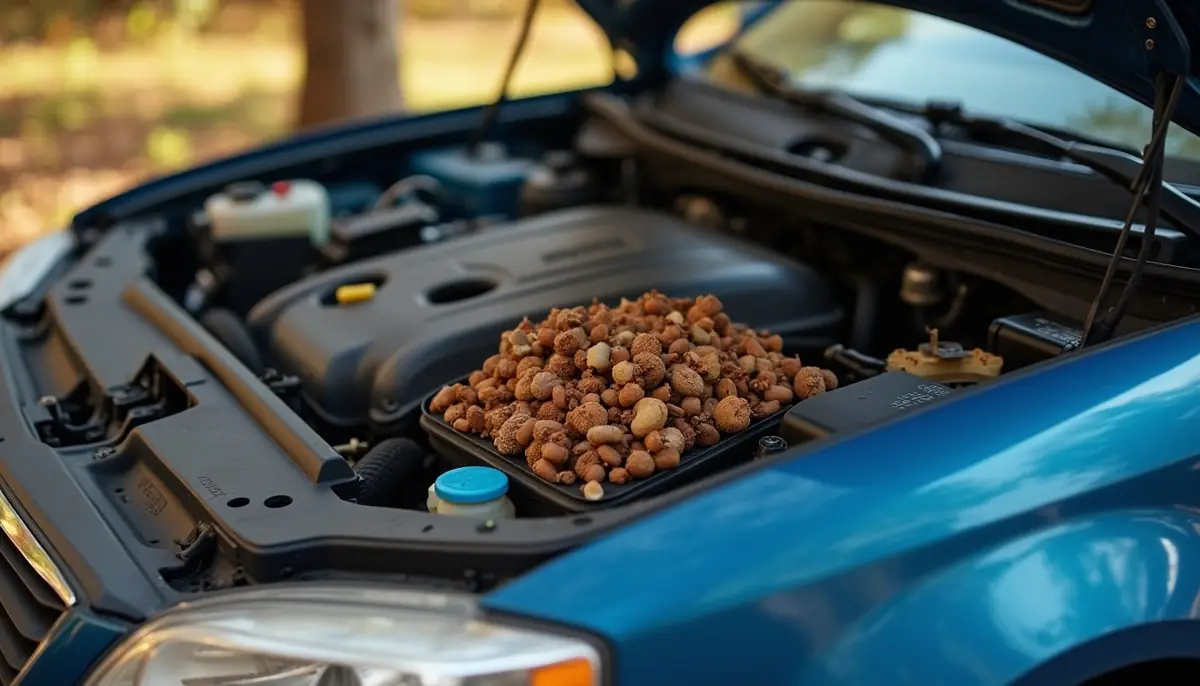
Why squirrels chew car wires
The Missouri Department of Conservation puts it simply: because squirrels are rodents, they constantly chew to wear down their always-growing incisor teeth, behaviour that can damage decks, siding, fencing and electrical wiring. A wiring harness is a convenient chewing object in a sheltered place, and squirrels do not need to be hungry to gnaw it. ICWDM says squirrels occasionally chew vehicle wiring, leading to replacement costs of $500 to $1,000, and that their gnawing on electrical lines can start fires.
The same continuous-growth teeth drive rats and mice, and our guide to why rodents chew wires and whether it causes fires covers tooth growth rates and the hot-pepper coating studies in detail.
The soy wiring claim
Many articles say soy-based wire insulation attracts squirrels. That idea comes from class actions against carmakers, in which owners alleged that soy-based coatings drew rodents. No court found that soy insulation attracts rodents, and we found no published controlled study testing whether squirrels or rats prefer it. ICWDM and UC IPM describe squirrels gnawing telephone cables and power lines that have nothing to do with soy. The case histories and the repair bills filed in court are set out in our page on mice in the car and the wiring lawsuits.
Squirrel, rat or mouse? Check the time of day
UC IPM states that tree squirrels are active during the day, most active in early morning and late afternoon. Our analysis of 292,434 US iNaturalist research-grade eastern gray squirrel records agrees: relative to everything people record at the same hour, gray squirrel records peak from 4pm to 6pm (an index of 145) and 6am to 8am (136), and fall to 28 between 8pm and midnight.
That gives a useful rule. Damage that appears while the car sits in the driveway during the day fits a squirrel; damage that appears overnight, especially with small droppings in the engine bay, fits rats or mice. The exception is the flying squirrel, which ICWDM says is active at night; our guide to flying squirrels and how they differ from gray squirrels explains how to tell. These records show when people see and record squirrels, not a direct measure of activity.
Droppings settle most cases: a squirrel dropping is about 3/8 inch long with rounded ends, fatter and blunter than a mouse’s, and our comparison of squirrel poop against rat and mouse droppings shows the size differences side by side.
When squirrels are most likely to move into a car
Autumn is caching season. UC IPM notes squirrels bury nuts, acorns and other seeds mostly in the fall, and ICWDM says gray and fox squirrels scatter-cache individual acorns and nuts around their home range and may travel 50 miles or more in autumn in search of better habitat. Our iNaturalist data show raw gray squirrel records rising from 15,384 in August to 37,604 in October.
Breeding is the second risk window. Fox and gray squirrels breed in mid-December or early January, and a small percentage again in June, with a gestation of 42 to 45 days, according to ICWDM, which warns that young may be present from February through August. A nest in a car that has not moved for weeks in spring may hold young. The same timing governs squirrels in buildings, covered in our guide to squirrels in the attic and when exclusion is safe.
What keeps squirrels away from your car: the evidence
| Method | What the evidence says | Verdict |
|---|---|---|
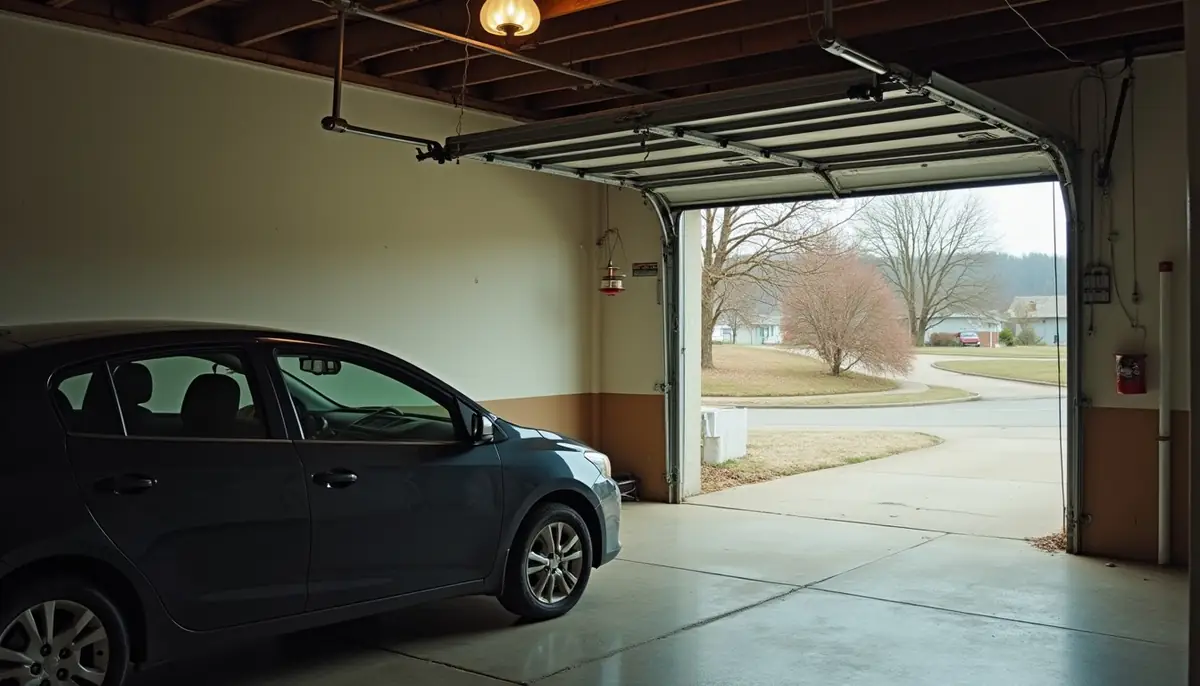
| Park in a closed garage | Gray and fox squirrels use holes about the size of a baseball and red squirrels a golf ball (ICWDM); Missouri advises closing openings with half-inch wire mesh | Most reliable, if the garage is sealed |
| Move bird feeders and clear fallen nuts | ICWDM lists removing bird feeders as habitat modification for squirrel damage | Removes the reason to stop at your car |
| Drive the car or open the hood daily | Allstate, citing Toronto Wildlife Centre, suggests leaving the hood open for a day or two if a squirrel is nesting | Low cost; no published trial |
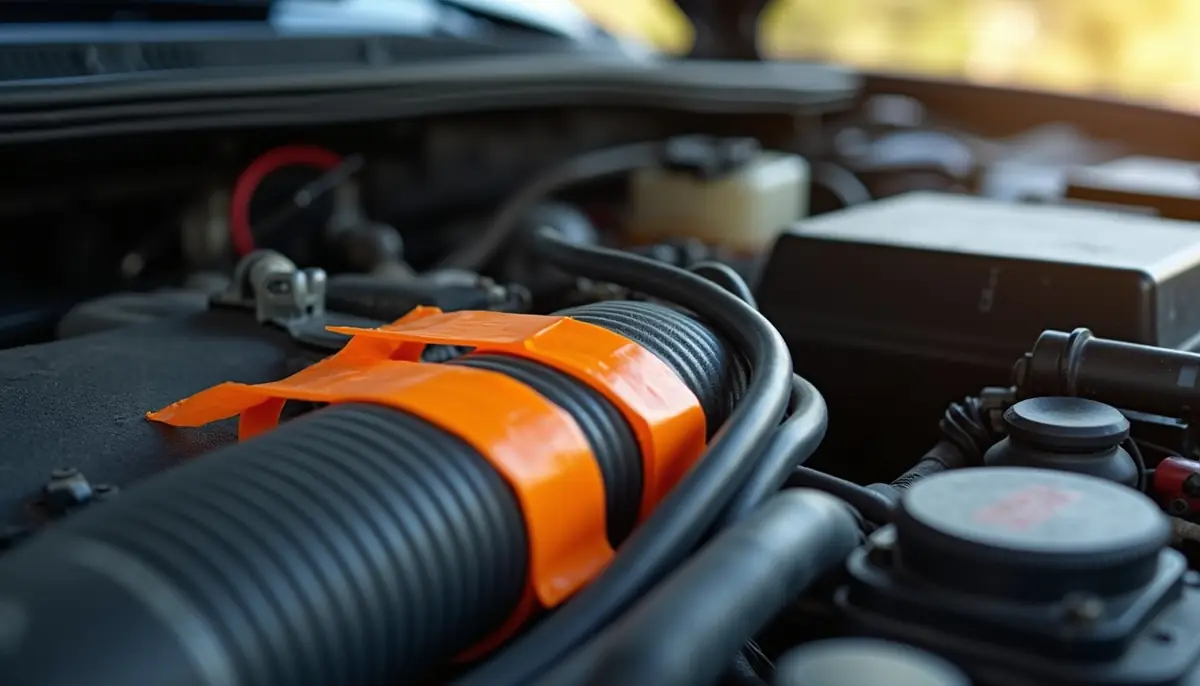
| Capsaicin (hot pepper) treatments | Captive gray squirrels refused capsaicin-treated sunflower hearts (Fitzgerald and colleagues, USDA repellents symposium, 1995); on cable, capsaicin worked best inside shrink tubing in rat trials | Plausible for wrapped tape; not tested on squirrels in an engine bay |
| Bitter taste sprays | ICWDM lists a registered contact taste repellent for surfaces; Missouri calls commercial spray-on repellents questionable | Check with a mechanic before spraying engine parts |
| Mothballs | Missouri: they may temporarily discourage squirrels but are not recommended; ICWDM warns naphthalene can cause severe distress to people | Do not use in a car |
| Ultrasonic and light devices | ICWDM: no frightening devices have been proven effective for tree squirrels | Not supported |
| Dryer sheets, peppermint, soap | No published test on squirrels | Not supported |
Mothballs are a common engine-bay remedy online, but using them outside label directions is illegal, and our guide to mothball fumes and off-label use explains why a closed car is a poor place for naphthalene.
The scent remedies fare no better. Our review of whether dryer sheets repel mice in stored cars found no controlled study on rodents at all.
Peppermint oil is the other popular choice; our analysis of what the peppermint oil studies actually found shows the effect in the one controlled mouse study was gone within a week.
Trapping is a last resort with legal strings. ICWDM notes fox and gray squirrels are game species in most states, so trapping permits may be required, and UC IPM says releasing a tree squirrel elsewhere in California is illegal without a permit. A licensed operator is the simplest route if a squirrel keeps returning; our wildlife removal cost guide lists published estimates of $250 to $600 for squirrels.
If the car lives in a garage that rats are also using, fix the garage first: our guide to rats in the garage covers the gaps they use.
Does insurance cover squirrel damage to a car?
Often, under comprehensive cover, but the policy wording decides. The Insurance Information Institute (Triple-I) lists contact with animals among the losses that comprehensive, not collision, coverage pays for. Comprehensive is optional, so a car with liability cover only is not protected, and a repair cheaper than your deductible returns nothing. Keep the chewed parts and take pictures of the nest or cache before cleaning up, since the claim depends on showing animal damage.
Frequently asked questions
What will repel squirrels from my car?
Nothing sprayed or hung in the car has published evidence behind it. What works is removing the reasons to stop: park in a sealed garage or away from oak, walnut and hickory trees, move bird feeders, clear cached nuts from the engine bay and drive the car often. Capsaicin-wrapped tape on vulnerable wiring is plausible from rodent cable trials but untested on squirrels in cars.
What smells do squirrels absolutely hate?
No smell has been shown to keep squirrels away for long. ICWDM says naphthalene may only temporarily discourage them and should not be used in occupied buildings, and Missouri rates commercial spray-on repellents as questionable. Capsaicin works as a taste and irritant: in a 1995 USDA symposium study, captive gray squirrels would not eat capsaicin-treated sunflower hearts.
What is the 5 7 9 rule for squirrels?
It is a bird-feeder placement rule of thumb from gardening sites: hang the feeder at least 5 feet off the ground, 7 feet from anything a squirrel can jump from, with 9 feet of clear space above. It is not from an extension source. ICWDM’s own figure for buildings is to trim limbs 6 to 8 feet back so squirrels cannot jump onto roofs.
Why do squirrels run towards your car?
Usually because they are heading for cover, not attacking. In 122 trials with people approaching on foot, Eason and colleagues (Frontiers in Ecology and Evolution, 2019) found gray squirrels weighed the angle to a tree against the threat: 73 per cent ran to the nearest tree when it lay away from the approacher, 25 per cent when reaching it meant running more towards them. No equivalent study has used cars.
Does car insurance cover squirrels chewing wires?
Usually under comprehensive coverage, if you carry it. Triple-I lists contact with animals among the losses comprehensive pays for, but each policy’s wording decides, and the deductible comes off the claim. ICWDM puts typical vehicle wire replacement after squirrel damage at $500 to $1,000, which is close to many deductibles, so check yours before filing.
Sources
- Internet Center for Wildlife Damage Management, Tree Squirrels: Biology, Damage Identification, and Damage Prevention and Control Methods.
- University of California Statewide IPM Program, Pest Notes: Tree Squirrels, Publication 74122.
- Missouri Department of Conservation, Squirrel Control.
- Fitzgerald, C.S., Curtis, P.D., Richmond, M.E. and Dunn, J.A. Effectiveness of capsaicin as a repellent to birdseed consumption by gray squirrels. Repellents in Wildlife Management symposium, USDA National Wildlife Research Center, 1995.
- Eason, P.K., Nason, L.D. and Alexander, J.E. Squirrels do the math: flight trajectories in eastern gray squirrels (Sciurus carolinensis). Frontiers in Ecology and Evolution 7:66, 2019.
- Insurance Information Institute (Triple-I), What is covered by collision and comprehensive auto insurance?
- Allstate, How to protect your car from wire-gnawing squirrels (2018).
- The Pest Control Brief analysis of iNaturalist research-grade records, pulled October and November 2026.