Rats in the Garage: Signs, Risks and How to Get Them Out
Rats in a garage are usually there for shelter and stored food, and they get in under a garage door through a gap of half an inch. Confirm it is a rat (droppings up to 3/4 inch long), set snap traps along the walls, seal every gap over 1/4 inch with metal or concrete, and move pet food, birdseed and grass seed into sealed metal bins. Burrows along the slab, rats inside the house walls, or rats still active after sealing are jobs for a licensed professional.
What you found, and what it tells you
| What you found in the garage | What it usually means | Next step |
|---|---|---|
| Droppings up to 3/4 inch long and 1/4 inch thick | Rat. Mouse droppings are about 1/4 inch long (Arkansas extension) | Wet them with disinfectant before cleaning; never sweep |
| Holes 2 inches or wider at the base of a wall or beside the slab | Rat burrow or gnawed entry. Mouse holes are often 1.5 inches or less | Norway rat likely; trap inside, then seal and backfill |
| Greasy smudges on beams, rafters or pipes | Rub marks from fur along a regular route (UC IPM) | Set traps on that route |
| Smudges high up, along shelves or the door track | Climbing rat, most often a roof rat | Trap above ground as well as on the floor |
| Chewed rubber seal at the bottom of the door | The entry point | Replace with a metal-backed seal; see the table below |
| Chewed wire sheathing in the car’s engine bay | UC IPM notes rats commonly gnaw engine wiring in cars | Have the wiring checked before driving far |
| A stash of dog food or seed behind boxes | Hoarding, which Arkansas extension describes in garages | Move all food into sealed metal bins |
Small droppings could mean a young rat or a mouse; our rat versus mouse guide settles it, and trap size and the gap you must seal both depend on the answer.
Burrower or climber: which rat is in your garage
The two US rats come into a garage from opposite directions. Norway rats are stocky burrowers that, according to Arkansas extension, nest under buildings and beneath concrete slabs and keep to ground floors. Roof rats nest off the ground, rarely dig burrows to live in, and arrive from the roof or along overhead utility lines and fences. UC IPM gives adult weights of 7 to 18 ounces for Norway rats and 5 to 10 ounces for roof rats.
Where you live decides which one is more likely. Our analysis of iNaturalist research-grade records found that roof rats make up more than 90 per cent of rat records in Florida and Hawaii and 86 per cent in Texas, while New York, Illinois and Massachusetts had no roof rat records at all against 2,503, 357 and 677 Norway rat records.
Holes along the slab point to Norway rats; droppings on shelves or rafters point to roof rats, which need traps fixed off the floor. Our roof rat guide covers the attic, which often comes next.
Why are rats in my garage?
Shelter comes first: boxes, clutter and a parked car give cover close to food, and Arkansas extension notes that rats hoard food behind boxes in a garage. The usual food is dry pet food, birdseed and grass seed; roof rats do very well on dog or cat food. A rat eats about half a pound of food a week and needs 1/2 to 1 ounce of water a day on dry food, so a dripping tap or a damp corner helps too.
Rats in the garage but no food
A garage with no food can still hold a nest. Rats travel to eat: UC IPM says roof rats routinely travel 300 feet or more for food, and Norway rats may forage 100 to 500 feet from the nest. A neighbour’s bird feeder or compost bin can feed a rat that sleeps in your garage. Our page on what attracts rats lists the outdoor sources worth removing.
Are rats in the garage common?
Rodents inside homes are common, and the garage is often the way in. No survey counts garages separately, but in the 2023 American Housing Survey, 12.5 per cent of occupied detached houses, about 10.7 million, reported seeing mice or rats or their signs inside the home in the previous 12 months, according to our analysis of the Census Bureau’s public microdata. Only 1.3 per cent saw them weekly or more often.
The survey does not separate mice from rats. New England houses reported rodent signs at 25.1 per cent, nearly three times the South Atlantic rate of 8.8 per cent.
How do rats get into a garage?
Through the bottom of the door, most often. UC IPM says rats of either species, especially young ones, can squeeze under a door with only a 1/2 inch gap, and it advises sealing all holes larger than 1/4 inch. Arkansas extension adds a detail most garage advice misses: rubber or vinyl weather stops are quickly gnawed through, so a worn rubber door seal is an entry point, not a barrier.
The garage is also a route into the house. Arkansas extension lists the paths rats take from a garage into the main structure: along electrical lines and pipes, through poorly sealed firewall sheathing, and around furnace ducts, water heaters and laundry drains. Seal the garage side of each of these as well as the outside.
| Spot | Specification from extension sources |
|---|---|
| Garage door bottom | No gap of 1/2 inch or more; metal kick plates or door edging of 22 gauge galvanized steel or heavier, or 18 gauge aluminium |
| Side door threshold | Tight fit, gap no more than 1/4 inch; metal threshold fastened to the floor |
| Holes and gaps in walls | Seal anything over 1/4 inch; back holes of 3 inches or more with 1/4 inch hardware cloth before patching |
| Pipe and cable penetrations | Cement mortar, masonry or metal collars |
| Vents | 1/2 inch galvanized mesh, 16 or 18 gauge; never chicken wire |
| Slab and foundation cracks | Concrete or masonry grout; rats can gnaw concrete until it is fully cured |
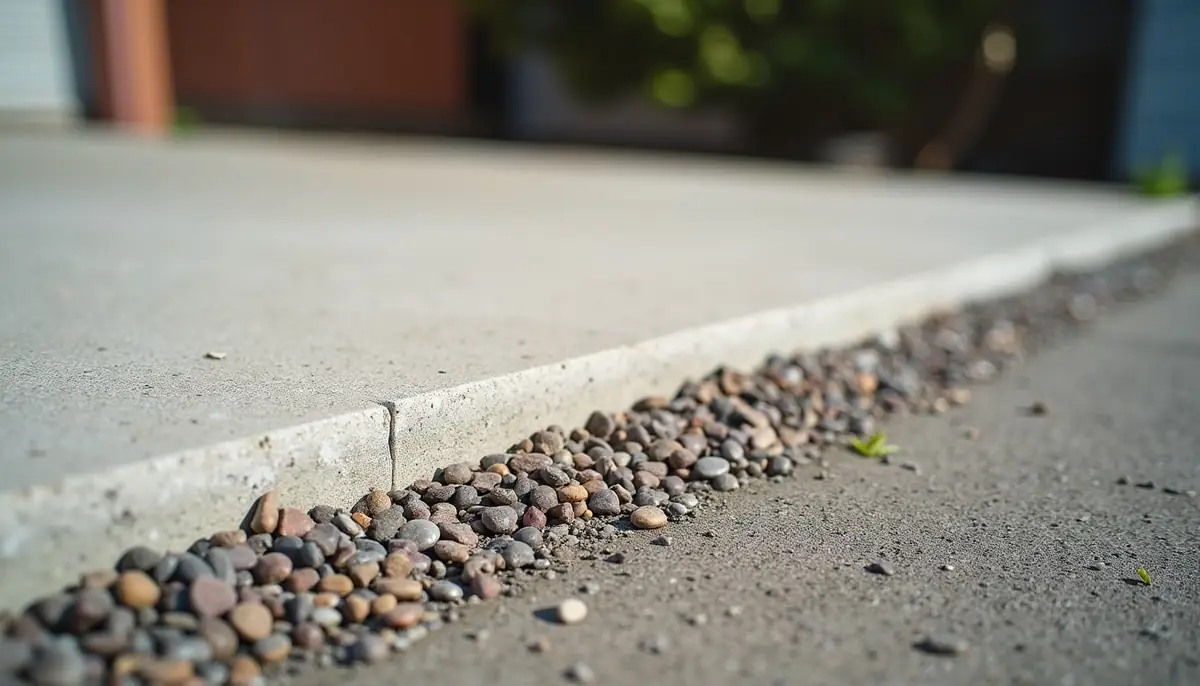
| Outside the slab edge | A clear 3 foot strip, or a gravel band at least 2 feet wide and 6 inches deep using stone 1 inch or larger |
Compiled by The Pest Control Brief from University of Arkansas Cooperative Extension MP546 and UC IPM Pest Notes: Rats. Our guide to rodent exclusion materials explains why steel wool alone is a temporary plug.
How do I get rid of rats in my garage?
- Take away the food first. Move pet food, seed and anything edible into sealed metal bins. Bait in a trap competes with whatever else is on the shelf.
- Trap along the walls. UC IPM advises placing traps close to walls, behind objects and in dark corners, at right angles to the wall with the trigger end against it, about 10 to 20 feet apart. Set traps in pairs if they run parallel to the wall. For roof rats, add traps on shelves and beams.
- Pre-bait before setting. Rats avoid new objects. UC IPM recommends leaving traps baited but unset until the bait has been taken several times.
- Seal as catches stop. Arkansas extension warns that rats outside will replace the ones you remove unless the building is sealed before or during trapping.
- Clean up safely, using the CDC steps below.
How to get rid of rats in a garage fast
There is no instant fix. UC IPM says rats avoid new objects and foods for several days, and a heavy infestation may need a dozen or more traps. Arkansas extension rates a properly set snap trap at 75 to 88 per cent effective.
How to get rid of rats in a garage naturally
Traps, sealing and food removal are the non-chemical method, and they work. UC IPM describes ultrasonic devices as ineffective against rats, and our page on peppermint oil covers why scent repellents fail. UC IPM says glue boards should never be used outdoors.
Poison bait in a garage
Under EPA rules, consumer rodenticides come only as ready-to-use bait stations with block or paste bait, labelled for indoor use or within 50 feet of buildings; second-generation anticoagulants are not sold to consumers. Follow the label. UC IPM advises sealing entry points before baiting outside, and in California most anticoagulant uses are prohibited. Arkansas extension notes that trapping avoids the odour of a poisoned rat dying out of reach.
Are rats in the garage dangerous?
They can be. CDC lists rodents among the carriers of leptospirosis, spread through the urine of infected animals. Rat-bite fever spreads through bites, scratches and food contaminated by rats, and CDC advises seeking medical care right away if symptoms follow a rat bite or scratch. The Norway rat is the natural reservoir of Seoul virus; in a 2017 US and Canadian investigation linked to pet rats, CDC found antibodies in 24 of 183 people tested. Our rat bite page covers bites; for any symptoms, speak to a doctor.
CDC cleanup steps for droppings and nests: open doors for 30 minutes and leave the space, wear rubber or plastic gloves, spray with 1 part bleach to 9 parts water (1.5 cups per gallon) and leave it 5 minutes, and do not sweep or vacuum. Bag dead rats and nests twice, and throw out cardboard boxes soiled with urine or droppings.
When it is a job for a professional
Call a licensed company for burrows along the foundation, gnawing or noises in the house walls, rats in the attic as well as the garage, or activity that continues after sealing. Published estimates on our rat exterminator cost page put a small job with one entry point at $176 to $613, Norway rats in a basement at $300 to $750, and sealing a few openings at $175 to $500. These are estimates, not measured prices.
Frequently asked questions
Can rats get in a garage with the door closed?
Yes, if the bottom seal leaves a gap. UC IPM says a young rat can squeeze under a door with a 1/2 inch gap, and Arkansas extension notes that rubber or vinyl seals are quickly gnawed through. Norway rats can also burrow beside or under a slab. Fit a metal-backed door edge and check the corners where the seal meets the frame.
Do rats live in garages?
They can nest in one. Norway rats burrow under slabs and along foundations and may nest in clutter at floor level, while roof rats nest high on shelves or in the roof space. Many garage rats nest outside and use the garage for food and cover, which is why sealing matters as much as trapping.
Will rats leave the garage on their own?
Rarely while food and cover remain. Rats memorise routes, food and shelter in their territory, according to Arkansas extension, and a Norway rat normally ranges over an area 100 to 150 feet across. A rat that can still get in will keep coming back.
Are rats in the garage roof a different problem?
Usually yes: rats in the roof space of a garage are most often roof rats, which climb in from trees, fences or utility lines. UC IPM advises setting traps above ground as well as on the floor for them, and Arkansas extension advises cutting back vines and overhanging branches they use as routes.
Sources
- University of Arkansas Cooperative Extension Service, MP546, Controlling Mice and Rats, Rebecca McPeake, 2018.
- University of California Statewide IPM Program, Pest Notes: Rats.
- US Environmental Protection Agency, Restrictions on Rodenticide Products.
- Centers for Disease Control and Prevention, How to Clean Up After Rodents; About Leptospirosis; About Rat-Bite Fever.
- Centers for Disease Control and Prevention, Outbreak of Seoul Virus Among Rats and Rat Owners, United States and Canada, 2017, MMWR 67(4), 2018.
- US Census Bureau and HUD, American Housing Survey 2023, National Public Use File v1.1; The Pest Control Brief analysis, weighted, with replicate-weight standard errors.
- The Pest Control Brief analysis of iNaturalist research-grade records, pulled October 2026.
- Published cost estimates from Fixr and This Old House, as compiled on The Pest Control Brief rat exterminator cost page, 2026.