Are Rats Smart? What Rat Intelligence Means for Trapping

Yes, rats are smart: experiments show Norway rats handle timing and number tasks, judge when they do not know an answer, free trapped cagemates and learn which foods are safe from each other’s breath. For a homeowner, the trait that matters most is caution rather than cleverness. Wild rats avoid new objects for days, and a rat that escapes a trap or survives a dose of fast-acting poison can become very hard to catch. Trapping works when it is planned around that.
What the research found, and what it means for your traps
| Finding | Study or source | What it changes in control |
|---|---|---|
| Wild rats keep away from changes in a familiar place (neophobia) | Barnett, British Journal of Psychology, 1958 | New traps and stations are ignored at first |
| Rats avoid traps and baits for the first several days, maybe weeks | UC IPM Pest Notes: Rats | Leave traps baited but unset until the bait has been taken several times |
| A rat that sets off a trap without being caught is very hard to trap again | UC IPM Pest Notes: Rats | Never use too few traps or half-set ones |
| Bait that makes a rat ill, but not dead, within a few hours causes bait shyness | ICWDM | Fast-acting poisons can teach survivors to avoid the bait |
| Observers did not learn to avoid food eaten by a sick rat | Galef, Wigmore and Kennett, 1983 | “Rats warn each other about poison” is not supported |
| One 30-minute meeting with a rat that had eaten a food left a preference lasting at least a month | Galef and Whiskin, 2003 | Safe-seeming food spreads through a colony; prebaiting builds on it |
| Rats declined hard tests more often than easy ones, showing they knew when they did not know | Foote and Crystal, Current Biology, 2007 | None directly; it shows how good rats are at judging risk |
| Free rats learned to open a restrainer holding a trapped cagemate and usually shared chocolate | Ben-Ami Bartal, Decety and Mason, Science, 2011 | None directly; social bonds are real, but no study shows rats free each other from snap traps |
Compiled by The Pest Control Brief from the named papers and extension sources.
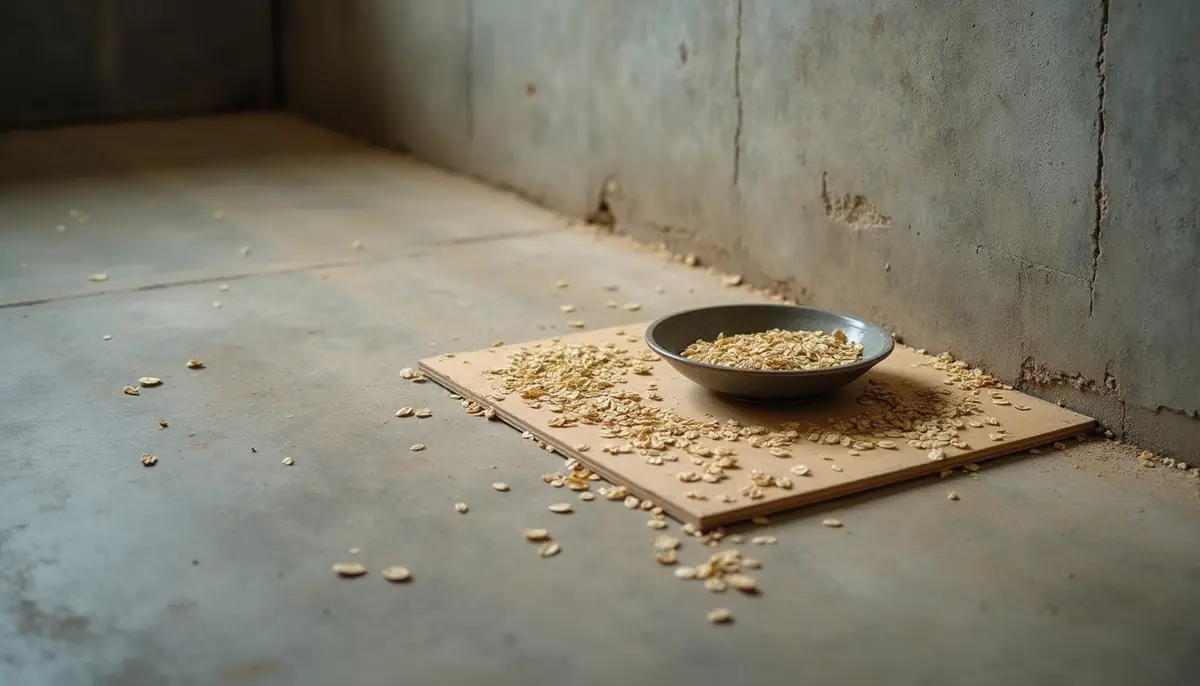
Are rats smart?
By the measures laboratory scientists use, yes. A 1996 review by H. Davis in Brain Research: Cognitive Brain Research argued that rat intelligence has been underestimated, citing timing and number tasks, transitive inference and recognition of individual humans. Davis added an observation pest control professionals would recognise: rats “are adept at exploiting procedural loopholes and confounded variables overlooked by human test designers.”
Two experiments stand out. In 2007 Foote and Crystal gave rats a duration-discrimination test with the option to decline it for a small, guaranteed reward. Rats declined most often on the hardest trials and scored lowest on hard trials they could not decline, which the authors read as evidence that rats know when they do not know. In 2011 Ben-Ami Bartal and colleagues placed a free rat beside a cagemate trapped in a restrainer. After several sessions the free rat learned to open it deliberately, ignored empty or object-filled restrainers, and, offered a second restrainer holding chocolate, opened both and typically shared the chocolate.
Popular articles go further than the papers. Claims that rats are “as smart as” a dog or a child rest on no shared test, and the empathy study used cagemates in a laboratory, not wild rats in a trap line.
Why are rats hard to trap? Caution, more than cleverness
The trait that defeats most home trapping is neophobia, the avoidance of anything new. S. A. Barnett’s 1958 experiments on wild and laboratory rats applied the term to rats keeping their distance from a change in a familiar place. UC IPM says rats “often avoid traps and baits for the first several days (and maybe weeks)” and that this is thought to be more pronounced in roof rats than in Norway rats, which is one reason our guide to telling roof rats from Norway rats matters before you set anything.
The research is more nuanced than the folklore. A 2015 multi-strain study by Modlinska, Stryjek and Pisula found wild and laboratory rats both showed only a temporary drop in eating an unfamiliar food, of similar size across strains. A 2016 field study by Modlinska and Stryjek on a farm found that rats living with constantly changing food did not show food neophobia, and the authors suggested the reaction was more about the new object than the new food. The practical reading: the trap is the problem, not the bait. Use a food the rats already eat, which our guide to what Norway and roof rats eat sets out, and give the trap time to become furniture.
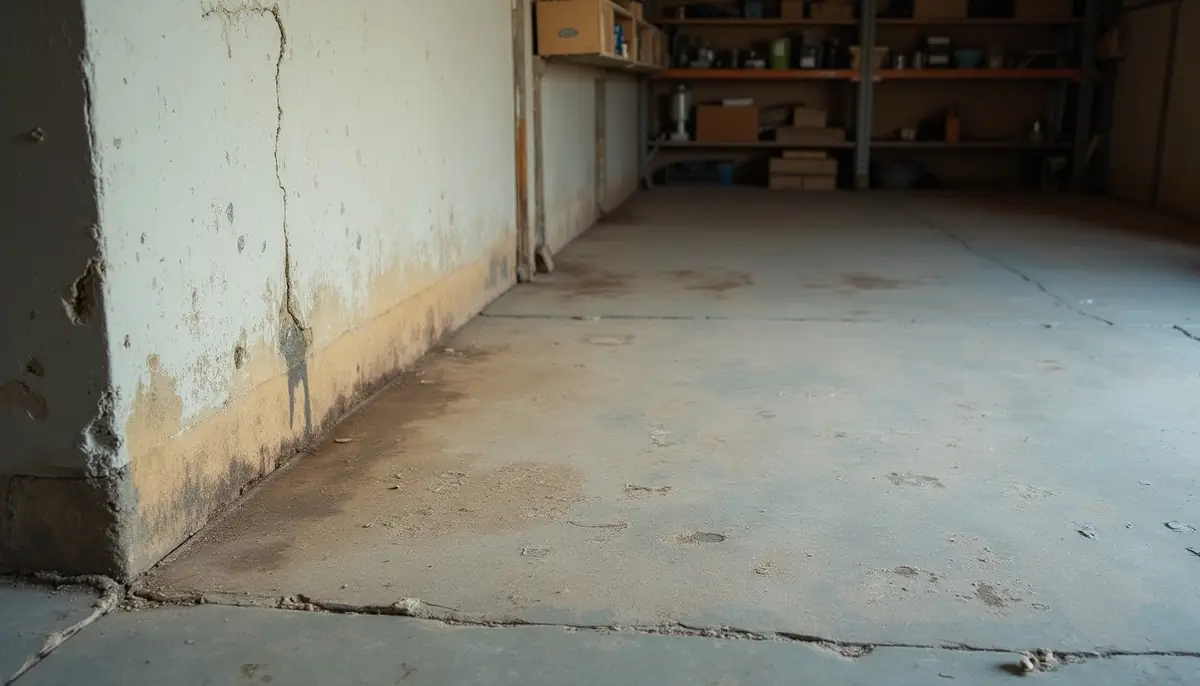
Are rats smart enough to avoid poison?
Partly, and only with the wrong poison. ICWDM defines bait shyness as what happens “when bait produces an ill effect, but not death, within a few hours of consumption.” Zinc phosphide, a fast-acting toxicant, can cause bait shyness in survivors if used for more than a few days. Anticoagulants avoid this because they are slow: ICWDM says illness is not linked to the bait even after a sublethal dose, and when eaten daily death may occur by the third or fourth day. That delay is why anticoagulants became standard, and also why poisoned rats wander and are eaten by predators, measured in our report on anticoagulant residues in California wildlife.
The idea that a sick rat warns the colony did not survive testing. Bennett Galef’s team let observer rats meet demonstrators that had eaten a new diet and been made ill; the observers did not then avoid the diet. The opposite does spread: rats learn which foods are safe from scents on a demonstrator’s breath, and Galef’s group identified carbon disulfide on rat breath as one of the cues.
Are rats smarter than mice?
On trap caution, rats and house mice differ more than on any test of intelligence. ICWDM states that mice “are not as afraid of new objects as rats,” and our rat vs mouse identification guide covers the body and dropping differences.
| Norway rat | House mouse | |
|---|---|---|
| Reaction to a new trap | Avoids it for several days, maybe weeks (UC IPM) | Less afraid of new objects than rats (ICWDM) |
| Prebaiting | Leave unset until bait is taken several times (UC IPM) | ICWDM still advises baited but unset until bait is taken |
| Bait shyness with anticoagulants | Usually does not occur (ICWDM) | Usually does not occur (ICWDM) |
| Sensitivity to rodenticides | Baseline | Usually less sensitive than rats (ICWDM) |
| Trap spacing | About 10 to 20 ft apart (UC IPM) | Closer, as our mouse trapping guide explains |
Compiled by The Pest Control Brief from UC IPM Pest Notes: Rats and ICWDM rat and house mouse chapters.
That is why mouse methods fail on rats. Setting traps the first night, which works with mice in our guide on how to catch a mouse with well-placed traps, usually just teaches a rat the trap is new.

Are rats smarter than dogs, cats or hamsters?
No study we found ranks rats, dogs, cats and hamsters on a common scale, so any confident answer online is opinion. Each species is tested on tasks suited to it, and rats are the most tested because they are the standard laboratory animal. A fair summary of the evidence: rats are very good at spatial learning, timing and social food learning, and show metacognition and helping behaviour in specific experiments. Whether that makes them “smarter” than a dog depends entirely on the task.
How to get rid of smart rats: trapping around their caution
- Use many traps at once. UC IPM says a dozen or more may be needed for a heavily infested home, so trapping is short and a rat is not given the chance to learn.
- Prebait. Place rat-sized snap traps baited but unset. ICWDM advises leaving traps unset for several days; set them only once the bait is being taken.
- Use their food. Bait with what the colony already eats, in a pea-sized amount fastened to the trigger; our guide to what attracts rats to a home and a trap lists the baits UC IPM suggests.
- Put traps on runways. At right angles to walls, about 10 to 20 feet apart, where droppings, rub marks or rat burrows and nest sites show travel.
- Do not move traps daily. Every move makes the trap new again.
- Seal after catches stop. Close gaps over a quarter inch with the materials in our test of steel wool, copper mesh and other rodent barriers, or new rats replace the old ones.
If catches stop while signs continue, the survivors are trap-shy. Wild Norway rats usually live 5 to 12 months, as our guide to how long wild and city rats live explains, so a colony’s caution is learned fresh each generation.
A licensed professional changes the trap type and placement rather than repeating what failed; our guide to what rat pest control costs lists published estimates of $395 to $1,500 for a typical job.
Frequently asked questions
How to get rid of smart rats?
Plan around their caution. Put out a dozen or more rat snap traps, baited but unset, for several days until the bait is being taken, then set them all at once along runways. Use food the rats already eat. Avoid fast-acting poisons, which ICWDM says can make survivors bait shy. Seal entry gaps once catches stop.
Why are rats smart?
Rats are omnivores that live alongside people and face constantly changing food and danger, so caution and fast learning pay off. Experiments show they learn safe foods from other rats’ breath, with one 30-minute meeting leaving a preference for at least a month (Galef and Whiskin, 2003). Their wariness of new objects protects them from traps and poison.
Are rats really smart, according to research?
Yes. Peer-reviewed studies show rats can judge when they do not know an answer (Foote and Crystal, 2007) and will learn to free a trapped cagemate (Ben-Ami Bartal and colleagues, 2011). A 1996 review in Cognitive Brain Research concluded that rat intelligence had been underestimated, though rats solve problems in their own ways.
Do rats learn quickly?
They learn quickly, especially about danger. UC IPM says a rat that sets off a trap without being caught becomes very hard to trap again, and rats avoid new traps and baits for several days or longer. That is learning and caution working together, which is why prebaiting and using many traps at once works better than setting one trap.
Are rats smart enough to avoid traps?
For a while. Rats avoid new objects for days and sometimes weeks, according to UC IPM, and escaped rats become trap-shy. They do not reason out how a trap works; they avoid unfamiliar things. Traps left unset until the bait is taken several times usually overcome that caution.
Sources
- Barnett, S. A., Experiments on neophobia in wild and laboratory rats, British Journal of Psychology 49(3), 195 to 201, 1958.
- Davis, H., Underestimating the rat’s intelligence, Brain Research: Cognitive Brain Research, 1996.
- Foote, A. L. and Crystal, J. D., Metacognition in the rat, Current Biology, 2007.
- Ben-Ami Bartal, I., Decety, J. and Mason, P., Empathy and pro-social behavior in rats, Science, 2011.
- Galef, B. G., Wigmore, S. W. and Kennett, D. J., A failure to find socially mediated taste aversion learning in Norway rats, Journal of Comparative Psychology, 1983.
- Galef, B. G. and Whiskin, E. E., Socially transmitted food preferences can be used to study long-term memory in rats, Learning and Behavior, 2003.
- Galef, B. G., Mason, J. R., Preti, G. and Bean, N. J., Carbon disulfide: a semiochemical mediating socially-induced diet choice in rats, Physiology and Behavior, 1988.
- Modlinska, K., Stryjek, R. and Pisula, W., Food neophobia in wild and laboratory rats (multi-strain comparison), Behavioural Processes, 2015.
- Modlinska, K. and Stryjek, R., Food neophobia in wild rats inhabiting a changeable environment: a field study, PLoS ONE, 2016.
- University of California Statewide IPM Program, Pest Notes: Rats, Publication 74106.
- Internet Center for Wildlife Damage Management, Norway Rat and House Mouse Damage Prevention and Control Methods.