Rats Keep Coming Back? The 6 Reasons and the Fix for Each
Rats keep coming back because something on the property still works for them: an open gap, food left out, a neighbouring colony, a branch onto the roof, or trapping that stopped while new rats were still arriving. Removing rats without removing the reason resets the clock. UC IPM puts it plainly: if sanitation lapses, rats will quickly return. Match your pattern to one of the six causes below and fix that first.
Match the comeback to its cause
| What you notice | Likely cause | How to check | Fix |
|---|---|---|---|
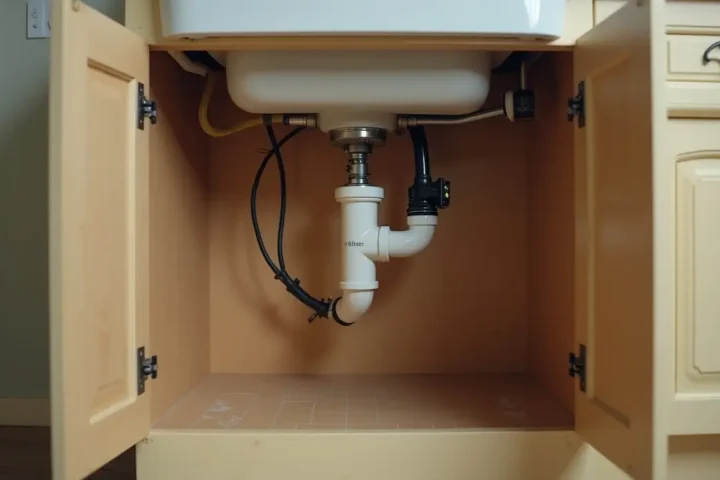
| Fresh droppings indoors within weeks of a clean-out | An entry gap was never sealed | Push a pencil into gaps at pipes, vents, door corners and the garage door; anything it enters is open to a young rat | Seal every gap over 1/4 inch with metal or concrete, not foam |
| Bait gone, traps untouched for days | Neophobia or trap shyness | Traps that have snapped empty, or traps moved every day | Leave traps baited but unset until bait is taken, then set them all at once |
| Activity outdoors every night, burrows by bins or compost | Food still available outside | Walk the yard after dark: pet bowls, bird seed, fallen fruit, compost with meat or eggshells | Pet food in at night, fruit picked up daily, compost in a lidded metal or rigid bin |
| Rats arrive along a fence line or from one side of the lot | A colony on a neighbouring property | Burrows or rub marks at the boundary, rats on the neighbour’s side | Coordinate with neighbours; seal your building regardless |
| Noises in the attic, nothing on the ground floor | Roof rats using trees, vines or utility lines | Branches within 6 feet of the roof, ivy on walls, rats on wires at dusk | Cut limbs back 6 feet, strip climbing vines, call the utility about lines |
| Catches fall, then start again a month later | Treatment stopped too early | Did catches reach zero for a full week before traps came up? | Keep traps out until a week passes with no catch and no fresh sign |
Compiled by The Pest Control Brief from UC IPM Pest Notes: Rats (Publication 74106), NC State Extension (2024), Nebraska Extension G1530 and the Internet Center for Wildlife Damage Management.
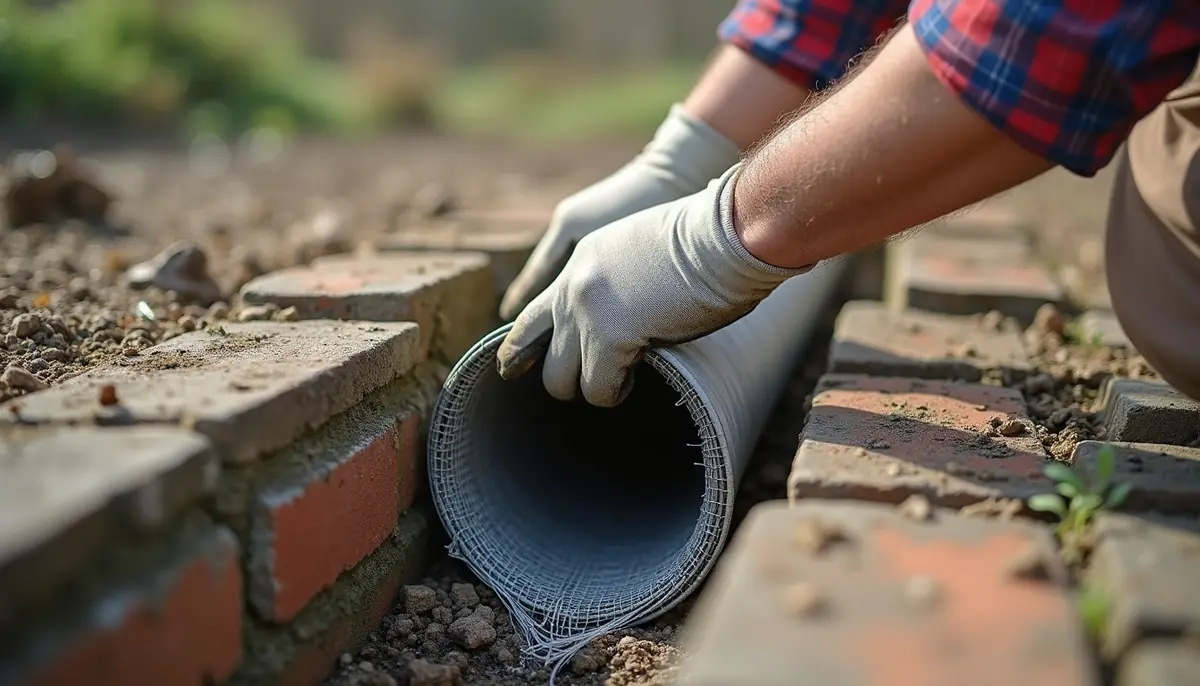
1. A gap is still open
UC IPM says all holes larger than 1/4 inch should be sealed to exclude both rats and mice. NC State Extension gives the reason for the small figure: gaps of 1/4 inch admit juvenile rats, while adults need about 1/2 inch. A house sealed to the adult figure stays open to the next litter.
The material matters as much as the gap. UC IPM lists plastic, foam, wood and caulk among the things rats chew through, and NC State warns that foam alone is not effective. Nebraska Extension G1530 calls proper rodent-proofing the way to stop the “control-reinfestation cycle”, while warning that it cannot guarantee a rodent-free building, because rodents gnaw new entrances or arrive inside boxes and appliances. Our comparison of steel wool, copper mesh and the materials that actually stop a rodent covers what holds.
New York’s inspection records show how often this is the problem. Of 144,314 initial city rodent inspections in 2025, 8,597 failed for conditions such as harbourage, refuse or structural gaps without active rats, and a further 6,245 failed for rat activity and another reason together, according to our analysis of how often a city inspection actually finds rats.
2. The rats learned to avoid your traps
UC IPM describes rats as constantly exploring and memorising pathways, food and shelter, and avoiding new objects and new foods, often for several days and maybe weeks after a trap appears. The same note says neophobia is thought to be stronger in roof rats than Norway rats. NC State tells readers to expect up to a week before catches start.
A trap that snaps without catching produces a rat that UC IPM says will be very difficult to trap again, and moving traps daily keeps them new. The fix is pre-baiting: leave traps baited but unset until the bait has gone several times, then set them all on the same night. Our guide to what rat intelligence means for trapping covers the research on caution.

3. Food is still outside
UC IPM lists the outdoor sources that keep rats on a property: pet food left out, fallen fruit and nuts, compost containing meat, fish or eggs, and pet faeces, which rats eat. Los Angeles County Public Health names pet food left out overnight and rotten fruit or nuts from trees. Roof rats hollow out oranges and eat avocados on the tree. Our list of what attracts rats to a home and yard ranks the sources.
Seed spilled under a bird feeder lands daily and is easy to miss; Los Angeles County’s post-fire rodent guidance tells owners to store bird seed and pet food in metal containers with tight lids. The zone-by-zone yard audit in our guide to rats in the backyard shows where to look at dusk.
4. Rats next door keep refilling your property
Rat territories ignore property lines. UC IPM puts the nightly foraging range of Norway rats at 100 to 500 feet from the nest, and says roof rats routinely travel 300 feet or more for food and may live in one yard while feeding in another.
The Internet Center for Wildlife Damage Management lists “small area of control that permits rats to move in from adjacent areas” among the reasons baiting fails. New York City’s Health Department says rats can be a problem for a single property, an entire block or a whole neighbourhood, so they require a coordinated response. If activity starts at the boundary, talk to the neighbours.

5. Roof rats have a bridge to the roof
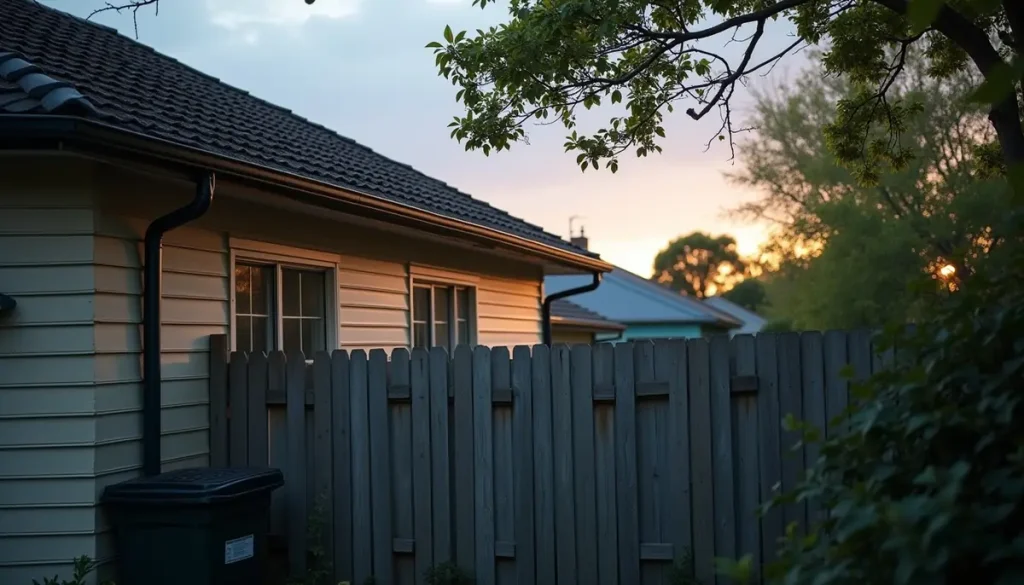
Roof rats climb. UC IPM says to remove overhanging tree limbs within 6 feet of roofs and to thin climbing ivy, star jasmine and honeysuckle on fences and buildings; the quick-tips box of the same note says 3 feet, so use the longer figure. Where rats run along overhead utility lines, UC IPM advises contacting the utility company or a professional rather than working on the lines yourself.
UC IPM also notes that roof rats have very strong nest site affinity, and that rats return to a site if nest sites are not removed. Our guide to telling roof rats from Norway rats and keeping them out covers the attic signs.
6. Treatment stopped while rats were still arriving
A 2019 study by Byers and colleagues trapped 580 Norway rats over four weeks across 31 city blocks in Vancouver. New rats kept entering traps to the end: 18.3 per cent of all rats were first caught in week four, as many as in week three.
Larger rats were caught earlier, so late arrivals tend to be smaller. For baits, ICWDM lists too short a period of exposure as a common cause of failure, and labels commonly say to keep bait available for 10 days or until feeding stops. Rats breed fast enough that a few survivors rebuild a colony, as our page on how fast rats reproduce sets out. ICWDM adds a twist: after rats are controlled, mice may increase through immigration and reproduction.
Why do rats keep coming back to the same place?
Because they remember it. UC IPM says rats memorise the locations of pathways, obstacles, food, water and shelter, and New York’s Health Department says rats prefer travelling the same paths over and over. NC State notes those repeated routes leave dark, oily rub marks along walls and pipes. A property that fed a colony stays on its map, which is why the signs of rats in a house often reappear in the same spots after a quiet spell.
How to get rid of rats that keep coming back?
- Map the cause first using the table above: indoor signs point to gaps, outdoor burrows to food and neighbours, attic noise to roof rats.
- Remove food and cover the same week: pet food, fruit, seed, compost, woodpiles, ivy.
- Start exterior sealing immediately at 1/4 inch, with hardware cloth, sheet metal or concrete.
- Trap indoors with enough traps; UC IPM suggests a dozen or more for a heavily infested home, 10 to 20 feet apart, pre-baited.
- Seal interior wall voids only after catches stop, so no rat dies inside a sealed wall.
- Keep traps out until a full week passes with no catches and no fresh droppings.
Our full plan on how to get rid of rats covers each step, including rodenticide label rules.
Can you ever fully get rid of rats?
From a building, usually yes; from a neighbourhood, not by yourself. UC IPM calls exclusion the most successful and longest-lasting strategy around structures. The National Park Service’s rodent exclusion manual records a 1994 study with the CDC in three park areas: after entry points were repaired in a one-time intervention, rodent infestations fell by more than 90 per cent against unrepaired buildings, and most repaired buildings showed no activity. New York’s inspection data shows that four in five inspected properties passed in 2025, with 17.8 per cent failing for rat activity. The outdoor population nearby is the part one owner cannot remove, which is why sealing has to be maintained.
What keeps rats away permanently?
A sealed building and nothing to eat outside it. Scents do not: NC State says repellents such as peppermint, mothballs, ammonia and vinegar are not a reliable form of rat management, and UC IPM says rats quickly get used to repeated sounds, which makes ultrasonic devices ineffective. Our review of smells rats are said to hate covers the trials.
Burrows under a slab, rats in multi-unit buildings and repeated attic infestations are usually jobs for a licensed professional; what that work costs is set out in our guide to rat exterminator costs.
Frequently asked questions
Do rats come back after extermination?
They can if the cause remains. UC IPM says rats quickly return when sanitation lapses, and ICWDM says a small treated area lets rats move in from adjacent areas. A 2019 Vancouver study still caught new rats in the fourth week of trapping. Sealing gaps over 1/4 inch and removing outdoor food is what stops a repeat.
How far will rats travel to get back home?
No extension source we read measures rat homing distance directly. UC IPM puts Norway rat nightly foraging at 100 to 500 feet from the nest and says roof rats routinely travel 300 feet or more for food. For house mice, UC IPM reports animals moved as far as half a mile navigating back to their nest site.
How long will rats stay away if there is no food?
No source gives a fixed period. UC IPM says Norway rats stay as close to their nests as possible when food is nearby, so removing food pushes them to forage elsewhere, but they remember pathways and shelter. If a burrow or nest site remains, UC IPM notes roof rats in particular will return to it.
Why do rats keep coming back to my house?
Usually one of six reasons: an unsealed gap of 1/4 inch or more, food left outside, cover such as ivy or woodpiles, a colony on a neighbouring lot, tree limbs within 6 feet of the roof, or trapping that ended before catches had stopped for a full week.
Sources
- University of California Statewide IPM Program, Pest Notes: Rats, UC ANR Publication 74106 (N. M. Quinn).
- University of California Statewide IPM Program, Pest Notes: House Mouse, UC ANR Publication 7483, 2025.
- NC State Extension, Surveillance and Management of Common Structure-Invading Rats (C. Hayes and P. Alder), 2024.
- University of Nebraska Extension, G1530 Rodent-Proof Construction: Structural (Vantassel, Hygnstrom, Ferraro and Stowell).
- Internet Center for Wildlife Damage Management, Norway Rat Damage Prevention and Control Methods; House Mouse Damage Prevention and Control Methods.
- Byers, Lee, Bidulka, Patrick and Himsworth, Rat in a Cage: Trappability of Urban Norway Rats, Frontiers in Ecology and Evolution 7:68, 2019.
- National Park Service, Rodent Exclusion Manual: Mechanical Rodent Proofing Techniques (Badzik, DiSalvo, Buttke and Chase), Natural Resource Report NPS/NRSS/EQD/NRR 2014/863.
- NYC Department of Health and Mental Hygiene, Rat Prevention: Working in Your Community.
- Los Angeles County Department of Public Health, Rodents.
- The Pest Control Brief analysis of NYC Open Data rodent inspection records, 2023 to 2025.