Why Do Rats Chew Wires? Teeth, Soy Insulation and Fire Risk
Rats chew wires because their incisors never stop growing, about 5 inches a year by one extension estimate, and gnawing is how they wear them down; cables are also the right size to grip and lie along the routes rats travel. They are not eating the wire. The popular idea that soy-based car insulation lures them has been argued in two federal lawsuits, and no court found it true. The often quoted claim that rodents cause 20 to 25 per cent of fires of unknown cause has no traceable data behind it.
Each common claim, against the evidence
| Claim | What the evidence shows | Source |
|---|---|---|
| Rats chew to keep their teeth short | Supported. Incisors grow continuously and are worn down on hard surfaces | ICWDM (Timm, 1994); Medical Science Monitor, 2003 |
| Rats can chew through metal | Partly. Norway rats gnaw soft metals such as copper and lead | UC IPM Pest Notes: Rats |
| Rats prefer thin, round things like cables | Supported. Rats do not gnaw smooth round items over 7/8 inch across | ICWDM, vehicle damage identification |
| Soy-based car wiring attracts rodents | Unproven. Lawsuits against Toyota and Honda produced no court finding that it does | US District Courts, C.D. Cal. and N.D. Ill.; Ninth Circuit |
| Rodents cause 20 to 25 per cent of fires of unknown cause | Untraceable. Stated without a source in a 2012 pest-industry trade article | Units magazine, October 2012 |
| Rodents gnawing wires start fires | Plausible and stated by extension, but not counted nationally | UC IPM Pest Notes: House Mouse |
| Hot-pepper (capsaicin) coatings stop gnawing | Some lab support when the repellent is enclosed in shrink tubing; coating alone failed in a gopher trial | USDA Wildlife Services, 1999 and 2000 |
| Ultrasonic devices keep rats off wiring | Not supported. Rats get used to repeated sounds | UC IPM Pest Notes: Rats |
Teeth that never stop growing
A rat’s incisors grow from the root for life. The Internet Center for Wildlife Damage Management (ICWDM), drawing on Robert Timm’s chapter in Prevention and Control of Wildlife Damage, puts the rate for Norway rats at about 5 inches a year and says rats keep their teeth worn down by gnawing on hard surfaces. Laboratory measurements run faster. A 2003 study in Medical Science Monitor measured the lower incisors of 23 young female rats: teeth in normal use (impeded) erupted at 0.6 mm a day, and teeth cut back so they no longer met (unimpeded) at 1.0 mm a day.
Per week, that is about 2.4 mm in the field estimate and up to 7 mm for unworn lab teeth, so gnawing is constant and not tied to hunger.
The enamel is unusually tough. Rat incisors carry pigmented, iron-rich enamel, and a 2015 paper in Science by Lyle Gordon and colleagues found that in this pigmented enamel an iron-containing phase replaces the more soluble magnesium phase of ordinary enamel, making it both harder and more resistant to acid. UC IPM states that Norway rats can gnaw all types of materials, including soft metals such as copper and lead as well as plastic and wood.
The figure that rat teeth rate 5.5 on the Mohs scale, harder than copper and iron, appears on many pest sites. We could not find a primary measurement behind it, so we do not repeat it as fact.
Why wires in particular
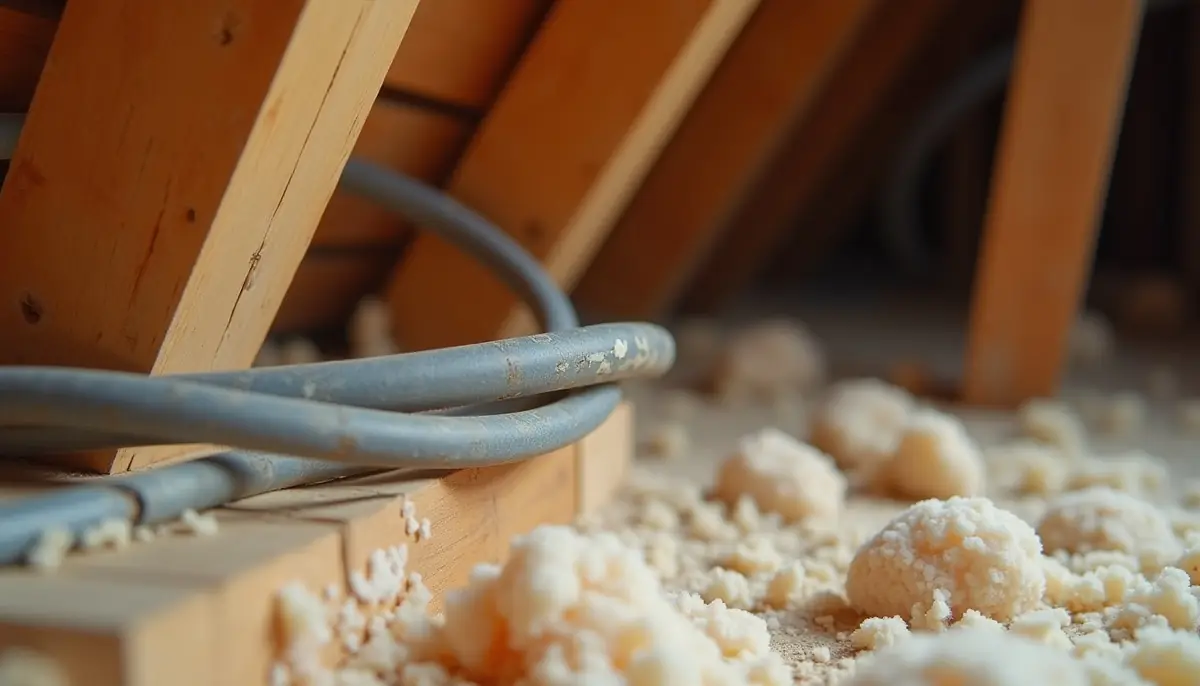
Wire is not food. Three things make it a target. First, size: ICWDM notes that rats do not gnaw on smooth round items more than 7/8 inch in diameter, and almost every household cable and car harness is thinner than that. Second, position: cables run along joists, through holes in top plates and around pipes, the same protected routes rats use every night, and UC IPM notes that rats will gnaw to enlarge a gap they want to pass through. Third, nesting: ICWDM records that roof rats living in attics may tear up insulation for nests or gnaw electrical wiring, and that rats living under a refrigerator or freezer may disable it by gnawing its wires.
Mice chew wires for the same reason. UC IPM’s house mouse note states that mice damage structures and vehicles by gnawing electrical wires and gas lines, including appliance cords and wires in walls. In the house, see mice in the attic; in an attached garage, rats in the garage.
Why do rats chew wires in cars?
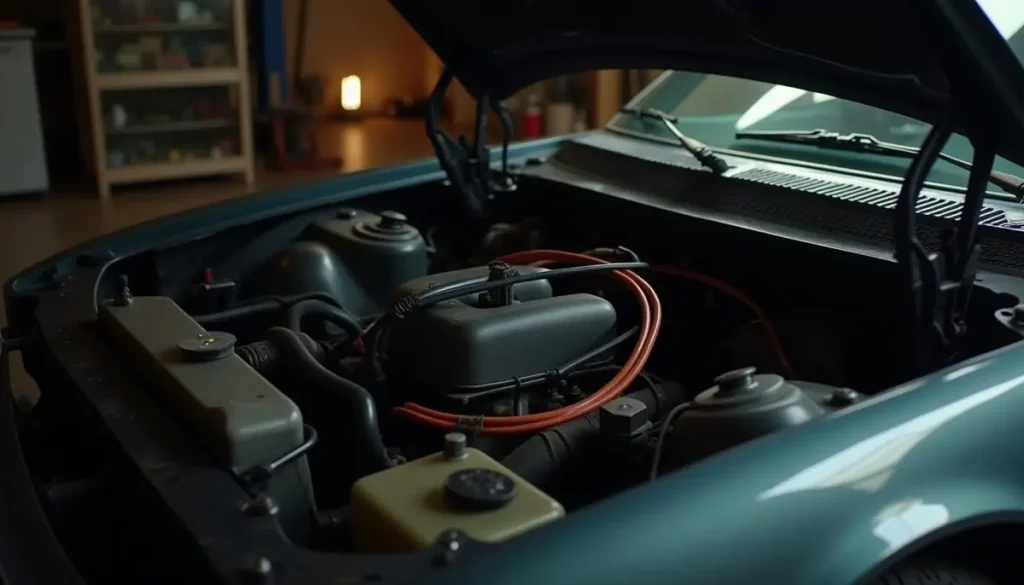
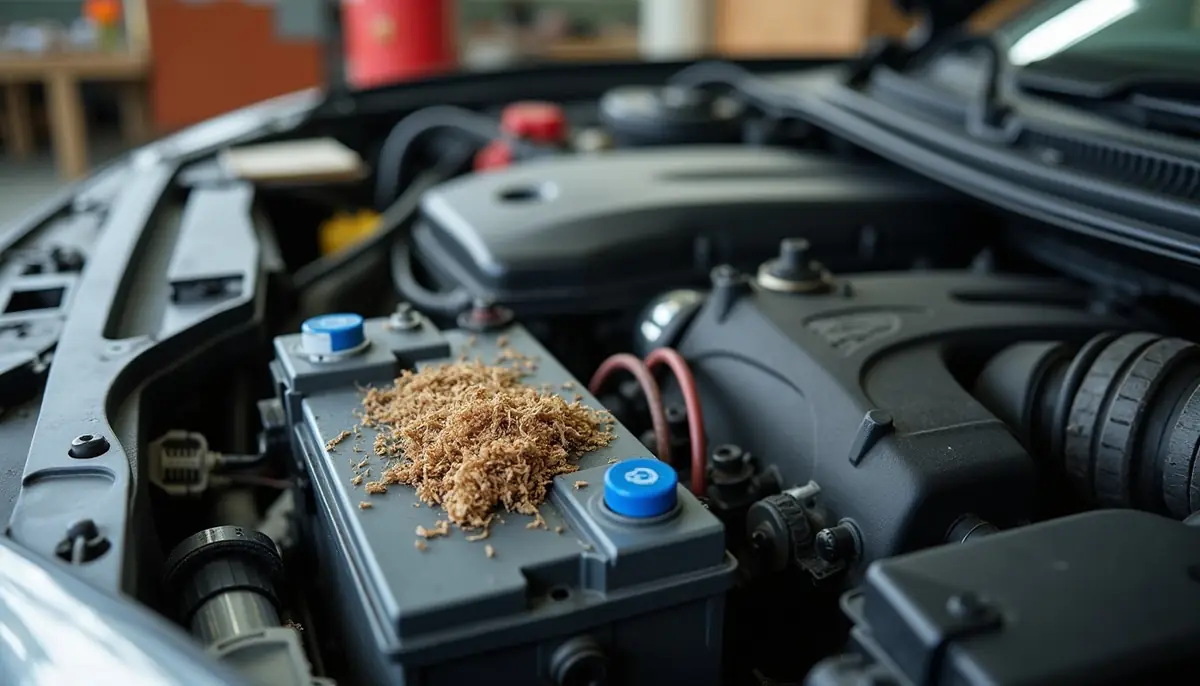
A parked car offers a sheltered engine bay full of thin wiring; UC IPM notes rats commonly gnaw engine wire sheaths, causing significant malfunctions.
The soy explanation came from lawsuits. In Heber v. Toyota Motor Sales, filed in 2016 in the Central District of California, owners alleged Toyota’s switch from vinyl chloride to a soy-based harness coating drew rodents. The district court dismissed the case in 2018. In August 2020 the Ninth Circuit kept the fraud claims dismissed but revived the implied warranty claims, on the narrow point that the alleged defect was the wiring, not the rats; it did not decide whether soy attracts rodents. In the Honda litigation, a federal judge in the Northern District of Illinois ruled for Honda in 2024, finding that the owners had failed to uncover any evidence that epoxidized soybean oil, or any bio-based material, was used in the damaged parts of their vehicles. Our mice in the car page sets out both cases year by year, with the repair bills recorded in the court filings.
We found no published controlled study testing whether rats prefer soy-based insulation. UC IPM records the same damage in trucks, tractors and farm equipment of all types.
Can rats chewing wires cause a fire?
It can. UC IPM warns that roof rats in an attic present safety concerns from electrical sparks and fires, and its house mouse note says many fires of unknown origin are believed to be caused by rodents gnawing wires. What nobody has is a count.
The figure most often quoted, that rodents cause 20 to 25 per cent of fires of unknown cause, traces back at least to an October 2012 article in Units, the National Apartment Association magazine, written by the National Pest Management Association’s vice president of public affairs. The article opens with genuine National Fire Protection Association figures for electrical fires, then gives the rodent share as “it’s estimated”, with no source. We found no NFPA or US Fire Administration table that reports that share. Treat it as an industry estimate, not a statistic.
Do rats get electrocuted when chewing wires?
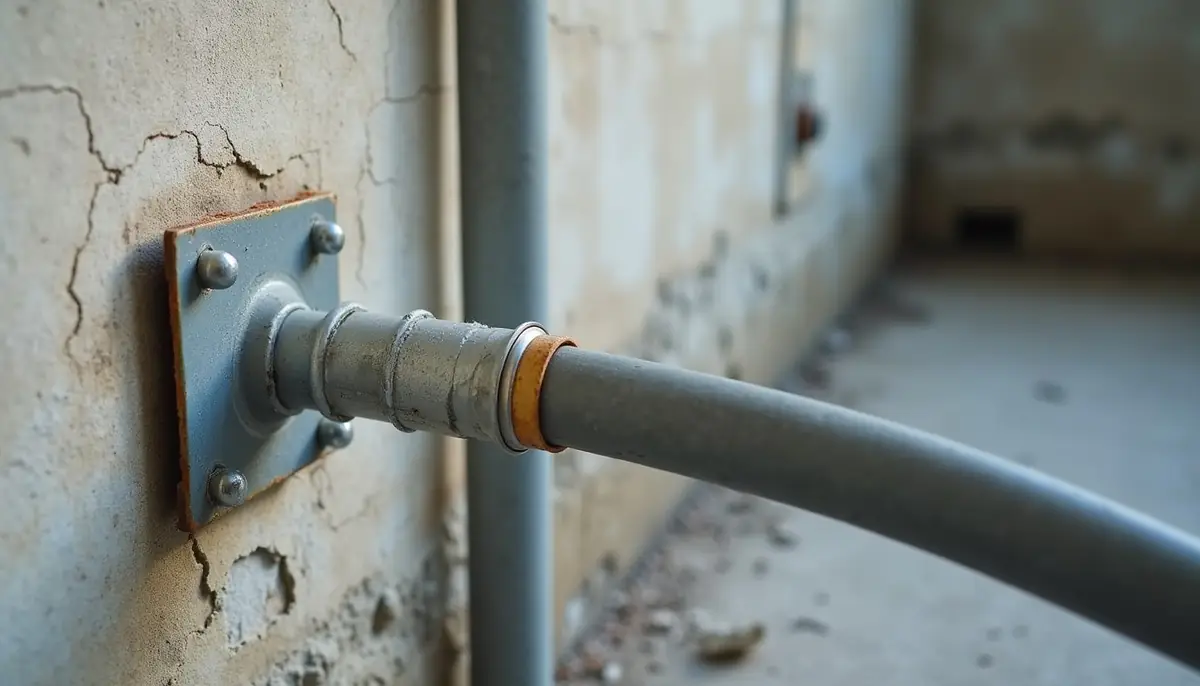
Sometimes, if a rat bites through the insulation into a live conductor, but we found no study or extension figure on how often it happens. Finding no dead rat therefore tells you nothing about the state of the wire: a sheath gnawed down to bare copper is the hazard UC IPM warns about, whether or not the rat survived. Any wiring with bared copper should be checked by a licensed electrician before the circuit is used again.
How to tell if rats or mice are chewing wires
- Look at the gnaw width. ICWDM’s vehicle guide gives 1 to 2 mm for mice and 4 mm for rats; UC IPM gives the same 4 mm and 2 mm split.
- Look below the cable. Fresh shavings of insulation, droppings in clumps (rat droppings run up to 3/4 inch, per ICWDM) and greasy rub marks along a joist or pipe.
- In the attic: tunnels through insulation, nests near the eaves, and chewed cable where it crosses a joist or enters a junction box.
- In the car: nesting material or stored food under the hood, and electrical faults or warning lights that appear after the car has been parked.
- Behind appliances: pull out the fridge and freezer; ICWDM records rats disabling them by gnawing the wires.
How to stop rats chewing wires
In the house
Exclusion is what lasts. UC IPM calls building rats out the most successful and longest-lasting strategy and says to seal every opening larger than 1/4 inch, using steel wool, wire screen or sheet metal, because rats chew through plastic, foam, wood and caulk. Vents should be covered with 16-gauge, 1/2 inch galvanized wire cloth or 18-gauge expanded metal. Our rodent exclusion materials guide covers what holds and what fails. Trap the rats already inside: along walls for Norway rats, and on beams and ledges for roof rats.
In the car
UC IPM suggests a weighted car cover that touches the ground all round, while warning that rodent management in the surrounding landscape will usually be needed for a longer-term fix. Clear food from the cabin, remove nests, and trap along the garage walls.
Hot-pepper tape and coatings
The best evidence is a 2000 USDA Wildlife Services study by Shumake, Sterner and Gaddis. Individually caged wild Norway rats gnawed communications cable for 7 days; with 2.0 per cent capsaicin enclosed in electrical shrink tubing, cable volume loss was significantly lower than with the untreated carrier, and capsaicin ranked best on all five damage measures, though only one measure reached statistical significance. A 1999 trial by the same team on pocket gophers found that capsaicin applied as a surface coating did no better than the control; only the shrink-tube version reduced damage. That favours wrapped products over sprays; neither trial tested a tape in an engine bay.
What time of year is worst for rats?
Spring and autumn, for numbers. ICWDM states that Norway rats breed most in spring and fall, with activity declining in summer heat and often stopping in winter, and that roof rat breeding usually peaks in spring and fall too, running nearly year round in warm regions. Autumn is also when rodents move indoors: UC IPM says house mice frequently enter homes in autumn as night temperatures fall.
Frequently asked questions
What is the hardest thing a rat can chew through?
UC IPM says Norway rats can gnaw soft metals such as copper and lead, as well as plastic, wood, foam and caulk. UC IPM’s barriers are sheet metal, wire screen and steel wool, with 16-gauge or 19-gauge galvanized wire cloth of 1/2 inch mesh over vents and low windows. Steel wool rusts and can be worked loose, so our exclusion guide treats it as packing behind a metal patch.
What do rats hate the worst?
No smell or sound reliably drives rats away. UC IPM states that rats quickly get used to repeated sounds, making ultrasonic devices ineffective. The strongest published evidence for a deterrent is capsaicin enclosed around cable, which reduced gnawing in a USDA trial on wild Norway rats. In practice, sealed entry points and traps work better than any repellent.
How often do rats chew wires?
No national survey counts it. Extension guides from UC IPM and ICWDM list wire gnawing as a routine type of rat and mouse damage in attics, walls, appliances and vehicles rather than a rare event. If rats are living in an attic or engine bay, assume wiring is at risk and inspect it.
Why do mice chew wires in the house?
For the same reason as rats: their incisors grow continuously and must be worn down. UC IPM’s house mouse note says mice gnaw appliance cords, wires in walls and gas lines, and that many fires of unknown origin are believed to be caused by rodents gnawing wires. Mice enter through gaps of 1/4 inch, so sealing has to be thorough.
Sources
- University of California Statewide IPM Program, Pest Notes: Rats (Publication 74106) and Pest Notes: House Mouse (Publication 7483).
- Internet Center for Wildlife Damage Management: Norway Rats, Norway Rat Biology, Roof Rat Biology, Roof Rat Damage Identification, and Identifying Vertebrate Damage to Vehicles; based on Timm, Prevention and Control of Wildlife Damage, 1994.
- The relationship between eruption and length of mandibular incisors in young rats. Medical Science Monitor, 2003 (PMID 12552237).
- Gordon, L.M. et al. Amorphous intergranular phases control the properties of rodent tooth enamel. Science 347:746, 2015.
- Shumake, S.A., Sterner, R.T. and Gaddis, S.E. Repellents to reduce cable gnawing by wild Norway rats. USDA APHIS Wildlife Services, 2000.
- Shumake, S.A., Sterner, R.T. and Gaddis, S.E. Repellents to reduce cable gnawing by northern pocket gophers. USDA APHIS Wildlife Services, 1999.
- Heber et al. v. Toyota Motor Sales U.S.A., US District Court for the Central District of California, No. 8:16-cv-01525; Ninth Circuit memorandum, August 2020.
- Caracci v. American Honda Motor Co., US District Court for the Northern District of Illinois, 2024 ruling as reported by CarComplaints.com, 1 April 2024.
- Henriksen, M. Pests Under Fire. Units magazine, National Apartment Association, October 2012.