Can Mice Chew Through Steel Wool? Grades, Rust and Better Fixes
Mice rarely chew through tightly packed steel wool, but they do get past it: they pull loose wool out, squeeze between the wool and the edge of the hole, or wait for it to rust. The National Park Service rodent exclusion manual says rodents often work their way between steel wool and the edges of an opening, and tells crews to always caulk over it. UC IPM calls steel wool pads a good temporary plug that may rust.
So the honest answer to “can they chew through it” is mostly no, and the honest answer to “will it keep them out” is only if it is packed, sealed and checked. We found no published gnaw test of steel wool against house mice; the guidance below comes from the federal and university manuals that crews train on.
What mice can and cannot get through
| Material | Can a mouse get through? | What the source says | Source |
|---|---|---|---|
| Wood, rubber, vinyl, plastic screening | Yes | Gnawable; ineffective for plugging holes | UC IPM Pest Notes: House Mouse (2025) |
| Expanding foam on its own | Yes | Useful against heat loss but will not prevent rodent entry | ICWDM |
| Aluminium screen or aluminium coil | Yes | Mice, rats and squirrels can easily gnaw through aluminium | National Park Service (NPS) manual, 2014 |
| Steel wool, loose | Yes, by pulling or pushing past it | Rodents work between the wool and the edges | NPS |
| Steel wool, packed and caulked | Rarely, until it rusts | Temporary plug; flammable; rusts | NPS; UC IPM |
| Copper mesh, caulked | Rarely | Does not rust, but rodents can push it aside unless caulked | NPS |
| Copper screen | Over time | A soft metal rodents can penetrate over time; inspect regularly | NPS |
| Lath screen pushed into a hole | No | Highly rodent-proof; does not rust or bleed through caulk | NPS |
| Hardware cloth, quarter-inch mesh | No | Effectively excludes mice and most rats; heavy galvanized half-inch cloth lasts 10 to 20 years | NPS; ICWDM |
| Galvanized sheet metal, 24-gauge or heavier | No | Recommended for most general exclusion uses | NPS |
| Mortar and concrete | No, when mixed properly | Best mix one part cement to three parts sand or richer; rats can gnaw concrete block at an exposed edge | NPS |
Compiled by The Pest Control Brief from the National Park Service Rodent Exclusion Manual (Badzik and colleagues, 2014), UC IPM Pest Notes: House Mouse (Publication 7483, updated 2025) and the Internet Center for Wildlife Damage Management (ICWDM).
Why steel wool fails: three ways mice get past it
They pull it out
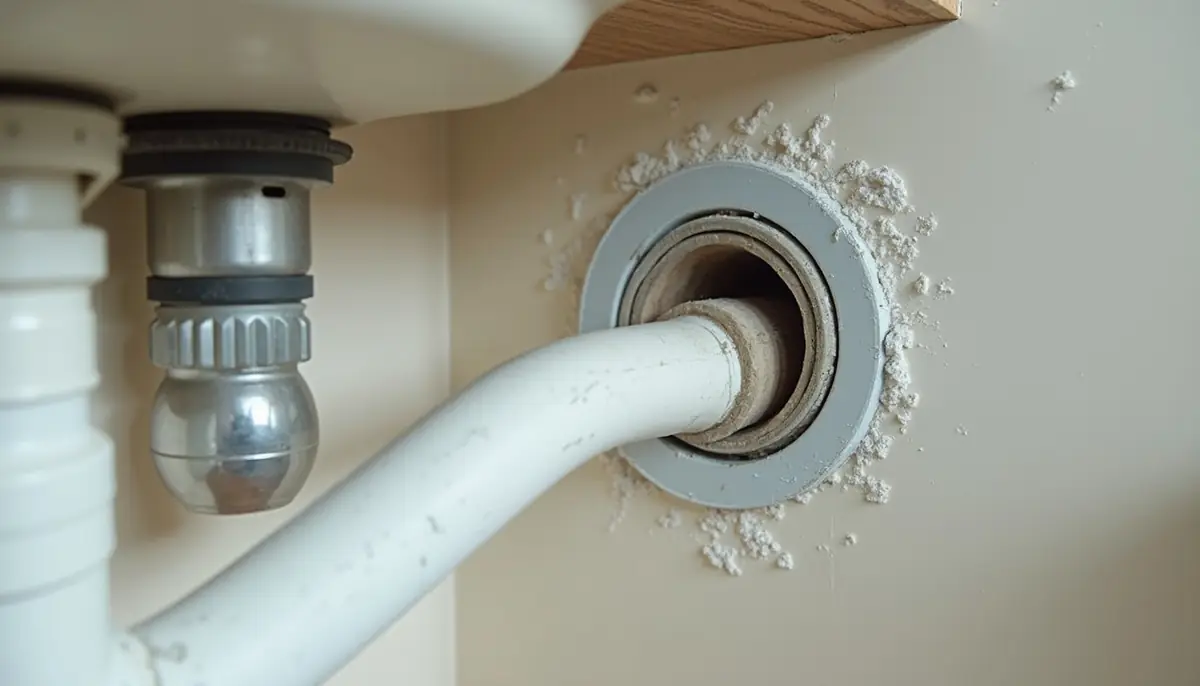
A plug of steel wool is held in place by friction alone. The NPS manual makes the same point about copper mesh, that rodents can push it aside to gain entry, and the instruction for both is identical: caulk over the plug. A loose wad pushed into a hole with a finger is the version most likely to end up on the floor beside the hole.
They go round the edge
The NPS manual says rodents often work their way between the steel wool and the edges of the opening. A mouse needs only a gap about a quarter inch across, roughly 6 mm or the width of a pencil, according to both CDC and the Park Service. Our guide to how small a hole rats and mice fit through sets out the measurements. A plug that leaves a crescent of space down one side has not sealed the hole.
They wait for rust
Plain steel wool rusts, and both UC IPM and the NPS say so. Neither gives a timeframe, and we found no published measure of how fast it breaks down in a wall or at a foundation. Damp crawl spaces, sill plates and pipe holes under sinks are exactly where mice enter, so check plugs in those places first, and if you already hear scratching, our guide to mice in the walls covers getting them out before you seal. Copper mesh and stainless steel wool, which ICWDM recommends, do not rust in the same way.
Does the grade matter?
Yes, and the federal advice runs against what most product listings say. The NPS manual states that only 00-sized steel wool can deter rodents. In the standard grading scale, 00 is very fine, with fibres about 0.04 mm thick, while the coarse #3 and #4 grades have fibres of 0.09 and 0.10 mm, more than twice as thick. The manual does not explain its reasoning.
No source we found tested coarse against fine grades with live mice, so treat the 00 recommendation as the training standard rather than a measured result.
Can mice chew through steel wool pads?
Steel wool scouring pads, including the soap-filled kind, work the same way as plain wool. UC IPM says steel wool scouring pads make good temporary plugs but may rust over time. No source we found credits the soap in a pad with any deterrent effect.
“Wire wool” is the British name for the same material, so the answer is the same: a temporary plug that needs caulk over it.
How to install steel wool so it holds
- Find the openings. CDC’s Seal Up list includes inside, under and behind kitchen cabinets, around pipes under sinks and washing machines, around pipes leading to water heaters and furnaces, and between the floor and wall. Our room-by-room checklist of signs of mice in the house helps locate active routes.
- Use the right material for the size. CDC says to fill small holes with steel wool and use lath screen, metal, cement, hardware cloth or metal sheeting for larger holes.
- Pack it tight. Force enough 00 wool into the hole that it fills the opening edge to edge with no visible gap.
- Caulk over it. The NPS manual says always caulk over steel wool, both to hold it in place and to make it easier to see if rodents have broken the seal. CDC allows caulk or spray foam around the wool; foam on its own is not a barrier, and our guide to whether mice eat through spray foam explains why.
- Keep it away from heat. The NPS lists steel wool as flammable, so do not pack it against a flue, heater or light fitting.
- Re-inspect. The NPS advises exterior inspections at least twice a year, in spring and again in autumn before rodents move in.
The caulk is the part that wears out first in most installations. The NPS manual gives these lifespans for the main types, which is a fair guide to how often to recheck a plug:
Where steel wool is the wrong choice
Steel wool fills small, irregular gaps. For a hole bigger than a plug can fill, a vent or a foundation crack, the NPS and CDC both move to hardware cloth, sheet metal or mortar, and our comparison of exclusion materials that stop rodents covers the specifications.
Wiring is another poor place for it: the NPS lists steel wool as flammable, so keep it away from electrical boxes and ask an electrician about gaps there. The reasons rodents target cables are in our guide to why rats chew wires.
Rats are a bigger problem than mice. The NPS manual says rats can gnaw through concrete block, aluminium siding, adobe brick, wallboard, plaster and wood, usually where there is an exposed edge. For rats, steel wool is a stopgap until metal or mortar goes in.
When the mice still get in
If mice return after you have sealed, the cause is usually a gap you missed rather than wool they chewed. The NPS notes that mice can climb almost any slightly rough vertical surface and jump 12 inches or more straight up, so gaps at the top of a wall and around roof lines count; our page on how mice climb walls shows where.
Sealing a house with mice still inside shuts them in with you, so set snap traps along the walls as well as sealing; UC IPM advises spacing them no more than about 10 feet apart where mice are active. The cycles that bring mice back after a seal are covered in our guide to why mice keep coming back.
The full plan, with trap numbers and placement from UC IPM, is in how to get rid of mice.
For a whole house with many entry points, a professional exclusion service that seals with metal and mortar is worth pricing.
Frequently asked questions
What material can mice not chew through?
Mice cannot get through quarter-inch galvanized hardware cloth, galvanized sheet metal of 24-gauge or heavier, lath screen, or properly mixed mortar and concrete, according to the National Park Service rodent exclusion manual. Wood, rubber, vinyl, plastic screening and expanding foam are gnawable and, as UC IPM puts it, ineffective for plugging holes.
Will steel wool keep a mouse out?
For a while, if it is packed tightly into a small hole and caulked over. Loose steel wool can be pulled out or bypassed at the edges, and plain steel wool rusts. The National Park Service recommends only 00-grade wool and says to always caulk over it. For a permanent fix use lath screen, hardware cloth or sheet metal.
Can mice chew through brillo pads?
Soap-filled steel wool pads behave like any steel wool: mice seldom chew through a tight plug but can pull out or push past a loose one. UC IPM says steel wool scouring pads make good temporary plugs but may rust over time. Caulk over the pad and check it each spring and autumn.
What do mice hate the most?
No smell has been shown to keep mice out of a home; the Internet Center for Wildlife Damage Management says chemical repellents are seldom practical for mouse infestations. What mice cannot deal with is a sealed building: every gap over a quarter inch closed with metal, mortar or caulked metal wool, and food stored in sealed containers.
How long can mice chew through steel wool?
There is no published measure of how long it takes, because mice rarely chew through a tight plug. They get past steel wool by pulling it out, slipping round the edges, or after it rusts. Neither UC IPM nor the National Park Service gives a lifespan for steel wool, so inspect plugs at least twice a year.
Sources
- Badzik B, DiSalvo CLJ, Buttke DE, Chase MF. Rodent Exclusion Manual: Mechanical Rodent Proofing Techniques, a training manual for National Park Service employees. Natural Resource Report, National Park Service, 2014.
- University of California Statewide IPM Program. Pest Notes: House Mouse, UC ANR Publication 7483, updated 2025.
- Internet Center for Wildlife Damage Management. House Mouse Damage Prevention and Control Methods.
- Centers for Disease Control and Prevention. How to Seal Up to Prevent Rodents.
- The Engineering ToolBox. Steel Wool Grades, fibre thickness table.