How Small a Hole Can a Rat Fit Through? Sizes, With Mice
An adult rat can fit through a hole about half an inch (13 mm) across, and a young rat through a quarter inch (6 mm), the same gap a house mouse uses. That is smaller than a US dime. Extension services and the National Park Service agree on both figures, and on the rule behind them: if the head fits, the body follows. So the working standard for sealing a house is a quarter inch, whichever rodent you have.
The measured gaps, rodent by rodent
| Rodent | Smallest opening it passes | Roughly the size of | What closes it |
|---|---|---|---|
| Adult Norway rat | 1/2 inch (12.7 mm); Nebraska says slightly more than 1/2 inch | A little over two thirds of a dime’s width | Hardware cloth with 1/4 inch mesh, sheet metal or concrete |
| Adult roof rat | Same 1/2 inch standard; UC IPM says rats of either species pass under a door with a 1/2 inch gap | As above | As above, including gaps at roof level |
| Juvenile rat | 1/4 inch (6.4 mm) | A pencil’s width | 1/4 inch hardware cloth, metal, concrete |
| Pack rat (woodrat) | ICWDM: leave no hole larger than 1/2 inch | A little over two thirds of a dime’s width | Same methods as Norway and roof rats |
| House mouse | A gap 1/4 inch tall, or a round hole 3/8 inch (9.5 mm) wide | A pencil’s width | 1/4 inch hardware cloth; never foam or rubber |
Compiled by The Pest Control Brief from NC State Extension (2024), UC IPM Pest Notes: Rats (74106) and House Mouse (7483, 2025), Nebraska Extension G1530, the Internet Center for Wildlife Damage Management (ICWDM), the National Park Service Rodent Exclusion Manual and the CDC. Coin widths from 31 U.S.C. 5112.
The quarter-inch rat figure is the one most pages leave out. NC State Extension puts it plainly: gaps of 1/4 inch or larger let juvenile rats into a structure, while gaps of 1/2 inch or larger admit adults. A house sealed only to the adult rat figure stays open to the next litter, and to every mouse. If you are not sure which animal you are dealing with, our guide to telling a rat from a mouse starts with the head and feet, which matter here too.
Why the head decides it
The National Park Service manual states the rule for mice: if a mouse can squeeze its head through an opening, the rest of the body can follow. The skull is the widest part that cannot compress; fur, fat and a long, narrow body can. The same logic applies to rats, which is why a young rat with a small skull passes a quarter-inch gap that its mother cannot.
One popular explanation is wrong. Many sources, including that NPS manual, credit a “lack of a collar bone”. Rats and mice do have collarbones: the growth of the rat clavicle was the subject of a 1988 study in the Journal of Anatomy by Rönning and Kantomaa, and a 2009 Human Molecular Genetics paper by Lou and colleagues describes clavicle defects in mutant laboratory mice, which requires mice to have clavicles in the first place. The head-first rule holds; the collarbone story does not.
Gnawing changes the numbers over time. UC IPM says a rat facing a wooden door with a narrow gap may gnaw it larger, and Nebraska Extension G1530 warns not to ignore smaller crevices because rodent gnawing can quickly enlarge them. A gap slightly under the limit with a rough wooden edge is not safe, and fresh gnaw marks around an opening are among the signs of rats in a house worth checking first.
Coin comparisons overstate the gap
Size comparisons online are often generous. A US dime is 0.705 inch across and a quarter 0.955 inch, under federal law at 31 U.S.C. 5112. An archived CDC page once said a mouse fits through a hole the size of a nickel (0.835 inch) and a rat through one the size of a half dollar (1.205 inches); NC State’s storm guidance says rats can fit through openings as small as a quarter. Measured against the 1/4 and 1/2 inch figures, each coin is roughly twice to more than three times the measured gap.
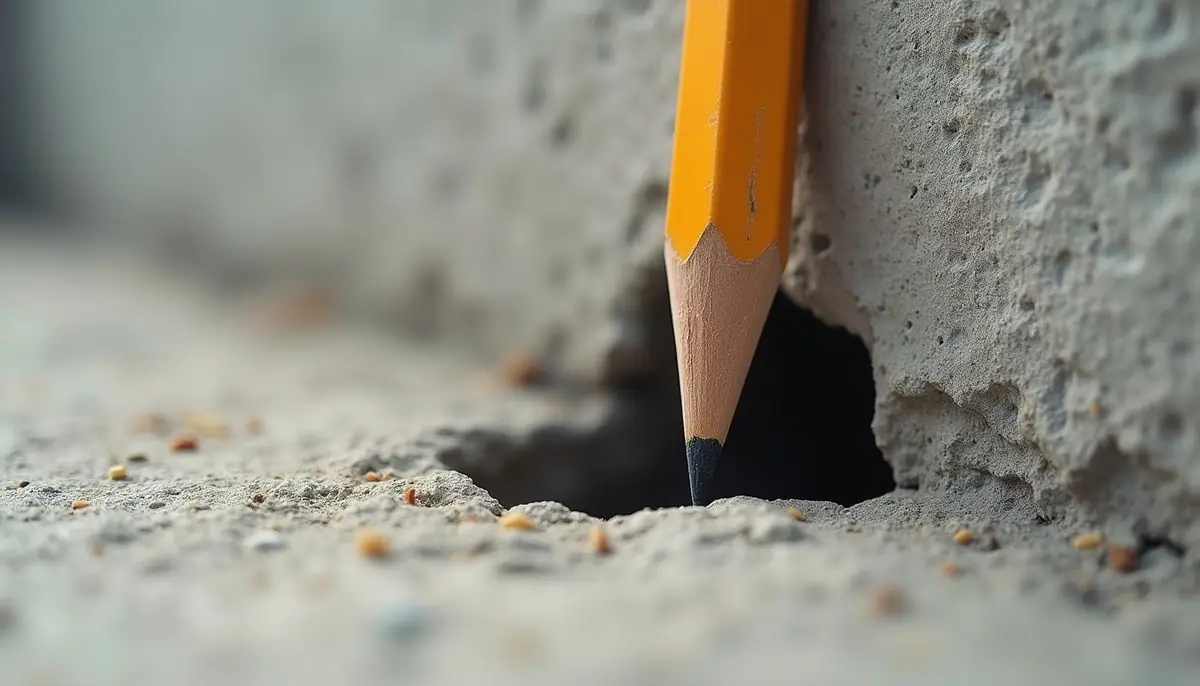
The current CDC page uses the better object: a mouse fits through a hole the width of a pencil, 1/4 inch or 6 millimetres. The National Park Service suggests a common wooden pencil or ballpoint pen, usually 3/16 to 3/8 inch across, as an inspection gauge for gaps under doors and around pipes, vents and screens. If the pencil goes in, so can a mouse or a young rat.

Where those gaps hide on a house
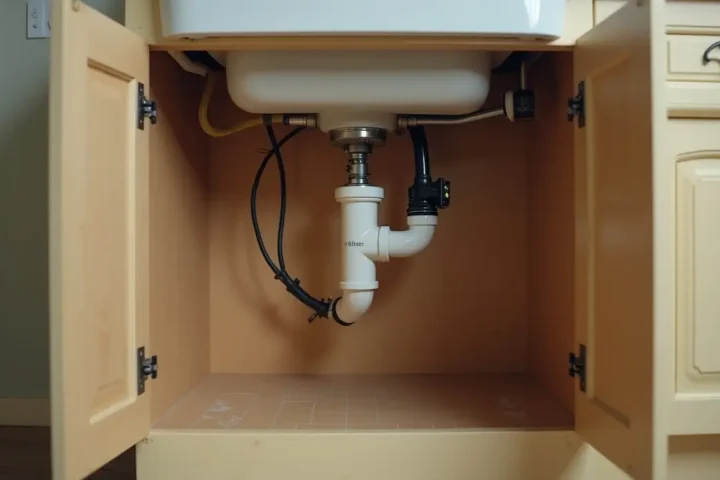
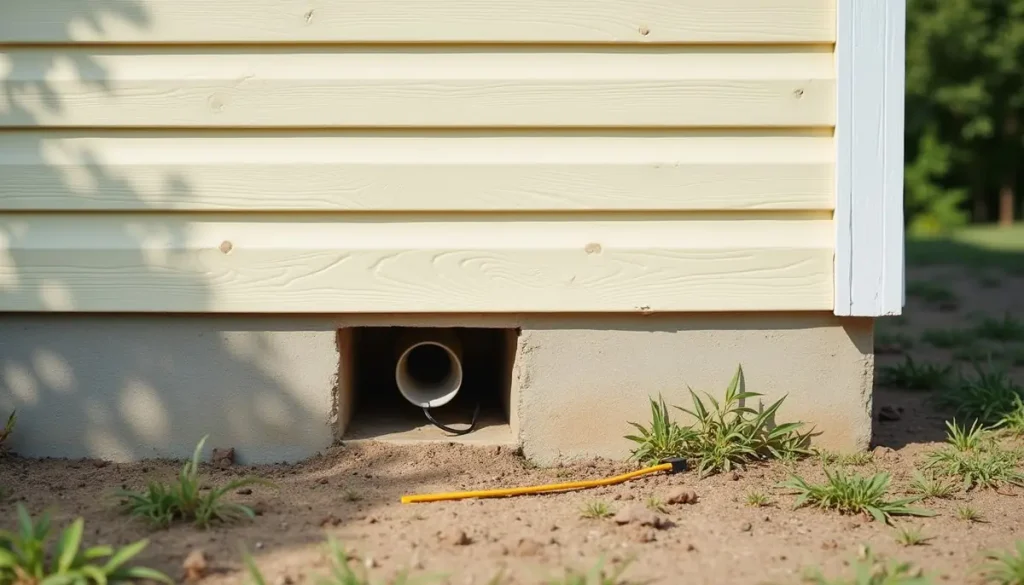
- Pipes, cables and wires where they pass through walls or the foundation, which UC IPM says to seal all the way round.
- Gaps under and to the sides of garage doors, listed on the NPS inspection diagram.
- Exterior doors: NC State says door sweeps and thresholds should leave no more than 1/4 inch clearance, and UC IPM flags the gap between double doors.
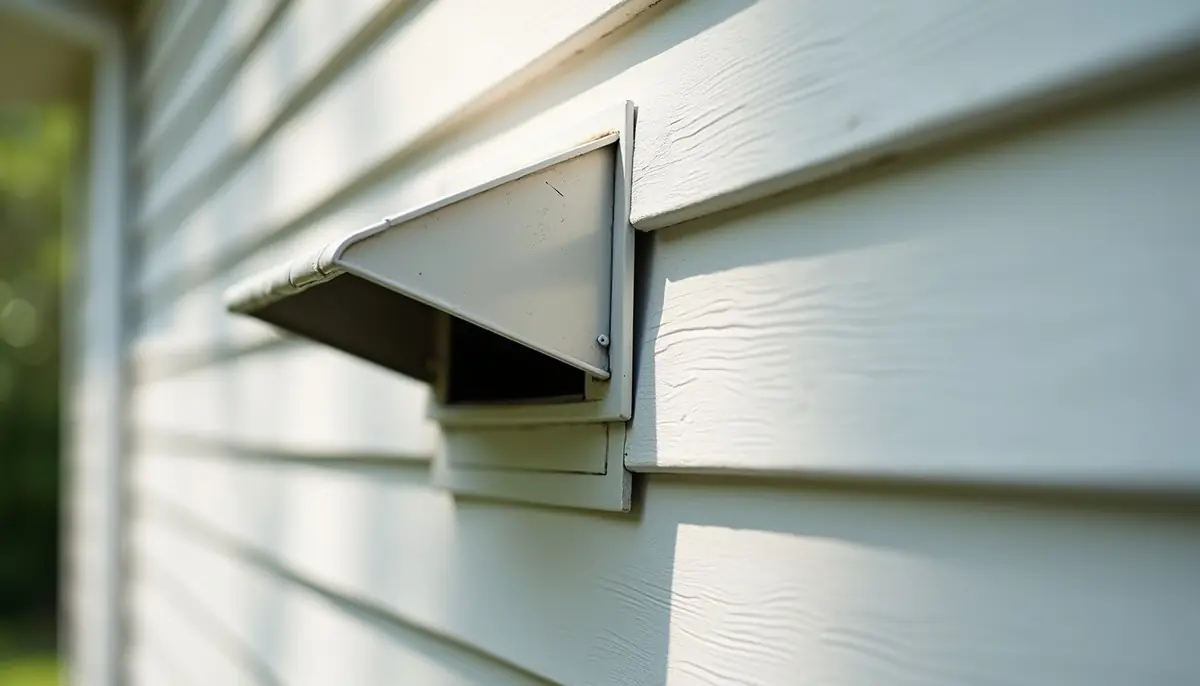
- Dryer vents with a missing or jammed flap, which the NPS manual shows as a rodent entrance.
- Soffits, roof vents and gaps at the eaves, the roof rat routes covered in our guide to roof rats and how to keep them out.
- Rooftop plumbing vents more than 2 inches across, which UC IPM says to screen at the top.
- Drains, since UC IPM notes rats can swim through sewers and enter through toilets or broken drains, as our explainer on whether rats can swim up toilets sets out.
Height is no protection. Mice run up rough walls and along cables, as our page on whether mice can climb walls shows, and Nebraska Extension says rats climb the outside of vertical pipes up to 3 inches in diameter and jump 36 inches straight up.
What holds, and what a rat chews through
UC IPM says rats chew through plastic, foam, wood and caulk, and NC State says expanding foam alone is not effective. Nebraska G1530 specifies 19-gauge hardware cloth with 1/2 inch mesh for rats and 24-gauge with 1/4 inch mesh for mice, concrete at least 2 inches thick if reinforced, and copper or stainless steel wool wedged tight for openings under 3/4 inch that cannot be secured another way. The National Park Service recommends 1/4 inch hardware cloth even where rats are the target, to keep mice out too. UC IPM rules out chicken wire, since rats pass through its openings.
Our comparison of steel wool, copper mesh and what actually stops a rodent covers why patches fail at the edges.
Seal after the rats inside are trapped, not before; the full sequence is in our guide to how to get rid of rats.
Can a rat squeeze through a 1 inch hole?
Easily. One inch is 25.4 mm, twice the half-inch figure for an adult rat. ICWDM describes active Norway rat burrow entrances as 2 to 3 inches wide, so a hole of an inch or more anywhere on a building should be treated as open to every rat and mouse.
Can mice get through a 1/2 inch hole?
Yes, with room to spare. UC IPM says house mice pass under a gap only 1/4 inch tall and through a round opening 3/8 inch wide, so a 1/2 inch hole is larger than a mouse requires. Any hole a mouse uses, a young rat can usually use too. Our guide to how to get rid of mice covers sealing in the right order.
What happens if I block a rat hole?
It depends where the hole is. On a building, blocking the only exit with rats inside can shut them in the walls or attic, with a gnawed new exit or a dead rat as the likely result. ICWDM’s woodrat guidance says to make sure the animal is not shut inside, for example by fitting a one-way door hinged at the top that lets it out but not back in. Trap the indoor rats first, then seal.
Outdoors, blocking burrows is a test, not a cure. ICWDM suggests plugging holes with paper to find which are active before securing them; a plug that is pushed out or chewed through marks a burrow in use and tells you where to place traps or bait stations; the yard guidance in our page on rats in the backyard covers what to do next.
What happens if I pour bleach down a rat hole?
Probably nothing useful. No extension or federal source we read lists bleach as a rat control method. NC State mentions bleach only for coating droppings before cleanup, and UC IPM names three registered rodenticide active ingredients for rats in California: bromethalin, cholecalciferol and zinc phosphide. Use it where it belongs, disinfecting droppings, following the method in our guide to safe mouse dropping cleanup.
Frequently asked questions
Can a rat fit under a door?
Yes, if the gap is about half an inch. UC IPM says rats of either species, especially young rats, can squeeze beneath a door with only a 1/2 inch gap, and may gnaw a wooden door to enlarge it. NC State recommends metal kick plates, thresholds or rodent-proof sweeps leaving no more than 1/4 inch clearance.
Can a rat fit through a pencil-sized hole?
A young rat can. NC State Extension says gaps of 1/4 inch admit juvenile rats, and the CDC describes a 1/4 inch hole as the width of a pencil. An adult rat needs about half an inch, roughly twice that, which is why a quarter inch is the sealing standard for both rats and mice.
How small a hole can a pack rat fit through?
ICWDM’s woodrat guidance says no hole larger than 1/2 inch should be left unsealed, and that woodrats are excluded the same way as Norway and roof rats. Several woodrat species climb well, so attic vents, broken shingles and gaps at the eaves need checking too. Our guide to pack rats and their nests covers identification.
Is a roof rat smaller than a Norway rat?
Yes. UC IPM gives roof rat body weight as 5 to 10 ounces against 7 to 18 ounces for Norway rats, and describes roof rats as smaller and sleeker. Extension guidance applies the same half-inch standard to both, and the quarter-inch seal covers both regardless.
Sources
- NC State Extension, Surveillance and Management of Common Structure-Invading Rats (C. Hayes and P. Alder), 2024; and NC State Entomology, Pest Problems After Storms: Rodents.
- University of California Statewide IPM Program, Pest Notes: Rats, UC ANR Publication 74106; Pest Notes: House Mouse, UC ANR Publication 7483, 2025.
- University of Nebraska Extension, G1530 Rodent-Proof Construction: Structural (Vantassel, Hygnstrom, Ferraro and Stowell).
- National Park Service, Rodent Exclusion Manual: Mechanical Rodent Proofing Techniques (Badzik, DiSalvo, Buttke and Chase), Natural Resource Report NPS/NRSS/EQD/NRR 2014/863.
- Internet Center for Wildlife Damage Management, Norway Rat Damage Prevention and Control Methods; Woodrat Damage Prevention and Control Methods.
- Centers for Disease Control and Prevention, How to Seal Up to Prevent Rodents (current page) and archived Seal Up page (2009 capture, University of North Texas web archive).
- Rönning O. and Kantomaa T., The growth pattern of the clavicle in the rat, Journal of Anatomy 159:173 to 179, 1988.
- Lou Y. et al., A Runx2 threshold for the cleidocranial dysplasia phenotype, Human Molecular Genetics 18(3):556 to 568, 2009.
- 31 U.S.C. 5112, denominations, specifications and design of coins.