Flying Squirrels in the Attic: Signs, Noise and Removal

A flying squirrel is a small, strictly nocturnal tree squirrel, 8 to 10 inches long for the common southern species, that glides between trees on a fold of skin stretched from wrist to ankle. It does not hibernate, often shares winter nests in groups, and can move into attics, where it is heard only at night. The fix is exclusion: seal every gap, use a one-way door on the last one when no young are present, and check state rules first, because flying squirrels are protected in some states.
Most people discover flying squirrels when something runs across the ceiling after dark. Below: how to tell what is in the attic, how many may be up there, when it is safe to evict them, the typhus link, and our own iNaturalist analysis.
What is in the attic? Flying squirrel, grey squirrel or mouse
| Southern flying squirrel | Northern flying squirrel | Eastern grey squirrel | House mouse | |
|---|---|---|---|---|
| When it is active | Night only | Night only | By day, mostly mornings and evenings | Mostly at night, sometimes by day |
| Length, nose to tail tip | 8 to 10 in | 9.8 to 11.5 in | 16 to 20 in | 5.5 to 7.5 in |
| Weight | 1.8 to 2.5 oz | 2 to 4.4 oz | 1 to 2 lb | 0.5 to 1 oz |
| Tail | Flat, used as a rudder in glides | Flat | Large and bushy | Thin, 3 to 4 in |
| Belly fur | White from tip to base | Grey at the base, white at the tip | White belly | Not a useful clue |
| Nest sharing | Groups of 2 to 12 recorded | Not covered in our sources | A female with her litter; the second litter overwinters with her | See our mouse guides |
| Damage in buildings | Rarely serious, per Nebraska extension | Not covered in our sources | Can badly damage insulation and wiring | See our mouse guides |
Compiled by The Pest Control Brief from Connecticut DEEP, University of Nebraska-Lincoln Extension (G1924 and Controlling House Mice), University of Kentucky FOR-45, Penn State Extension and Reynolds, Fies and Pagels (2009).
The time of day is the best clue. Nebraska extension says plainly that, unlike other squirrels, flying squirrels are nocturnal, and that their activity is frequently misattributed to mice. Kentucky extension notes grey and fox squirrels are most active in the mornings and evenings. Scurrying and thumps between dusk and dawn, with nothing heard by day, point to flying squirrels or rodents; daytime thumping points to grey squirrels, covered in our guide to squirrels in the attic. If the sounds come from inside the walls rather than overhead, our mice in walls guide covers that diagnosis, and insects that call at night are in our night noises guide.
What is a flying squirrel?
Flying squirrels do not fly. They glide on a membrane of skin, the patagium, which Nebraska extension describes as running from the wrist of the front leg to the ankle of the hind leg, steering with a horizontally flattened tail. Connecticut DEEP says that, depending on air currents, a glide from 60 feet up can cover 150 feet or more, and that they land face up and often run straight up the trunk. Large eyes help them forage at night.
What are the flying squirrels called? The three US species
- Southern flying squirrel (Glaucomys volans): the smallest and most widespread, 8 to 10 inches, found from southern Canada to southern Florida, per Connecticut DEEP. This is the usual attic species in the East.
- Northern flying squirrel (Glaucomys sabrinus): 9.8 to 11.5 inches and up to 4.4 ounces, in northern and high-elevation conifer forests from southeastern Alaska and northern Canada south to Tennessee. Penn State Extension’s identification test is the belly fur: grey at the base and white at the tip on a northern, white all the way down on a southern.
- Humboldt’s flying squirrel (Glaucomys oregonensis): recognised as a separate species in 2017 from genetic data, along the Pacific Coast from southern British Columbia to the mountains of southern California. It looks much like the northern species.
Flying squirrel vs sugar glider
Sugar gliders glide on a similar membrane but are marsupials, not rodents. A 2024 study in Nature found the gliding membrane evolved independently in several marsupial lineages, linked to changes near a gene called Emx2. The resemblance to a flying squirrel is convergent evolution, not kinship.
How big are flying squirrels?
Southern flying squirrels are 8 to 10 inches long including the tail and weigh 1.8 to 2.5 ounces, about the weight of two to five house mice. Northern flying squirrels are 9.8 to 11.5 inches and 2 to 4.4 ounces, according to Connecticut DEEP, and the endangered Carolina subspecies is 10 to 12 inches and 3 to 5 ounces, according to the US Fish and Wildlife Service. A grey squirrel, at 1 to 2 pounds, is roughly 6 to 18 times heavier than a southern flying squirrel.
Are flying squirrels nocturnal?
Yes, strictly. Connecticut DEEP notes their nocturnal habits make them seldom seen and their abundance hard to document, which shows in our data.
Records concentrate across the Southeast and the Ohio Valley, with Mississippi highest at 2.2 per 10,000 observations. The low numbers reflect an animal people rarely see, not a rare one: Connecticut DEEP describes the southern species as common throughout that state.
Where do flying squirrels live?
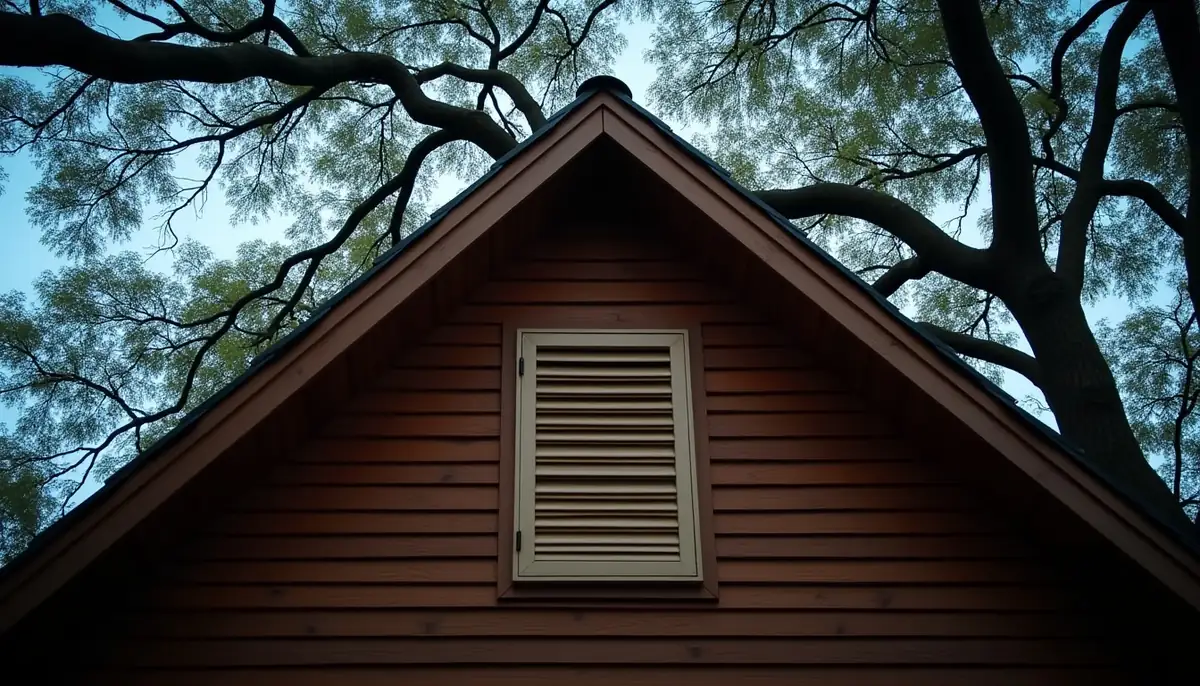
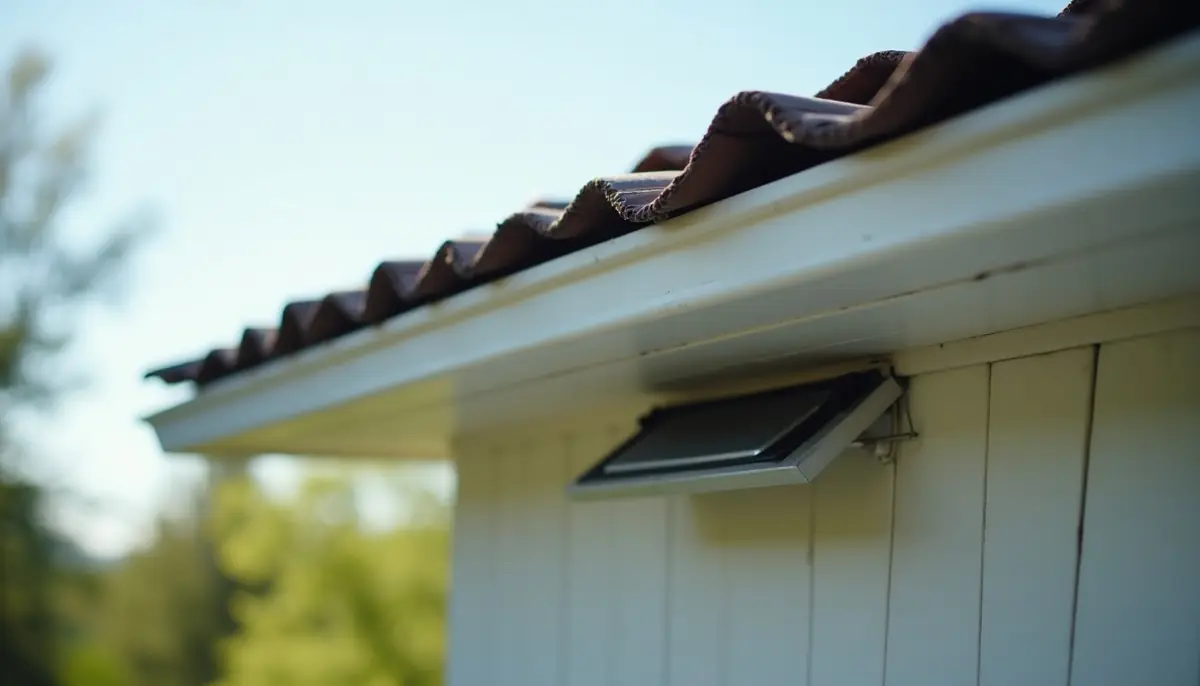
In mixed woodland, nesting in tree cavities and bird boxes lined with shredded bark, leaves, moss and feathers. Northern flying squirrels need older conifer and spruce forest; Penn State notes Pennsylvania has little of it left. In buildings, Connecticut DEEP says they get in through small gaps around dormers, ridge vents, eaves and attic vents. Nebraska extension says squirrels can squeeze through holes 1.5 inches across; flying squirrels are the smallest tree squirrels, so treat that as an upper limit, not a safe size.
Do flying squirrels hibernate?
No. Connecticut DEEP and Maine’s wildlife agency both say they are active year round. Instead of hibernating they huddle: Maine describes winter social groups, and Connecticut notes they feed and den together, especially in harsh weather. A CDC report notes they tend to gather and nest in house attics in the colder months, when they can get in.
How many are in one nest is less settled than many websites suggest. Field studies disagree, and we have put them side by side.
A 12-year nest box study in western Virginia recorded groups of 2 to 12, averaging 4.8 in winter and 3.6 to 3.7 in other seasons, though the difference was not statistically significant. Radio-tracked squirrels in Michigan more often slept apart, with a mean group of 1.59. Nebraska extension cites colonies of up to 40. Plan for several animals, not one.
Our monthly data shows flying squirrels are recorded steadily all year, with no winter gap.
What do flying squirrels eat?
More meat than other squirrels. Connecticut DEEP lists acorns, nuts, seeds, berries, blossoms, mushrooms, moths, beetles, and small birds and their eggs; Nebraska adds insects, nestlings, mice and carrion as foods of tree squirrels generally. Northern flying squirrels rely heavily on fungi and lichens, and the US Fish and Wildlife Service says truffles are a favourite of the Carolina subspecies. They store food for winter.
A useful sign: Connecticut DEEP notes flying squirrels open a nut through a single hole, whereas other squirrels break it into pieces. Nebraska adds that crushed acorns point to fox or grey squirrels. Nut shells with a single neat hole in the attic or under a feeder are a good clue, and Maine notes they visit bird feeders.
When young are in the nest
Southern flying squirrels mate in late winter, carry young for about 40 days and have a second breeding period in summer, according to Connecticut DEEP; young forage on their own by about six weeks. The Virginia study recorded two birth peaks, late March to mid-April and mid-August to mid-September, with births overall from early March to early May and late July to October, and a mean litter of 2.7. That decides when you can safely evict.
| Months (Virginia data) | What is happening | Exclusion? |
|---|---|---|
| Late January to February | Mating; winter groups in dens | Possible before births start; animals lose a winter den |
| March to May | Spring litters born and nursing | Avoid: young cannot leave |
| Mid-June to mid-July | Spring young foraging alone, before summer births | Best window |
| Late July to October | Summer and autumn litters | Avoid |
| November to mid-December | Late young still being weaned | Check carefully first |
Derived by The Pest Control Brief from Reynolds, Fies and Pagels, Northeastern Naturalist 2009 (western Virginia, 1985 to 1996) and Connecticut DEEP. Timing elsewhere may differ; confirm no young are present before sealing the last hole.
How to get rid of flying squirrels
Exclusion is the long-term fix every extension source we read recommends, and Kentucky extension calls it building them out. Connecticut DEEP warns that trapping offers only temporary relief because others move in.
- Check the law first. Status varies by state (see below), and some states restrict trapping or relocation.
- Find every opening at dormers, ridge and gable vents, eaves, fascia gaps, loose chimney flashing and around cables.
- Confirm which holes are in use by plugging them loosely with crumpled newspaper. Nebraska extension says a plug undisturbed for five days in good weather means the opening is reasonably safe to seal; Cornell’s NYS IPM program uses two days with no other activity inside.
- Seal all but the main entrance with quarter-inch or half-inch hardware cloth or 26-gauge metal, as Kentucky advises; it warns that squirrels chew through steel wool and window screen.
- Fit a one-way door over the last entrance so animals can leave but not return. Cornell stresses that excluders only work combined with sealing the other weak spots. Because several animals may share the den, leave the door in place until no activity is seen.
- Seal the last hole once nothing has used it, and trim branches back at least 8 feet from the roof, as Nebraska and Kentucky advise.
Do not use mothballs: Kentucky notes they are no longer labelled for anything but moths. Cornell notes no rodenticides are registered for squirrels. Because of the protected status in some states, nightly-only activity and the typhus risk in nests, this is a job many homeowners hand to a licensed wildlife control operator; our wildlife removal cost guide covers pricing. For droppings and safe clean-up, see our guide to squirrel poop.
Are flying squirrels endangered?
The southern flying squirrel is not federally listed and is common across its range, but status varies by state and by subspecies.
| Animal | Status |
|---|---|
| Carolina northern flying squirrel | Federally endangered since 1 July 1985; high elevations of North Carolina, Tennessee and southwest Virginia |
| Virginia northern flying squirrel | Removed from the federal endangered list in 2013 (78 FR 14022) |
| Northern flying squirrel, Pennsylvania | State endangered since 2007; hunting prohibited |
| Southern flying squirrel, Nebraska | Threatened and fully protected because of limited range and low numbers |
| Southern flying squirrel, Kentucky | Non-game species; state law lets owners protect property from wildlife other than federally protected species |
| Squirrels in New York | Without a state permit, must be released on the property or humanely destroyed |
Compiled by The Pest Control Brief from US Fish and Wildlife Service ECOS, the Federal Register, Penn State Extension, Nebraska G1924, Kentucky FOR-45 and Cornell NYS IPM. Check your own state wildlife agency.
Flying squirrels and typhus
CDC says rare US cases of epidemic typhus, called sylvatic typhus, follow exposure to flying squirrels and their nests, and advises avoiding contact with both. A 2003 CDC study in Emerging Infectious Diseases documented 39 such infections from 1976 to 2001, nearly all in the eastern US, with contact with flying squirrels or their nests in about a third. How it spreads to people is not established; the authors suggest close contact with nests, dander or the squirrels’ fleas and lice.
Cases cluster in the cold months. In a 1984 Georgia case, investigators found a colony in the attic near the patient’s bedroom, and three of four squirrels trapped there had antibodies to the bacterium. The risk is small, but it is a reason not to handle nests or nesting material bare-handed. If you develop fever, headache or a rash after contact with flying squirrels or a nest, CDC advises telling your healthcare provider about the contact.
Frequently asked questions
Are flying squirrels nocturnal?
Yes. Unlike grey and fox squirrels, which are active by day, flying squirrels come out only after dark, which is why they are seldom seen. Nebraska extension notes their activity is frequently mistaken for mice. If you hear scurrying or thumps in the attic at night and nothing during the day, flying squirrels are a likely cause, especially near mature woods.
What is a flying squirrel?
A small tree squirrel that glides rather than flies, on a fold of skin running from wrist to ankle, steering with a flat tail. The US has three species: the southern flying squirrel, 8 to 10 inches long and about 2 ounces; the larger northern flying squirrel; and Humboldt’s flying squirrel on the Pacific Coast, recognised in 2017. All are nocturnal.
How to get rid of flying squirrels?
Exclude them. Find every gap, confirm which are in use with loose newspaper plugs, seal all but the main entrance with quarter or half-inch hardware cloth or metal, then fit a one-way door on the last one and seal it once they have gone. Do this only when no young are in the nest, and check your state’s rules, since flying squirrels are protected in some states.
Do flying squirrels hibernate?
No. State wildlife agencies in Connecticut and Maine both describe them as active year round. In winter they share dens in groups to keep warm; a Virginia nest box study recorded groups of 2 to 12, averaging 4.8 in winter. That communal habit is why an attic can hold several flying squirrels at once in winter.
What do flying squirrels eat?
Acorns, hickory nuts and other nuts, seeds, berries, blossoms and mushrooms, plus more animal food than other squirrels: moths, beetles, and small birds and their eggs. Northern flying squirrels depend heavily on fungi, including truffles, and lichens. Flying squirrels open nuts through a single neat hole, a sign that separates them from grey squirrels, which break nuts apart.
Sources
- Connecticut Department of Energy and Environmental Protection, Flying Squirrel fact sheet.
- Maine Department of Inland Fisheries and Wildlife, Flying Squirrel species information.
- University of Nebraska-Lincoln Extension, G1924 Control of Tree Squirrel Damage (Vantassel, Hygnstrom and Ferraro, 2009); Controlling House Mice.
- University of Kentucky Cooperative Extension, FOR-45 Managing Tree Squirrel Problems in Kentucky (Barnes and Springer, revised 2023).
- Cornell University NYS Integrated Pest Management Program, Think IPM blog, squirrels in buildings (Lampman, 2015).
- Penn State Extension, Protected Species in Pennsylvania: Northern Flying Squirrel.
- US Fish and Wildlife Service, Carolina northern flying squirrel species profile and ECOS listing record; Federal Register 78 FR 14022 (2013).
- UC Statewide IPM Program, Pest Notes: Rats (Norway rat weight).
- Reynolds, Fies and Pagels. Communal nesting and reproduction of the southern flying squirrel in montane Virginia. Northeastern Naturalist 16(4): 563 to 576, 2009.
- Jacquot, Miara and Keenlance. Southern flying squirrels do not read literature: over wintering non-aggregation. American Society of Mammalogists annual meeting, 2011.
- Arbogast and others. Genetic data reveal a cryptic species of New World flying squirrel: Glaucomys oregonensis. Journal of Mammalogy 98(4), 2017.
- Nature, 2024: study of Emx2 and the evolution of marsupial gliding membranes, with accompanying commentary.
- Centers for Disease Control and Prevention, About Epidemic Typhus; MMWR, Epidemic Typhus, Georgia (1984 case).
- Reynolds and others. Flying squirrel-associated typhus, United States. Emerging Infectious Diseases 9(10), 2003.
- The Pest Control Brief analysis of iNaturalist research-grade records, pulled October 2026.