Copperhead Snakes: Identification, Bites and Yard Safety

The copperhead is a venomous pit viper of the eastern and central US, usually 2 to 3 feet long, with a plain copper head and hourglass-shaped bands that are narrow on the back and wide on the sides. Its bite is painful and needs hospital care, but it is rarely fatal: no one died in a review of 178 Carolina cases. Most bites happen when someone steps on, handles or tries to kill one.
Copperheads (Agkistrodon contortrix) tolerate living near people. North Carolina’s wildlife agency says they are the only venomous snake in most of the state’s larger urban areas and probably account for over 90 per cent of its venomous snakebites.
What do copperhead snakes look like?
The Savannah River Ecology Laboratory (SREL) at the University of Georgia describes a light brown to tan snake with 10 to 18 darker crossbands that are narrow along the spine and widen towards the belly, and that often look like a Hershey’s Kiss when seen from the side. The head is solid copper to reddish with no pattern on top, and North Carolina notes a thin dark line from the eye to the back of the jaw.
- Size: adults are usually 22 to 36 inches (56 to 91 cm), according to the Florida Museum; the record is 53 inches (135 cm). Newborns are 8 to 10 inches.
- Eyes: vertical, cat-like pupils, with a heat-sensing pit between eye and nostril.
- Body: heavy and stout, with keeled, rough-textured scales.
- Belly: whitish or yellowish, sometimes mottled, with dark smudges along the sides; not boldly checkered.
- Young: patterned like adults, but newborns have a bright sulphur-yellow tail tip that they wiggle to lure frogs and lizards. The Florida Museum says the colour and the luring usually end after about a year.
Head shape is not a reliable test. The Florida Museum notes that many harmless snakes flatten their heads into a triangle when threatened, and SREL says the copperhead’s triangular head is not an identifying characteristic. Look at the band shape, the plain head and the pupils instead.
Copperhead look-alikes: a decision table
These are the snakes most often confused with copperheads within their range, according to the Florida Museum and SREL.
| Snake | Venomous? | How to tell it from a copperhead |
|---|---|---|
| Eastern copperhead | Yes | Hourglass bands, narrow on the spine and wide on the sides; plain copper head; vertical pupils; yellow tail tip when newborn |
| Young rat snake | No | Grey with dark blotches widest on the back; round pupils; dark band between the eyes; checkerboard belly |
| Corn snake | No | Orange to red, black-edged blotches; spear-shaped mark on the head and neck; black and white checkerboard belly |
| Northern or midland watersnake | No | Bands darker, narrower and more numerous, turning into alternating blotches halfway down; dark vertical lines on the lips; round pupils; usually near water |
| Eastern hognose | Mildly, not medically significant | Upturned snout; flattens its neck like a cobra, hisses and may play dead |
| Cottonmouth (young) | Yes | Dark facial band through the eye; bands speckled with dark spots |
Compiled by The Pest Control Brief from the Florida Museum of Natural History, University of Georgia SREL, Missouri Department of Conservation and NC Wildlife Resources Commission species accounts.
Our guide to the rat snake compares a young rat snake and a copperhead feature by feature. If you cannot see the pupils or head from a safe distance, treat the snake as venomous.
Do copperhead snakes smell like cucumbers?
No. The Florida Museum states it directly: contrary to folklore, neither copperheads nor their musk smell like cucumbers. When provoked, a copperhead may release a foul-smelling musk from glands at the base of the tail and vibrate its tail tip, which buzzes in dry leaves.
Is the Australian copperhead the same snake?
No. Australia’s copperheads (genus Austrelaps) belong to the Elapidae, the cobra family, and live in south-eastern Australia including Tasmania, according to the Reptile Database. They share a name and nothing else with the North American pit viper.
Are copperhead snakes poisonous? What the bite data show
Copperheads are venomous: they inject venom through hinged, hollow fangs. (“Poisonous” strictly describes toxins that are eaten or touched.) Their venom is hemotoxic, damaging blood and tissue, and SREL describes it as relatively mild compared with other North American vipers. The case series below show why medical sources treat a bite as serious but seldom life-threatening.
| Study or source | What it found |
|---|---|
| Thorson et al. 2003, 178 bites reported to a Carolinas poison centre, 1997 to 2000 | 48% mild, 39% moderate, 6% severe, 7% dry; tissue necrosis in 8%; 79 admitted; no deaths; 18 reported limb problems lasting 5 to 365 days |
| Walker and Morrison 2011, 88 copperhead bites at an East Texas trauma centre, 1995 to 2010 | 85% grade 1 (minimal); no antivenom given; no surgery; no deaths |
| Roth et al. 2016, North Texas Poison Center, followed daily | Median 7 days to pain resolution, 9 days to normal function, 10 days for swelling; outliers lasted up to 89 days |
| Walter et al. 2012, US poison centre reports, 1983 to 2008 | One copperhead fatality reported, in 2001 |
| Emswiler et al. 2017, citing US poison centre data | Over 14,000 copperhead bites reported from 1983 to 2008, and 1,809 in 2014 |
| Greene et al. 2021, fatal US snakebites, 1989 to 2018 | 101 deaths from native snakes, 5 attributed to copperheads; most fatal bites were rattlesnakes |
| Missouri Department of Conservation | About 100 or more people bitten a year in Missouri; fatality rate about 0.01% |
| CDC NIOSH | 7,000 to 8,000 venomous snakebites a year in the US, all species, with about 5 deaths |
Compiled by The Pest Control Brief from the named studies and agencies.
Why is the copperhead’s venom medically significant?
Because the damage is local and slow to heal, not because it often kills. In the Carolinas series, 94 per cent of patients had swelling, 53 per cent bruising and 13 per cent blisters, and 11 of the 37 patients tested had abnormal clotting results. An analysis of US poison centre data for 2001 to 2005 found outcomes were generally more severe with rattlesnake and copperhead bites, and in children under 6. The Florida Museum adds that bites can be dangerous to children, frail older people and small pets. NC Wildlife notes that copperheads often give “dry” bites with no venom, and that young copperheads have less venom but are no more or less dangerous than adults. Doctors, not the bite’s appearance, decide whether antivenom is needed.
If someone is bitten
Call 911 or go to an emergency department, and call Poison Control on 1-800-222-1222 for guidance. CDC’s list of things not to do is the one to remember, because each is still widely repeated:
- Do not apply a tourniquet.
- Do not cut the wound or try to suck out the venom.
- Do not apply ice or soak the wound in water.
- Do not drink alcohol or take pain relievers such as aspirin or ibuprofen.
- Do not try to catch or kill the snake; photograph it from a distance if it is safe.
CDC also advises removing rings and watches before swelling starts. Never handle a dead copperhead: Missouri warns that freshly killed specimens can bite by reflex, and Virginia toxicologists reported a patient who needed antivenom after pricking his finger on the fang of a copperhead that had been cut into three pieces. For telling bites apart in general, see our bite identification guide.
Hands and feet take almost nine bites in ten in the Carolinas data. That fits how bites happen: NC Wildlife says many come from putting a hand or foot near a resting copperhead, but a large share happen when people try to capture, kill or handle one.
Copperhead bites on dogs
Dogs are bitten often because they investigate. In a North Carolina State veterinary review of 52 dogs treated for copperhead bites, signs were mostly swelling, pain and bruising, none needed antivenin, and all survived to discharge. A bitten pet should still see a vet promptly.
Where do copperhead snakes live?
SREL gives the range as southern New England west to Illinois and south through the Southeast; Missouri calls it the state’s most common venomous snake, and our iNaturalist records extend west to Kansas and Texas. In Florida it is found only in the Panhandle. Copperheads use hardwood and mixed forest, old fields and rocky hillsides, and SREL notes they tolerate moderate disturbance and can be common in suburban lots and parks.
Measured against all research-grade iNaturalist activity, copperhead records are densest in Kansas, at 22.88 per 10,000 observations, followed by North Carolina (16.94), South Carolina (14.99) and Kentucky (14.62). Texas has the most copperhead records in raw terms, 6,181 of the 27,117 we counted, but its rate is 5.58 because Texans record so much else. These are sightings, not counts of snakes or bites.
When copperheads are active, and when bites happen
Copperheads are active from about mid-March to early November in Missouri. They are mostly active at dawn and dusk, by day in spring and autumn, and at night in the hottest months, which Missouri lists as June, July and August. Missouri warns that pit vipers are most active in late evening and at night.
Copperhead records climb to 164 on our index in May, stay high through summer, and reach their yearly peak of 192 in September, almost twice their usual share. Eastern rat snakes, by contrast, peak in May and fall away. That lines up with breeding: SREL puts births and peak surface activity in late summer and early autumn. Bite reports track the warm season too: 88 per cent of snakebites reported to Kentucky’s poison centres from 2012 to 2016 came between May and September, and 78 per cent happened at a private residence.
Copperhead babies
Copperheads give birth to live young rather than laying eggs. Missouri says the young are born with functional fangs and venom glands. Litter sizes differ by source:
| Source | Litter size | When born |
|---|---|---|
| NC Wildlife Resources Commission | 3 to 14, up to 20 | Late summer or early autumn |
| University of Georgia SREL | 4 to 15 | Late summer to early autumn |
| Missouri Department of Conservation | Usually 3 to 11 | August to early October |
| Florida Museum of Natural History | Typically 4 to 8 | July to October |
How to get rid of copperhead snakes
There is no spray that keeps copperheads out; the evidence on repellents is covered in our guide on how to keep snakes away. What works is moving the one in front of you safely and making the yard less useful to the next one.
A copperhead in the yard right now
- Keep people and pets back and let it leave; most will within a short time, says NC Wildlife.
- If it must move now, NC Wildlife suggests spraying it with a garden hose from a safe distance.
- Do not try to kill it. That is when many bites happen. Missouri protects all native snakes and allows a venomous one to be killed only when it is so close to people that someone might be bitten.
- Call a wildlife control operator for a copperhead under a deck, in a garage or anywhere it cannot be left. Our guide to snake removal cost gives typical prices.
Making the yard less attractive
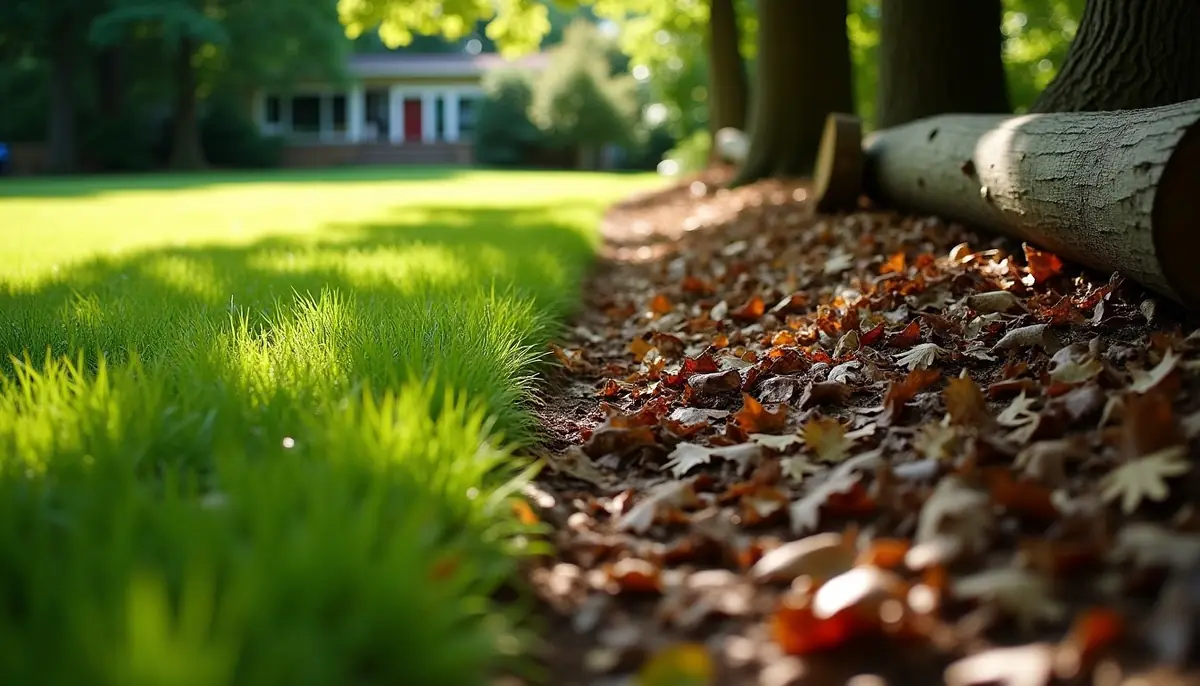
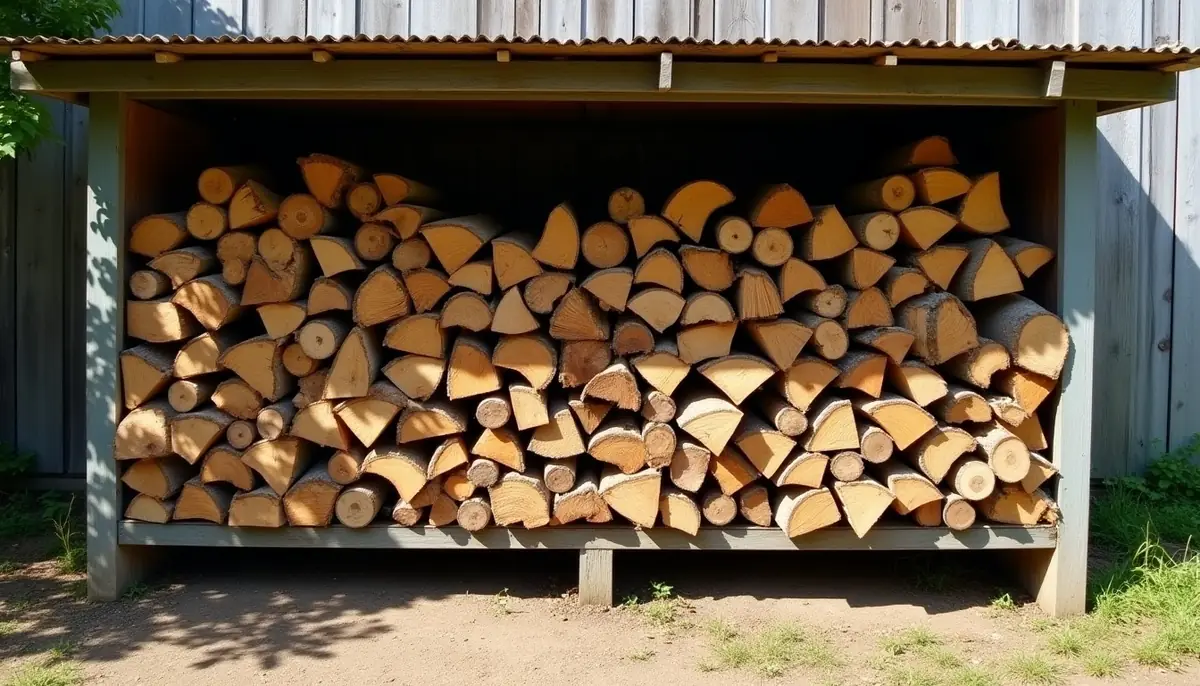
- Remove cover. Copperheads spend the day under logs, leaf litter, rocks and debris. Mississippi State advises clearing leaf and grass piles, board and rock piles, brushy fence rows and weedy growth near the house, keeping the lawn mowed, and storing firewood on a rack at least 12 inches off the ground, away from the house.
- Control rodents. Mice and voles make up most of the copperhead’s diet, Missouri says, so bird seed and pet food left out feed the prey. See rodent exclusion materials for sealing sheds and foundations.
- Close gaps under structures. Mississippi State advises blocking access under sheds and decks with materials extending about 6 inches below the soil, and sealing openings larger than a quarter inch.
- Change habits. Missouri advises never putting hands under rocks or logs, stepping on a log before stepping over it, looking before you sit, wearing protective footwear, and taking extra care in the evening and at night.
Frequently asked questions
Are copperhead snakes poisonous?
Copperheads are venomous, which is what people usually mean: they inject venom through fangs. The bite is painful and needs emergency care, but deaths are very rare. A review of 178 Carolina cases found 6 per cent severe and no deaths, and Missouri puts the fatality rate at about 0.01 per cent. Children, frail older people and small pets face more risk. Call 911 or Poison Control on 1-800-222-1222 after any bite.
What is a copperhead snake?
The eastern copperhead, Agkistrodon contortrix, is a venomous pit viper related to the cottonmouth and the rattlesnakes. It lives across the eastern and central US, is usually 2 to 3 feet long, and has a plain copper head with hourglass-shaped bands. It eats mainly mice and voles, plus frogs, lizards and cicadas, and gives birth to live young in late summer and autumn.
How to get rid of copperhead snakes?
Leave it alone, keep children and pets back, and let it move off, or spray it with a hose from a distance if it must move now. Call a wildlife control operator if it is under a deck or in a building. Then remove leaf, wood and rock piles, raise firewood, control rodents and seal gaps under sheds. No repellent has been shown to keep copperheads away.
Do copperhead snakes smell like cucumbers?
No. The Florida Museum of Natural History states that, contrary to folklore, neither copperheads nor their musk smell like cucumbers. A disturbed copperhead can release a foul-smelling musk from glands near the tail, but it is not a cucumber smell, and smell is no way to detect one. Look for the snake, especially in leaf litter and under logs, rather than sniffing the air.
What do copperhead snakes look like?
A heavy-bodied tan, pinkish or light brown snake, usually 2 to 3 feet long, with chestnut bands shaped like an hourglass or a Hershey’s Kiss: narrow on the back, wide on the sides. The head is plain copper with no markings on top and vertical pupils. Newborns look the same but have a bright yellow tail tip. Young rat snakes, corn snakes and watersnakes are the usual look-alikes.
Sources
- University of Georgia Savannah River Ecology Laboratory, Herpetology at SREL: Eastern Copperhead, Corn Snake, Northern Watersnake and Eastern Hognose Snake.
- Florida Museum of Natural History, Florida Snake ID Guide: Eastern Copperhead and Red Cornsnake.
- Missouri Department of Conservation, Field Guide: Eastern Copperhead and Western Ratsnake.
- North Carolina Wildlife Resources Commission, Copperhead species page.
- Thorson A, Lavonas EJ, Rouse AM, Kerns WP. Copperhead envenomations in the Carolinas. Journal of Toxicology: Clinical Toxicology, 2003.
- Walker JP, Morrison RL. Current management of copperhead snakebite. Journal of the American College of Surgeons, 2011.
- Roth B, Sharma K, Onisko N, Chen T. Prospective evaluation of pain, swelling, and disability from copperhead envenomation. Clinical Toxicology, 2016.
- Walter FG et al. Epidemiology of the reported severity of copperhead snakebite. Southern Medical Journal, 2012.
- Greene SC et al. Epidemiology of fatal snakebites in the United States 1989 to 2018. American Journal of Emergency Medicine, 2021.
- Seifert SA et al. AAPCC database characterization of native U.S. venomous snake exposures, 2001 to 2005. Clinical Toxicology, 2009.
- Buchanan J et al. Snakebites reported to the Kentucky Regional Poison Control Centers for the years 2012 to 2016. Wilderness and Environmental Medicine, 2021.
- Emswiler MP et al. Clinically significant envenomation from postmortem copperhead. Wilderness and Environmental Medicine, 2017.
- Pritchard JC et al. Copperhead envenomation of dogs: 52 cases (2004 to 2011). Journal of the American Animal Hospital Association, 2014.
- CDC NIOSH, Venomous Snakes.
- Mississippi State University Extension, Publication 2277, Reducing Snake Problems Around Homes.
- The Reptile Database, Austrelaps superbus.
- The Pest Control Brief analysis of iNaturalist research-grade records, pulled October 2026.