Muskrats: Pond Damage, Identification and Control
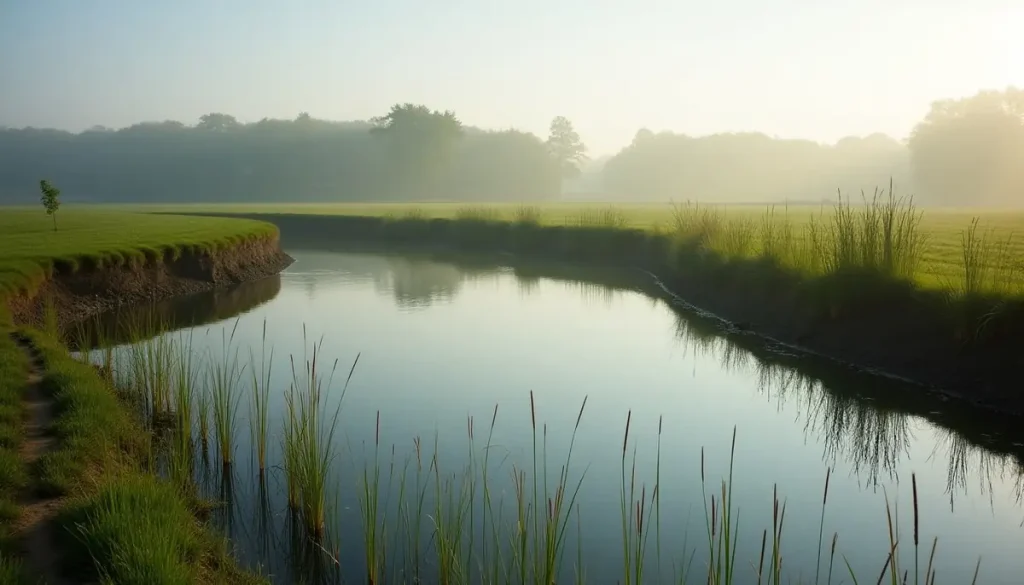
A muskrat is a semi-aquatic rodent, 18 to 24 inches long including a scaly tail that is flattened from side to side, that lives in ponds, marshes and slow streams across most of North America. It eats mainly cattails and other water plants, is not dangerous to people unless handled, and its burrows into pond dams and banks are the main damage it does. Extension specialists recommend riprap or wire to stop burrowing and, where removal is needed, trapping within your state’s furbearer rules.
Most people meet one as a brown head cutting a V across a pond at dusk, then ask whether it is a beaver or a rat and whether it will hurt anything. Here are the identification facts in one table, the damage to look for, what state rules allow, and our own analysis of where and when muskrats are recorded.
What is a muskrat? Muskrat, beaver, nutria or rat
The muskrat (Ondatra zibethicus) is, in the words of the federal wildlife damage handbook, the largest microtine rodent in the United States: a giant relative of the voles. It is named for paired musk glands at the base of the tail, used for scent-marking in the breeding season. The tail is the fastest identification feature.
| Muskrat | Beaver | Nutria | Round-tailed muskrat | |
|---|---|---|---|---|
| Total length | 18 to 24 in; large males over 30 in | Up to about 40 in | 30 to 42 in | 10.75 to 15 in |
| Weight | 1.5 to over 4 lb, most about 2.5 lb | 40 to 60 lb on average | 15 to 25 lb | Between a muskrat and a meadow vole |
| Tail | 10 to 12 in, scaly, flattened side to side | Paddle 8 to 12 in long, 5 to 6 in wide, flattened top to bottom | 12 to 18 in, round, sparsely haired | Round, about half the body length |
| Tail when swimming | Wriggles from side to side like a snake | Rudder and propeller | Trails straight behind | Not described in our sources |
| Whiskers and teeth | Fine dark whiskers, hard to see | Subtle dark whiskers | White whiskers 3 to 5 in; yellow to orange front teeth often visible | Many long whiskers on a short snout |
| Home | Bank burrows and cattail lodges; builds no dams | Stick and mud lodges; builds dams | Not detailed in our sources | Woven grass domes; Florida and southeast Georgia only |
Compiled by The Pest Control Brief from the Pennsylvania Game Commission, Missouri Department of Conservation, Miller (Prevention and Control of Wildlife Damage, 1994) and the Florida Natural Areas Inventory.
A dam of sticks across a creek is a beaver’s: the Pennsylvania Game Commission says plainly that muskrats do not dam streams. Nor is a muskrat a rat, though University of Kentucky extension notes homeowners sometimes panic on mistaking one for a Norway rat. UC IPM gives Norway rats 7 to 18 ounces, so even the smallest adult muskrat, at about 1.5 pounds, outweighs the largest rat. Our rat versus mouse guide covers the rodents that actually live in buildings.
How big is a muskrat?
Adults are usually 18 to 24 inches (46 to 61 cm) from nose to tail tip, 10 to 12 inches of it tail, according to Miller’s chapter of the University of Nebraska handbook; large males pass 30 inches. Weights run from about 1.5 to over 4 pounds, most about 2.5. The Pennsylvania Game Commission gives 2 to 3 pounds and Connecticut DEEP 2 to 4.
Are muskrats related to beavers?
Only distantly. Both are rodents, but the Florida Museum places the muskrat in the vole and lemming subfamily, and Kentucky extension calls it closely related to voles, the lawn rodents in our moles and voles guide. A beaver is roughly 16 to 24 times heavier. Muskrats often move into abandoned beaver lodges and bank dens, Penn State Extension notes, which adds to the confusion.
Where do muskrats live?
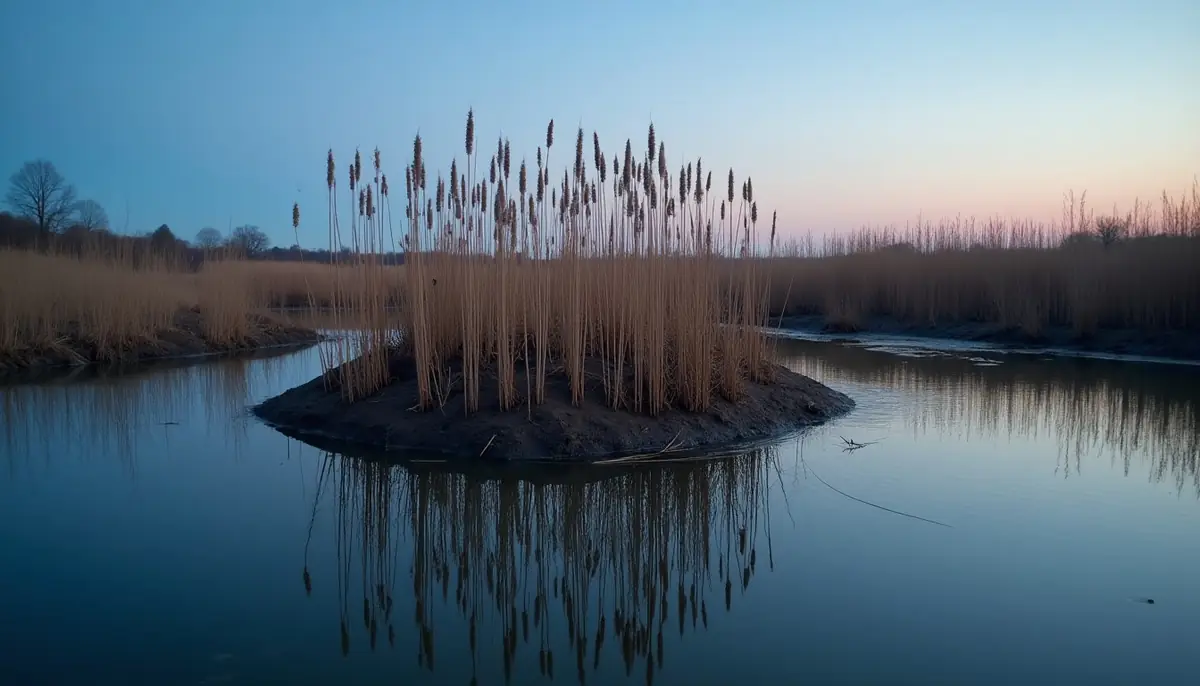
Anywhere water and food last all year: streams, ponds, lakes, marshes, canals, roadside ditches and mine pits. The federal handbook describes a range from near the Arctic Circle to the Gulf of Mexico and down the Atlantic coast into Georgia. In shallow, vegetated water they build cattail and mud lodges, which the Pennsylvania Game Commission says can be 8 to 10 feet across and 2 to 3 feet high; elsewhere they dig bank dens. Both have underwater entrances. Connecticut DEEP and Kentucky extension put a normal home range within about 200 yards of the den.
Adjusted for how much people record in each state, the upper Midwest and interior West lead. That lines up with a 2017 Journal of Wildlife Management study of 42 years of harvest data from 37 states, which found declines greatest in southern states and least evident in parts of the upper Midwest and West. Ours are sightings, not population counts, but Georgia records 0.83 per 10,000 observations, Louisiana 0.18 and Texas 0.03, against 14.26 in Minnesota.
Why are there no muskrats in Florida?
The common muskrat’s native range stops in Georgia, and the iNaturalist data we pulled holds no research-grade muskrat records from Florida. Florida has a smaller relative instead: the round-tailed muskrat (Neofiber alleni), 10.75 to 15 inches with a round tail, found through most of the state and in four southeast Georgia counties. None of our sources gives a settled reason for the common muskrat’s absence; the Florida Museum suggests only that Neofiber depends on warm aquatic habitats. A muskrat-like animal in a Florida marsh is most likely the round-tailed species, which Florida lists as a Species of Greatest Conservation Need. Leave it alone.
What do muskrats eat?
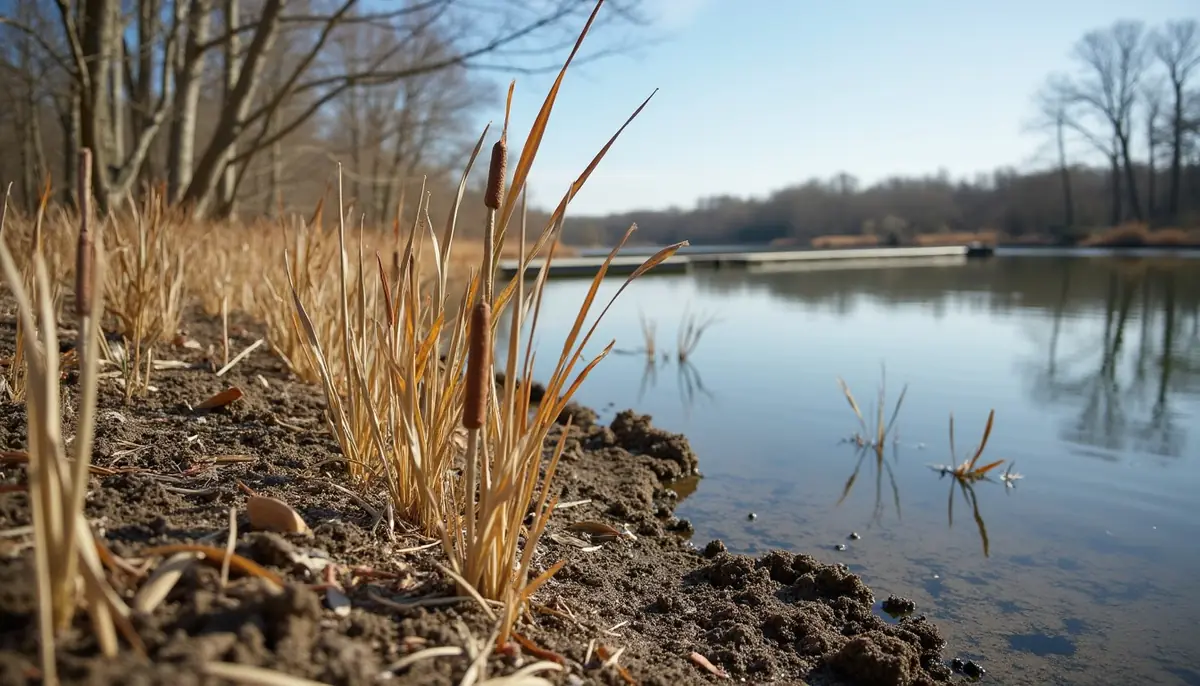
Mostly water plants. Extension and state sources name cattail first, then bulrush, pickerelweed, water lilies, smartweed, duck potato and sedges. Near water they take grasses, clover, grain, garden crops and apples, and the federal handbook lists corn, soybeans, rice and sugarcane among crops damaged. In winter they dig roots from the pond bottom and eat willow and cottonwood bark. Heavy populations can strip a marsh, which managers call an eat-out.
Do muskrats eat fish?
Occasionally. The Pennsylvania Game Commission lists fish, crayfish, freshwater mussels and frogs as occasional foods, and West Virginia University Extension says they usually make up only a small portion of the diet. The federal handbook notes muskrats eat more animal food in ponds where vegetation is scarce, and flags this as a possible source of loss for fish farms.
When muskrats are most visible
Muskrats are active year round and do not hibernate. They are mostly nocturnal, though sometimes seen by day.
US muskrat records climb from 991 in January to 5,887 in April, about six times higher. Beavers rise less steeply and nutria barely change. That fits the federal handbook, which says males and maturing young disperse in spring to set up breeding territories. Spring is when a muskrat is most likely to arrive in a new pond, and when to look for fresh burrows.
Gestation is 25 to 30 days and litters average 4 to 8 young. Northern females usually have 2 litters a year; some southern females have up to 6. The Pennsylvania Game Commission puts average wild lifespan at under 12 months, and populations cycle every 5 to 10 years.
The damage: burrows, dams and leaks
Burrowing is the costliest thing muskrats do. Missouri’s Department of Conservation warns that tunnelling into earthen dams can cause leaks or complete dam failure. Kentucky extension describes a typical den entrance as a 4 to 6 inch hole 6 to 8 inches below the surface, leading to a burrow up to 15 feet long; the resulting leak is difficult to plug. Burrows also undermine docks, boathouses and shorelines.
Signs of muskrats in a pond
- Runs: trails worn into the bottom, from just below the surface to 3 feet deep, visible in clear water.
- Muddy water and floating cut vegetation near the bank, which Penn State lists as signs of a den.
- Pellet-sized droppings on rocks and logs at the shore; our droppings identification guide compares them with indoor rodent droppings.
- Lodges and feeding platforms of cattail and mud.
How to get rid of muskrats
Make the bank hard to dig, remove food and cover if you can, and trap the animals already there. Missouri and Penn State both stress that control is far easier before a population is established.
| Method | Extension specification | Limits |
|---|---|---|
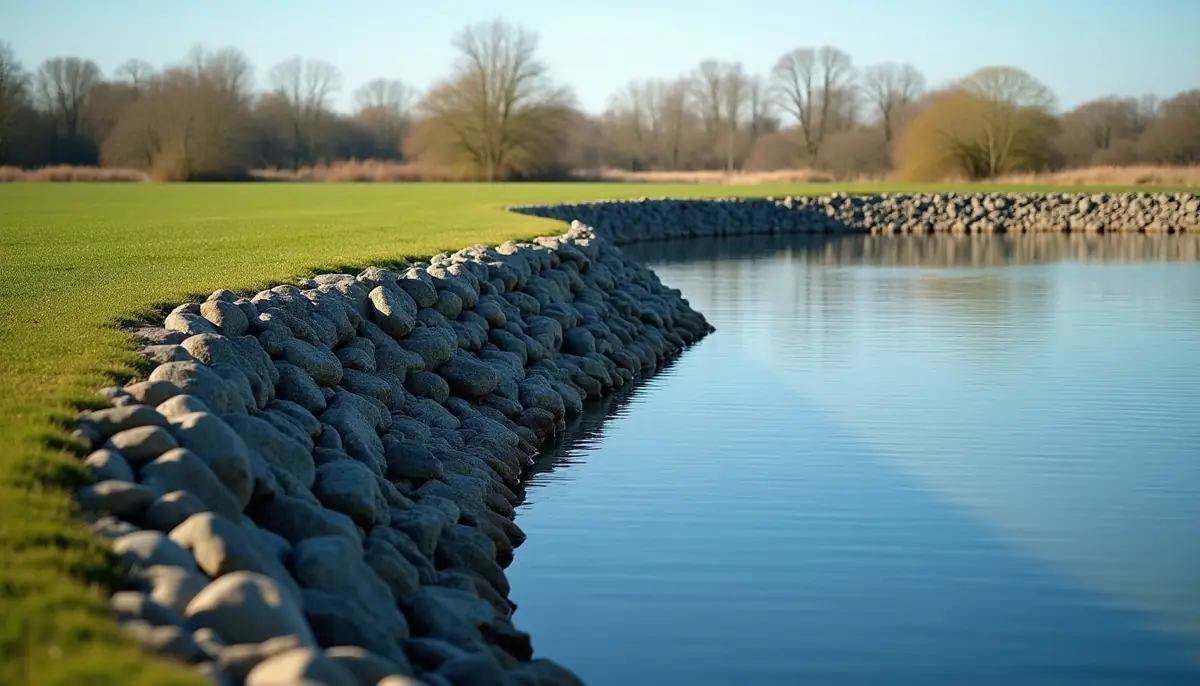
| Riprap | Coarse stone about 6 in thick, 1 ft above to 3 ft below the water level | Cost and labour; also stops wave erosion |
| Wire mesh | 1 or 2 in galvanised mesh pegged flat, 1 ft above to at least 3 ft below water | Corrodes; not advised where people swim |
| Dam design | Inner slope 3:1, outer 2:1, top at least 8 ft wide, water 3 ft below the crest | New or rebuilt ponds only |
| Winter drawdown | Lower at least 2 ft (1.5 to 3 ft exposes burrows), fill burrows, riprap, then trap | Needs a drainable pond |
| Habitat removal | Remove cattail, bur-reed, rushes, sedges and arrowhead | Also removes cover for fish and wildlife |
| Trapping | No. 110 body-gripping or No. 1 to 2 foothold traps in runs and den entrances | State rules apply; professional help advised |
| Repellents, scare devices | None registered or known to work | Do not spend money on them |
Compiled by The Pest Control Brief from Missouri Department of Conservation, Penn State Extension, University of Kentucky, Connecticut DEEP and Miller (1994).
Every source we read calls trapping the most effective method once damage is happening. The federal handbook says a set in a run or den entrance usually catches a muskrat in one or two nights. Missouri says cage traps are much less reliable and advises professional assistance. California, Colorado, Massachusetts, Oklahoma and Washington have banned body-gripping traps, the 2017 study notes, and Kentucky extension says no poisons are registered for muskrats there.
For most homeowners the realistic plan is to protect the bank yourself and leave removal to a licensed trapper or wildlife control operator; our wildlife removal cost guide explains pricing. Missouri also suggests letting trappers work your property in the open season to prevent problems.
The rules: a furbearer with seasons
Every state wildlife agency regulates muskrats, and each state we checked classes them as furbearers. Check your state’s trapping digest every year. Examples:
| State | What the agency or extension says |
|---|---|
| West Virginia | Season typically early November to late February, no bag limit; out of season, ask WVDNR about a damage permit. |
| Missouri | Damage-causing muskrats may be shot or trapped out of season without a permit (3 CSR 10-4.130). |
| Kentucky | Resident landowners need no licence to remove damaging muskrats but must contact a conservation officer about the carcass. |
| Connecticut | Trappers must first complete a DEEP trapping course. |
If raccoons are raiding the pond too, the same licensing questions apply; see how to get rid of raccoons.
Are muskrats dangerous?
Not to people who leave them alone. Kentucky extension calls the fear unwarranted: muskrats are very clean animals that do not carry most of the diseases associated with rats and mice. The Pennsylvania Game Commission says mature adults defend themselves vigorously, so never corner or handle one, and keep dogs away from dens.
The health issue is for people who handle them. The federal handbook lists tularemia and leptospirosis among diseases muskrats carry, and the Pennsylvania Game Commission links waterborne tularemia outbreaks to beavers and muskrats. CDC advises gloves when handling sick or dead animals. If you fall ill after handling one, tell a doctor about the contact.
Fewer muskrats than there used to be
From 1970 to 2012 trappers in 37 states reported 132 million muskrats, with annual totals between 731,486 and 8,106,786.
Harvest tracks pelt prices as well as abundance, but after adjusting for prices the study still found declines in most states. West Virginia’s harvest fell from 5,909 in 2012 to 2013 to 900 in 2018 to 2019, and Connecticut’s from over 20,000 a year two decades earlier to roughly 2,000 to 4,000. West Virginia University cites habitat loss, predation, disease and contaminants as suggested causes.
Frequently asked questions
What is a muskrat?
A muskrat is a semi-aquatic North American rodent, about 18 to 24 inches long including a scaly, side-flattened tail, weighing about 2.5 pounds. It is a large relative of voles, not a rat or a young beaver. It lives in ponds, marshes, streams and ditches, eats mostly cattails and other water plants, and lives in bank burrows or cattail lodges with underwater entrances.
Are muskrats dangerous?
Not to people who leave them alone. Kentucky extension calls fear of muskrats unwarranted and describes them as clean animals that do not carry most rat and mouse diseases. Adults defend themselves vigorously if cornered, so do not handle one. They can carry tularemia, so wear gloves with a dead animal and tell a doctor about the contact if you become ill.
How to get rid of muskrats?
Extension specialists recommend protecting banks and dams with riprap or galvanised wire from 1 foot above to 3 feet below the waterline, and trapping animals already burrowing. No repellents or scare devices are known to work. Muskrats are regulated furbearers, so check your state wildlife agency’s rules or hire a licensed trapper or wildlife control operator.
Do muskrats eat fish?
Occasionally. State wildlife agencies list fish, crayfish, freshwater mussels and frogs as occasional foods, and West Virginia University Extension says these usually make up only a small portion of the diet. The federal handbook says they take more animal food, including fish, in ponds where aquatic plants are scarce, and flags this as a possible source of loss for fish farms.
What do muskrats eat?
Mostly aquatic plants: cattails above all, plus bulrush, pickerelweed, water lilies, smartweed, duck potato and sedges. Near water they also eat grasses, clover, grain, garden crops and apples, and in winter they dig roots from the pond bottom and eat willow and cottonwood bark. Large populations can strip a marsh of vegetation.
Sources
- Miller, J. E. Muskrats. In Prevention and Control of Wildlife Damage, University of Nebraska Cooperative Extension, USDA APHIS Animal Damage Control and Great Plains Agricultural Council, 1994.
- Pennsylvania Game Commission, Muskrat species profile; Beaver species profile; Tularemia wildlife disease page.
- Penn State Extension, Pond and Lake Wildlife: Muskrats.
- Missouri Department of Conservation, Muskrat Control; Nutria (Coypu) field guide.
- University of Kentucky Forestry and Natural Resources, Muskrat; Muskrat Conflicts and Damage; Preventing and Controlling Muskrat Damage; Lethal and Nonlethal Control for Muskrats (FOR-51).
- West Virginia University Extension, Muskrats (Sheldon Owen).
- Connecticut Department of Energy and Environmental Protection, Muskrat fact sheet.
- Florida Natural Areas Inventory, Field Guide: Round-tailed Muskrat (Neofiber alleni); Florida Museum of Natural History, Neofiber alleni species page.
- University of California Statewide IPM Program, Pest Notes: Rats.
- Ahlers, A. A. and Heske, E. J. Empirical evidence for declines in muskrat populations across the United States. Journal of Wildlife Management 81(8): 1408 to 1416, 2017.
- Centers for Disease Control and Prevention, About Tularemia.
- The Pest Control Brief analysis of iNaturalist research-grade records, pulled October 2026.