Raccoons on the Roof at Night: Passing Through or Moving In?
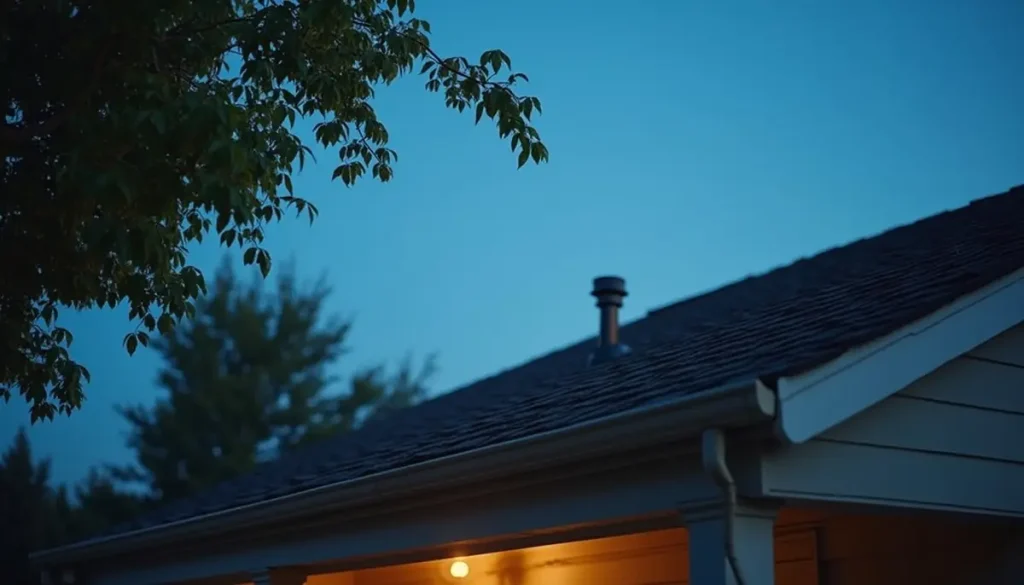
A raccoon on your roof at night is either using it as a route between trees and food, or looking for (or already using) a den in the attic or chimney. The signs tell you which: a torn roof vent or soffit, a pile of droppings in one spot, noise inside the ceiling and chirring in spring all point to a den. UC IPM says an occasional visit may not be a major concern, but regular visits plus roof climbing warrant action: cut branches back at least 5 feet, cap the chimney and remove food.
Passing through or moving in? Read the signs
| Sign | Passing through | Moving in, or trying to |
|---|---|---|
| Footsteps | Heavy walking across the roof, then gone | Walking that continues inside the ceiling or attic |
| Timing | Irregular nights | Out around dusk, back before dawn, most nights |
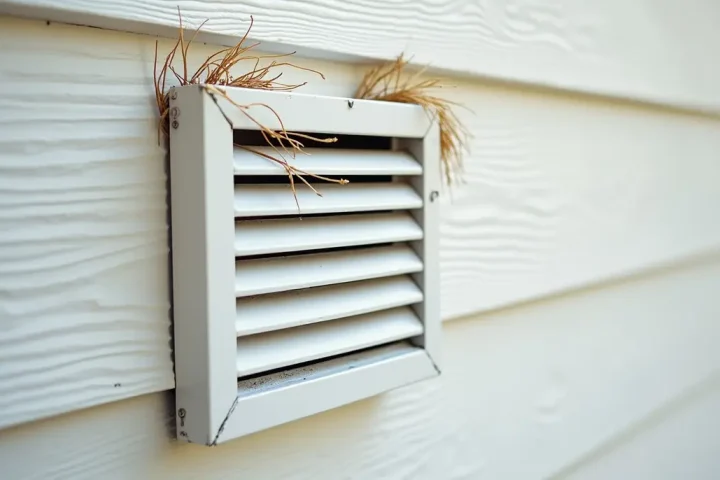
| Roof vents, soffits, fascia, shingles | Intact | Bent vent covers, torn soffit panels, lifted shingles |
| Downspouts and corners | Smudged tracks only | Smudges plus hair at one entry point |
| Droppings | None, or a few | A latrine: piled droppings reused in one flat spot |
| Sounds in spring | None | Chirring, squealing or chattering from the attic or chimney: kits |
| Chimney | Capped and quiet | Uncapped, with scratching above the damper |
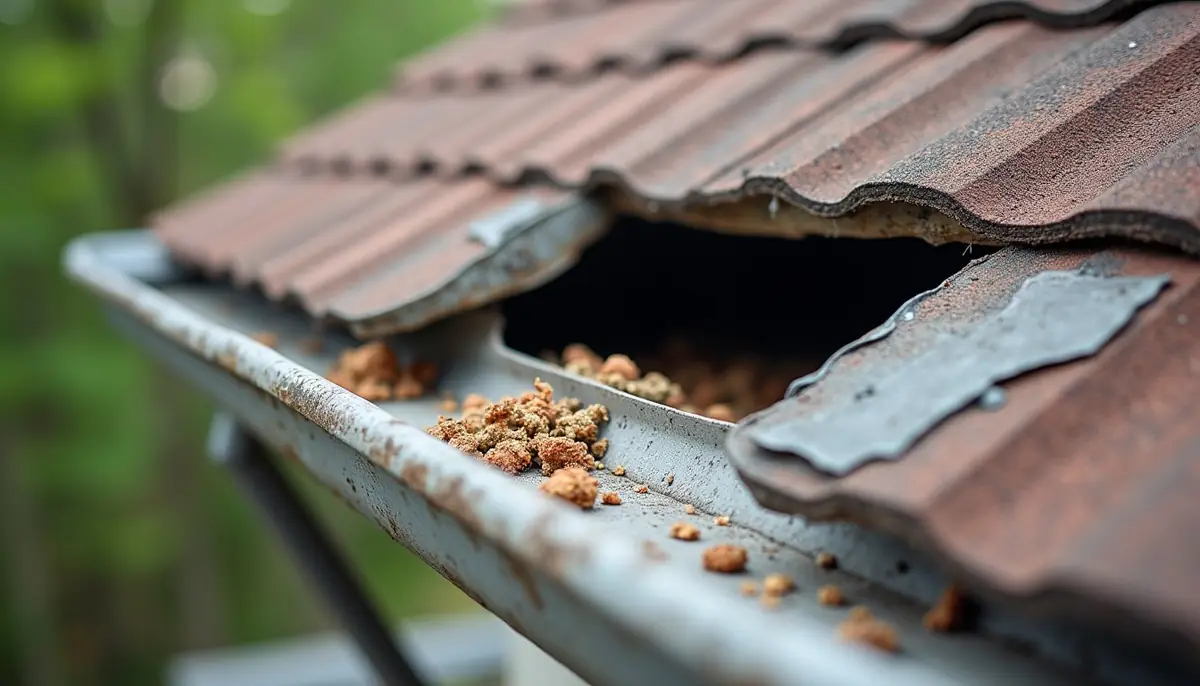
The damage signs are the ones that matter. UC IPM reports that females searching for nest sites may rip off shingles, fascia boards or rooftop ventilators to get into an attic, and the Internet Center for Wildlife Damage Management (ICWDM) says a raccoon needs only a 4 inch gap to get into a space. ICWDM also notes that tracks often turn to smudges where raccoons climb downspouts, which is how you find the route up.
What time of night are raccoons most active?
Raccoons are nocturnal, ICWDM states, and they are active year round, though UC IPM notes they may stay in dens during severe winter weather. Our analysis of 136,120 US iNaturalist research-grade raccoon records shows when people log them compared with everything else being recorded at the same hour. Raccoon records are most over-represented between 3am and 6am, at almost ten times their average share of records (an index of 983), followed by midnight to 3am (696). From 9am to 6pm they fall to between about half and two thirds of it.
These are records of when people noticed and recorded raccoons, not a measure of activity, and few people are out at 4am to log anything. Still, the pattern fits roof noise reports: a raccoon going out shortly after dark and coming back in the small hours. The number of raw records peaks in the evening, at 8pm. A raccoon seen in daylight is common too, and our explainer on what a raccoon out in the daytime usually means covers the warning signs.
Raccoon, squirrel or rat on the roof?
Night timing alone rules out most tree squirrels. UC IPM says tree squirrels are active during the day, and our data agree: only 1.9 per cent of eastern gray squirrel records were logged between 9pm and 5am, against 25.8 per cent for raccoons and 12 per cent for both roof and Norway rats.
| Raccoon | Gray squirrel | Flying squirrel | Roof rat | |
|---|---|---|---|---|
| When active | Night (ICWDM) | Day (UC IPM) | Night (NY DEC) | Mostly night (UC IPM) |
| Records logged 9pm to 5am | 25.8% | 1.9% | Not pulled | 12.0% |
| Size | 7 to 30 lb (UC IPM) | Cat-sized at most | Smallest of the four | Smaller and sleeker than a Norway rat (UC IPM) |
| What you hear | Heavy, slow walking | Running and scratching by day | Light scurrying at night | Fast scurrying; often seen on lines and fences at night (UC IPM) |
| Gap it needs | 4 in (ICWDM) | Can gnaw its own entrance (UC IPM) | Small gaps at eaves and vents | 1/2 in under a door (UC IPM) |
| Droppings | Piled in a latrine on flat roof areas (ICWDM) | Scattered | Scattered near the nest | Scattered along runs |
Compiled by The Pest Control Brief from UC IPM Pest Notes (Raccoons, Rats, Tree Squirrels), ICWDM, the New York State DEC nuisance wildlife fact sheet and our iNaturalist analysis. Heavy footsteps at night are the raccoon signature; a light, fast scurry is usually a rodent.
- Fast scurrying and gnawing high in the house: our guide to rat noises at night and where they come from matches the sound to the source.
- Running in the attic in daylight: the gray squirrel pattern covered in squirrels in the attic: timing, gnawing and the law.
- Night scurrying that is not rats: possibly the nocturnal species in our guide to flying squirrels in the attic.
- Movement along fences and wires before it reaches the roof: read up on how roof rats climb and get in.
How raccoons get onto the roof, and how to stop them
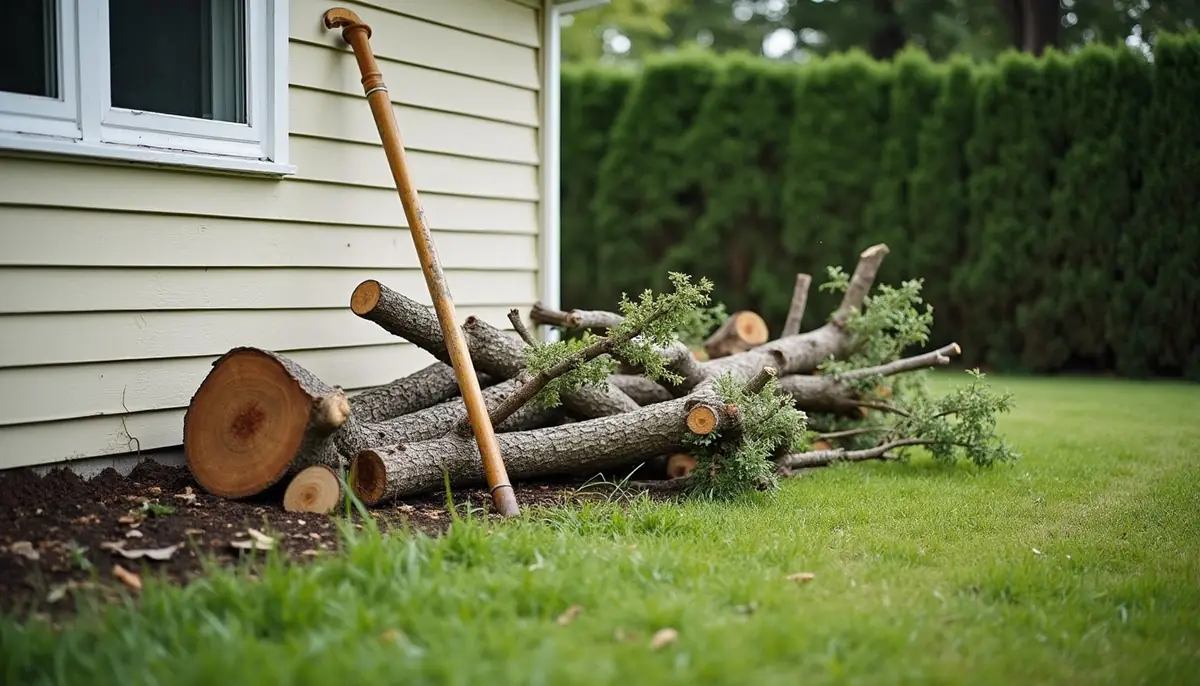
- Trees: UC IPM advises cutting back overhanging branches to leave a gap of at least 5 feet between roof and tree. That is wider than the 3 feet UC IPM gives for roof rats, so trimming for raccoons covers both.
- Trellises, arbors and vines: UC IPM suggests considering removing trellises and arbors attached to the house; Connecticut’s Department of Energy and Environmental Protection (DEEP) names trees, downspouts, vines and trellises as climbing routes.
- Corners and downspouts: on sheds and outbuildings, ICWDM describes sheets of slick metal at least 3 feet square wrapped around corners so raccoons cannot get a toehold. ICWDM also says that on homes it is usually more practical to secure the chimney and other attractions than to exclude raccoons from the roof entirely.
- Chimney: a heavy, securely fastened chimney cap, or a spark arrester meeting local fire code, as UC IPM specifies. Never cap a chimney with an animal inside; our guide to birds in the chimney and when to cap it covers the same timing problem for swifts.
- Vents and soffits: 10 gauge galvanised hardware mesh with 1/4 or 1/3 inch openings, UC IPM’s specification for raccoon-proof screening, fitted only after you know nothing is inside.
- Food: metal bins with secured lids, pet food in before dark, and bird feeders that raccoons cannot climb to. A roof route usually leads to food somewhere.
How long will raccoons stay in your attic?
If it is a female with young, until the kits can travel. ICWDM says most litters are born in April or May, eyes open at about 3 weeks, and young are weaned between 2 and 4 months. Connecticut DEEP puts den-leaving at around 8 weeks; NYC Parks and Health say 8 to 12 weeks. ICWDM adds two details that surprise people: late litters can arrive in June, July or August, and family groups often den together through the first winter. So a raccoon family in the attic in December can stay until spring unless it is evicted.
The safe order is the one in our step-by-step guide to getting raccoons out of an attic or chimney without trapping young inside: confirm whether there are kits, wait or have a licensed operator remove them, then seal the same day. In a chimney, ICWDM notes that people who put up with several weeks of scratching and chirring are normally rewarded by the mother moving the young out when she starts weaning.
If the den is in a garage roof void rather than the house, the steps are simpler, and our triage for a raccoon in the garage covers the flour check and the evening routine.
Droppings on the roof
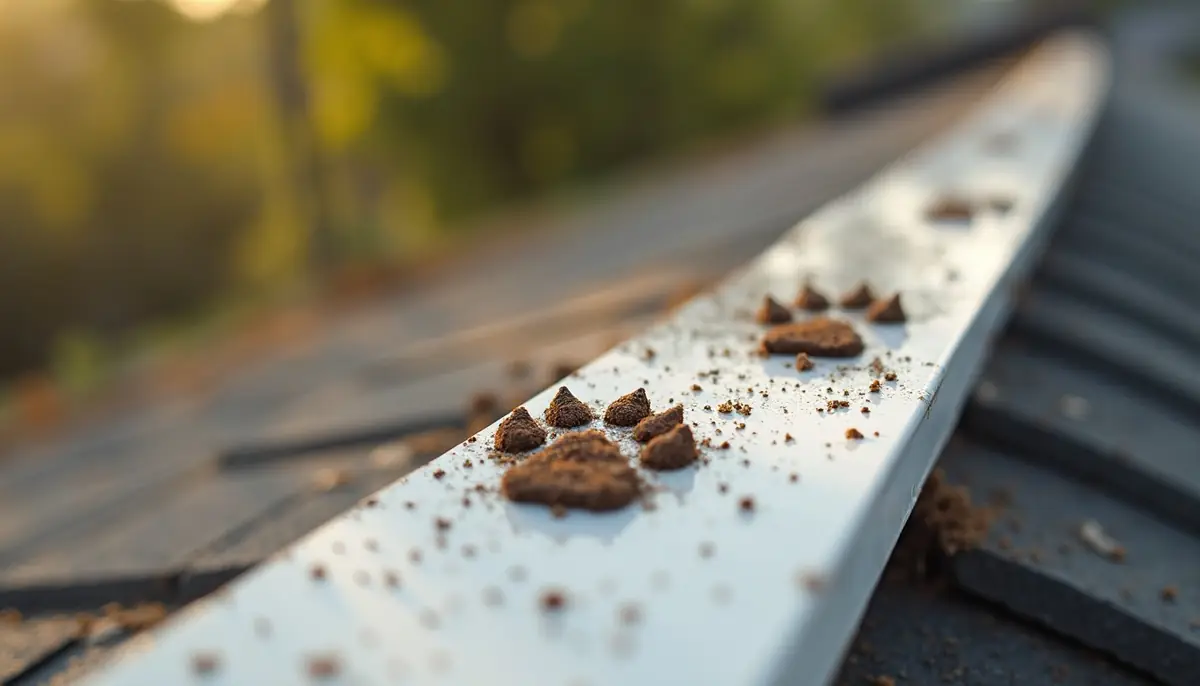
ICWDM notes raccoon latrines tend to be in places open to the sky, such as roofs, and CDC lists rooftops, decks and attics among the places raccoon feces are found. The droppings can carry raccoon roundworm eggs, which CDC says take at least 2 to 4 weeks to become infective, so remove a roof latrine promptly with gloves and an N95 respirator in confined spaces, as CDC advises. Ladder work on a roof is a reasonable job to pay for. Our guide to spotting a raccoon latrine and cleaning it safely has the full method.
When to call a professional, and what it costs
Call a licensed wildlife control operator when you find an opening into the attic, hear movement inside the ceiling, suspect kits, or need roof-height repairs. Published estimates on our wildlife removal cost guide put raccoon removal at $300 to $450 and animals in an attic at $500 to $1,500, with each extra exclusion door at $225 to $400. These are estimates, not measured prices. Trapping and moving a raccoon is restricted or prohibited in many states, including California and Connecticut, so check your state’s rules before anyone sets a trap.
Frequently asked questions
How to get rid of raccoons on roof at night?
Take away the route and the reason. Cut branches back to leave at least 5 feet from the roof (UC IPM), remove trellises that touch the eaves, cap the chimney securely and lock down bins and pet food. Check vents and soffits for damage. If an animal is already inside, do not seal the hole: wait for kits to be mobile or call a licensed operator.
What does it mean when raccoons are on a roof?
Usually one of two things: the roof is a route to trees or food, or a raccoon is looking for a den. Torn vents, lifted shingles, a latrine and noise inside the ceiling mean denning. UC IPM notes that females searching for nest sites may rip off shingles, fascia boards or rooftop ventilators, so spring visits deserve a closer look.
How long will raccoons stay in your attic?
A mother with kits usually stays until the young can follow her, about 8 weeks according to Connecticut DEEP and 8 to 12 weeks according to NYC Parks and Health. ICWDM notes family groups often den together through the first winter, so an autumn or winter family may stay months unless evicted and sealed out.
What do raccoons hate the most at night?
No smell has been shown to keep them away. UC IPM states that no commercial repellent has been effective for raccoons, and that lights, radios and other frightening devices work for a few days before raccoons learn there is no threat. Our review of ultrasonic repellers against the evidence reaches the same verdict. Physical barriers last.
Sources
- University of California Statewide IPM Program, Pest Notes: Raccoons, Publication 74116.
- University of California Statewide IPM Program, Pest Notes: Rats, Publication 74106.
- University of California Statewide IPM Program, Pest Notes: Tree Squirrels, Publication 74122.
- Internet Center for Wildlife Damage Management, Raccoons: species account, Biology, Damage Identification, and Damage Prevention and Control Methods, based on E.K. Boggess, Prevention and Control of Wildlife Damage (1994).
- Connecticut Department of Energy and Environmental Protection, Raccoon Nuisance Problems.
- NYC Parks and NYC Health, WildlifeNYC: Raccoons.
- CDC, Preventing Baylisascaris Infection (raccoon roundworm).
- The Pest Control Brief analysis of iNaturalist research-grade records, pulled November 2026.