Raccoon Poop: How to Spot a Latrine and Clean It Safely

Raccoon poop is dark, tubular and blunt at both ends, about 3/4 to 1 inch thick (roughly the size of a small dog’s), with a pungent smell and often undigested seeds or berries in it, and it is almost always found piled in a latrine that raccoons reuse. Latrines sit on raised, flat spots: roofs, decks, woodpiles, logs, the base or fork of a tree, attics. The droppings can carry eggs of raccoon roundworm, Baylisascaris procyonis, which bleach does not kill. Remove a latrine promptly and decontaminate with heat.
Raccoon droppings are the one wildlife scat where identification has a direct safety payoff. Fresh roundworm eggs need at least two to four weeks before they can infect anyone, so spotting a new latrine and clearing it properly removes most of the risk.
How to identify raccoon droppings
Three features together identify raccoon scat: the blunt ends, the contents, and the location. Wildlife Illinois notes that blunt ends separate raccoon droppings from opossum and fox droppings, which are more pointed or rounded. Missouri’s Department of Conservation lists seeds and a very pungent odour as the content clues, with colour varying with diet.
| Scat | Thickness | Shape and contents | Where you find it |
|---|---|---|---|
| Raccoon | About 3/4 to 1 in (19 to 25 mm); “the diameter of a dime or nickel” per Purdue | Tubular, uniform thickness, blunt ends; seeds, berries, insect or crayfish parts; old piles look like dried leaves | Latrines on roofs, decks, woodpiles, logs, tree bases and forks, attics, pool steps |
| Opossum | Too variable to give an average, per UC IPM | Varies with diet; ends more pointed or rounded than a raccoon’s | Protected, leafy areas; sometimes garden paths and patios |
| Striped skunk | 1/4 to 1/2 in (6 to 13 mm), 1 to 2 in long | Looks like cat droppings but with undigested insect parts, berry seeds, fur | Ground level, often mistaken for a cat’s |
| Fox or coyote | About 1/2 in (13 mm), about 2 in long | Segmented, tapered pointed ends, hair and bits of bone | Trails, territory edges |
| Dog | Varies with the dog | CDPH says raccoon droppings look like small dog droppings, so location matters more than shape | Lawns, verges and walks at ground level, not piled on a roof |
| Norway rat | Up to 1/4 in (6 mm), up to 3/4 in long | Capsule shaped, blunt; a whole rat dropping is about as long as a raccoon dropping is thick | Basements, ground floor, along walls |
The location rule is the most useful one. Raccoons prefer hard, elevated, flat surfaces, which is why a pile of dog-sized droppings on a garage roof, a chimney top or the flat of a deck railing is almost always a raccoon. Purdue adds a detail that confirms it: latrines build up in layers, dry on the bottom and progressively fresher towards the top. For rat, mouse and cockroach droppings, see our droppings identification guide.
Raccoon poop smell, colour and stains
CDC describes raccoon feces as having a pungent odour, and Missouri’s field guide calls it very pungent. Colour runs from black to brown and shifts with whatever the animal has been eating, so black raccoon poop and seedy, berry-coloured raccoon poop can come from the same animal a week apart. Indoors, UC IPM notes that raccoons may turn part of an attic into a latrine, and the ceiling below can stain with urine, with an objectionable smell.
Do raccoons poop in the same place every night?
They return to the same places, but not always the same animal on the same night. A 2016 review in Clinical Microbiology Reviews reports that groups of two to seven raccoons typically visit the same latrine sites, and that an individual raccoon may visit as many as six sites within 14 days. So a latrine is a shared toilet used repeatedly, and one property can have several. That is the answer to “do raccoons poop everywhere?” too: they concentrate, which is what makes latrines easy to find and worth clearing.
Do raccoons poop from trees?
Not from them, but in them. CDC lists the base of trees and the forks of trees among the standard latrine sites, and UF/IFAS records latrines on the ground, in trees, on logs and even in water. The UF/IFAS raccoon publication explains why pool steps are such a common complaint: standing in shallow water to defecate is natural for raccoons and hides the droppings from other raccoons and predators.
Do raccoons eat poop?
We found no source that describes raccoons eating feces. The documented habit runs the other way: Purdue Extension notes that many animals eat raccoon feces for the undigested seeds, and the 2016 review says latrines are routinely visited by small rodents and birds foraging for seeds. That is how the roundworm reaches other wildlife.
When raccoons are most active
Our analysis of iNaturalist research-grade records shows raccoon sightings across the US rising through spring to a high in April (15,522 records) and staying high through June, then falling to a low in December (8,201). Opossum records follow a similar curve; striped skunk records peak in June.
These are records of when people photographed raccoons, not counts of latrines, but raccoons are recorded in every month, so a latrine can appear at any time of year.

Is raccoon poop dangerous?
Yes, more than most wildlife droppings, because of one parasite. Raccoon roundworm lives in raccoons’ intestines without making them ill. The 2016 review reports infection rates usually between 66 and over 90 per cent in individual studies in the Northeast, Midwest and West Coast, and female worms laying 115,000 to 179,000 eggs a day each, so one infected raccoon can shed millions of eggs daily.
The regional pattern matters for risk. In the review’s breakdown of earlier surveys, 64 per cent of 476 raccoons from the Northeast and mid-Atlantic and 58 per cent of 3,967 from the Midwest were infected, against 4 per cent of 1,868 from the Southeast. CDC notes that infections have since been documented in Florida and Georgia as well, so low is not zero.
Can raccoon poop kill you?
It can, but it is rare. CDC counted only 22 documented US cases from 1973 to 2010 and a further seven from 2013 to 2015, while calling the disease likely underreported. When larvae reach the brain or eyes the outcome is often severe: of 25 cases in the 2016 review, 16 left neurological after-effects, often severe, and seven were fatal. Most patients were young children or people who put soil in their mouths. Health officials in Los Angeles County note that larvae can travel to the spinal cord, brain and eyes. If a child may have eaten soil or droppings from a latrine, call a doctor promptly and mention raccoons; CDC says early treatment matters.
Rabies is a separate worry and does not travel in droppings. CDC’s immunisation advisers state that contact with blood, urine or feces does not count as a rabies exposure. Raccoon urine can carry leptospirosis, though, according to Public Health Seattle and King County.
Can raccoon poop make dogs sick, or kill them?
It can. The California Department of Public Health says pets, livestock and wildlife can be infected with raccoon roundworm, show similar signs and may die. Los Angeles County calls infection in pets very rare. Dogs are unusual in one respect: the 2016 review notes they can carry adult worms and pass eggs in their own feces, which is why CDC advises having dogs tested and dewormed regularly. King County adds that dogs are at higher risk of leptospirosis from urine-contaminated water. A dog that has been eating at a latrine is a reason to call your vet.
Can raccoon poop be used as fertilizer?
No. Every public health source we read says to bag it, burn it, bury it or send it to landfill, and Purdue says not to dump it outside because the eggs contaminate soil. King County notes the eggs can survive in soil for several years, and where a latrine sits on soil, both CDPH and Purdue say to remove the top 2 to 4 inches. None of them offers composting as an option. Wildlife Illinois recommends wearing gloves while gardening where raccoons are about.
What to do if you find raccoon poop in your yard
Act within days rather than weeks. CDC says eggs in newly deposited feces take at least two to four weeks to become infective, so prompt removal is the single most effective step. The four public health sources we compared agree on the essentials and differ on details.
| Step | CDC | California DPH | Purdue Extension | Los Angeles County |
|---|---|---|---|---|
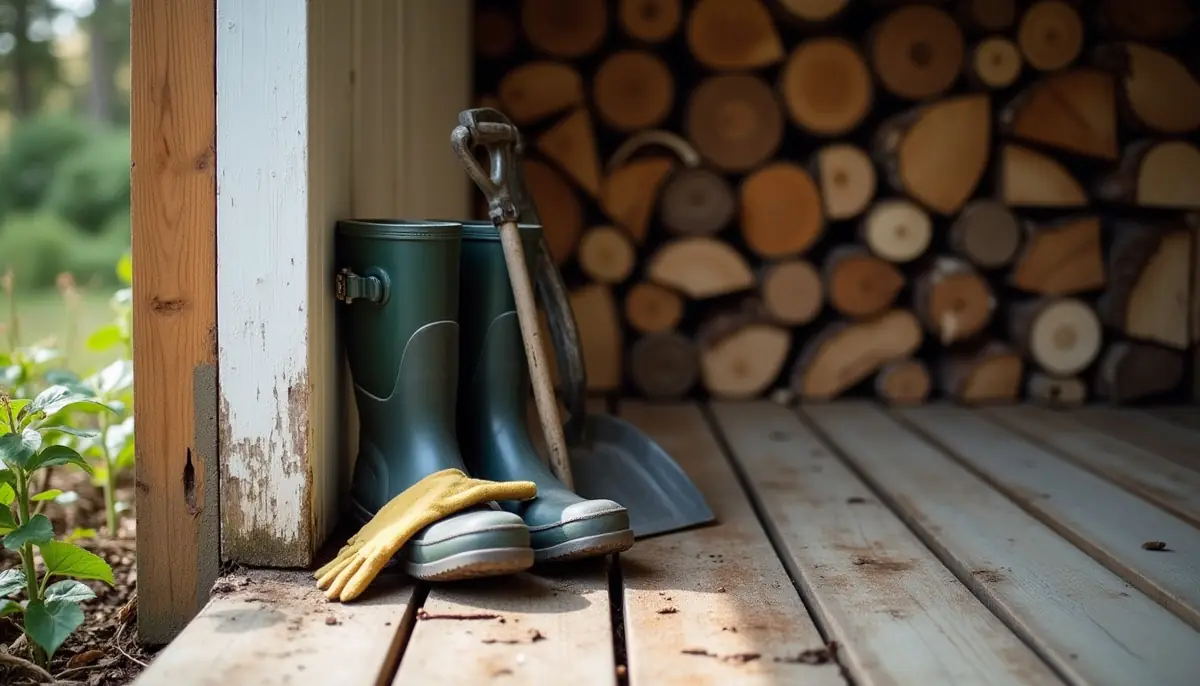
| Protective gear | Disposable gloves, scrubbable boots or booties; N95 in confined spaces | Gloves, coveralls, rubber boots; fitted respirator indoors | N95, gloves, boots, disposable overalls | Gloves, scrubbable boots or disposable booties |
| Before lifting | Lightly mist indoor latrines | Lightly mist to avoid dust | Mist lightly; do not soak | Spray a little water if dry |
| Removal and disposal | Shovel or inverted bag; burn, bury or landfill | Scoop into heavy bag, double bag, trash | Double bag, household garbage | Double bag, closed outdoor bin |
| Soil and firewood | Break up and flame soil several times | Remove 2 to 4 in of soil; discard latrine wood | Remove top 2 to 4 in of soil; discard latrine wood | Not specified |
| Bleach | Most chemicals do not kill the eggs | Will not kill eggs; only loosens them | Do not spray bleach; it may free eggs | Most chemicals do not kill the eggs |
| Heat | Boiling water or propane torch outdoors; never a torch indoors | Flame soil; boiling water for tools | Torch only on concrete or gravel; call the fire department first | Boiling water or a steam cleaner |
Compiled by The Pest Control Brief from the named sources. Two points deserve emphasis. Do not use a leaf blower near a latrine, CDPH warns, and do not reach for bleach as the main treatment: the 2016 review found eggs survive freezing for six months but not heating to 62°C (about 144°F), which is why every source ends on boiling water, steam or flame. Indoors, CDC’s method is a damp, not wet, sponge in hot soapy water, with the dirty water flushed down the toilet and the bucket disinfected with boiling water.
Is it safe to clean up raccoon poop yourself?
For a small outdoor latrine on a deck or patio, usually yes, following the steps above. A latrine in an attic with soaked insulation, inside a chimney or wall, across a roof, or anywhere a child plays is reasonable to hand to a professional. LA County notes some latrines are in places that are difficult or unsafe to clean. Our wildlife removal cost guide covers what that work costs.
Raccoon poop in the pool
CDC’s pool guidance is specific because chlorine kills most germs raccoons carry but does not kill Baylisascaris eggs. Close the pool, net out the droppings and double bag them, then either filter for at least 24 hours, backwash and replace the filter media, or drain and hose down the pool. UF/IFAS suggests covering the top steps with plastic sheeting so raccoons cannot stand on them.

Stopping the latrine coming back
Cleaning removes the eggs; it does not remove the raccoon. LA County advises feeding pets indoors, securing bins, picking up fallen fruit, covering sandboxes and closing off attics, basements and crawl spaces. If raccoons are denning in or under the building, our guide to getting rid of raccoons covers one-way doors, the timing around litters and why relocation is the wrong fix. For the similar ground-level culprits, see skunks and opossums. If the droppings turn out to be small pellets rather than tubular scat, our rodent dropping cleanup guide is the one to follow.
How we did this
Identification details come from Purdue, UF/IFAS, Missouri, Illinois and ICWDM publications; health figures from CDC, three public health departments and a 2016 review in Clinical Microbiology Reviews. One figure we could not verify: raccoon scat length is widely quoted as 2 to 3 inches, but we found no extension or agency publication giving a length, so we give thickness only.
Frequently asked questions
How to identify raccoon droppings?
Look for dark, tubular droppings about 3/4 to 1 inch thick with blunt ends, often containing seeds or berries, piled on a raised, flat spot such as a roof, deck, woodpile, log or tree fork. Piles of mixed ages, dry underneath and fresh on top, confirm a raccoon latrine. Opossum and fox droppings are more pointed; skunk droppings are thinner and full of insect parts.
What to do if you find raccoon poop in your yard?
Remove it promptly, because CDC says eggs take at least two to four weeks to become infective. Wear disposable gloves and washable boots, mist dry droppings lightly, lift them with a shovel or inverted bag, double bag them for the trash, take up the top 2 to 4 inches of soil underneath, then treat hard surfaces with boiling water. Keep children and pets away until done.
Is it safe to clean up raccoon poop?
It is safe enough outdoors if you follow CDC guidance: gloves, scrubbable boots, no bleach as the main treatment, heat to finish, and thorough hand washing afterwards. In an attic or other confined space CDC recommends an N95 respirator. Large indoor latrines, soaked insulation, or a latrine somewhere hard to reach are reasonable jobs to hand to a professional wildlife company.
Do raccoons poop in the same place every night?
They reuse the same latrines, but not necessarily nightly. A 2016 review found groups of two to seven raccoons visiting the same latrine sites, and single raccoons using as many as six sites within 14 days. Fresh droppings appearing on top of old ones in the same spot means the latrine is active, and it will keep being used until the attraction or access is removed.
Can raccoon poop make you sick?
It can, through raccoon roundworm eggs swallowed from contaminated soil, hands or objects. Infection is rare: CDC documented 22 US cases from 1973 to 2010 and seven more from 2013 to 2015, but it can be severe when larvae reach the brain or eyes. Young children are at highest risk. If you think someone has swallowed latrine material, contact a doctor promptly and say so.
Sources
- US Centers for Disease Control and Prevention, Raccoon Latrines: Identification and Clean-up (CS222686).
- CDC, About Baylisascaris Infection, and Clinical Overview of Baylisascaris.
- CDC, Responding to Raccoons in and near the Pool, Healthy Swimming.
- CDC, Raccoon Roundworm Infection Associated with Central Nervous System Disease and Ocular Disease, Six States, 2013 to 2015. MMWR 65(35), 2016.
- CDC, Human Rabies Prevention, Recommendations of the Advisory Committee on Immunization Practices, MMWR 57(RR-3), 2008.
- California Department of Public Health, What You Need to Know About Raccoon Roundworms: Cleaning Up a Raccoon Latrine.
- Los Angeles County Department of Public Health, Veterinary Public Health, Raccoon Roundworm (Baylisascaris Infection).
- Public Health Seattle and King County, Diseases from raccoons.
- Caudell JN. Protecting Yourself from Wildlife Diseases: Raccoon Roundworm. Purdue Extension ADM-17-W, revised 2010.
- Kern WH. Northern Raccoon. UF/IFAS Extension WEC-34.
- UF/IFAS Extension WEC324, identifying wildlife damage from scat, tracks and diggings, 2012.
- Missouri Department of Conservation, The Scat Detective, Missouri Conservationist, September 2021.
- Wildlife Illinois (University of Illinois Extension), Raccoon and Striped Skunk identification pages.
- Internet Center for Wildlife Damage Management, Raccoons, Skunks and Norway Rats species pages.
- University of California Statewide IPM Program, Pest Notes: Raccoons, and Pest Notes: Opossum.
- Graeff-Teixeira C, Morassutti AL, Kazacos KR. Update on Baylisascariasis, a Highly Pathogenic Zoonotic Infection. Clinical Microbiology Reviews 29(2):375 to 399, 2016.
- The Pest Control Brief analysis of iNaturalist research-grade records, pulled October 2026.