How to Get Rid of Skunks (and the Smell) Without Getting Sprayed
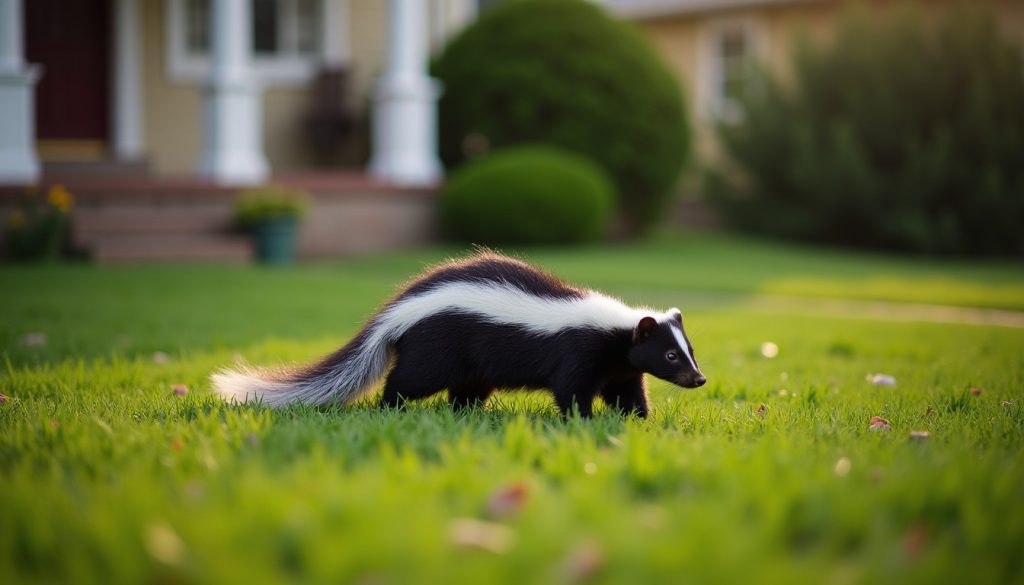
To get rid of skunks, remove what draws them (grubs, bins, pet food, rodents, debris), confirm the den is empty with a flour patch or sticks at the entrance, then seal it with buried wire mesh bent out in an L. Do not seal from May to midsummer, when kits born in May and June are still in the den. For the smell, use the hydrogen peroxide, baking soda and dish soap formula from chemist Paul Krebaum, mixed fresh in an open container. Tomato juice only masks it.
Skunks are slow, deliberate animals that prefer to be left alone and rarely spray unless cornered. Most problems come down to one of three things: a den under a porch, deck or shed, holes dug across the lawn, or a pet that got too close. Each has a clear fix, and the order matters because a skunk den in late spring is usually a nursery.
Skunk problems and what fixes each one
| Problem | What is going on | Fix | DIY or pro |
|---|---|---|---|
| Skunk under the porch, deck or shed | A dry den; in May to July often a mother with kits | Wait out the kit season, test the hole, one-way door, buried L-shaped mesh | DIY in most cases outside kit season |
| Small cone-shaped holes in the lawn | Digging for grubs and insect larvae | Confirm grubs before treating; damage usually stops in about 3 weeks | DIY |
| Skunk in a window well or pit | Fell in and cannot climb out | Give it a way out at night, then cover the well | Pro if it will not leave |
| Raiding bins, pet food, coop | Food, eggs, rodents | Tight lids, food indoors, seal ground-level openings in the coop | DIY |
| Dog or person sprayed | Thiol compounds in the musk | Krebaum formula, fresh; wash fabrics twice and air dry | DIY |
| Smell that gets stronger for days | Probably a dead skunk under a structure | Find and remove the carcass with protection | Pro is sensible |
| Skunk out by day, staggering or approaching people | Possible rabies | Keep away; call animal control | Animal control |
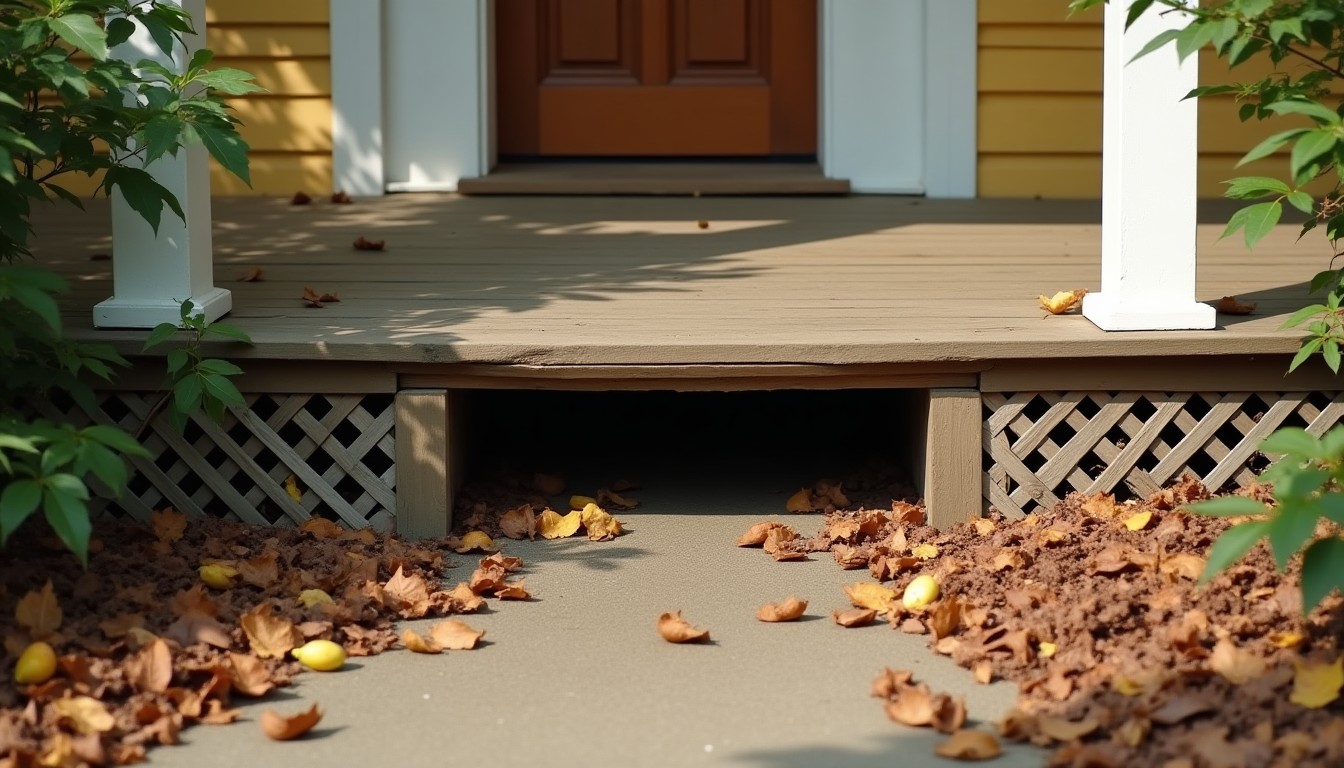
Timing: the kit season decides when you can seal
Striped skunks breed from late January into March. Gestation is usually 7 to 10 weeks. According to the wildlife damage literature, older females give birth in the first part of May and yearlings in early June; Missouri gives early May to early June. Litters are usually 4 to 6 kits. UC IPM notes that after 2 to 3 months the kits can be seen following their mother at night, and they stay with her until autumn.
That gives a simple rule. From May until you see kits trailing the mother, assume a den under a porch holds young that cannot leave. Seal it then and you trap them inside, and the odour of a dead skunk under a deck is worse than a live one. UC IPM warns that kits not yet able to walk may need to be removed by other means, which is a job for a licensed wildlife control operator. Late summer and autumn, once the family moves about together, is the easier time to evict.
Our analysis of iNaturalist research-grade records shows the pattern clearly. Striped skunks reach their largest share of US records in February (an index of 178 against a yearly average of 100), during the breeding season, when the wildlife damage literature says a male may travel 4 to 5 miles a night. Part of that winter peak reflects how little else is out to record. Raw sightings then peak in June and July (4,054 and 4,011 records), when kits begin following their mothers. Those are the two months most people meet a skunk family.
How to get rid of a skunk under a porch, deck or shed
1. Make the area less attractive
- Grubs and insects: skunks dig lawns for insect larvae and grubs, their preferred summer food.
- Rodents: mice are a regular part of the diet, especially in winter, so a rodent problem in a shed or garage invites skunks.
- Debris: remove lumber, brush and junk piles, which give cover and hunting ground.
- Bins and pet food: tight lids, and no food left outside overnight.
- Poultry: seal ground-level openings and shut doors at night. Skunks normally do not climb fences, so a buried 3-foot mesh fence protects a coop.
- Window wells and pits: cover any pit more than 3 inches deep so young skunks cannot become trapped.
2. Find out whether the den is occupied
UC IPM’s test is a smooth layer of flour about an eighth of an inch thick in front of the entrance; check it after dark for tracks. The wildlife damage literature uses thin sticks pushed into the ground across the hole: if none are knocked over for 2 to 3 days, the den is likely empty. Loosely plugging the hole with leaves or soil works the same way.
3. Fit a one-way door
Seal every other gap first. Then fit a one-way door over the main entrance: the wildlife damage literature gives a minimum size of 4 by 4 inches, and UC IPM describes an outward-swinging gate of half-inch hardware cloth, hinged so it only opens outward. Leave it for several days of good weather, check that nothing is using the hole, then remove the door and seal.
4. Seal it for good with an L-shaped footer
Skunks are strong diggers with long claws. The wildlife damage literature specifies half-inch mesh buried 2 inches deep with an apron extending at least 12 inches outward, deeper and wider in sandy soil or where skunks are determined. UC IPM uses quarter-inch hardware cloth buried at least 6 inches. Either way, the bend outward is what stops a skunk digging under, because it starts digging at the wall and meets mesh.
For a sense of what a professional eviction and exclusion job costs, see our wildlife removal cost guide.
Skunks digging up the lawn
Skunk digging shows as small cone-shaped holes, 3 to 4 inches across according to the wildlife damage literature and 3 to 5 inches according to UC IPM, or patches of turned-up earth. Skunks work systematically, section by section, and the damage generally stops after about 3 weeks because the food runs out. Raccoons, by contrast, tend to roll back strips of turf, and our raccoon guide covers that pattern.
The temptation is to treat the lawn for grubs. That only helps if grubs are actually present at damaging numbers and the treatment goes on before the damage starts. Count them first; our lawn pest control guide explains how to check and when timing makes treatment worthwhile.
Skunk repellents: what works and what does not
The wildlife damage literature lists no registered repellents for skunks and says no frightening devices are effective. UC IPM mentions an ammonia-soaked rag in the den as a home remedy with limited success.
- Mothballs: often thrown under porches. The National Pesticide Information Center states that using mothballs in a way not specified on the label, such as outdoors against wildlife, is illegal and can harm people, pets and the environment.
- Lights and noise: may encourage a skunk to move on during an eviction but do not keep skunks away long term.
- Predator urine, citrus, coffee grounds, vinegar: no extension source we read reports evidence they work.
- Poison and fumigants: gas cartridges are registered for skunk burrows, but the label example quoted by the wildlife damage literature forbids treating dens under inhabited buildings where gas could reach people or pets. That rules out the usual porch den.
Is it legal to trap and move a skunk?
Often not. Striped skunks are unprotected in most states, but spotted skunks are fully protected in some, and rules on trapping and licensing vary. Because skunks carry rabies, several states restrict relocation outright: Connecticut prohibits relocating skunks, raccoons and foxes, and California prohibits relocating skunks without written permission. Check with your state wildlife agency first.
Trapping a skunk near a house also risks exactly what you are trying to avoid. The wildlife damage literature advises covering a cage trap over at least half its length, approaching slowly behind a tarp, and avoiding foothold traps near houses because of the risk of spraying. Most homeowners are better off with exclusion, or with a licensed operator.
Skunks and rabies
CDC lists skunks among the four animals most often found with rabies in the US. In the 2022 national surveillance report, skunks made up 660 of 3,579 rabid animals, 18.4 per cent. The wildlife damage literature calls skunks the primary carriers of rabies in the Midwest. A skunk out by day, acting tame, aggressive or uncoordinated, should be reported to animal control and not approached. Rabies is not spread by skunk spray, but a bite or scratch, or a pet that fought a skunk, warrants a call to a doctor or vet the same day.
How to get rid of skunk smell
Skunk musk is an oily yellow liquid made mostly of sulphur compounds called thiols, and people can smell it at about 10 parts per billion. Skunks aim it: UC IPM puts accurate range at 6 to 10 feet, and Nebraska extension says up to 15 feet. A skunk usually warns first by stamping its front feet, hissing and raising its tail. Back away slowly.
The Krebaum formula
Chemist Paul Krebaum devised a mix that converts the odorous thiols into odourless acids. Nebraska, Penn State and UC IPM extension all give it:
- 1 quart of 3 per cent hydrogen peroxide, from a fresh bottle
- a quarter cup of baking soda
- 1 to 2 teaspoons of liquid dish soap
Mix it in an open container and use it straight away. Never mix it in advance or store it in a closed bottle: Nebraska extension warns the oxygen it releases may cause a closed container to explode. Keep it out of eyes and mouth, leave it on fur or hair for five minutes, rinse, and repeat if needed. Do not put it directly on clothing, which it may discolour.
Why tomato juice does not work
Nebraska extension explains the myth: tomato juice does not neutralise skunk odour. The nose becomes so overwhelmed by skunk musk that it stops registering it, a condition called olfactory fatigue. When tomato is added, the nose smells the tomato, and the person assumes the skunk smell has gone.
Clothes, house and outdoor surfaces
- Fabrics: wash twice with laundry detergent and hang to dry, preferably outdoors, not in the dryer. Household bleach also works on fabrics that tolerate it, used as a separate step, never mixed with other cleaners.
- Wood and concrete: one cup of bleach in a gallon of water on the sprayed spot only; it may stain.
- Indoors: ventilate. If a faint smell lingers after cleaning, replace the furnace or air conditioner filter.
- Humidity: odour can seem to come back in humid weather without a new spray.
If the smell grows stronger over several days, a skunk has probably died under a deck, shed or window well. Nebraska extension advises gloves, long sleeves, eye protection and a mask for carcass removal, because rabies remains infectious until the body has decomposed. Many homeowners hand this to a professional.
Skunks often share yards with other night visitors; see our guides to getting rid of opossums and raccoons for the overlapping fixes.
Frequently asked questions
What will make skunks stay away?
Removing food and blocking dens, not smells. Skunks come for grubs, insects, rodents, pet food and bins, and stay where a porch or shed offers a dry den. No repellent is registered for skunks and no frightening device has proved effective. Buried half-inch mesh bent outward in an L along decks, porches and sheds is the lasting fix, installed outside the May to midsummer kit season.
What is a skunk’s worst enemy?
The great horned owl is the predator most often named: Missouri’s Department of Conservation notes that despite the spray, great horned owls prey on skunks. For homeowners, the more practical answer is a sealed foundation. Skunks normally do not climb fences and den at ground level, so mesh buried with an outward apron defeats them where repellents do not.
What food is poisonous to skunks?
Poisoning skunks with food, chocolate included, is not a lawful or registered control method, and anything a skunk eats from a bait, a dog or cat can eat too. The only registered toxicant is a burrow gas cartridge, and its label forbids use under inhabited buildings. Removing the food that attracts skunks and sealing the den is what extension services recommend.
What smell do skunks hate the most?
There is no smell proven to drive skunks off. The wildlife damage literature lists no registered skunk repellents, UC IPM rates an ammonia-soaked rag as a home remedy of limited success, and using mothballs outdoors against wildlife breaks the label, which makes it illegal. Smells may help nudge a skunk out during an eviction, but sealing the den is what keeps it out.
Do mothballs get rid of skunks?
No, and using them that way is illegal. The National Pesticide Information Center states that using mothballs in a way the label does not specify, including outdoors to repel wildlife, is against the law and can harm people, pets and the environment. A skunk can push them aside, and children and pets can find them under a porch.
Sources
- University of California Statewide IPM Program, Pest Notes: Skunks, Publication 74118 (R.A. Baldwin, updated 2015).
- University of Nebraska-Lincoln Extension, Removing Skunk Odor, NebGuide G2100 (Vantassel, Hygnstrom and Ferraro, 2011).
- Penn State Extension, Sprayed by a Skunk (M.C. Brittingham, updated 2025).
- Internet Center for Wildlife Damage Management, Skunks: identification, biology, damage identification and control methods, based on J.E. Knight, Prevention and Control of Wildlife Damage (1994).
- Missouri Department of Conservation, Field Guide: Striped Skunk.
- CDC, About Rabies.
- Ma X. et al., Rabies surveillance in the United States during 2022, Journal of the American Veterinary Medical Association 262(11), 2024.
- Connecticut Department of Energy and Environmental Protection, Nuisance Wildlife Control Program, Rabies and Client Notification (updated 2022).
- National Pesticide Information Center, Mothballs: regulation and label use.
- The Pest Control Brief analysis of iNaturalist research-grade records, pulled October 2026.