A Bat in the House: What to Do Right Now
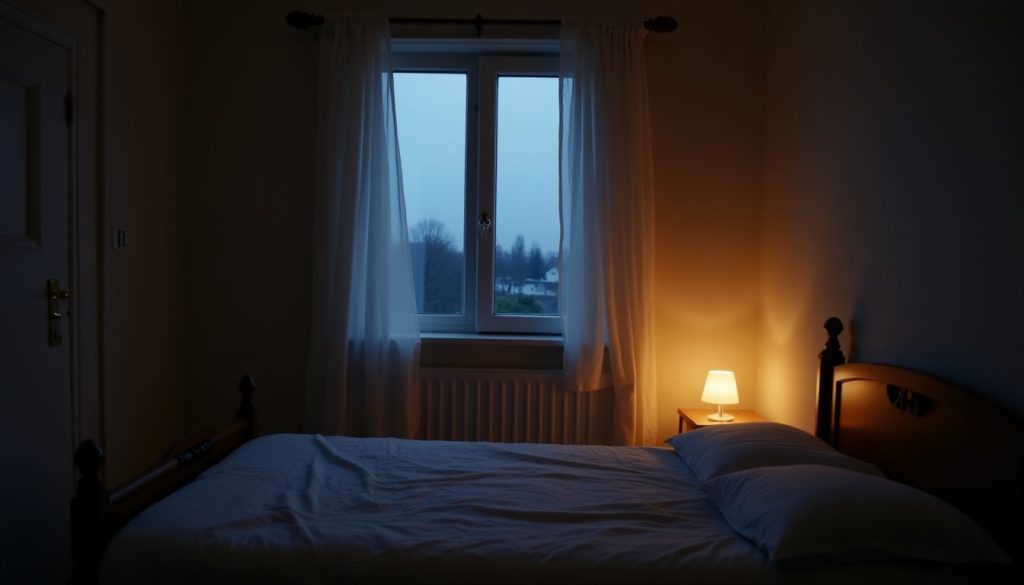
If a bat is in your house and nobody has touched it or slept near it, shut the interior doors, open a window or outside door in that room, turn off the lights and let it fly out. Never touch it bare-handed. If the bat was in a room with someone sleeping, a young child, or anyone who cannot say whether they were bitten, do not let it go: capture it with gloves and a box and call your local health department, because the CDC says bat bites can be too small to notice.
A bat indoors is usually a lost animal looking for a way out. Purdue Extension says it is most often a big brown bat that came in accidentally through an open window, door or ungrated fireplace, and that these bats will not attack people. The one decision that matters is whether anyone may have had contact with it: that decides release or testing.
Bat in house: what to do, by situation
| Your situation | Release or keep? | Who to call |
|---|---|---|
| Bat flying in a room, everyone awake, nobody touched it | Let it leave through an open window or door | Nobody, unless it will not leave |
| You woke up and found a bat in the bedroom | Keep it: capture without touching it | Local health department |
| Bat found in a room with an unattended child | Keep it | Local health department |
| Bat in a room with someone intoxicated or cognitively impaired | Keep it | Local health department |
| Anyone was bitten or scratched, or bat saliva got in eyes, nose, mouth or a wound | Keep it | Doctor now, and the health department |
| Bat in the house and you cannot find it | Search (see below) | Health department if anyone slept in the house |
| Repeated bats indoors, or noises in the attic | Likely a roost: plan exclusion | Licensed wildlife control operator |
The keep-it rows come from the federal rabies recommendations. The Advisory Committee on Immunization Practices, publishing through the CDC, lists as possible exposures finding a bat in the same room as a person who might be unaware that a bite or direct contact had occurred, for example a deeply sleeping person who awakens to find a bat in the room, or an adult who sees a bat in the room with a previously unattended child, mentally disabled person or intoxicated person. The same document notes that rabies can be transmitted by minor, seemingly unrecognised bites from bats.
The reason to keep the bat is that testing usually settles the question. The recommendations state that if the bat is available for testing and is negative, post-exposure treatment is not necessary, and that most submitted bats, approximately 94 per cent, are not rabid. Penn State Extension gives a similar figure: roughly 5 per cent of sick, dead or suspect bats submitted in Pennsylvania test positive. Release a bat that may have bitten someone and that option is gone.
How to get a bat out of your house
When nobody has had contact with it, the simplest method is the one Penn State recommends: allow the bat to find its own way out.
- Stay calm and keep children and pets out of the room.
- Close interior doors so the bat is confined to one room.
- Open the windows and any outside door in that room. Purdue notes the bat will usually find its way out by following fresh air movement.
- Turn off the lights in the room. Purdue warns that if lights are left on, the bat may seek refuge behind wall hangings or drapes.
- Stand quietly to one side and watch. A bat circling a room is not attacking; it is looking for the exit.
- If it lands and will not leave, capture it using the method below and release it outdoors.
How to capture a bat safely
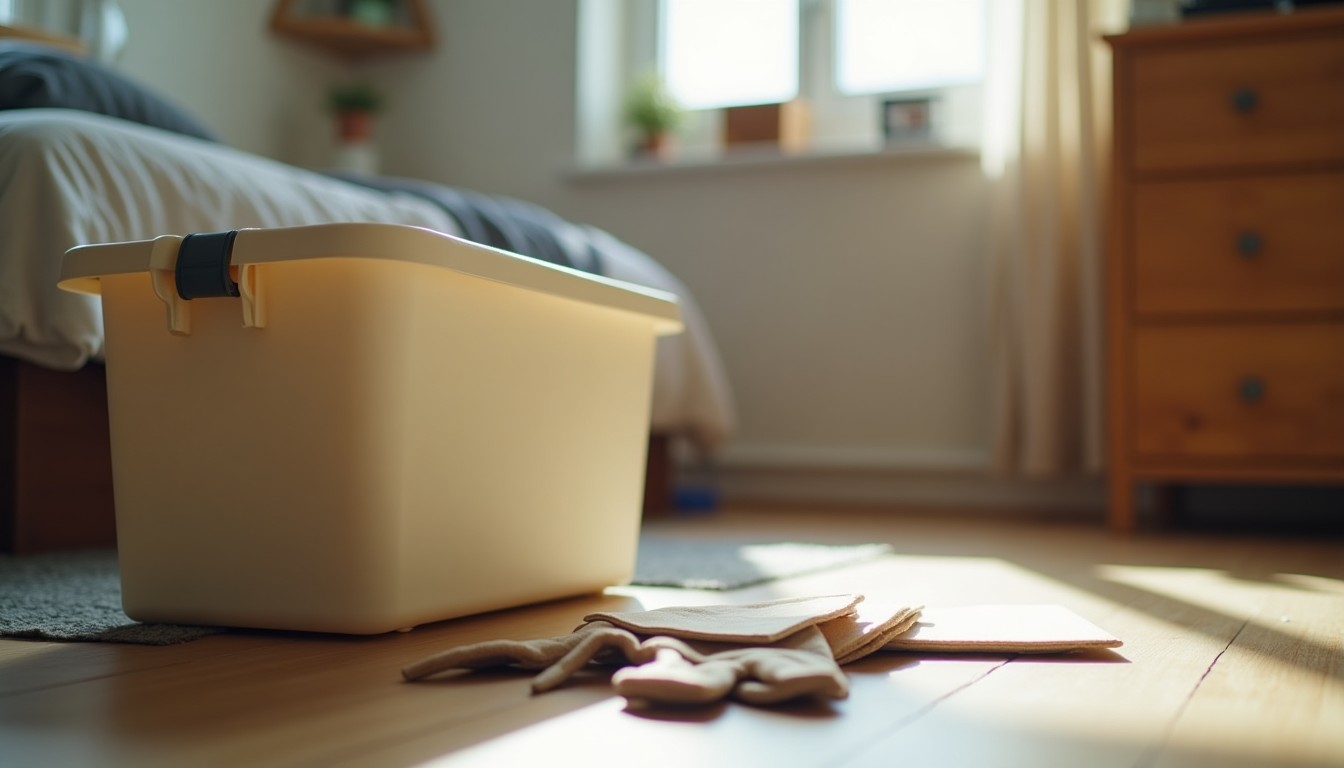
The CDC’s method needs five things: a container such as a box or jar big enough for the bat, a piece of cardboard larger than the opening, leather work gloves, tape, and something to punch small air holes in the cardboard.
- Put on leather work gloves. Long sleeves help.
- Wait for the bat to land. Do not swat it out of the air.
- Approach slowly and put the container over it.
- Slide the cardboard between the wall or floor and the container to trap the bat inside.
- Tape the cardboard to the container and punch small air holes.
- If anyone may have been exposed, do not release it. The CDC’s instruction is plain: do not release the bat until you talk with a public health expert, and contact your local health department to have it tested.
If nobody was exposed, Bat Conservation International advises keeping the box somewhere quiet until dark, then releasing it from a raised spot such as a deck or ladder, because a bat needs to drop to take flight, and not releasing it in harsh weather. The US Fish and Wildlife Service adds that your state natural resources department may have a biologist who can remove the bat for you.
Never handle a bat bare-handed, alive or dead. If you know you were bitten or scratched, the CDC says to wash the wound with soap and water and get medical help right away. Decisions about rabies shots belong to a doctor and the health department, not to a website.

Bat in bedroom while sleeping
This is the situation people most often get wrong, because there is usually no mark and no memory of a bite. The CDC notes that bat bites can be tiny and you may not even know you were bitten. That is exactly why the federal recommendations treat waking up with a bat in the room as a possible exposure.
So do not wave it out of the window. Capture it, keep it, and call the health department the same day. If the bat has already gone, call anyway and explain what happened.
Do I need a rabies shot if there was a bat in my house?
Not automatically. If everyone was awake, nobody touched it and nobody can have been bitten, the federal recommendations say treatment is not necessary when a person can be reasonably certain no bite, scratch or mucous membrane contact occurred. If someone was asleep, a child was alone with it, or contact cannot be ruled out, the decision depends on testing the bat, which is why you keep it. The health department and a doctor make that call. Most people in the US who die of rabies were exposed to a rabid bat, according to the CDC, so it is worth the phone call.
I saw a bat in my house and now I can’t find it
Bats hide in tight, dark places. Purdue’s warning about lights points to drapes and wall hangings first. Check the folds of curtains, behind pictures and mirrors, behind furniture against walls, inside open cupboards, and among hanging clothes. Search with gloves on and a torch (flashlight). If you still cannot find it, it may have left the way it came in or moved into a wall or attic void. If anyone slept in the house that night, call the health department for advice even without the bat.
Why do bats get in, and why now?
A single bat indoors is usually a mistake, and the timing tells you which kind.
- Late summer: young bats. Purdue says bat pups are born in June and July, and Penn State says that by mid-July the pups can fly and begin hunting on their own. Bat Conservation International notes that lost bats sometimes find their way into living areas during the summer maternity season, as lost juveniles. A young bat from a roost in your attic or walls can take a wrong turn into the house.
- Winter: big brown bats. Purdue explains that while most bats leave buildings for the winter, it is common for small numbers of big brown bats, typically one to four, to hibernate in homes, and that these bats sometimes become active on unseasonably cold or warm winter days. Iowa State says only the big brown bat uses buildings in winter.
- Any time: an open door. Open windows without screens, doors left open at dusk and fireplaces without a grate are the usual ways in.
Our data: when and where big brown bats are recorded
We looked at iNaturalist research-grade records of the two bats most often found in and around US houses, the big brown bat and the little brown bat. Because bats are active only part of the year and people record mammals year round, we plot raw monthly records rather than an index.
Big brown bat records climb to 1,091 in July and 1,054 in August, the months when young bats start flying. The winter contrast between the two species is the more striking result. Big brown bat records hold at 248 to 257 a month from December to February, about a quarter of the summer peak. Little brown bat records fall to 5 in November and 8 in December and January, against 143 in August. That fits the biology: little brown bats hibernate in caves, while big brown bats are the species that overwinters in buildings. A bat in the house in January is almost certainly a big brown bat.
Adjusted for how much people record in each state, big brown bats are recorded most often in Nebraska (6.62 records per 10,000 observations), Oklahoma (4.2) and Iowa (2.58), with Missouri, Kansas and Mississippi next. These are records of where people photographed and identified bats, not population counts or rates of bats in homes.
Is it safe to be in a house with bats?
A single bat that flies in and out with no contact is a low risk, and Purdue notes that the great majority of house-infesting bats in Indiana are not rabid. The risks are contact and droppings. Never handle a bat, and treat any possible contact as described above. A roosting colony is a different matter: Purdue notes that long-term accumulations of droppings in attics have been associated with histoplasmosis, a respiratory disease caused by a fungus that grows in old bat and bird droppings, and advises a respirator and disposable gloves at minimum for any cleanup.
What does it mean when a bat is in your house?
Practically, one of two things. Purdue’s view is that a bat flying around inside may mean nothing more than a bat flying in through an open window or chimney, but its presence could also signify that a colony is living in the attic. Bat in house spiritual meanings are folklore and outside what we cover; the useful question is whether this was a one-off.
Signs of a roost include scratching or squeaking in walls or the attic at dusk, droppings with a coffee-grounds look below gaps, and stains around openings. Purdue says openings of only 3/8 inch are enough for bats to get in. If you hear noises at night and are not sure whether it is bats, insects or something larger, our guide to noises at night helps separate them, and raccoons in the attic are covered in how to get rid of raccoons.
Bats in the attic: exclusion, not removal
If bats keep turning up, the fix is exclusion: sealing every gap except the ones they use, fitting one-way exits so they can leave but not return, and sealing those once they are gone. Purdue calls this the only method that can rid a building of a colony permanently and says there are no poisons that can be legally used for bat control. It also reports that none of the ultrasonic sound devices have been found effective for repelling bats.
Timing matters. Purdue says exterior exclusion should never be attempted from mid-May to mid-August, Penn State says never from late May through mid-July, and Iowa State says to wait until after 1 August, all so that flightless young are not trapped inside. Bat Conservation International advises against exclusion through the April to September pup season. Check your state’s rules, which may be stricter. Costs and contract questions are in our bat removal cost guide, and general wildlife pricing in wildlife removal cost.
Bat in house: who to call
- Possible exposure: your local or county health department, and a doctor if anyone was bitten or scratched.
- A bat that will not leave: local animal control, or your state wildlife agency.
- Bats living in the building: a licensed wildlife control operator who does exclusion, not a general pest sprayer.
Frequently asked questions
What do you do if you find a bat in your house?
Close interior doors to confine it, open a window or outside door in that room, turn off the lights and let it fly out. Do not touch it bare-handed. If it was in a room with someone sleeping, an unattended child, or anyone who cannot say whether they were bitten, capture it under a box with gloves on, tape cardboard over the opening, and call your local health department for testing.
Is it safe to sleep in a house with a bat?
Not until the bat is out or contained. Federal rabies recommendations treat waking up with a bat in the room as a possible exposure because bat bites can be small enough to go unnoticed. Close the bedroom door, sleep elsewhere, and if anyone already slept in a room with the bat, keep the bat for testing and call the health department.
Why is there a bat in my house in winter?
It is almost certainly a big brown bat. Purdue Extension says small numbers of big brown bats, typically one to four, hibernate in homes and can become active on unusually warm or cold winter days. Our analysis of iNaturalist records shows big brown bats recorded all winter, while little brown bats, which hibernate in caves, nearly vanish from the records.
What does it mean if a bat comes inside my house?
Usually that it got lost: Purdue says it is most often a big brown bat that entered through an open window, door or fireplace. In late summer it may be a young bat from a roost nearby. If bats appear more than once, or you hear scratching in the walls or attic at dusk, a colony may be living in the building and needs exclusion outside the pup season.
Sources
- Centers for Disease Control and Prevention, Rabies: Bats (exposure guidance and safe capture).
- Manning, S. E. and colleagues, Human Rabies Prevention: United States, 2008, Recommendations of the Advisory Committee on Immunization Practices, MMWR 57(RR-3), 2008.
- Purdue University Cooperative Extension, ADM-11-W, Bats, J. Loven, revised 2003.
- Penn State Extension, Bats, L. M. Williams and M. Brittingham, 2007.
- Iowa State University Extension and Outreach, Bats: Damage Management.
- Bat Conservation International, Bats in Homes and Buildings.
- US Fish and Wildlife Service, Five methods to safely remove a bat from your home.
- The Pest Control Brief analysis of iNaturalist research-grade records, pulled October 2026.