Woodpecker Damage to a House: Why It Happens and How to Stop It
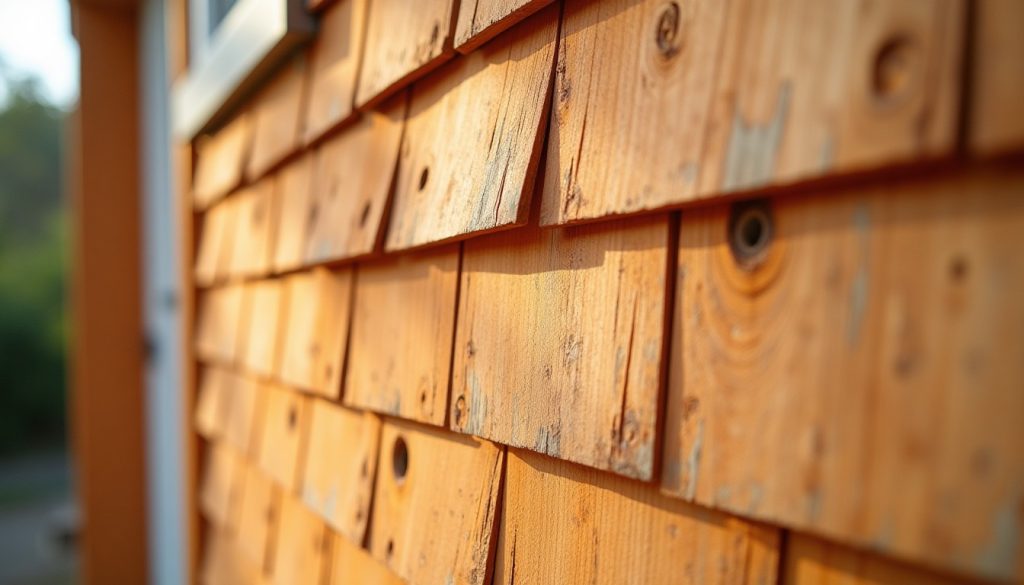
Woodpeckers damage houses for three main reasons: drumming to claim territory in spring, digging out insects living in the siding, and excavating a nest or roost hole. The shape of the holes tells you which: small, irregular holes mean insects, a large, neat round hole means a nest or roost, and noise with little damage means drumming. Woodpeckers are protected by the Migratory Bird Treaty Act, so killing one without a federal permit is illegal. In a Cornell study, moving reflective streamers worked best, stopping new damage at half of 16 test houses.
The fix depends on the reason, which is why so many homeowners try a plastic owl, see it fail, and conclude nothing works. This guide shows how to read the damage, what the controlled studies found about deterrents, what the law allows, and why the holes are sometimes a sign of an insect problem you need to deal with first.
Why woodpeckers peck houses: read the holes
| What you see | Likely reason | When | What to do first |
|---|---|---|---|
| Loud rapid hammering on gutters, chimney caps, flashing or siding; little or no damage | Drumming to claim territory and attract a mate | Mostly spring, early morning and late afternoon | Deaden the sound or move the bird on; usually stops once breeding begins |
| Small, irregular holes scattered across siding or trim | Feeding on insects in or under the wood | Any season | Find and treat the insects, then repair |
| One large, smoothly rounded hole | Nest or roost cavity | Nesting holes usually late April to May; some activity in autumn | Check nothing is inside, then exclude and repair |
| Rows of small holes packed with acorns (Western states) | Acorn woodpecker storing food | Varies | Netting or covering the area |
Cornell Lab of Ornithology lists those same four reasons. Virginia Tech extension adds a useful rule of thumb: damage that is irregular in shape and spread across the surface usually means foraging, while a round, concentrated hole means a bird is testing a site for a nest, and needs prompt action before serious damage is done.
Drumming: loud but rarely damaging
Drumming is communication, not feeding. Colorado State University Extension says woodpeckers pick wooden, cedar or redwood siding, metal or plastic gutters, antennas, chimney caps and light posts because they make a loud noise, and that drumming is most common in spring in the early morning and late afternoon. Virginia Tech notes that it often sounds as if the bird is destroying the house, yet the bill touches the surface only enough to make the sound; it is annoying but rarely damaging. Cornell says drumming birds will most likely stop once breeding has begun.
Feeding: the holes are a symptom
When woodpeckers feed on a house, they are usually after insect larvae in the wood. The US Fish and Wildlife Service and Cornell both name carpenter bees, leafcutter bees and grass bagworms. Virginia Tech adds that a pileated woodpecker can do serious damage quickly once it detects a carpenter ant nest or carpenter bee galleries, and says foraging damage should be treated as a call to check for an insect infestation in or under the siding. Our guide to carpenter bees and other wood-destroying insects covers how to confirm and treat them.
Nesting and roosting: the expensive one
All North American woodpeckers excavate cavities, Colorado State notes, and they normally need dead or dying trees to do it. Where snags are scarce, a house can stand in. Cornell says nest holes are usually dug at the start of the breeding season, between late April and May, and advises evicting birds before or after the nesting season, never during it.
Does a woodpecker on the house mean termites?
Usually not termites specifically, but it can mean insects. The species named by FWS and Cornell as targets in siding are carpenter bees, leafcutter bees and grass bagworms, and Virginia Tech adds carpenter ants. What matters is the pattern: drumming on a gutter means nothing about insects, while scattered, irregular holes in wood do. Colorado State notes that in that state woodpeckers hammer for insects mainly in the first two years after a house is built, because insects seldom infest well-seasoned wood.
If you see foraging damage, look for round carpenter bee holes in fascia and trim, or sawdust below the damage, and use our wood damage identification guide to tell them apart. Treat the insects before you repair, or the birds will come back to the same food.
Which houses woodpeckers choose
The biggest study of this question surveyed 1,185 houses in Ithaca, New York, between March 2001 and April 2002. Cornell researchers Emily Harding, Sandra Vehrencamp and Paul Curtis found that 33 per cent had woodpecker problems, either damage or noise. Damage depended strongly on siding type: grooved plywood siding was more likely to be damaged than tongue-and-groove, board-and-batten, clapboard or non-wood siding. Damage also rose with the density of trees in the yard, and stained houses fared worse in every wooded setting.
Their 2007 paper, as summarised by Virginia Tech, found homes painted or stained in dark earth tones or natural wood colours had more woodpecker activity than houses painted white, pastel yellow, cream or light blue, whatever the condition of the paint. Virginia Tech also flags cedar siding, T1-11 plywood and heavily textured surfaces such as log siding, shakes and board and batten, because they hide gaps where insects live. Colorado State lists cedar, rough pine, redwood and some synthetic stucco as frequently damaged, with plywood and Masonite less so in its experience.
How to stop woodpeckers pecking your house
Act at the first sign. Colorado State warns that woodpeckers are not easily driven from a territory or pecking site once they are established, and Virginia Tech says moving deterrents have their greatest success when used at the first signs of activity.
What the deterrent trial found
In 2003 and 2004, the same Cornell team tested six common deterrents on 16 Ithaca homes with active damage, counting new holes per day before and after: life-sized plastic owls with paper wings, reflective streamers, plastic “scare eyes”, a sound system playing woodpecker distress calls followed by a hawk call, suet feeders and roost boxes. None stopped new holes every time. Reflective streamers gave the greatest reduction, and Cornell reports they completely eliminated damage at half the test sites. Owls and distress calls may work at first, but birds get used to them.
| Deterrent | Evidence | Verdict |
|---|---|---|
| Reflective streamers or holographic tape that moves | Best result in the Cornell trial; ended damage at half of 16 houses | First choice |
| Bird netting from the eaves | FWS: typically effective at excluding most woodpeckers if taut and maintained | Most reliable for a persistent bird |
| Hardware cloth over the pecked area | Virginia Tech: extend 6 to 12 inches beyond the damage | Good for one spot |
| Plastic owls, rubber snakes, eye balloons | Birds habituate, sometimes in 1 to 2 days (Virginia Tech) | Short-lived at best |
| Distress and predator call playback | Temporary relief only | Rarely worth it |
| Methyl anthranilate repellent | The only EPA-registered woodpecker repellent; did not deter woodpeckers in a 1997 test | Does not work |
| Sticky bird repellents | Can fatally trap or injure birds | Do not use |
Netting, done properly
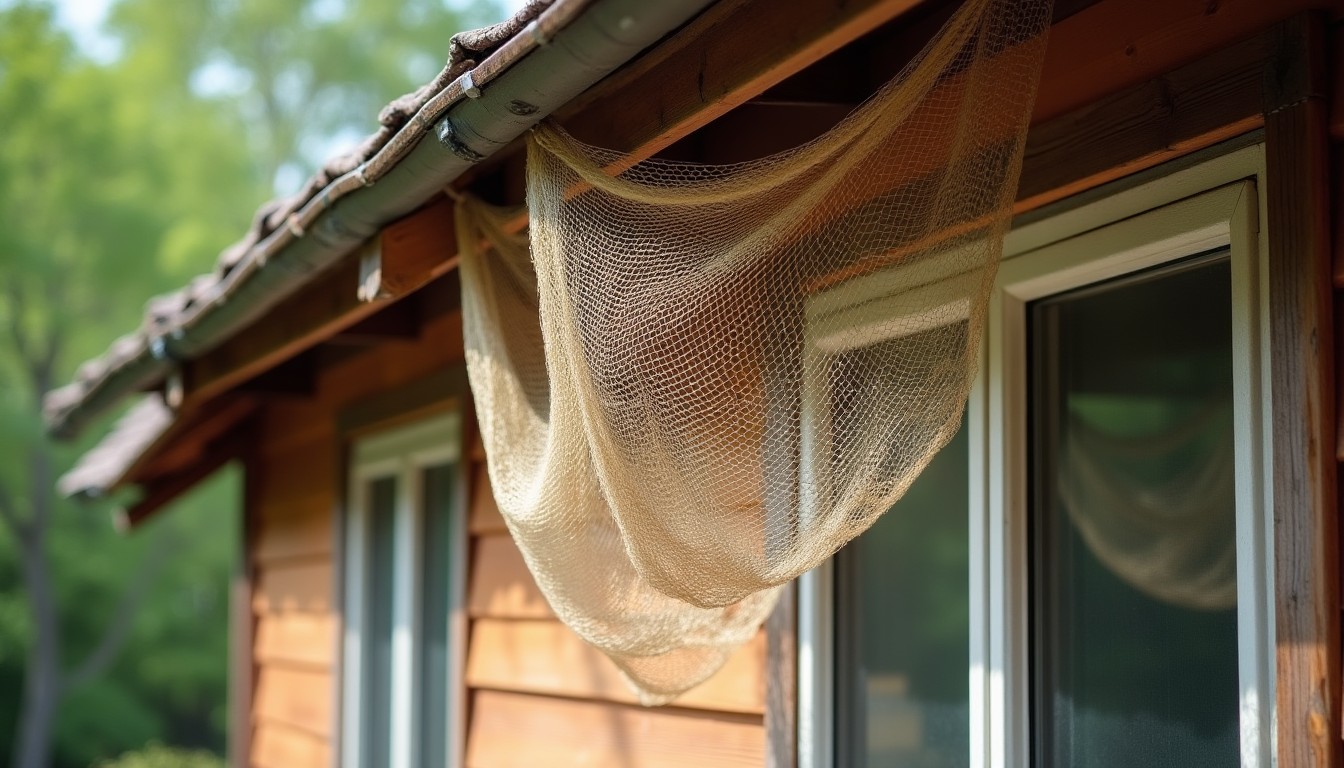
Netting is the method extension sources rely on when a bird will not move. FWS says bird netting installed from the outer eaves down the side of the building is typically effective, but it must be taut and maintained because it develops holes. Virginia Tech advises fastening it to the outer edge of the eave and angling it back to the base of the siding, with mesh of 5/8 inch or smaller; Cornell and Colorado State say to keep it at least 3 inches from the wall so birds cannot peck through. Close the sides so birds cannot get trapped behind it.
Suet feeders: distraction or attraction?
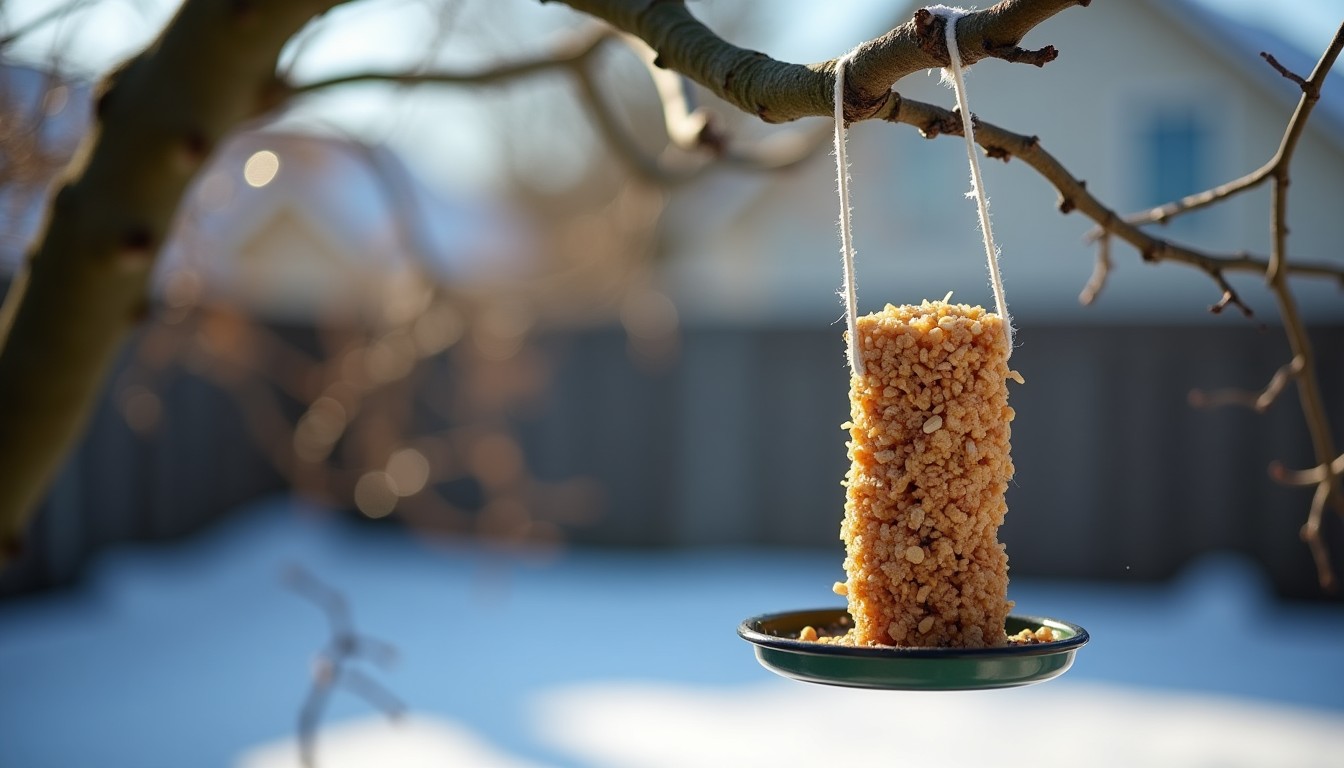
Advice conflicts here. Suet feeders were one of the six methods in the Cornell trial and did not stand out. Virginia Tech goes further and suggests removing feeders offering suet or peanut butter, because extra food can hold more birds near the house. If you already feed birds and have a woodpecker problem, try taking the suet down for a season rather than adding more.
Other measures that help
- Deaden the drumming spot. Colorado State suggests filling the hollow space behind a resonant board with expanding foam insulation.
- A nest box nearby. Where other methods fail, Colorado State suggests a flicker box with a 2.5 inch entrance hole mounted near the damage; a nesting pair then defends the territory from other woodpeckers.
- Hose them. Virginia Tech notes that a burst of water every time the bird starts pecking can work, if someone is home to do it at the first sign of activity.
- Repaint lighter next time the house needs it, if you live among trees.
Can I shoot a woodpecker destroying my house?
No, not without a federal permit. FWS states that almost all birds native to the United States, including their nests and eggs, have been protected by federal law since 1918 under the Migratory Bird Treaty Act. FWS describes a Wisconsin pest control company owner who, in 2015, pleaded guilty to state violations and paid $4,185 in fines and restitution for illegally killing 108 woodpeckers for about 30 customers.
A depredation permit is a last resort. FWS says permits will be issued only if non-lethal methods have been tried and failed. Colorado State adds that flicker control permits are not issued from May 15 to August 15 except in special circumstances, and that local ordinances also apply. Removal rarely fixes the problem anyway: Virginia Tech notes that another bird often moves into the territory soon after. Nests may be removed only when they hold no eggs or young, according to Colorado State. A licensed wildlife professional knows the permit rules; our guide to wildlife removal costs explains what that typically involves, and bird control costs covers netting installation.
When woodpeckers are about: what the iNaturalist records show
We counted US research-grade iNaturalist records of three common house-damaging woodpeckers, month by month, and scaled each bird to its own busiest month.
All three peak in April: 17,684 records for the red-bellied woodpecker, 17,636 for the downy and 14,686 for the northern flicker, matching the spring drumming and nest-building season described in the extension guidance. The flicker has a second rise in October. Records stay fairly high through winter because these are largely year-round birds. These are records of birds people photographed, mostly outdoors, not records of damage.
Repairing woodpecker damage
Repair promptly once the reason is dealt with. Colorado State says large holes left open can act as visual attractants to other woodpeckers, and suggests covering them with aluminium flashing or metal sheathing painted to match. Cornell suggests plugging holes with wood putty, and checking that no bird is roosting inside before you seal anything. Virginia Tech advises removing temporary metal coverings and making permanent repairs once the damage stops, since metal can become a new drumming board.
How much does it cost to repair woodpecker damage?
The Cornell trial reported that woodpeckers cause an average of about $300 in damage to affected houses, adding up to millions of dollars nationally, though that figure dates from the mid-2000s. Filling a few small foraging holes is a DIY job. Replacing sections of cedar or plywood siding, or treating a carpenter bee or carpenter ant problem underneath, costs more and depends on the material and how much has to come off.
Frequently asked questions
Is woodpecker damage covered by homeowners insurance?
Usually not. The standard ISO homeowners special form, HO 00 03, excludes damage by birds, along with vermin, rodents and insects, according to the FC&S coverage analysis published by PropertyCasualty360. Insurers treat it as preventable maintenance rather than sudden loss. Policies vary, so read your exclusions and ask your agent. Our guide to homeowners insurance and pest damage explains the pattern.
How to get rid of woodpecker damaging houses?
First work out why it is pecking: drumming, feeding or nesting. Then act immediately with moving reflective streamers or holographic tape near the damage, which performed best in a Cornell trial, or taut bird netting from the eaves angled to the base of the wall. Treat any insects in the wood, repair holes promptly, and never use sticky repellents or harm the bird, which is federally protected.
How much damage can a woodpecker do to a house?
Drumming rarely causes damage beyond a few marks. Foraging leaves scattered small holes, and a pileated woodpecker after carpenter ants can tear out large areas quickly, Virginia Tech notes. A nest or roost cavity can go right through siding into the wall space. In a Cornell survey of 1,185 Ithaca houses, a third had woodpecker problems, and the researchers put average damage at around $300 per affected house.
Why do woodpeckers peck houses in the morning?
Morning hammering on a gutter, chimney cap or siding is usually drumming, the bird’s way of announcing its territory and attracting a mate. Colorado State says drumming is most common in spring during the early morning and late afternoon, and woodpeckers choose surfaces that make the loudest sound. It is rarely damaging and, according to Cornell, usually stops once the birds have started breeding.
Sources
- US Fish and Wildlife Service, Woodpeckers and your home (Tina Shaw).
- Cornell Lab of Ornithology, All About Birds: Why do woodpeckers like to hammer on houses? And what can I do about it?; species measurements from the All About Birds guide.
- Harding, Curtis and Vehrencamp, Assessment of Management Techniques to Reduce Woodpecker Damage to Homes, Journal of Wildlife Management 71(6): 2061 to 2066, 2007.
- Harding, Vehrencamp and Curtis, External Characteristics of Houses Prone to Woodpecker Damage, Human Wildlife Conflicts 3(1), 2009.
- Colorado State University Extension, Preventing Woodpecker Damage.
- Virginia Cooperative Extension, Managing Human-Wildlife Interactions: Woodpeckers, CNRE-147 (Parkhurst).
- Belant, Seamans, Dolbeer and Woronecki, Evaluation of methyl anthranilate as a woodpecker repellent, International Journal of Pest Management 43: 59 to 62, 1997 (as cited by Virginia Tech).
- FC&S, The Problem of Rodents and Vermin, PropertyCasualty360, 2014.
- The Pest Control Brief analysis of iNaturalist research-grade records, pulled October 2026.