Reading Wood Damage: Termite, Carpenter Ant, Beetle or Rot
Four things damage structural wood in American buildings, and they leave distinguishable evidence: termite galleries carry soil and mud, carpenter ant galleries are smooth and clean with coarse stringy debris pushed out, wood-boring beetles leave round exit holes of 1.6 to 6.4 mm with powder, and decay fungi leave wood that is soft and crumbling with no tunnels at all. The distinction matters because one of those is a moisture repair, one is an insect job, and one is neither.
A homeowner who finds damaged timber under a sink or in a crawl space is usually asking a single question: is this termites. Often it is not, and the difference is visible without any specialist equipment once you know what separates them.
Start with what is inside the tunnel
| Cause | Inside the damage | What is left outside | Reading the wood |
|---|---|---|---|
| Subterranean termites | Soil and mud packed into galleries | Mud tubes on foundations and walls | Galleries generally follow the grain |
| Drywood termites | Clean galleries, no soil | Hard six-sided fecal pellets in small piles below exit holes | Galleries cut across the grain |
| Carpenter ants | Smooth-sided galleries, no soil, no pellets | Coarse stringy wood particles mixed with insect body parts | Excavated, not eaten; usually in damp or decayed wood |
| Wood-boring beetles | Tunnels packed with fine powder | Round exit holes with powder beneath | Attacks seasoned wood, often flooring and furniture |
| Decay fungi | No tunnels at all | Nothing insect-related | Soft, spongy or cracked into cubes; darkened |
If you take one thing from this page: soil in the tunnel means termites, and clean smooth tunnels with stringy debris mean carpenter ants. Penn State extension puts the ant side plainly, describing carpenter ant tunnels as smooth-sided and containing no soil particles or fecal pellets, unlike the mud-lined galleries of termites.
Beetle exit holes, by size
Round exit holes in seasoned wood point to powderpost beetles, and the family can be narrowed by hole size and, more reliably, by the texture of the powder. Lyctid frass feels like flour or fine talc and the beetles attack hardwoods only, which is why the damage shows up in oak flooring, furniture and panelling. Anobiid frass feels gritty between the fingers and these beetles attack both hardwoods and softwoods, including structural beams and joists in damp areas. Bostrichid frass is more meal-like and stays tightly packed in the hole.
Whether an infestation is active matters as much as which family it is. Fresh powder the colour of newly sawn wood sifting out of holes indicates activity. Yellowed, caked powder with dust settled over it is a record of something that has finished.
Carpenter ants mean water
Carpenter ants do not eat wood. They excavate galleries to nest and push the debris out, which is why the diagnostic sign is a pile of coarse, stringy material containing insect parts, appearing in cracks in siding, behind mouldings, in basements and attics and under porches. They prefer wood that is already damp or decayed, so an indoor colony is normally a symptom of a leak, a blocked gutter or ground contact rather than a random arrival.
A mature colony holds roughly 2,000 to 3,000 workers before producing winged reproductives, and workers run 6.4 to 12.7 mm. Identifying the ant itself is covered in ant identification.
Rot is not an insect problem
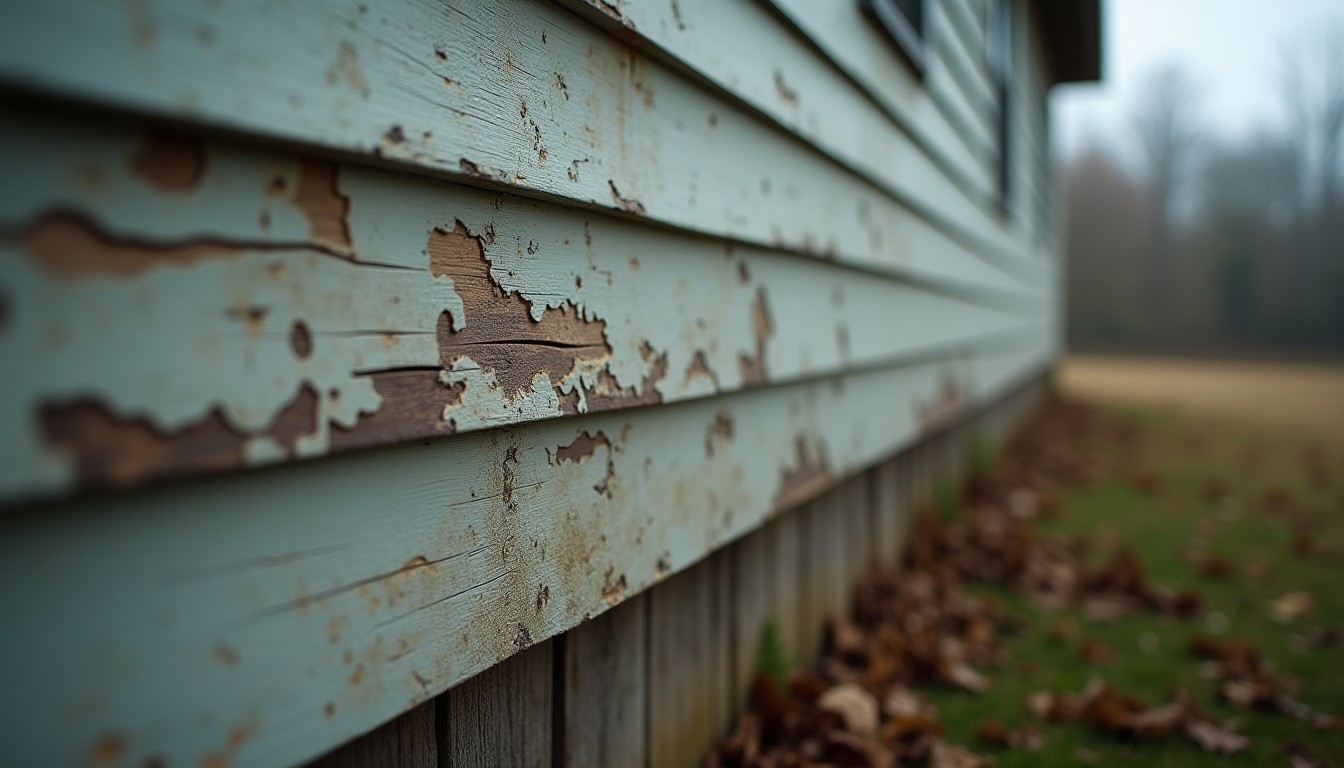
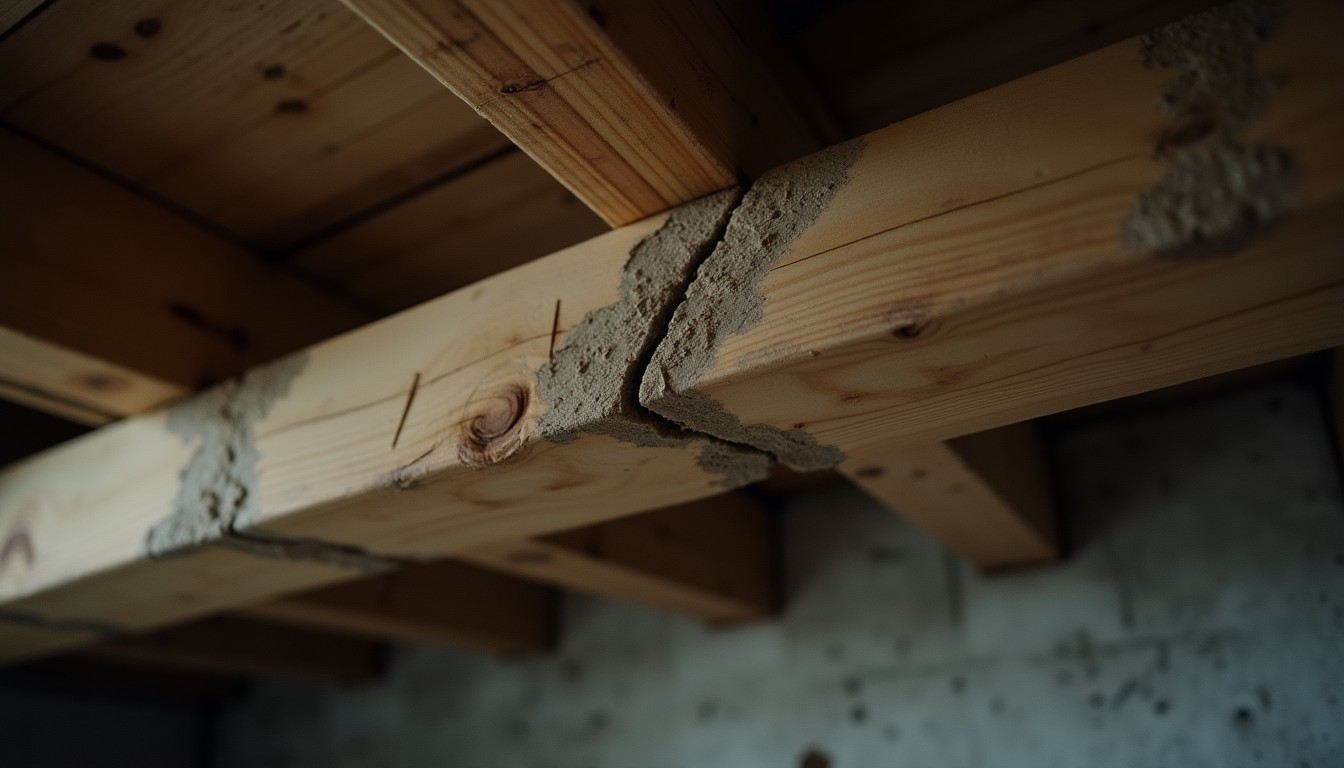
Decayed wood is soft, often darkened, and may crack into cube-like blocks. There are no tunnels, no frass and no insects. It is the result of moisture, and the repair is a moisture repair: fix the leak, improve drainage or ventilation, replace the affected timber.
The relevance to pest control is that decay and insects travel together. Damp softened wood attracts carpenter ants, supports some beetle species, and makes termite attack easier. Treating the insects without fixing the water leaves the conditions intact.
The tap test, and its limits
Tapping timber with a screwdriver handle and listening for a hollow sound is a real technique and a limited one. It finds damage that has already hollowed the interior. It does not find early infestation, it does not identify the cause, and it produces false confidence on painted or veneered surfaces where a sound skin covers damaged wood. Probing with a screwdriver tip tells you more: sound wood resists, decayed or galleried wood gives way.
Neither test replaces an inspection. Where the finding is termites, a licensed inspection is usually a prerequisite for treatment and often for a property sale; see what a termite inspection covers. If swarmers were what prompted the search, the timing of the flight narrows the species considerably, which we set out in termite swarm season.
What to do with what you find
- Photograph it with something for scale, and photograph the powder or debris separately.
- Collect the frass in a bag. Flour-fine, gritty, stringy or pelleted is the fastest route to a species.
- Leave mud tubes intact until someone has seen them. Breaking one destroys evidence of whether it is active.
- Find the water. Damp timber has a source, and that source is part of the repair regardless of which organism is present.
- Match the trade to the finding. Termites and beetles are pest control work, carpenter ants are pest control plus a moisture repair, and decay alone is a builder’s job. Costs for the termite side are in termite treatment costs, and what insurance will and will not cover is in homeowners insurance and pest damage.
Frequently asked questions
How do I tell termite damage from water damage?
Look for tunnels. Termite damage contains galleries, and in subterranean species those galleries carry soil and mud. Water damage has no tunnels at all: the wood is soft or spongy, often darkened, and may crack into cube-like blocks. The two frequently occur together because damp wood is easier for termites to attack.
What is the difference between termite and carpenter ant damage?
What is inside the tunnel. Carpenter ant galleries are smooth-sided and clean, with no soil and no pellets, because the ants excavate wood and push the debris out. Termite galleries in subterranean species are mud-lined. Carpenter ants also leave coarse stringy frass containing insect body parts, which termites do not.
What causes small round holes in wood?
Usually wood-boring beetles. Powderpost beetle exit holes run from about 1.6 mm to 6.4 mm depending on the family, with powder beneath them. The texture of that powder is diagnostic: flour-fine for lyctids, gritty for anobiids, and tightly packed and meal-like for bostrichids.
How do I know if a wood-boring beetle infestation is still active?
By the powder. Fresh frass is the colour of newly sawn wood and sifts out of the holes; old frass is yellowed, caked and often covered in dust. New holes look clean and unweathered, while old ones may be stained or painted over.
What are the small piles of pellets under my timber?
If they are hard and six-sided, drywood termites. They push fecal pellets out of the galleries through small openings, and the pellets collect in piles below. This is a different problem from subterranean termites and usually a different treatment.
Does tapping wood tell you if you have termites?
Only partly. A hollow sound indicates wood that has already been substantially hollowed out, which means you find late damage rather than early activity, and it says nothing about the cause. Probing with a screwdriver adds more information because sound wood resists and damaged wood gives way.
Do carpenter ants eat wood?
No. They excavate it to nest and discard the material. The debris is coarse and stringy and usually contains insect parts, which distinguishes it from the fine powder left by beetles and from the soil found in termite galleries.
Sources
- University of Kentucky Entomology, ENTFACT-616, Powderpost Beetles. entomology.uky.edu
- Penn State Extension, Carpenter Ants. extension.psu.edu
- UC Statewide IPM Program, Subterranean and Other Termites. ipm.ucanr.edu
- NC State Extension, Biology and Behavior of Eastern Subterranean Termites. content.ces.ncsu.edu