Termite Swarm Season: When Each Species Actually Flies
Four subterranean termite species share the eastern United States and each one swarms in a different month, which means the date of a swarm is itself a clue to what is under the building. Eastern subterranean termites fly February to April, dark southeastern April to June, Formosan April to July, and light southeastern July to September. Only the Formosan flies after dark. Swarmers indoors are not a warning that termites may arrive; they are evidence that a colony is already there.
Most termite coverage treats swarm season as a single event in spring. It is not. The calendar below comes from University of Georgia extension work on the species of the eastern states, and the differences between them are wide enough to be useful to anyone trying to work out what they have.
The swarm calendar
Three practical readings come out of that chart.
- A February or March flight in the east is almost certainly the eastern subterranean termite, the most widely distributed species in the country.
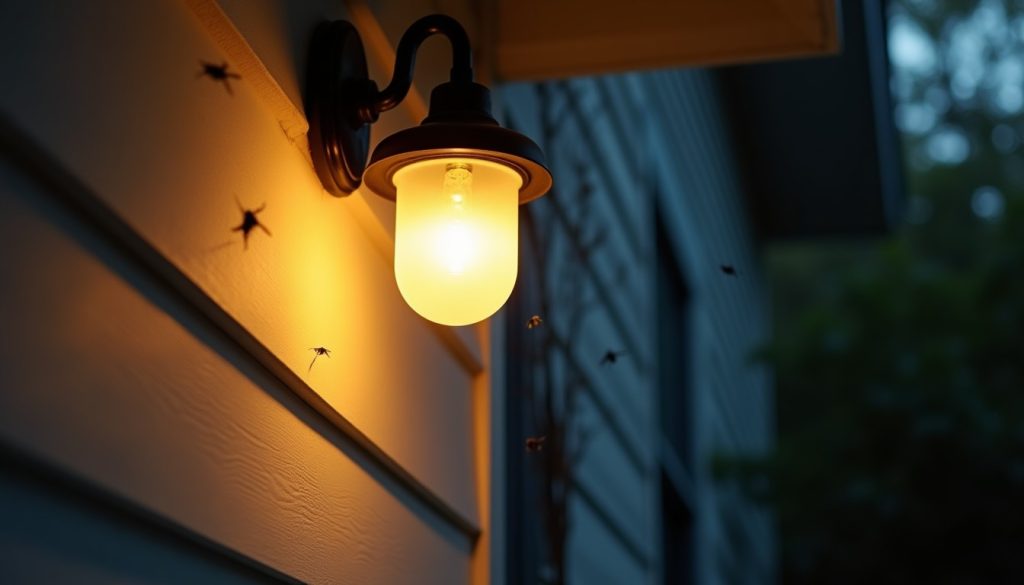
- An evening or night flight between April and July, in the states where the species is established, points to the Formosan termite. It swarms from dusk until around midnight while the native species fly during the day.
- A flight in late summer is not automatically drywood. The light southeastern subterranean termite swarms July to September, which is exactly when people assume the flying insects must be something else.
The Formosan termite is established in Alabama, California, Florida, Georgia, Hawaii, Louisiana, Mississippi, North Carolina, South Carolina, Tennessee and Texas. Its alates are yellowish brown with very fine hairs on the wings, and they are noticeably larger than the native species. The native Reticulitermes alates are brownish black to black, except the light southeastern, which is yellowish brown.
On the west coast the pattern differs again. Western subterranean termites swarm in the afternoon in either spring or autumn, on clear days after a soaking rain.
What sets a swarm off
Swarms are triggered by weather rather than the calendar alone. Extension guidance describes flights on warm, gusty days, especially after recent rain. That is why swarms across a neighbourhood tend to happen on the same afternoon: the colonies are all responding to the same conditions.
A swarm is a colony reproducing, not a colony attacking. The winged reproductives leave, pair off, shed their wings and try to found new colonies. The overwhelming majority die. What matters to a building owner is not the swarmers themselves but what their presence proves.
Why swarmers indoors mean something different
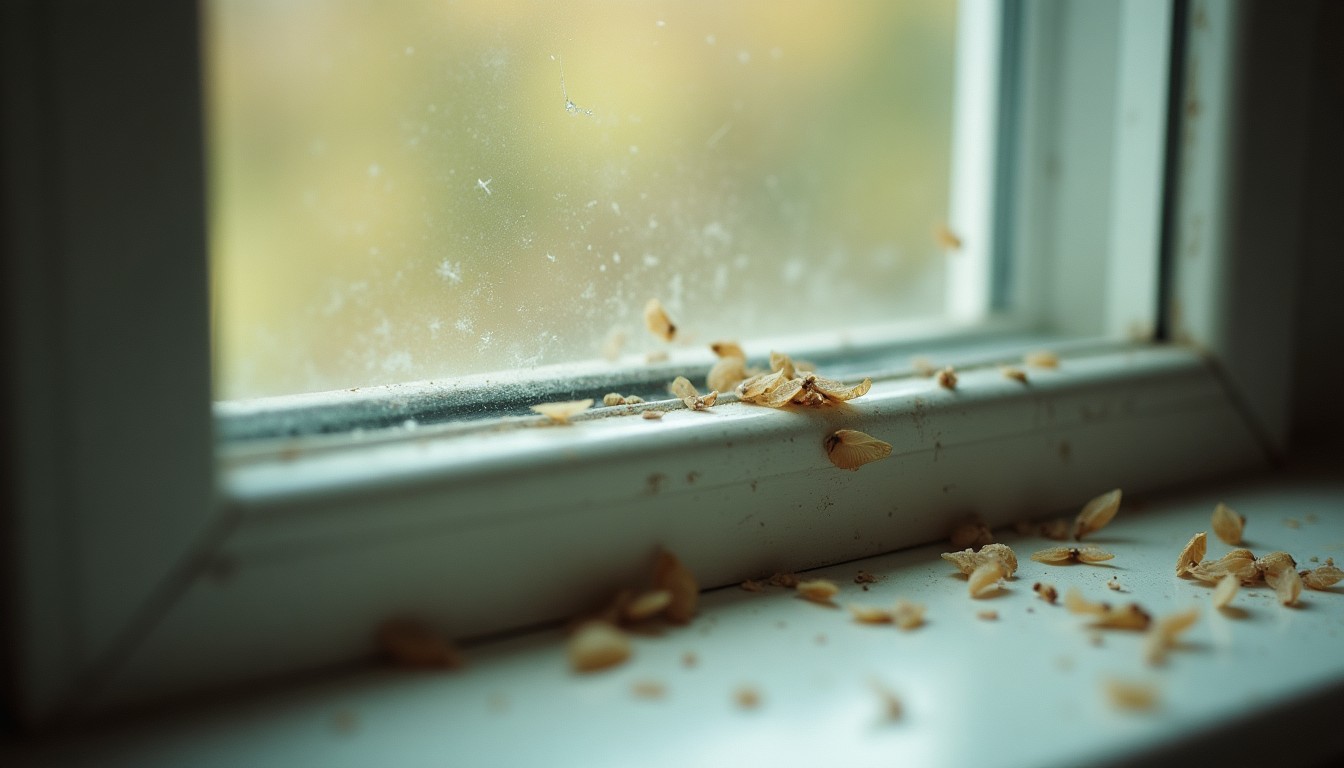
This is the distinction worth taking away. Swarmers outdoors, around a porch light or over a lawn, tell you termites are active in the area, which in most of the country is unremarkable. Swarmers emerging inside the building are, in the words of NC State extension, most certainly a sign of active infestation inside the structure.
The reason is simple. Swarmers do not fly in through a closed window. If they are appearing in a room, they came out of the structure or the soil beneath it. A mature eastern subterranean colony averages roughly 300,000 insects, and some run to several million, so the flight is the visible fraction of something considerably larger.
Swarmers indoors also die quickly. They need soil contact and humidity, and a carpeted living room offers neither, so what people usually find is a pile of shed wings on a sill or in a spider web near a window.
Telling a termite flight from an ant flight
Carpenter ants produce winged reproductives in spring too, and the two get confused constantly. Size is not the discriminator, since a carpenter ant reproductive can be larger than a termite alate.
| Feature | Termite swarmer | Ant swarmer |
|---|---|---|
| Antennae | Straight and beaded | Elbowed |
| Wings | Four, all roughly equal in size and shape | Front pair noticeably larger than the rear pair |
| Waist | Broad, no narrowing | Pinched |
| Wings after landing | Shed readily, often found in piles | Usually retained |
Our separate guide to telling termites from flying ants goes through this in more detail, including what to keep if you want an identification confirmed.
What to do with a swarm
- Collect some of them. A few insects or shed wings in a sealed bag or a pot of rubbing alcohol is enough for an inspector to identify the species, and species determines treatment.
- Note where they came from. The emergence point matters more than the insects. Look for a crack in a slab, an expansion joint, a plumbing penetration, or mud tubes on foundation walls.
- Do not spray them. Killing swarmers in the room has no effect on the colony and removes the evidence. A vacuum is fine for clearing them up.
- Book an inspection rather than a treatment. The inspection establishes species, extent and conducive conditions. See what a termite inspection costs and covers.
- Be wary of same-day pressure. A swarm is alarming and some sales approaches make use of that. The colony has been there for years; a considered decision this week is not a risk.
Once species and extent are known, the treatment options and their costs are covered in termite treatment costs, and the question of ongoing cover in termite bonds and warranties.
Drywood and dampwood termites are a separate calendar
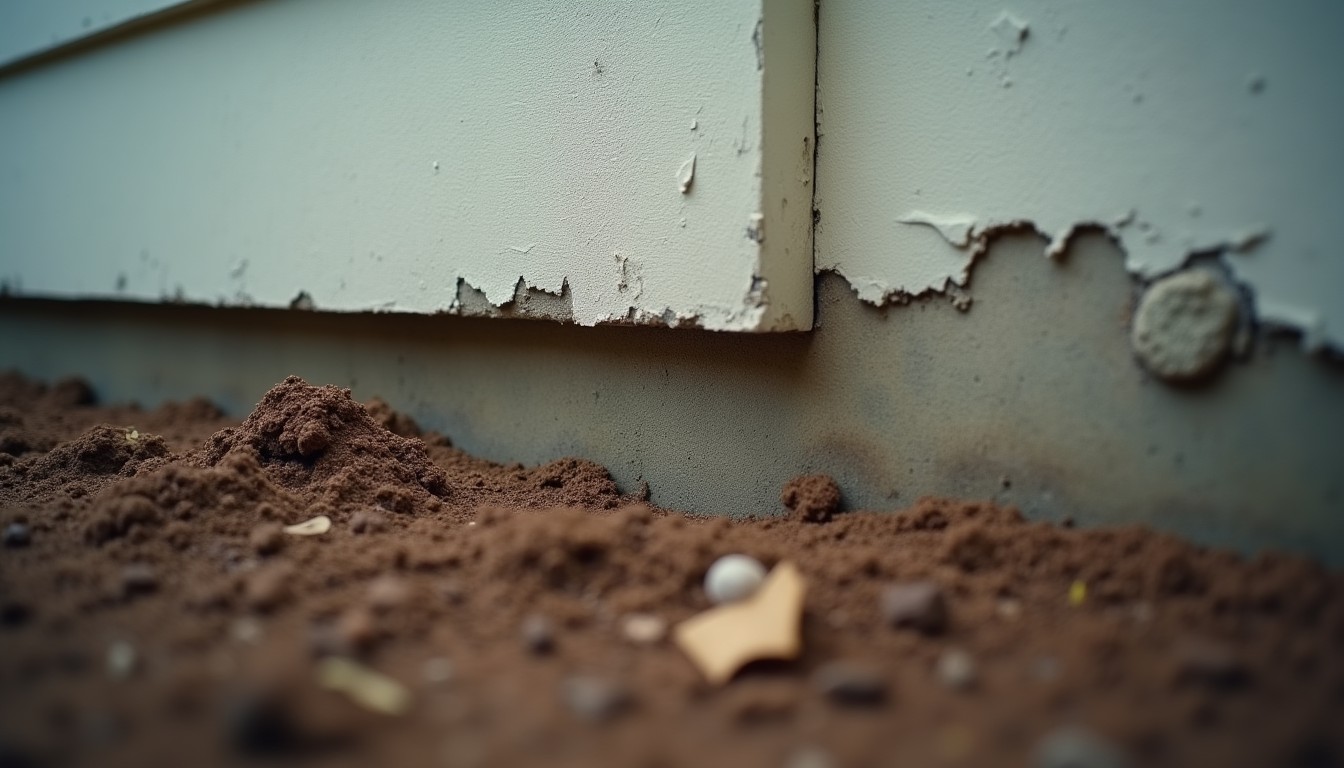
Everything above concerns subterranean termites, which live in the soil and need moisture contact. Drywood termites live entirely inside the wood they eat and leave a quite different signature: galleries cut across the grain rather than following it, and hard fecal pellets with six flattened sides that collect in small piles below exit holes. Dampwood termites make large open galleries in wood that is already wet.
If what you are finding is pellets rather than mud, the problem and the treatment are different. Tenting and fumigation exists mainly for drywood infestations, and the wider question of what damage looks like is covered in our guide to reading wood damage. For the year-round picture across other pests, see the seasonal pest calendar.
Frequently asked questions
When do termites swarm?
It depends on the species. In the eastern United States, eastern subterranean termites swarm February through April, dark southeastern April through June, Formosan April through July, and light southeastern July through September. Native species fly during the day; the Formosan flies from dusk until about midnight. Western subterranean termites swarm on spring or autumn afternoons after a soaking rain.
Does a termite swarm mean my house has termites?
If the swarmers emerged inside the building, yes. NC State extension describes indoor swarmers as most certainly a sign of active infestation within the structure, because swarmers do not fly in from outside. Swarmers outdoors mean termites are active in the area, which is common across most of the country and not by itself evidence about your building.
What weather makes termites swarm?
Warm, gusty days, particularly after recent rain. That is why swarms across a neighbourhood often occur on the same afternoon: colonies respond to the same conditions. Western subterranean termites specifically swarm on clear days after a soaking rain.
How can I tell a termite swarmer from a flying ant?
Look at three features rather than size. Termites have straight beaded antennae, four wings of roughly equal size, and a broad waist. Ants have elbowed antennae, a front pair of wings larger than the rear pair, and a pinched waist. Termites also shed their wings readily, which is why piles of wings appear on sills.
How long do termite swarmers live indoors?
Not long. They need soil contact and humidity to found a colony, and indoor conditions provide neither, so they die quickly and leave shed wings behind. Their inability to survive indoors is why the wings, rather than live insects, are usually what people find.
Should I spray termite swarmers?
No. Killing the swarmers in the room does nothing to the colony that produced them and destroys evidence an inspector could use. Vacuum them up, keep a few specimens, and note where they emerged.
How big is a termite colony?
Mature eastern subterranean colonies average roughly 300,000 insects, and some reach several million. Formosan colonies are larger on average than native subterranean colonies, which is part of why the species is treated as a more serious structural threat.
Sources
- University of Georgia Extension, Biology of Subterranean Termites in the Eastern United States, Bulletin 1209. caes.uga.edu
- NC State Extension, Biology and Behavior of Eastern Subterranean Termites. content.ces.ncsu.edu
- UC Statewide IPM Program, Subterranean and Other Termites. ipm.ucanr.edu
- Penn State Extension, Carpenter Ants. extension.psu.edu