Termites vs Flying Ants: How to Tell Them Apart
Three features settle it: waist, antennae and wings. The answer decides between a $275 to $1,600 termite job and a $250 to $500 ant job.
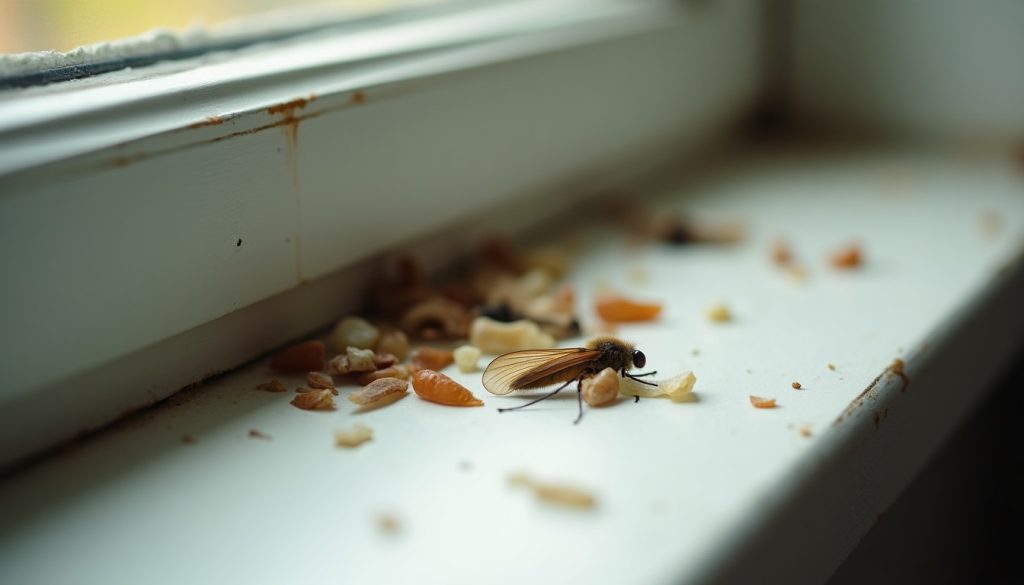
Termite swarmers have two pairs of equal-length wings, straight beaded antennae and a broad waist. Flying ants have a front wing pair longer than the rear, elbowed antennae and a pinched waist. Both swarm indoors in spring, and getting the identification right decides whether you are looking at a $275 to $1,600 termite job or a $250 to $500 carpenter ant job.
This is the single most consequential identification in residential pest control, and it is made from three features you can check on a specimen in under a minute.
The three-point check
| Feature | Termite swarmer | Flying ant |
|---|---|---|
| Waist | Broad, no pinch | Narrow, clearly pinched |
| Antennae | Straight, beaded | Bent, elbowed |
| Wings | Two pairs of equal length | Front pair longer than rear |
| Wing shedding | Sheds readily, piles of wings common | Less readily shed |
| Body colour | Often pale to dark brown, uniform | Usually darker, more defined segments |
Wings are the easiest check on a dead specimen and the reason piles of discarded wings on windowsills are diagnostic. Termites shed readily after swarming, so the wings often outlast the insects.
What each one means for the structure
Termites eat wood. Carpenter ants excavate it to nest without consuming it. That difference shows up in the debris.
- Termites leave mud tubes on foundation walls and no sawdust anywhere, because the wood is consumed.
- Carpenter ants leave coarse sawdust containing insect body parts, since the excavated material is pushed out.
- Powderpost beetles, a third possibility, leave tiny holes with flour-fine powder.
Our guides to termite treatment costs and wood destroyers beyond termites cover each, and early signs of infestation sets out the wider evidence.
Why swarmers indoors are not a new problem
Winged reproductives appear when a colony reaches maturity, which takes years for termites. Seeing them indoors means an established colony has been present for some time and has now produced its reproductive caste.
So a swarm is a signal to inspect rather than evidence of a recent arrival. It is also seasonal, concentrated in spring, which is why our seasonal pest calendar puts termite inspection in that window.
Swarmers emerging indoors are more significant than swarmers outdoors. Indoors indicates the colony is in or under the structure. Outdoors may simply mean a colony nearby.
What it costs to get it wrong
| Identification | Treatment | Typical cost |
|---|---|---|
| Subterranean termites | Liquid soil barrier or bait system | $275 to $1,600, whole-home around $1,500 |
| Carpenter ants | Targeted treatment to nest and galleries | $250 to $500, up to $1,500 severe |
| Powderpost beetles | Treatment or fumigation | $500 to $5,000 |
Treating carpenter ants as termites means paying for a soil barrier that does nothing about a nest in a wall void. Treating termites as ants means a spot treatment while the colony continues, and standard US homeowners policies generally exclude termite damage.
What to do with a specimen
- Collect several, including wings, in a sealed bag or container.
- Photograph one clearly from the side, where waist and antennae are visible.
- Note exactly where they emerged, which room, which window, which wall.
- Note the date, since spring swarming supports a termite identification.
- Do not spray them. Killing visible swarmers changes nothing about the colony and destroys the specimens an inspector needs.
- Book an inspection rather than a treatment, so the diagnosis precedes the quote. Our guide to termite inspection and WDI reports covers what that involves.
Frequently asked questions
How do I tell termites from flying ants?
Check three features. Termite swarmers have a broad waist with no pinch, straight beaded antennae, and two pairs of wings of equal length. Flying ants have a clearly pinched waist, bent elbowed antennae, and a front wing pair longer than the rear. Wings are the easiest check on a specimen.
What does it mean if I see flying termites indoors?
An established colony has reached reproductive maturity, which takes years, and it is in or under the structure. Swarmers indoors are more significant than outdoors, where a nearby colony may be the source. It is a signal to book an inspection rather than evidence of a recent arrival.
Should I spray flying ants or termites I see indoors?
No. Killing visible swarmers does nothing to the colony that produced them and destroys the specimens an inspector needs for identification. Collect several including wings, photograph one from the side, note where and when they emerged, and book an inspection.
How much does it cost if it turns out to be termites?
Termite treatment runs $275 to $1,600 for most homes, with whole-home jobs averaging around $1,500. Carpenter ants cost $250 to $500 typically, rising toward $1,500 for established colonies. Misidentifying one as the other means paying for treatment that does not address the actual problem.
Sources
- Identification features compiled from pest control industry and extension sources, 2026.
- Contractor-reported treatment pricing compiled by home services marketplaces, 2026.