What Attracts Termites to a House, and What Does Not
Termites are attracted to moisture, wood touching soil, and buried or stacked cellulose such as stumps, firewood and form boards, not to your house as such. Subterranean termites live in the soil and tunnel outwards looking for food; they find a house when its damp soil, leaks or wood contact put food and water in their path. Mulch matters mostly because it holds moisture, not because termites want to eat it. Fixing water and wood contact does more than any repellent.
Most lists of termite attractants read like a catalogue of everything made of wood. That is not how extension entomologists describe it. The University of Kentucky’s Michael Potter puts the problem in two lines: termites are attracted to moisture, and they are more likely to infest if the soil next to the foundation is consistently moist. Everything else on the list is a variation on wet soil, wood in contact with it, or a hidden way in.
The checklist: what attracts termites and what to do about it
This table covers the conditions extension services name most often for subterranean termites, the group that does most structural damage in the US. Costs are relative, because the bill depends entirely on what the fix involves at your house.
| Factor | Why it matters | Fix | Typical cost |
|---|---|---|---|
| Wood touching soil (siding, door frames, lattice, steps, posts) | Gives termites food, moisture, shelter and a hidden entry in one place | Keep wood at least 6 in above grade; set posts and steps on concrete bases; trim lattice | Low to moderate; regrading can be a contractor job |
| Wet soil at the foundation | Subterranean termites have very little resistance to drying out | Grade soil to slope away; keep downspouts and splash blocks pointing out | Low for splash blocks, moderate for regrading or drains |
| Leaks: gutters, faucets, pipes, roof, AC condensate | Above-ground moisture lets termites survive away from the soil | Repair leaks; drain condensate to the outside, not under the crawl space | Low to moderate |
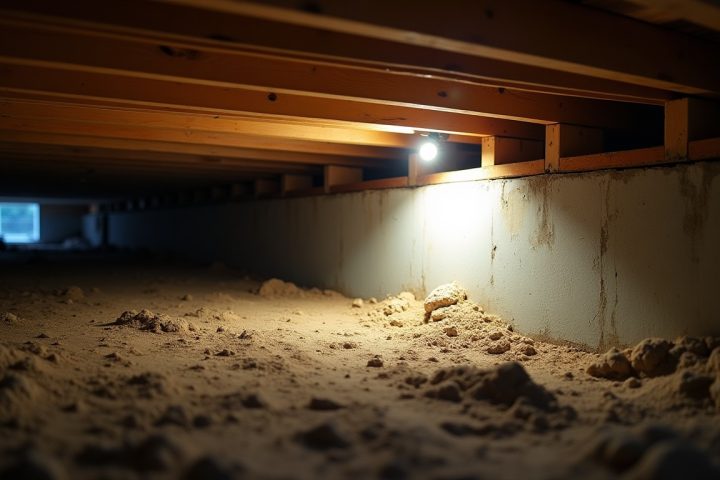
| Damp crawl space | Condensation on joists and subflooring keeps wood moist | Clear vents; cover about 75 per cent of the soil with 4 to 6 mil polyethylene | Moderate |
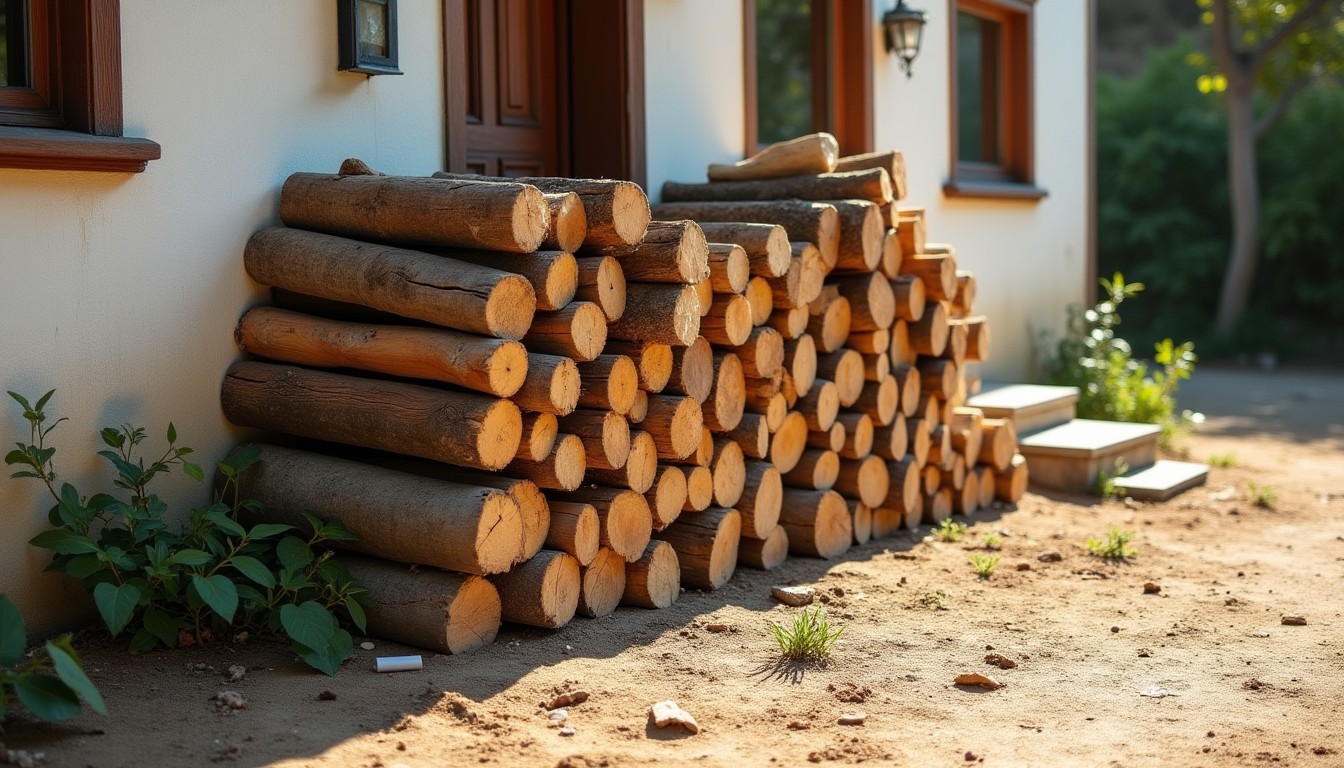
| Firewood, lumber, cardboard against the house | Food plus a hidden bridge that can bypass treated soil | Store away from the foundation and never in the crawl space | Free |
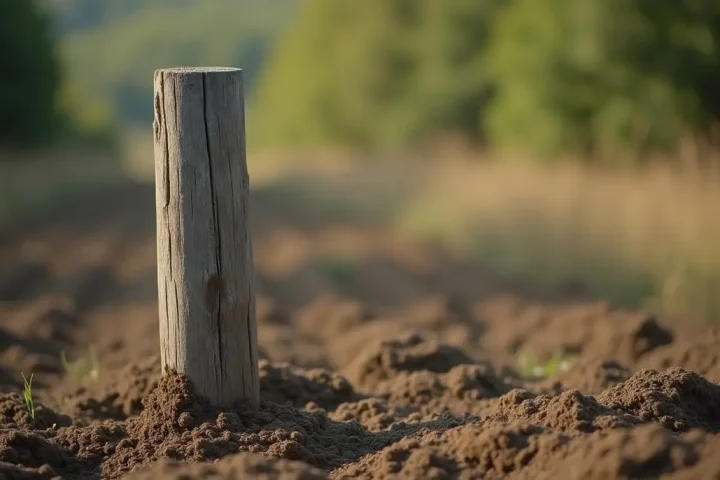
| Stumps, dead roots, buried form boards | Cellulose in warm, moist soil is a termite’s preferred setting | Remove where practical; do not bury construction debris | Low to moderate |
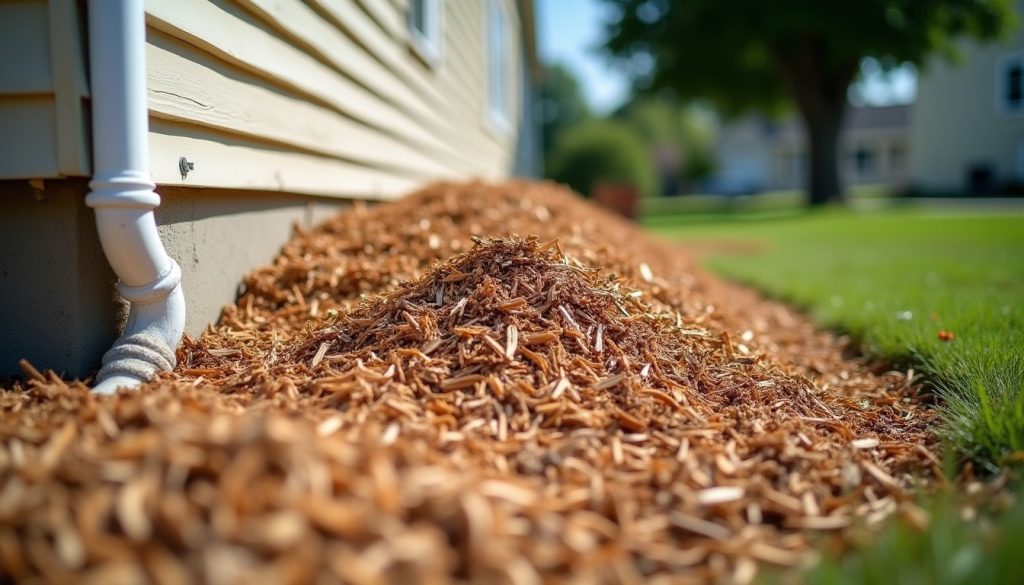
| Mulch or gravel piled against siding | Holds moisture in the soil beneath and hides activity | Use a couple of inches at most; keep it off siding and door and window frames | Free |
| Foundation cracks | Termites can use cracks as small as 1/32 in | Seal visible cracks; have the rest inspected | Low |
| Dense plants, ivy or vines on walls | Keeps soil damp, blocks vents and hides mud tubes | Plant back from the foundation; keep vents clear | Free to low |
The clearance figures come from the University of Kentucky (Entfact 605), NC State Extension and Utah State University, which all give at least 6 inches between soil and wood or siding. NC State adds a rule many homeowners break during garden projects: never dig up the soil within 12 inches of the house, because that is the strip that was, or will be, treated for termites.
Termites do not find your house from across the yard
The word “attract” suggests termites smell a house and march towards it. Subterranean termites do not work that way. They live in the soil in colonies that UF/IFAS puts at 100,000 to 1,000,000 termites, and workers tunnel outwards in search of food. Published foraging ranges vary by source: UF/IFAS gives up to 150 feet, an older UF/IFAS fact sheet 250 feet, and Iowa State up to 300 feet. Either way, a colony under your lawn or your neighbour’s already reaches your foundation.
Within that range, the search is part chance and part chemistry. A 2025 study in the journal Insects by Lee and Phelan found eastern subterranean termites were attracted to moist wood mulch, and that carbon dioxide at the concentration mulch gives off produced a response comparable to the mulch itself. The termites’ response peaked at around 14,000 ppm of carbon dioxide. The same paper notes earlier work in which decaying wood drew termites from 12 to 18 cm away, while termites tunnelled within 2.5 mm of sound wood without finding it.
Texas A&M’s urban entomology programme describes the same preference from the other side: termites are attracted to odours of wood-decaying fungi that make wood more palatable and easier to penetrate. Wet, rotting wood is the strongest signal a termite can detect. Dry, sound wood is close to invisible to it.
That is the practical reason moisture control works. You cannot move the colony, but you can stop giving its workers the cues and the water they need once they arrive.
Does mulch attract termites?
Mostly through moisture, not as food. Three lines of evidence point the same way.
- Termites eat mulch, but poorly. In a UF/IFAS study of six Florida landscape mulches (Duryea, fact sheet FOR 79), subterranean termites consumed all of them, ate a utility mulch of oak and cherry prunings most, and avoided melaleuca. Today’s cypress mulch is cut from young trees with little heartwood, and termites ate it as readily as cypress sapwood.
- Termites fed on mulch did badly. A Maryland study by Long, Thorne, Breisch and Douglass (Environmental Entomology, 2001) found termites consumed organic mulches at rates similar to preferred foods but suffered significantly lower survival, pointing to poor nutrition rather than toxicity.
- Gravel is not a cure. The same Maryland study found gravel mulch gave higher feeding rates in underground monitors than organic mulches or bare soil, and mulch type had no significant effect on whether termites found the monitors. The University of Kentucky reaches the same conclusion: crushed stone and pea gravel are comparable to wood mulch because they also keep the soil beneath moist.
Iowa State’s answer to whether mulch attracts termites to homes is a flat no, while still advising homeowners to keep it several inches away from the foundation and off siding and windowsills. The University of Kentucky treats it as moisture and insulation from temperature extremes, and says it makes little difference whether the mulch is cypress, pine bark or eucalyptus. The sensible reading: mulch is safe to use, it should be thin, a couple of inches is usually enough, and it should never bury the siding or the top of the foundation where you would otherwise see mud tubes.
One genuine mulch risk is moving termites rather than attracting them. Texas A&M Extension (E-367) names infested railroad ties and shoring timbers used in landscaping as the main way Formosan subterranean termites spread in Texas, with cargo pallets and mulch and sod from infested areas as other sources.
Swarmers, porch lights and what triggers termites to come out
Winged termites are the only stage most people ever see, and they are where the “attracted to light” idea comes from. It is true for some species and not others.
- Native subterranean termites (Reticulitermes) usually fly by day. UF/IFAS describes flights of the eastern and dark southern subterranean termites on warm, sunny, windless early afternoons, usually after rain. UC IPM describes swarms on warm, sunny days after fall or spring rains.
- Formosan subterranean termites swarm at dusk on calm, humid evenings and are attracted to lights, according to both UF/IFAS and Texas A&M, which is why they gather at windows and light fixtures.
- Drywood termites vary by species and region: Texas A&M says those in Texas swarm at night and come to artificial light, while UC IPM describes California drywood swarms in daytime during summer and fall.
Outdoor lights therefore draw swarmers that are already flying; they do not create an infestation. A swarm inside the house is different, because it usually means a colony is already feeding in the structure. Our termite swarm season calendar covers flight timing by species and region, and termites versus flying ants shows how to tell them apart.
When people record subterranean termites
The Pest Control Brief analysis of iNaturalist research-grade records, pulled October 2026, shows subterranean termite records peak twice in the year. The index runs at 166 in March and 195 in April, falls to 22 in July, then climbs to 207 in November. An index of 200 means termites are twice their usual share of everything people record that month.
The spring peak lines up with the swarm calendars for eastern native species. The November peak needs more care. UC IPM notes that swarms follow fall rains as well as spring ones, but these records include wingless workers photographed in logs and stumps, and the data cannot say which caste each photo shows. Carpenter ant records, by contrast, build from March to a June high of 165 and fade in winter, which is one reason winged ants in summer are rarely termites. These are records of where and when people photographed termites, mostly outdoors, not counts of infested homes.
Termites in the house: good or bad?
Outdoors, termites do useful work. UF/IFAS calls their role as decomposers of dead and fallen trees a valuable one. Inside a structure the same appetite becomes damage, and EPA notes that termites cause billions of dollars in structural damage each year, with property owners spending over two billion dollars to treat them.
The signs that the conditions above have turned into an infestation are consistent across extension sources: pencil-wide mud tubes on foundations, piers and joists; swarmers or shed wings on windowsills; and wood hollowed along the grain and lined with soil. Utah State describes working mud tubes as a quarter inch to an inch across, and exploratory tubes as narrower than a sixteenth of an inch. For telling termite galleries from other damage, see our guide to wood damage identification.
What reduces the attraction, and what does not
What works
- Dry the perimeter. Gutters, downspouts, splash blocks, grading and sprinkler heads aimed away from the foundation.
- Break wood-to-soil contact. At least 6 inches of clearance, and posts on concrete bases. Kentucky warns that posts or stairs embedded in concrete are still vulnerable because they usually extend through to the soil.
- Remove buried cellulose. Stumps, roots, form boards and lumber scraps.
- Keep the inspection strip visible. Thin mulch, plants set back, vents clear.
- Get an inspection. Kentucky notes that buildings have many hidden openings, and the best way to prevent infestation is protection with a termiticide applied by a licensed firm. Our guides to termite inspection cost and termite treatment cost cover what to expect.
What does not
- Pressure-treated wood as a shield. Kentucky says it is still vulnerable: termites enter through cracks and cut ends, or tunnel over the surface.
- Swapping wood mulch for gravel. Gravel also holds soil moisture.
- Relying on a scent. No smell has been shown to keep subterranean termites away from a house.
Termite pressure also varies hugely by region; our termite zones map shows where the risk is highest.
Frequently asked questions
What is a termite’s worst enemy?
Ants. Laboratory work by Wells and Henderson (1993) exposed native and Formosan subterranean termites to predation by red imported fire ants, and Purdue researchers Buczkowski and Bennett (2007) used protein marking to show that woodland ants prey on eastern subterranean termites in the field. That pressure is one reason termites stay sealed inside soil, wood and mud tubes. Ants in the yard will not protect a house, though.
What triggers termites to come out?
Swarming is the main reason termites appear in the open. Native subterranean termites usually fly on warm, sunny days after rain, and UC IPM describes swarms after both spring and fall rains. Formosan termites swarm at dusk on humid evenings. Workers stay hidden because they dry out easily, so seeing them in the open usually means you have broken into a mud tube or infested wood.
Which smell do termites hate?
No smell reliably repels subterranean termites from a house. Some woods resist them: in UF/IFAS trials termites avoided melaleuca and cypress heartwood. Orange oil is sold for drywood termites, but UC IPM notes that lab and field tests from two universities question the efficacy of d-limonene. Termites are, if anything, drawn by smells: the odours of wood-decay fungi and carbon dioxide from moist wood.
What kills termites immediately?
Nothing a homeowner can apply kills a colony on the spot. Subterranean termites have very little resistance to drying out, which is why they build mud tubes, but the colony itself stays protected in the soil. Professional options such as soil termiticides, baits, or fumigation for drywood termites work over days to months. Termite control is a job for a state-licensed firm, following the product label.
Can termites harm people?
Termites feed on wood and other cellulose, not on people, and extension services treat them as a structural pest. The risk is to the building. Any health question around a termite job is usually about the treatment; EPA says termiticides used according to label directions meet current safety standards, while stressing that labels must be followed with care. If you have a health concern, speak to a doctor.
Sources
- University of Kentucky Entomology, Entfact 605: Protecting Your Home from Termites, Michael F. Potter, revised 2018.
- NC State Extension, Termites: Preventing Problems in Existing Homes, Waldvogel, Alder and Hayes, 2017, reviewed 2022.
- Utah State University Extension, Utah Pests fact sheet: Subterranean Termites.
- UF/IFAS Extension, FOR 79: Landscape Mulches: Will Subterranean Termites Consume Them?, Mary L. Duryea, 2000, reviewed 2014.
- UF/IFAS Featured Creatures, Native Subterranean Termites: Reticulitermes species, Chouvenc, Su and Scheffrahn.
- UF/IFAS Extension, Formosan Subterranean Termite fact sheet (archival EDIS).
- Texas A&M AgriLife Extension, E-367: Formosan Subterranean Termites; Texas A&M Urban Entomology, Native Subterranean Termites.
- University of California Statewide IPM Program, Pest Notes: Termites (7415) and Drywood Termites (7440).
- Iowa State University Extension, Does landscape mulch lead to termites in your home?, Donald Lewis, 2001.
- Long, Thorne, Breisch and Douglass, Effect of organic and inorganic landscape mulches on subterranean termite foraging activity, Environmental Entomology 30(5), 2001.
- Lee and Phelan, Reticulitermes flavipes response to wood mulch and workers mediated by attraction to carbon dioxide, Insects, 2025.
- Wells and Henderson, Fire ant predation on native and introduced subterranean termites in the laboratory, Ecological Entomology, 1993.
- Buczkowski and Bennett, Protein marking reveals predation on termites by the woodland ant, Aphaenogaster rudis, Insectes Sociaux 54, 2007.
- US EPA, Termites: How to Identify and Control Them.
- The Pest Control Brief analysis of iNaturalist research-grade records, pulled October 2026.