Bird Control Cost 2026: Spikes, Netting and Cleanup
Bird control averages $500. Spikes cost $2 to $6 per linear foot plus $200 to $500 installation. The dropping cleanup is usually the bigger line.
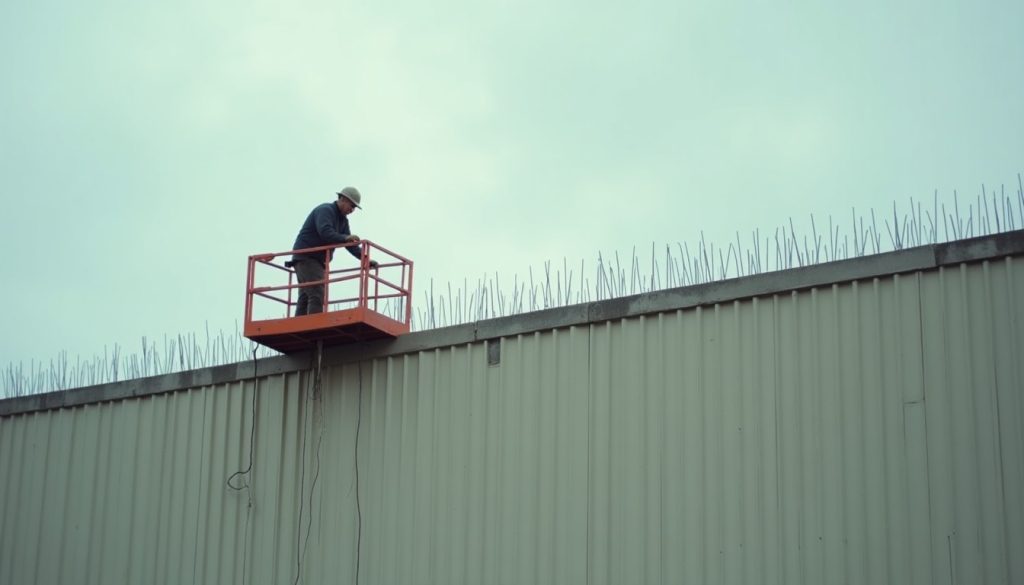
Bird control averages $500, ranging from $100 to $2,000 depending on scope. Most companies charge a flat $100 to $250 for inspection and assessment, then $50 to $150 an hour for the work. Bird spikes cost $2 to $6 per linear foot in materials plus $200 to $500 for professional installation. Full jobs including netting, nest removal and dropping cleanup reach $2,000.
Bird work is the pest category least like the rest of the trade. There is usually no chemical application, the deliverable is physical exclusion hardware, and the driver of cost is access and linear footage rather than pest pressure.
What bird control costs in 2026
| Item | Cost | Basis |
|---|---|---|
| Inspection and assessment | $100 to $250 | Flat fee |
| Subsequent labour | $50 to $150 per hour | Height and access dependent |
| Bird spikes, materials | $2 to $6 per linear foot | Polycarbonate to stainless steel |
| Spike installation | $200 to $500 | Varies with height and access |
| Full programme with netting and cleanup | Up to $2,000 | Assessment, capture, nest removal, exclusion |
| National average | Around $500 | Overall range $100 to $2,000 |
Contractor-reported ranges compiled in 2026. No federal price index exists for pest control services.
Deterrent methods compared
| Method | Cost basis | Best for | Limitation |
|---|---|---|---|
| Spikes | $2 to $6 per linear foot plus install | Ledges, signage, parapets, beams | Only protects the ledge it covers |
| Netting | Priced by area and access | Warehouses, loading docks, courtyards | Higher install cost, must be tensioned properly |
| Wire and post systems | Per linear foot | Ledges where appearance matters | Less effective against smaller birds |
| Electric track | Per linear foot, higher | High-pressure ledges | Needs power and maintenance |
| Visual and sonic deterrents | Low | Short-term or supplementary use | Birds habituate, effect often temporary |
Stainless steel spikes cost more upfront than polycarbonate but resist corrosion for over a decade, which usually makes them the cheaper choice on any exposed elevation you do not want to revisit.
Why the cleanup is the expensive part
Accumulated droppings are a separate job from exclusion, and they are frequently the larger line on a commercial quote. Droppings are corrosive to some building materials, create slip hazards on walkways and roof surfaces, and their removal may require containment and specific protective equipment.
That is labour at $50 to $150 an hour before any hardware goes up, which is why a quote covering exclusion alone can look far cheaper than one covering the actual condition of the site. Ask explicitly whether cleanup and disinfection are included.
Why this matters commercially
For food handling and warehouse operations, birds are an audit issue rather than an aesthetic one. Facilities subject to third-party inspection are generally expected to demonstrate active exclusion, documented inspection and corrective action where activity is found.
The economics follow the same logic as every other commercial pest programme: you are buying documented, repeatable attendance. Since payroll is 36% of pest control revenue and technicians must generate roughly $139,825 a year, height access work priced hourly reflects real time and real risk. Our guide to commercial pest control costs covers how facility contracts are structured.
What to establish before signing
- Which species, since legal protections differ and some birds are federally protected in the United States.
- Whether nests are currently active, which can restrict what may lawfully be removed and when.
- Linear footage or area to be covered, which is the unit the price is built from.
- Whether cleanup and disinfection are included or quoted separately.
- What warranty covers the hardware and whether it includes re-tensioning netting.
- How access is achieved, since ladder work, lifts and roof access carry different costs and different risk.
Frequently asked questions
How much does bird control cost?
The national average is around $500, with a range of $100 to $2,000. Most companies charge $100 to $250 for inspection then $50 to $150 an hour for the work. Bird spikes cost $2 to $6 per linear foot in materials plus $200 to $500 for installation.
Are bird spikes or netting better?
They solve different problems. Spikes protect a specific ledge, parapet or beam and are cost-effective per linear foot. Netting excludes birds from a whole volume such as a loading dock or courtyard and costs more to install but covers far more. Many commercial sites use both on different elevations.
Why is bird dropping cleanup so expensive?
Because it is hourly labour at $50 to $150 before any hardware is fitted, and it may require containment and specific protective equipment. Droppings are corrosive to some building materials and create slip hazards. A quote covering exclusion but not cleanup is not comparable to one covering both.
Do bird deterrent gels and sonic devices work?
Visual and sonic deterrents are inexpensive and can help in the short term, but birds commonly habituate to them, so the effect often fades. They are generally better used to supplement physical exclusion such as spikes or netting than as a standalone solution on a site with established roosting pressure.
Sources
- Contractor-reported price ranges compiled by Yelp cost guides and commercial bird control providers, 2026. Sample sizes and methods are not published by those sources.
- U.S. Census Bureau, Statistics of U.S. Businesses 2022, NAICS 561710, for payroll share and revenue per employee.