Do Bats Chew Through Insulation or Wood? What Bats Damage
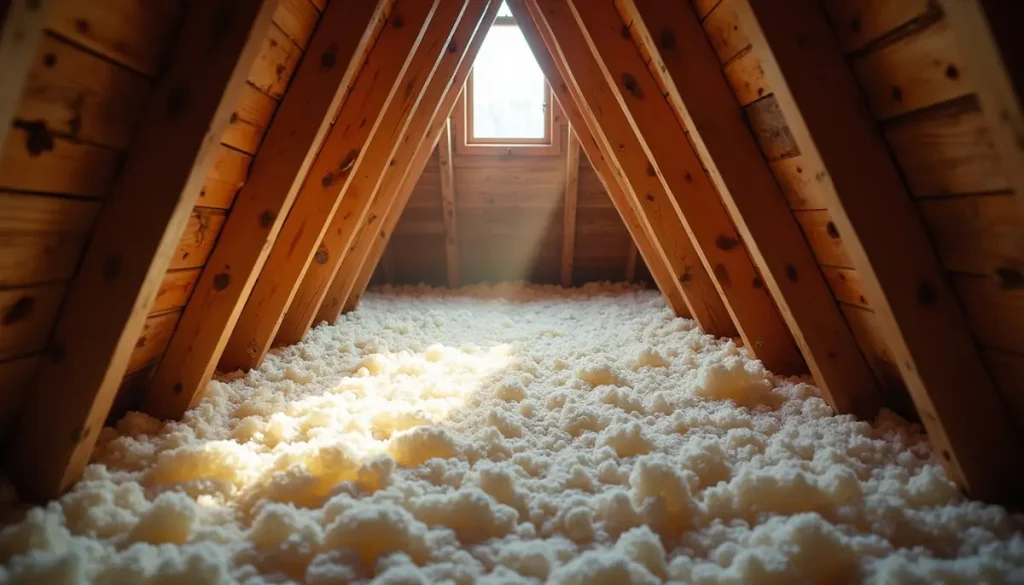
No, bats do not chew through insulation, wood or foam. University of Nebraska Extension says bats “do not chew wood, caulk, or structural materials” and “cannot create their own entry holes”; they use gaps as small as 3/8 inch that already exist. What bats do to insulation is soil it: droppings and urine soak in, stain the ceiling below and leave a lasting odour.
The claims, checked
Bat damage gets described as if bats were rodents. Compiled by The Pest Control Brief from University of Nebraska Lincoln Extension G1667 (Bats in and Around Structures, 2012), Purdue Extension ADM-11 (Bats), Penn State Extension and the Florida Administrative Code.
| Claim | What the evidence says |
|---|---|
| Bats chew through insulation | No. Nebraska: insectivorous bats “have small needle-like teeth that crush insect exoskeletons. They do not chew wood, caulk, or structural materials.” |
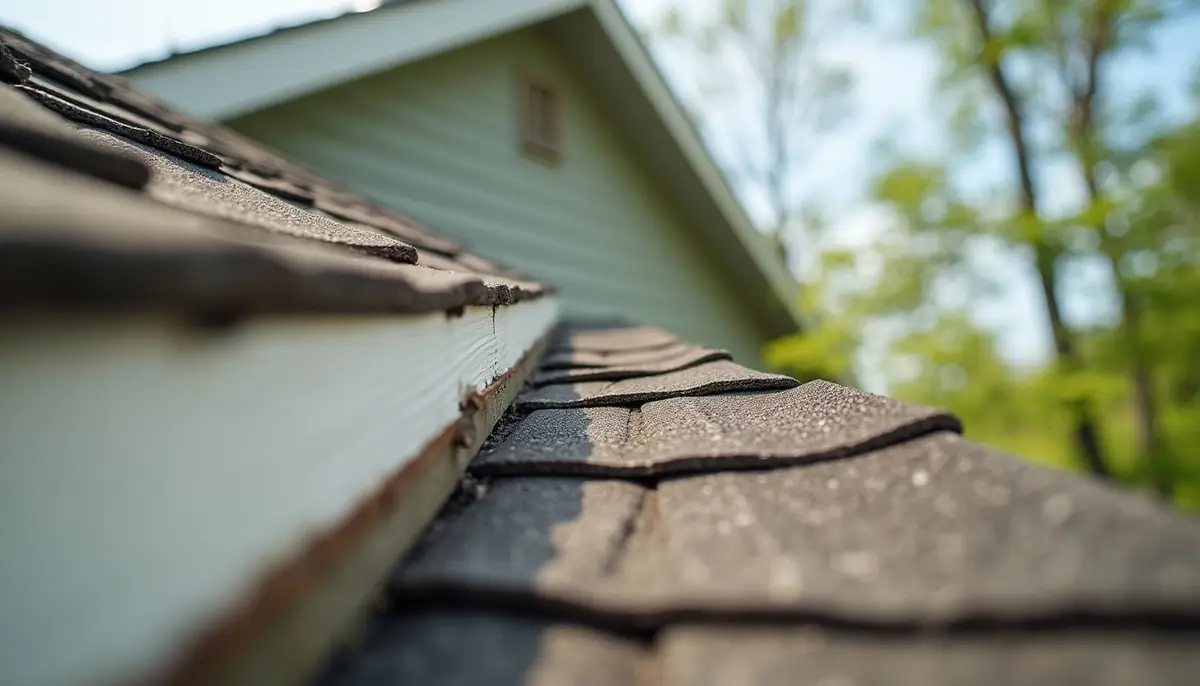
| Bats chew new holes to get in | No. Nebraska: “bats cannot create their own entry holes.” They use roof-edge gaps, vents and deterioration; Purdue says 3/8 inch is enough. |
| Bats chew wiring | No extension source we read attributes wiring damage to bats. Chewed cables point to rodents or squirrels. |
| Bats burrow or nest in insulation | Purdue lists roost sites as concealed voids (roof, ceiling and brick voids) or exposed joists and rafters. They hang and cluster; they do not build nests or tunnel. |
| Bats ruin insulation | Yes, by contamination. Purdue: droppings and urine “stain walls and ceilings” and cause “objectionable, persistent odors”. |
| Bats will eat through spray foam | No, but foam is still the wrong seal. Nebraska says foam insulation “will degrade under UV light and is not recommended”; Purdue lists foam sealants only for temporary exclusion. |
| Old guano is harmless | No. Purdue links long-term accumulation in attics to histoplasmosis; disturbing old piles is the risk. |
Why bats cannot chew like a mouse or squirrel
The difference is the teeth. Rodents have incisors that grow continuously and must be worn down by gnawing, which is why Nebraska Extension says squirrels enlarge any hole smaller than 1.5 inches by gnawing, and why mice work through foam. Bats have small, sharp teeth built for crushing beetle and moth shells. The big brown bat, the species most often found in US buildings according to both Purdue and Nebraska, is about 4 inches long and weighs about half an ounce; the little brown bat is about 3 inches and a quarter of an ounce. Neither has the jaw or the incisor design to strip wood or cut insulation.
That changes where to look. If you find chewed insulation, gnawed wood or tunnels through batts, the animal is a rodent or squirrel, whatever else lives up there. Our attic guide to mice in the attic, their noises and droppings covers the most common one.
Our guide to squirrels in the attic explains why their gnawing is the real fire risk. A bat colony and a mouse problem can share an attic, and the repairs differ.
What bats actually do to insulation
Guano and urine
Bats roost in one area, in a void or hanging from joists and rafters, and their droppings and urine fall on whatever is below. Nebraska describes droppings and urine that “accumulate beneath a colony of bats over time, leading to staining and a rather pungent odor in enclosed spaces”. Purdue adds that the odours “may attract insects and other bat colonies, even after the original colony is eliminated”. Colonies in buildings range from a few bats to several hundred, and Purdue says a colony of more than 200 is likely little brown bats.
Compressed and contaminated, not shredded
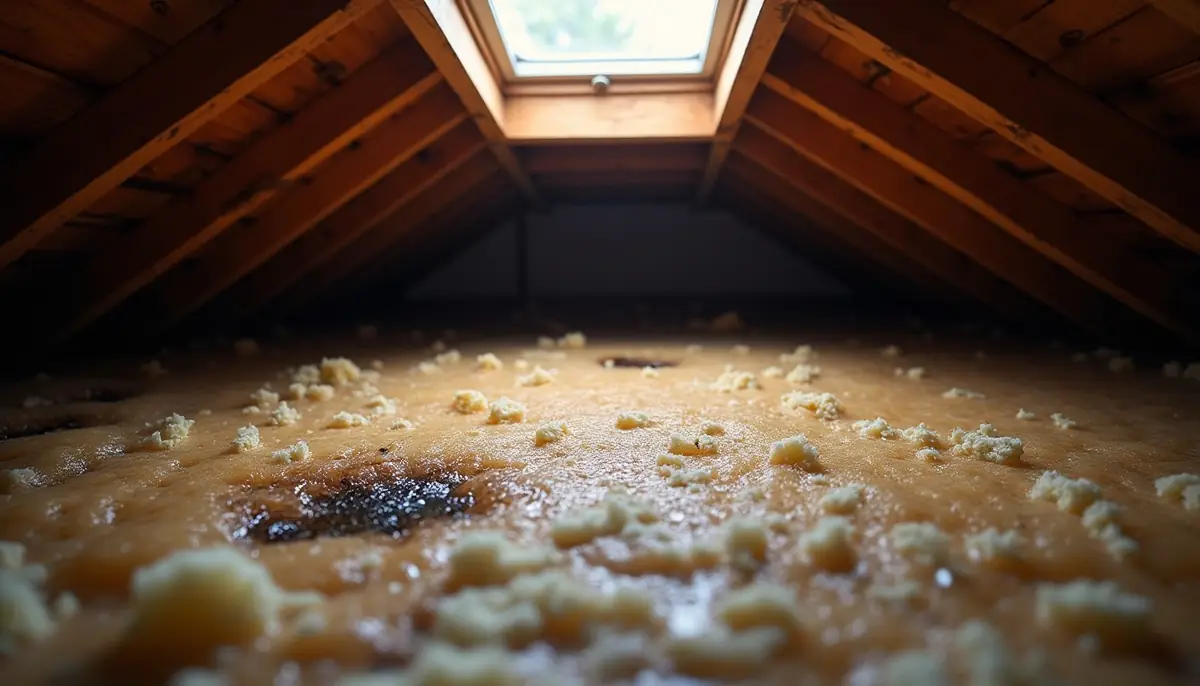
Insulation under a roost ends up soiled and soaked in patches, with dry droppings on top, while insulation away from the colony may be untouched; Nebraska places the build-up beneath the colony. Purdue notes old dried bat droppings can look like coffee grounds. There are no tunnels or shredded nests, which is the quickest way to tell bat damage from rodent damage.
The health part
Old guano is where the disease risk sits. Purdue links long-term accumulation in attics with histoplasmosis, a fungal lung infection, and the safe cleanup rules from CDC NIOSH and state health departments (wet the material, wear a proper respirator, bag everything) are set out in our guide to whether bats in the attic are dangerous. Anyone who feels unwell after attic work should see a doctor and mention the droppings.
If you find a grounded or dead bat while you are up there, do not touch it bare-handed; our page on finding a dead bat covers testing and handling.
How can you tell if bats are in your attic?
- The dusk exit. Purdue says bats emerge at dusk and most are out “within 60 minutes from the first bat’s exit”. Watch the roofline from outside on a warm evening.
- Droppings in one zone on the attic floor, windowsills or the ground below an exit; they crumble to powder, unlike mouse pellets, which our droppings identification guide shows side by side.
- Smudge marks around the entry, from oil and dirt rubbing off the fur; Nebraska notes resident bats use the same openings “every evening”.
- Squeaking and rustling at dusk and dawn from one part of the roof, rather than scurrying all night.
- A stained ceiling patch or a sharp ammonia odour in one room below the roost.
- A bat in the living space, most often in mid to late summer when young start to fly; our guide to a bat in the house says what to do and when a rabies assessment is needed.
Exclusion: the only fix, and when you are allowed to do it
Because bats cannot make holes, exclusion works unusually well: find every gap of 3/8 inch or more, fit one-way devices on the ones bats use, and seal the rest. Purdue’s method is to seal all but one or two main openings, wait 3 to 4 days, fit one-way exits, then seal those once there is no further activity. Nebraska describes one-way tubes about 2 inches wide and at least 3 inches long, angled downward, and advises leaving them at least a week.
Materials
For permanent sealing Purdue lists “1/4inch hardware cloth, sheet metal, plywood, mortar, or aluminum flashing”; Nebraska lists hardware cloth of 1/4 inch or smaller mesh, caulk, sealant and weatherproof foam strips. Bats will not chew through spray foam, but exposed foam breaks down in sunlight, so it is a poor permanent seal on a roofline. If mice or squirrels also use the attic, foam fails for a second reason, set out in our guide to whether mice eat through spray foam.
Timing: the pup season
Exclusion in summer seals flightless young inside, where they die and create a worse odour problem. Sources agree on the principle and differ on dates:
| Source | Do not exclude | Status |
|---|---|---|
| Florida Administrative Code 68A-9.010 | April 16 through August 14 | State rule: exclusion devices prohibited |
| Purdue Extension ADM-11 (Indiana) | Mid-May through mid-August | Extension guidance |
| Penn State Extension | May through July; one-way doors August to October | Extension guidance |
| Nebraska Extension G1667 | June through July; “wait until Aug. 1” | Extension guidance |
Penn State says bats enter the roost in late April or early May, young are born in late May or early June, and pups are flightless until around mid-July. Purdue says pups take 3 to 7 weeks to fly. The sources also disagree on litter size for big brown bats: Purdue says two young, Nebraska says one. Our iNaturalist data show both common building bats recorded most in July and August, when young are joining the flights.
Several states set their own legal window, so check your state wildlife agency before booking work.
Replacing insulation after bats
Soiled insulation under a roost is normally bagged out with the guano, work that needs containment and protective equipment rather than ordinary cleaning. Do it after exclusion, never before, so the colony does not simply re-soil the new material. Published estimates in our bat removal cost guide put exclusion at $100 to $400 per entry point and guano cleanup and disinfection at $500 to $5,000 for an attic up to 1,000 square feet.
New insulation is a separate line: our guide to borate-treated pest control insulation gives published material and installation figures.
Frequently asked questions
Will bats eat through spray foam?
No. Nebraska Extension says bats do not chew wood, caulk or structural materials, and that includes foam. But foam is a poor permanent seal for bat exclusion: Nebraska says foam insulation degrades under UV light and is not recommended, and Purdue lists foam sealants only for temporary use, with hardware cloth, sheet metal or flashing for permanent sealing.
What do bats hate the most in the house?
Light and disturbance at the roost, more than any smell. Purdue says bright lights may repel bats from small attics, while chemical repellents are “not very effective” and no ultrasonic device has been found effective. Nebraska warns against mothballs, whose ingredients EPA considers possible human carcinogens. Exclusion is the only lasting answer.
How can you tell if bats are in your attic?
Watch the roofline at dusk: Purdue says most bats leave within 60 minutes of the first exit. Inside, look for a concentrated pile of crumbly droppings, greasy smudges at a gap, a stained ceiling patch and an ammonia smell. Chewed insulation or wood points to rodents instead.
What is the fastest way to get rid of bats?
Outside the pup season, one-way exclusion. Seal every gap of 3/8 inch or more except the main exits, fit one-way tubes or netting there, wait about a week, then seal those too. In summer the fastest lawful route is usually to wait: Florida bans exclusion devices from April 16 through August 14.
Sources
- University of Nebraska Lincoln Extension, G1667, Bats in and Around Structures (D. M. Ferraro, revised November 2012).
- Purdue University Extension, ADM-11-W, Bats (J. Loven).
- Penn State Extension, Timing for Excluding Bats (M. C. Brittingham).
- Florida Administrative Code, Rule 68A-9.010, Taking Nuisance Wildlife.
- University of Nebraska Lincoln Extension, G1924, Controlling Tree Squirrel Damage to Property.
- The Pest Control Brief analysis of iNaturalist research-grade records, pulled October 2026 (b19 to b30 files).