Bird in the Bathroom Exhaust Vent: What to Do
Chirping or scratching above a bathroom fan in spring nearly always means a bird is nesting in the exhaust duct or roof cap, usually a house sparrow or European starling. Turn the fan off and leave it off. Neither species is protected by federal law, so its nest can come out now; a native bird’s nest with eggs or chicks must stay until the young fledge.
What you hear, and what to do about it
The sound and the season usually tell you which situation you are in. Compiled by The Pest Control Brief from Cornell Lab of Ornithology life histories, US Fish and Wildlife Service memorandum MBPM-2-02 (2025) and the US Department of Energy’s Building America Solution Center.
| Sound or sign | Likely situation | What to do |
|---|---|---|
| Rustling and scratching by day in spring, grass or straw at the outside cap | Adults building a nest | Before the first egg the nest counts as inactive: remove it and fix the cap |
| Quiet for days, then a single bird flying in and out of the cap | Female incubating eggs | Identify the bird before touching the nest |
| Loud, repeated cheeping, adults flying in with food | Chicks being fed | Non-native: can be removed; native: wait for fledging |
| Frantic fluttering, then silence, no nest material at the cap | A single bird trapped in the duct | Fan off, open the exterior flap, follow the trapped bird steps below |
| Scratching only at night, no birds seen | Probably mice or other mammals, not birds | Check the attic for droppings |
| Tiny moving specks and bites in the bathroom after the noise stops | Bird mites leaving an abandoned nest | Remove the nest; the mites cannot live on people |
| Bees crawling from the fan grille | A bee colony in the ceiling void, not a bird | Leave the fan off and do not spray into it |
Starlings and sparrows forage by day, so scratching that only happens at night points elsewhere; our guide to mice in the attic and the noises they make covers the usual culprit.
Bees at the grille have their own route in and their own rules, set out in our guide to why bees end up in the bathroom.
Can the bird get into the house?
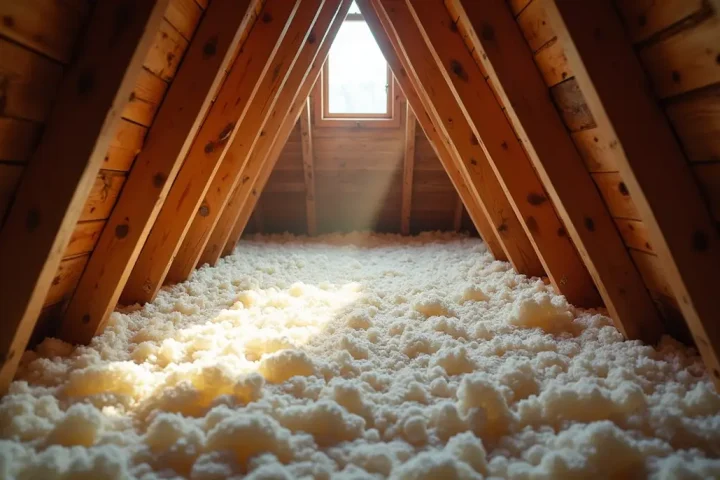
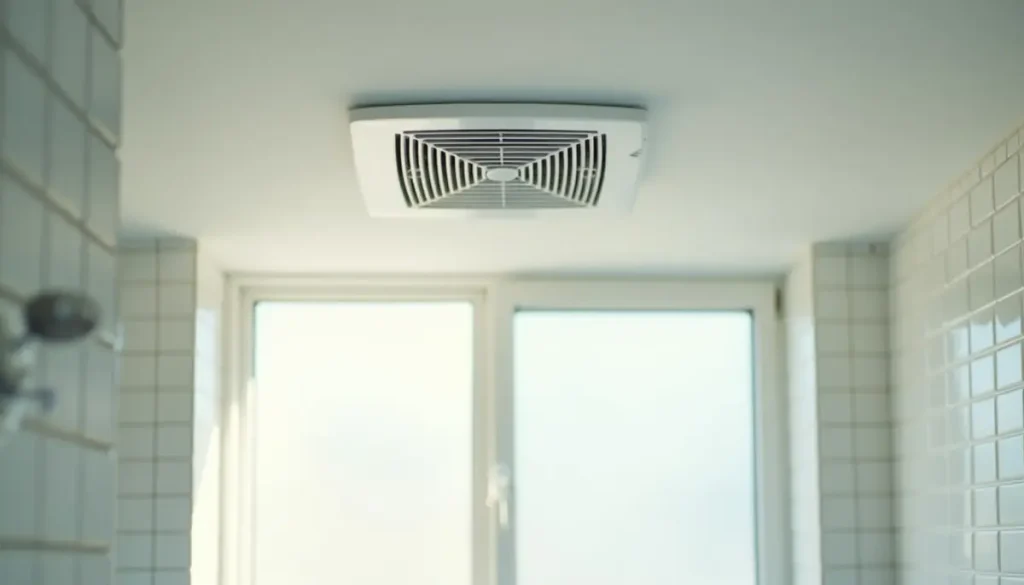
Rarely into the bathroom itself. A bath fan duct runs from the fan housing in the ceiling to a cap on the roof, wall or soffit, and many fan housings have their own small backdraft flap behind the grille. A bird would have to pass the fan blades and that flap to reach the room. The real risk is the attic: if the duct has come loose from the fan or the cap, a bird can drop out of the duct into the roof space. That is worth checking whatever kind of bird it is.
How to get a bird out of an exhaust vent
These steps are for a single bird that has fallen into the duct and cannot climb out, not for a nest.
- Fan off, and leave it off. Running the fan to blow the bird out pushes it against the cap or chops it in the fan; neither ends well.
- Open the way out. From outside, lift or remove the exterior cap flap so daylight shows down the duct and the bird can see the way out.
- Keep the bathroom dark with the door shut and the window open, so if the bird does drop into the fan housing, the only bright opening is the way out.
- Give it a few hours of quiet. Check the cap for activity before refitting it.
- If it is still there, or the cap is on a steep roof, call a wildlife control operator. Ladder work on a roof is the dangerous part of this job.
How to get birds to leave the vent when they are nesting
A nest is a legal question before it is a practical one. Federal law excludes the house sparrow family (“including house or English sparrow”) and starlings outside the Japan treaty list from the Migratory Bird Treaty Act, under the Fish and Wildlife Service notice at 85 FR 21262 (2020). For native birds, the 2025 memorandum says a nest is “in-use” from the first egg until the nestlings “fledge and are no longer dependent on the nest”, and destroying an in-use nest needs authorisation. The species table, state law caveats and identification by nest material are in our companion guide to birds nesting in a dryer vent, which applies the same law to the same birds.
If you decide to wait, the clock is short. Cornell gives the European starling, the bird with the longest stay of the usual vent nesters, 12 days of incubation and 21 to 23 days as a nestling:
House sparrows are quicker, at 10 to 14 days of incubation and 10 to 14 days in the nest, but Cornell records up to four broods a year and notes that they often reuse nests. So once the young have gone, remove the nest that day and close the cap before the pair starts again. Our guide to a bird nesting in a chimney covers chimney swifts, a protected native species that turns up in flues rather than fan ducts.
Removing the nest and fixing the duct
From outside
Take off the cap, pull the nest material out with gloved hands, and bag it. Starling nests are bulky: Cornell describes grass and pine needles with feathers, trash, cloth and string, and starlings keep adding fresh green plants while nesting. Material is often packed well down the duct.
From the attic
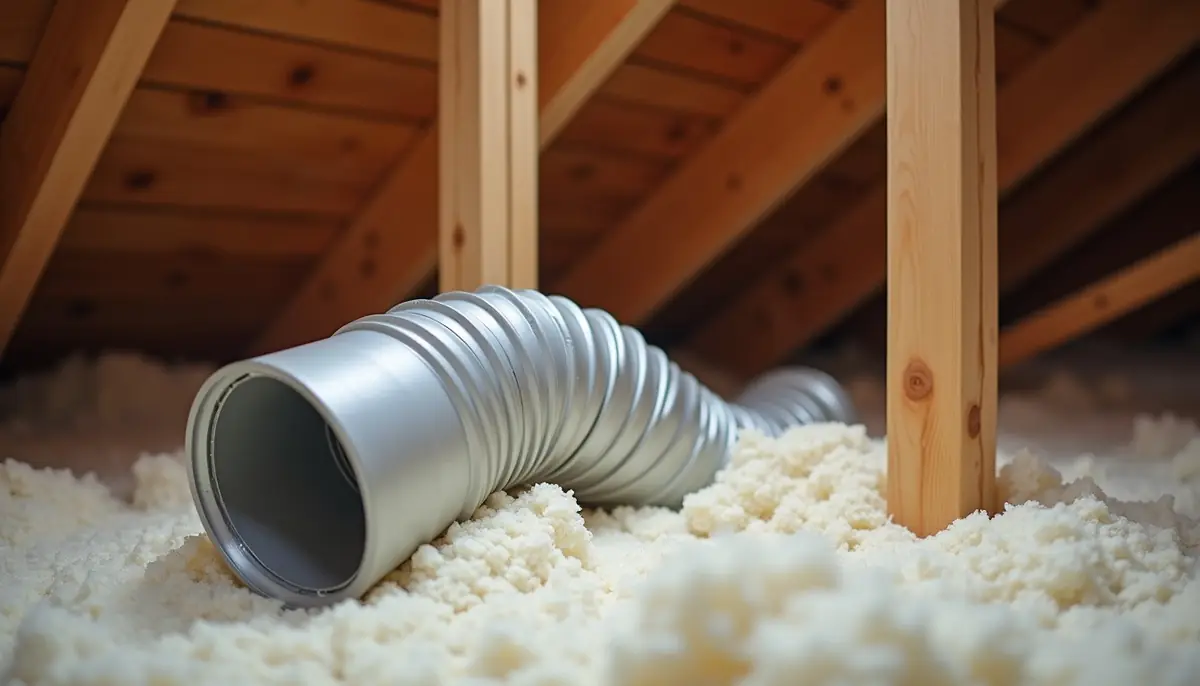
The Building America Solution Center, run for the US Department of Energy, says bathroom fan ducts should run “directly from the exhaust fan box on the attic floor to either the eaves (edges) of the attic or up through the roof”, ending at “a dampered roof cap vent” or a vented opening in the soffit or side wall, with “an air-sealed connection”. It warns that moisture from fans “exhausting into the attic or crawlspace can cause mold growth and damage to the wood”.
That makes a disconnected duct a code problem as well as a bird problem. The International Residential Code, section M1505.2, as adopted in Ohio’s residential code, says bathroom exhaust air “shall be exhausted directly to the outdoors” and “shall not discharge into an attic, crawl space or other areas inside the building”. If the nest pushed the duct off its fitting, or the duct was never attached, reconnect it with screws and foil tape before the fan is used again.
The cap that keeps birds out
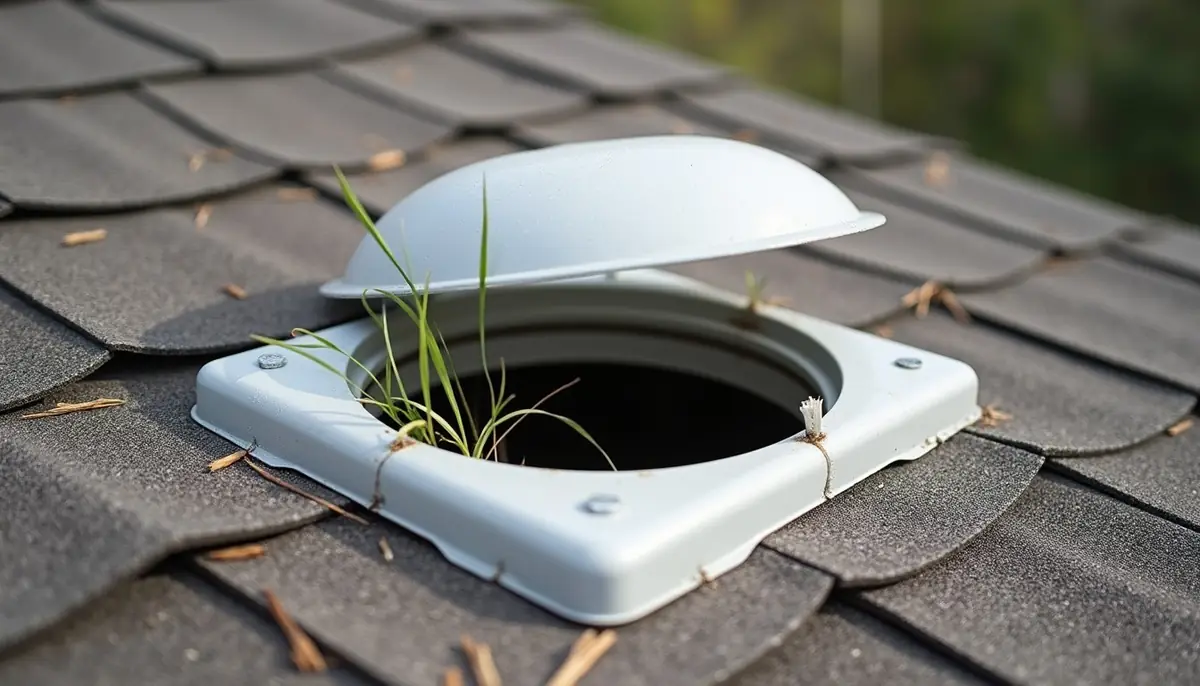
Fit a cap with a damper flap that closes fully when the fan stops; broken or missing flaps are how birds get in. A bath fan carries moist air, not lint, so it is not bound by the dryer rule that bans screens at the termination, but any guard still has to leave the outlet open enough for the fan’s airflow, and local codes set opening sizes. Your building official can say what your adopted code allows.
After the birds: mites in the bathroom
When a nest is abandoned or removed, the mites in it lose their host and wander in search of another, which in a bathroom can mean bites on people. Our guide to bird mites after a nest is removed explains, drawing on Colorado State University Extension, why they cannot establish on humans and why taking the nest out is the treatment.
If the specks are something else entirely, our guide to the bugs found in bathrooms sorts drain flies, springtails and silverfish.
How much does it cost to remove birds from a vent?
A sparrow nest in a ground-floor wall cap is a DIY job costing the price of a new damper cap. Roof caps, packed ducts and attic reconnection are where a professional earns the fee. Published estimates in our bird control cost guide put inspection at $100 to $250, labour at $50 to $150 an hour and a typical job around $500, within a $100 to $2,000 range for all bird work.
If several vents and gaps need closing at once, priced pest exclusion services can cover the whole house in one visit.
Mice also use loose duct connections and gaps around fan housings; if droppings turn up in the attic while you are there, our plan for getting rid of mice in the house is the next step.
Frequently asked questions
How do I get rid of birds in my bathroom vent?
Turn the fan off, identify the bird and check for eggs or chicks. House sparrow and starling nests can be removed at any stage under federal law; native birds’ in-use nests stay until the young fledge. Then clear the duct, reconnect it in the attic if needed and fit a cap with a working damper.
How much does it cost to remove birds from a vent?
Published estimates put a professional bird inspection at $100 to $250 and labour at $50 to $150 an hour, with typical jobs around $500. A ground-floor wall cap is usually a DIY fix for the cost of a replacement damper cap; roof work and attic duct repairs push the price up.
How to get a bird out of an exhaust vent?
Leave the fan off, open or remove the outside cap so daylight shows down the duct, keep the bathroom dark with the window open, and give the bird a few quiet hours to climb or fly out. If it stays, or the cap is on a steep roof, call a wildlife control operator.
How to get birds to leave the vent?
Birds with eggs or chicks will not leave until the young fledge, which Cornell puts at up to 35 days from incubation for starlings and about 28 for house sparrows. Non-native nests can be removed sooner. The lasting fix is a cap whose damper closes fully, so the vent is no longer an open cavity.
Sources
- US Fish and Wildlife Service, List of Bird Species To Which the Migratory Bird Treaty Act Does Not Apply, 85 FR 21262, 16 April 2020.
- US Fish and Wildlife Service, Migratory Bird Permit Memorandum MBPM-2-02, Authorizations to take migratory bird nests and contents, 15 January 2025.
- Cornell Lab of Ornithology, All About Birds life histories: European Starling and House Sparrow.
- US Department of Energy, Building America Solution Center (PNNL), Look at Exhaust Fans for Venting to Outside.
- International Residential Code section M1505.2, as adopted in Ohio Administrative Code 4101:8-15-01.