How Many Mice Is an Infestation? Signs, Counts and Thresholds

There is no official number: one mouse with signs of breeding is an infestation, and two or more caught, or droppings in more than one room, usually means a breeding group rather than a lone visitor. HUD’s housing inspection standard records a deficiency for any evidence of mice, even a single mouse on a trap. Mouse biology explains the strictness: litters of 5 or 6, and young that can breed at 5 to 6 weeks old.
The useful number is not how many mice you have seen. It is what your catches, droppings and sightings say about whether a group is breeding inside, and that can be read with some precision.
What your count means
| What you have | What it most likely means | Next step | Basis |
|---|---|---|---|
| One mouse seen, no droppings found | A single animal, possibly just arrived | Set several traps along walls where it ran; look for droppings | UC IPM 7483; ICWDM |
| One caught, nothing more for two weeks | Probably a lone mouse | Seal the entry point; keep one or two traps set | UC IPM 7483 |
| 2 to 4 caught in a week, all near one spot | One family group nesting within about 10 to 30 feet | More traps, no more than 6 to 10 feet apart, and seal | ICWDM; Nebraska G1105 |
| Catches or droppings in two or more rooms far apart | More than one group; established | Professional inspection is usually worth it | ICWDM; Nebraska G1105 |
| Only males caught so far | A family unit, with females, is being missed | Keep trapping; move traps to new runs | ICWDM |
| Nest, very small young or a musky smell | Breeding is happening; often long term | Treat as an infestation regardless of count | UC IPM 7483; Nebraska G1105 |
| Catches stopped, but droppings keep appearing | Survivors that avoid traps | Change bait and trap positions; keep monitoring | Klimstra 1972 |
Compiled by The Pest Control Brief from UC IPM Pest Notes: House Mouse (Publication 7483), the Internet Center for Wildlife Damage Management (ICWDM) house mouse pages, Nebraska Extension NebGuide G1105 and Klimstra (1972), Proceedings of the 5th Vertebrate Pest Conference.
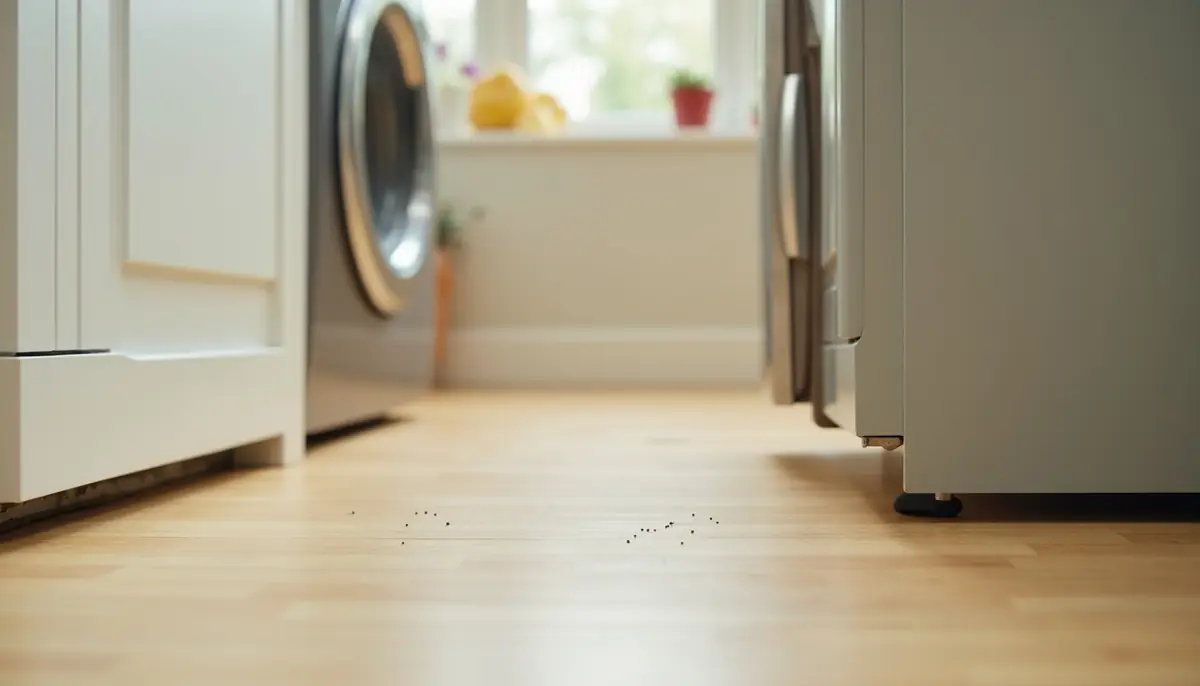
Is 4 mice an infestation?
Yes, in practice. Four mice in a house almost always include at least one female, and UC IPM says a female may have 5 to 10 litters a year of about 5 or 6 pups. ICWDM puts pregnancy at 19 to 21 days and sexual maturity at 6 to 10 weeks, so a pregnant female among the four can add 5 or 6 more within three weeks, and her young can breed before they are three months old. Our page on how fast mice reproduce works through the breeding figures source by source.
Where they were caught matters as much as how many. ICWDM says one mouse travels an area averaging 10 to 30 feet in diameter during daily activities, UC IPM says house mice seldom venture more than 30 feet from their nest and food, and Nebraska puts the limit at about 50 feet. Four mice caught under one kitchen sink are one group. Four caught in the kitchen, the basement and an upstairs bedroom are probably several.
How many mice to catch before calling an exterminator?
No extension source sets a catch number, and the threshold is better set by spread and time than by count. Call a professional when catches keep coming after two weeks of well-placed traps, when droppings show up in two or more separate rooms, or when you hear activity inside walls or ceilings.
Our guide to when to call pest control for mice sets out those triggers in full.
Published estimates for a professional trapping programme run $150 to $550, usually after a $75 to $150 inspection, as broken down on our mouse exterminator cost page.
Under-trapping is the common reason a small problem looks endless. Nebraska Extension says two dozen properly placed snap traps will be sufficient to control a new mouse infestation, with traps no more than about 10 feet apart; ICWDM advises no more than 6 feet apart where mice are active and enough traps to make the effort short and decisive. Placement detail is in our guide to trap placement that catches mice.

Caught 2, 3, 5 or 10 mice: how many more?
Nobody can give a fixed ratio, and pages that say “for every mouse you see there are ten more” cite no study. Three trapping signals are better guides:
- The trend. Catches that fall night by night mean the group is shrinking. Steady catches mean you are trapping new arrivals or a large group.
- The sexes. ICWDM says that if captures are not evenly balanced between males and females, it is likely that you are missing a family unit.
- The age. Very small mice in traps mean breeding inside the house, whatever the total.
What one trapping study found when the traps went quiet
The clearest published record of how many mice hide behind a “finished” trapping job comes from W.D. Klimstra’s 1972 study at Southern Illinois University. Two males and three females of wild-strain house mice were released into each of two 80 square foot arenas with sacked grain and corncobs. About six months later he set four live traps per arena at the busiest sites.
Captures “did not faithfully reflect the numbers of mice observed,” he wrote, and fell to zero by day 12. A further 72 hours of watching showed no mice active. When the arenas were taken apart, 6 mice were still living in one and 16 in the other. The founding 5 had become an estimated 69 and 80, so trapping had removed 91.3 and 80.0 per cent. About 90 per cent of males were caught against around 80 per cent of females.
Three lessons follow for a house. Five mice with unlimited food and shelter can become 70 to 80 in half a year. Traps that stop catching do not prove every mouse is gone. Females, the breeders, are the ones most likely to be left. That is why the all-clear tests in our guide to how to tell if mice are gone rely on fresh droppings and tracking patches as well as empty traps.
How many mice are typically in a house?
No survey counts mice per home. What exists is how common any mice are: our weighted analysis of the 2023 American Housing Survey found that 11.8 per cent of occupied US homes reported mice or rats or their signs inside within 12 months, as set out in whether it is normal to have rodents in your house. A home that sees signs every year is not unusual; a home with signs in several rooms has a group that is breeding.
How can I tell how many mice I have?
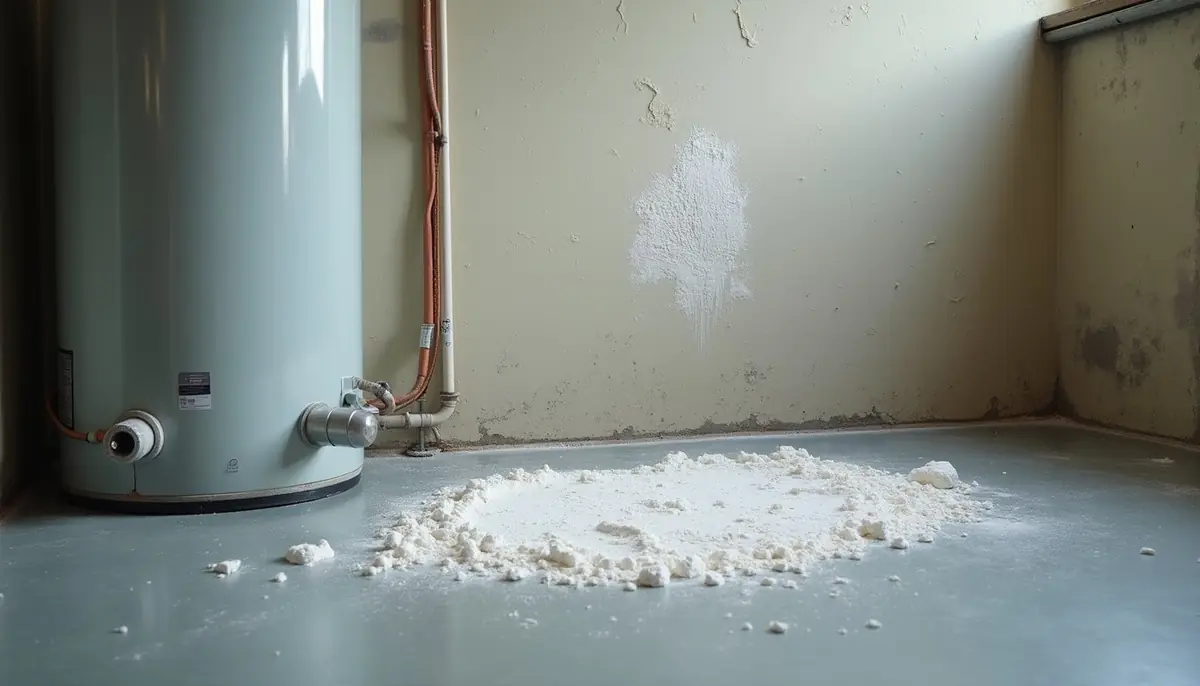
Droppings are a poor counter. Nebraska Extension says house mice deposit approximately 50 to 75 pellets a day, so one mouse can fill a drawer in a week. Spread is more useful than quantity: droppings along one run suggest one group, while fresh droppings in several rooms suggest more. Our room by room guide to signs of mice explains the flour patch method for mapping how widespread they are.
Mouse droppings average about 1/4 inch long (ICWDM). Larger droppings point to rats, which change the plan; our droppings identification guide separates mouse, rat and cockroach.
And how many rats is an infestation?
The same logic applies, with fewer animals needed. HUD’s inspection standard treats any evidence of rats (burrows, droppings 1/2 to 3/4 inch long, or gnawed door sweeps) as a deficiency, exactly as it does for mice.
The official definitions
HUD’s National Standards for the Physical Inspection of Real Estate (NSPIRE, Infestation standard v2.2, 2022) define infestation as the presence of potentially disease carrying animals or insects. For mice the deficiency is simply “Evidence of mice is found,” rated moderate, with a 30 day correction time and a Housing Choice Voucher fail. Inspectors are told that a sticky pad or trap with a mouse on it counts, and an empty one does not. Cockroaches get a number: three or fewer seen at once is evidence, and more than three is an extensive infestation, a threshold compared in how many roaches is an infestation. Mice get no such allowance.
Sightings mislead in both directions. In our analysis of 3,650 US research-grade iNaturalist house mouse records with a recorded hour, records are about twice as likely as the all-species baseline between 8 pm and 4 am, and under-represented from 8 am to 4 pm. These reflect when people notice and record mice, not true activity, but they match mice being most active after dark, so a daytime mouse is worth reading carefully, as our page on what a mouse seen in daylight means explains.
Whatever the count, the fix is the same sequence of trapping, sealing at a quarter inch and monitoring, set out step by step in how to get rid of mice.
Frequently asked questions
How many mice to catch before calling an exterminator?
No extension source sets a catch count. Call when catches continue after two weeks of well-placed traps, when droppings appear in two or more separate rooms, or when you hear mice in walls or ceilings. Nebraska Extension says about two dozen snap traps, 10 feet apart or closer, should handle a new infestation, so persistent catches beyond that suggest a larger problem.
Is 4 mice an infestation?
Usually yes. Four mice almost always include a female, and UC IPM says a female can have 5 to 10 litters a year of about 5 or 6 young, which can breed at 5 to 6 weeks old. If the four were caught in one spot it is likely one family group; in several rooms, more than one.
How many mice are typically in a house?
No survey counts mice per home. In the 2023 American Housing Survey, 11.8 per cent of occupied US homes reported mice or rats or their signs inside within a year. In Klimstra’s 1972 study, five founding mice with unlimited food grew to an estimated 69 and 80 in about six months, which shows the ceiling when nothing is done.
How can I tell how many mice I have?
Not from droppings: one mouse leaves about 50 to 75 a day (Nebraska Extension). Look at spread instead: house mice stay within about 10 to 30 feet of the nest, so signs in rooms far apart suggest separate groups. Falling trap catches, an even mix of males and females, and no very small young all point to a shrinking group.
Sources
- US Department of Housing and Urban Development, NSPIRE Standards: Infestation, version 2.2, published 23 June 2022.
- University of California Statewide IPM Program, Pest Notes: House Mouse, Publication 7483.
- Internet Center for Wildlife Damage Management, House Mouse identification, biology, and damage prevention and control methods pages.
- University of Nebraska Lincoln Extension, Controlling House Mice, NebGuide G1105 (revised March 2012).
- Klimstra, W.D., House Mouse Behavior and Its Significance to Control, Proceedings of the 5th Vertebrate Pest Conference, 1972.
- US Census Bureau and HUD, American Housing Survey 2023 (weighted analysis by The Pest Control Brief, November 2026).
- The Pest Control Brief analysis of iNaturalist research-grade records, pulled November 2026 (b36 hour file).