How Fast Do Mice Reproduce? Litters, Timing and Real Growth

House mice reproduce very fast: a female gives birth 18 to 21 days after mating, has about 5 or 6 young, can have 5 to 10 litters a year, and her daughters can breed at 5 to 10 weeks old. In a heated house with food, breeding runs all year. On paper one pregnant mouse becomes about 5,400 mice in a year, but only if none of the young die. Real numbers are far lower, because survival collapses as a group grows, and that is the number trapping and sealing change.
The breeding figures, source by source
| Measure | Wild house mouse (extension sources) | Pet or laboratory mouse (Merck) | What it means in a house |
|---|---|---|---|
| Pregnancy | 18 to 21 days (UC IPM); 19 to 21 days (ICWDM) | 19 to 21 days | A pregnant mouse that gets in this week can have a litter inside three weeks |
| Young per litter | About 5 or 6, more in older females (UC IPM, ICWDM) | 10 to 12 on average | Online figures of 12 or 14 pups come from pet strains, not wild mice |
| Litters a year | 5 to 10 | Up to 15 | One new litter every five to ten weeks from each breeding female |
| Breeding age | 5 to 6 weeks, delayed to as late as 12 (UC IPM); 6 to 10 weeks (ICWDM) | About 6 to 8 weeks | A daughter can be pregnant before she is two months old |
| Mating after birth | Possible; pregnancy runs slightly longer while nursing (ICWDM) | Can conceive within 24 hours of giving birth | A female is often pregnant and nursing at the same time |
| Breeding season | Year round with stable food; outdoors mostly spring and autumn (ICWDM) | Year round | No winter pause indoors |
Compiled by The Pest Control Brief from UC IPM Pest Notes: House Mouse (Publication 7483, 2025), the Internet Center for Wildlife Damage Management (ICWDM) house mouse biology page, and the Merck Veterinary Manual pet mouse breeding page.
The middle column explains most of the frightening numbers online. Merck’s figures of 10 to 12 pups and up to 15 litters describe bred pet mice. Wild house mice, the ones in walls and kitchen drawers, average 5 or 6 young and 5 to 10 litters according to both UC IPM and ICWDM. Our separate age key for baby mice found in a nest covers what each litter looks like day by day.
The generation clock: two to three months
How long a mouse lives matters less than how long one cycle takes. Adding the stages from UC IPM and ICWDM gives the time from one pregnancy to the next generation’s first litter.
On the fastest published figures (an 18 day pregnancy, weaning at about 3 weeks, breeding at 5 weeks, then another 18 day pregnancy), a daughter born today can deliver her own litter roughly 8 weeks later. On the slow end (breeding at 10 weeks, then a 21 day pregnancy) it is about 13 weeks. Counted from the start of her mother’s pregnancy, the whole cycle takes about 10 to 16 weeks. Rats run on a much slower clock: ICWDM puts Norway rat sexual maturity at 3 months and litters at 3 to 6 a year, which is why rats reproduce more slowly than mice despite bigger litters.
One pregnant mouse, one year: a model with its assumptions shown
Viral posts say two mice become thousands, or even millions, in a year. None states its assumptions. Ours are below. We started with one female already pregnant on day one and counted every mouse alive after 3, 6 and 12 months, in daily steps.
- Pregnancy 20 days, the middle of the 18 to 21 day range.
- 5.5 young per litter (UC IPM and ICWDM: about 5 or 6), half of them female.
- A litter every 49 days, which is 7.5 litters a year, the middle of 5 to 10.
- Daughters conceive at 52 days (about 7.5 weeks), the middle of the 5 to 10 week range.
- For deaths: adults live 10.5 months, the middle of UC IPM’s usual 9 to 12. The share of young lost before weaning is our assumption, shown at two levels, because no source we read gives a single figure for wild house mice.
| Scenario | After 3 months | After 6 months | After 12 months |
|---|---|---|---|
| Nothing dies, mid-range breeding | 12 | 110 | 5,421 |
| Nothing dies, fast end (6 young, 10 litters, breeding at 5 weeks) | 31 | 571 | 98,197 |
| Nothing dies, slow end (5 young, 5 litters, breeding at 10 weeks) | 6 | 28 | 542 |
| 10.5 month adult lifespan | 12 | 110 | 5,416 |
| Lifespan plus half of young lost before weaning | 6 | 29 | 448 |
| Lifespan plus three quarters of young lost | 4 | 10 | 62 |
The Pest Control Brief model, November 2026, using breeding figures from UC IPM Publication 7483 and ICWDM. Counts include the founding female. Survival levels are model assumptions.
Two results stand out. First, old age barely matters inside a year: a 10.5 month lifespan removes 5 mice out of 5,421, because almost every mouse in the count is young. Second, the share of pups that survive moves the 12 month figure from 62 to over 5,000. Food, shelter and control decide that share, not the breeding biology.

What happened when real mice were given a building’s worth of food
A model is only a model, so we looked for a measured comparison. In a study published in the 1972 Proceedings of the Vertebrate Pest Conference, W. D. Klimstra of Southern Illinois University released 2 males and 3 females (first generation laboratory reared wild house mice) in April into each of two 80 square foot arenas holding a pallet of sacked grain and corncobs. After roughly six months, the estimated populations were 69 and 80 mice.
Our mid-range model with no deaths, run for three founding females, predicts about 330 mice at six months. The arenas reached a quarter of that and then levelled off. Klimstra found only two pregnant females among those trapped, “suggesting that reproduction had virtually ceased,” and saw excess mice pushed out of the pallet as social outcasts. ICWDM states the general rule: survival and breeding of young mice decline markedly when densities are high. Unlimited grain did not produce unlimited mice; nest space and social pressure capped them.
How fast do mice reproduce in your house or in walls?
Faster than outdoors, because the seasonal pause disappears. ICWDM says outdoor mice breed mostly in spring and autumn but may breed year round, and that they prefer nest sites near heat sources such as compressors, pilot lights and hot water heaters. A wall cavity next to a boiler or behind a fridge is that site. UC IPM adds that with plentiful, stable resources house mice can reproduce year round, producing high densities that last for months to years.
Timing gives the practical answer to “how quickly can mice infest a house”. UC IPM says outdoor mice frequently enter homes in autumn as nights cool, and a female that arrives pregnant in October can have her first litter before November ends and grandchildren by about January. The noises that start in walls in late autumn are usually the founders; the ones in midwinter are often their young, which is why mice in walls rarely go away on their own.
What the breeding rate means for getting rid of them
- Act in the first three weeks. Before the first litter, you are dealing with one or a few adults. After it, you are dealing with a nest. The signs that tell you mice are active right now are worth checking the day you see one.
- Trap all at once, not one trap at a time. UC IPM says to use enough traps to make the trapping period short and decisive, to space them no more than about 10 feet apart where mice are active, and to set pairs 1 to 2 inches apart for mice that jump over a single trap. ICWDM notes one mouse ranges over an area only 10 to 30 feet across, so a trap 40 feet away may never be met. Our routine for where to set mouse traps and how many to use walks through the placement.
- Expect the last few to be females. In Klimstra’s arenas, about 90 per cent of males were trapped against around 80 per cent of females, and he warned that the females left behind are the start of the next infestation. Keep traps down after catches slow.
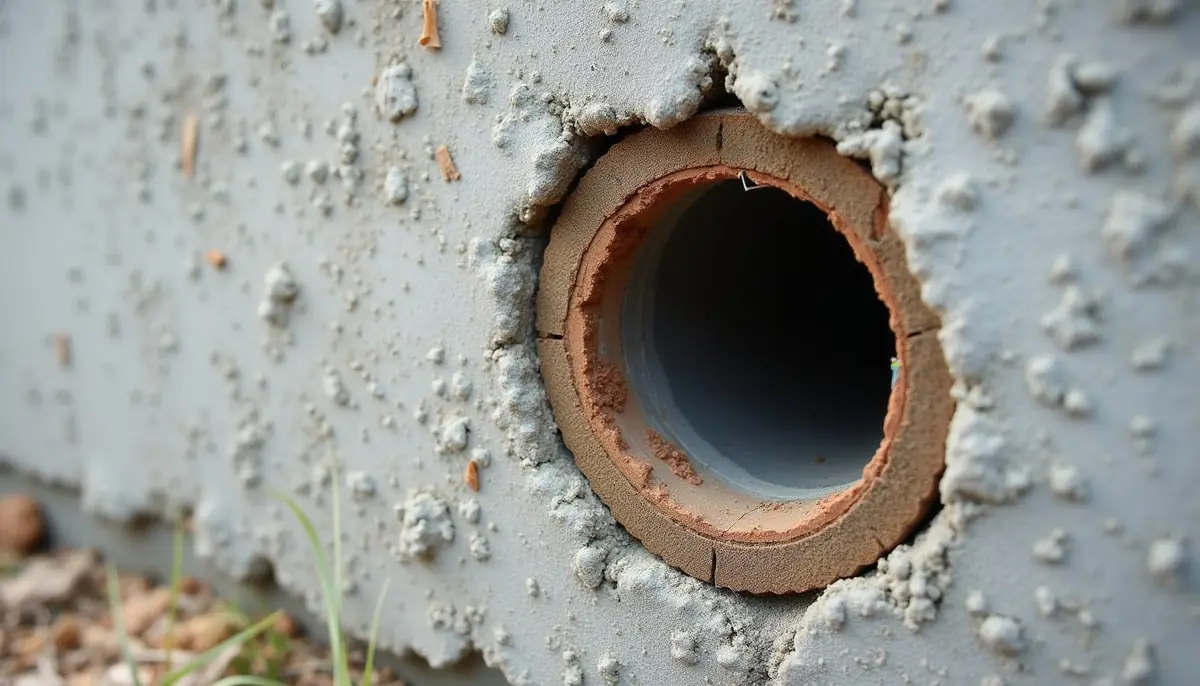
- Seal the building. UC IPM says house mice can squeeze under gaps 1/4 inch tall and through openings 3/8 inch wide, and that foam, plastic, rubber and wood are ineffective because mice chew through them. Our comparison of steel wool, copper mesh and other gap fillers covers what holds.
- Know when to call someone. Droppings in several rooms, or catches still coming after two weeks, usually mean a breeding group across the structure; our guide to when a mouse problem needs a professional sets out the thresholds.
Frequently asked questions
How quickly can mice infest a house?
A pregnant female can give birth 18 to 21 days after mating, so a single mouse can become a nest of 6 or 7 within three weeks of getting in. Her daughters can breed at 5 to 10 weeks. On our mid-range model with no losses, one pregnant mouse becomes about 12 mice at three months and about 110 at six months. Real homes usually stay well below that.
What is the fastest way to get rid of mice?
Set many snap traps at once along walls where you see droppings, no more than about 10 feet apart as UC IPM advises, and seal every gap over 1/4 inch at the same time. Trapping clears the mice inside; sealing stops new ones. UC IPM says sound, magnetic and vibrating devices are not effective against established mice.
What is the 5 day mouse rule?
It is an informal rule of thumb that you can stop trapping after five days with no catches. We could not find it in extension or federal guidance. The CDC’s standard is longer: if no rodents are captured for a week and there are no new signs, they are gone. With mice able to give birth every few weeks, the full week is the safer test, and our page on how to tell if mice are gone lists the checks.
How many mice are typically in a house?
No published survey counts mice per infested home, so treat any typical figure with caution. Spread is the better clue: ICWDM says one mouse covers an area 10 to 30 feet across, so fresh droppings in rooms far apart usually mean separate groups. Klimstra’s arenas show how high a fed group can go: 5 mice became 69 to 80 in six months.
How long do mice keep reproducing?
UC IPM says house mice usually live 9 to 12 months, although some have lived to 3 years, and that litter size increases in older females. With 5 to 10 litters a year, an indoor female has usually been joined by breeding daughters long before she dies, which is why how long mice live matters less than how fast they breed.
Sources
- University of California Statewide IPM Program, Pest Notes: House Mouse, UC ANR Publication 7483 (N. M. Quinn and M. Frye), updated July 2025.
- Internet Center for Wildlife Damage Management, House Mouse Biology (from Prevention and Control of Wildlife Damage, University of Nebraska).
- Internet Center for Wildlife Damage Management, Norway Rat Biology.
- Merck Veterinary Manual, Breeding and Reproduction of Mice (pet owner version).
- Klimstra, W. D. (1972). House mouse behavior and its significance to control. Proceedings of the Vertebrate Pest Conference 5.
- Centers for Disease Control and Prevention, How to Trap Up to Remove Rodents, Healthy Pets, Healthy People.
- The Pest Control Brief mouse population model, November 2026 (assumptions stated in the article).