Mice in the Garage: Why They Move In and How to Keep Them Out
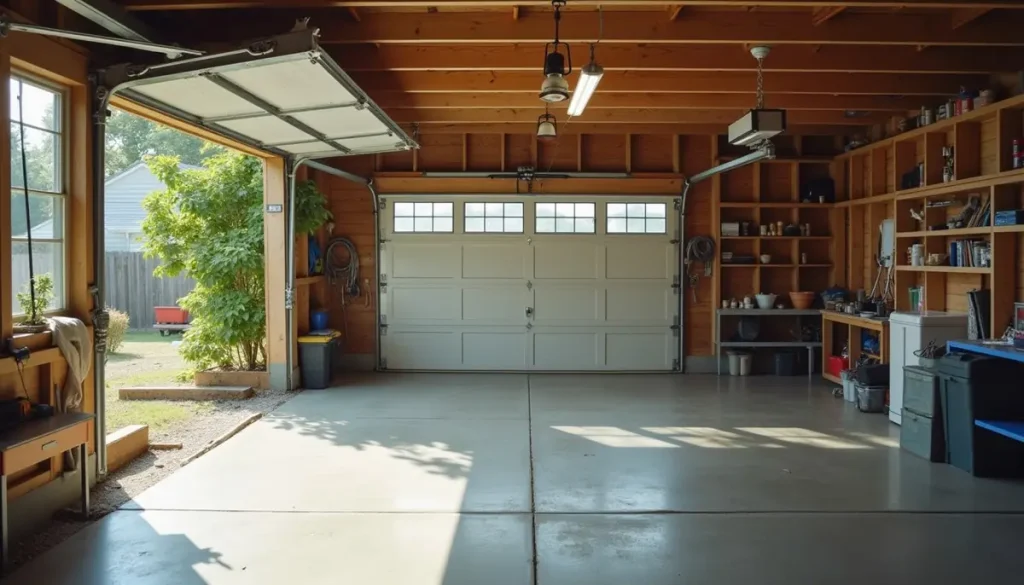
Mice move into garages for shelter and stored food, mostly in autumn, and most get in under the main door or the side door, where a gap of a quarter inch is enough. Close door bottoms to less than a quarter inch with a gnaw-resistant seal, move seed and pet food into lidded hard bins, and run snap traps along the walls no more than 10 feet apart. A mouse in an attached garage often means the house is next, because house mice seldom range more than 30 feet from their nest.
| Garage weak point | Why mice use it | What extension guidance says to do |
|---|---|---|
| Main door bottom seal | Worn, torn or uneven seals leave gaps; mice need slightly more than a quarter inch | Close the gap to under a quarter inch; rubber and vinyl alone can be gnawed through (Nebraska Extension G1530) |
| Side or service door | Gap at the threshold, softwood door edge, door left propped open | Gap under a quarter inch, metal flashing on the lower edge to within an eighth of an inch of the edges, a door closer (G1530) |
| Door between garage and house | The last barrier before living space | All doors should fit tightly; cover gnawed edges with metal (UC IPM Pest Notes 7483) |
| Pipe, cable and vent openings | Gaps around utilities through the wall | Metal or concrete; plastic, rubber, vinyl, expanding foam and wood are ineffective (UC IPM 7483) |
| Sacks of birdseed, grass seed, pet food | A seed-eating rodent’s main reason to stay | Hard containers with tight lids; store sacks on shelves, pallets or hooks, not the floor (G1530) |
| Cardboard and floor clutter | Nesting material and cover along walls | Clear the wall line so traps and droppings are visible |
Compiled by The Pest Control Brief from Nebraska Extension NebGuide G1530 and UC IPM Pest Notes: House Mouse (7483, 2025).
Why are there mice in my garage?
Shelter, food and access. Shelter: UC IPM notes that house mice frequently enter homes in autumn when nighttime temperatures fall, and a garage is the nearest dry space with clutter to hide in. Food: many garages hold the largest seed store on the property, and mice eat up to 20 per cent of their body weight a day in about 200 small meals a night, according to UC IPM. Access: the main door is the widest opening in the house and its bottom seal is the softest.
An unheated garage is not too cold for them. Nebraska Extension states that house mice can survive and reproduce at temperatures down to 24°F (about minus 4°C) if they have food and nesting material, and that they can jump 18 inches straight up, which puts a low shelf of grass seed within reach. They also do not need a water bowl: UC IPM notes house mice do not need to drink water to survive.
Our guide to what attracts mice ranks the attractants room by room; in the garage, seed and the door seal are the two that decide whether mice stay.

Is it normal to have mice in your garage?
It is common, and it is seasonal. In our analysis of iNaturalist research-grade records, US house mouse records climb from 235 in June to 443 in October, the yearly peak, then ease to 393 in November. Deer mice, the outdoor species that also turns up in garages, sheds and cabins, peak much earlier, at 1,015 records in May.
These are photographed sightings, not infestation counts, but the October peak matches UC IPM’s description of mice moving indoors as nights cool. A mouse in the garage in summer is less usual and more often means something in the garage is feeding it all year: an open sack of dog food or a bird feeder refilled from a bag on the floor.
Normal does not mean harmless. UC IPM puts a female’s output at 5 to 10 litters a year of about 5 or 6 young each, so a pair that arrives in October can become a population by spring.
How do I keep mice out of my garage?
Nebraska Extension’s rodent-proofing guide assumes the building is already free of animals before openings are closed, and our rodent exclusion materials guide explains why trapping comes before sealing. Set traps the same day as the door work.
- Find the gaps at night. With the garage lights off and daylight or a torch outside, look along the main door bottom, its two lower corners and the side door threshold. Any line of light is a candidate entry, and mice only need slightly more than a quarter inch (about 6 mm), per G1530.
- Fix the main door bottom. Replace a torn or flattened bottom seal and adjust the door so it meets the floor evenly. G1530 warns that rats and mice can quickly gnaw through rubber or vinyl weather stops, so where mice have chewed the seal before, choose a seal with a metal or wire mesh element, or raise the threshold: the guide notes it is sometimes easier to build up the threshold than to modify the door.
- Treat the side door like an exterior door. G1530’s specification is a gap under a quarter inch between door bottom and threshold, plus metal flashing or a metal channel on the lower edge, particularly on softwood doors, ending within an eighth of an inch of the sides and bottom. A mechanical door closer stops it being left open.
- Close utility openings with metal. Use 24-gauge quarter-inch hardware cloth or sheet metal around pipes and cables, with caulk only as a finish. UC IPM lists expanding foam, rubber, vinyl, plastic screening and wood as ineffective for house mouse holes.
- Take food off the floor. Decant birdseed, grass seed and pet food into hard lidded bins and keep everything else on shelves, pallets or hooks, as G1530 recommends for stored materials.
- Clear the outside edge. G1530 suggests a vegetation-free strip at least 24 inches wide around the building, kept mown or covered with 1.5-inch crushed rock to a depth of 3 inches.

How to get rid of mice in the garage, fast
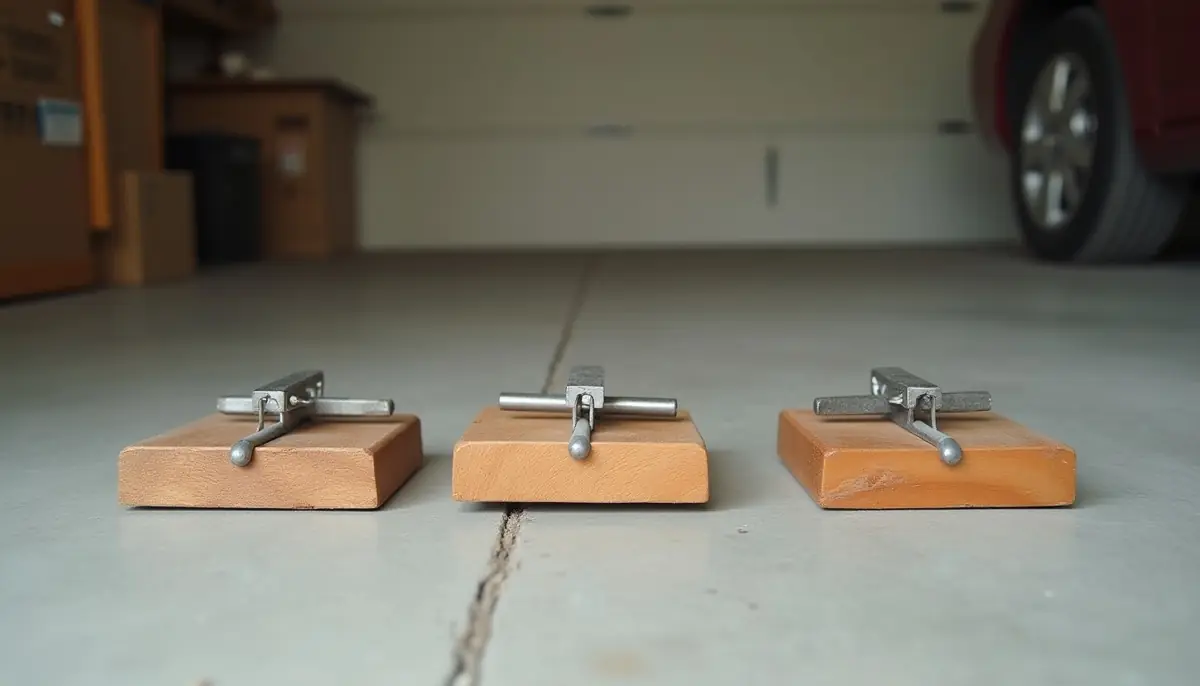
Fast means enough traps. UC IPM’s instruction is to use enough traps to make the trapping period short and decisive, spaced no more than about 10 feet apart where mice are active. In a garage that means a line of traps along the back and side walls, close to droppings and gnawed sacks, baited with peanut butter, which UC IPM’s deer mouse guidance calls usually an effective attractant. Our trapping routine covers when to stop.
Should I kill mice in my garage?
Snap traps are the standard extension answer. Skip glue boards: UC IPM advises against them for deer mice because the chance of contact with hantavirus rises when a live, frightened mouse is stuck in place. Rodenticide is a poor fit for a garage. EPA allows consumer products only as ready-to-use bait stations with block or paste bait, with no loose pellets and no second-generation anticoagulants, and UC IPM warns that baits often mean mice die inside the structure, which in an attached garage can be inside a wall shared with the house.
Can you get rid of mice in a garage naturally?
Not with scents. As our review of peppermint oil sets out, the one controlled test found no repellent effect after seven days. What works is removing food, closing gaps and trapping.
Deer mice change the cleanup
A garage near fields or woodland may hold deer mice rather than house mice, and the difference matters for cleanup. UC IPM describes the deer mouse as having white undersides, legs and feet, larger eyes and ears, and a bicoloured tail, white below and dark above, against the house mouse’s almost furless tail and uniform grey-brown coat. CDC says the most common hantavirus causing illness in the US is spread by the deer mouse.
| Step | CDC instruction |
|---|---|
| Before cleaning | Open doors and windows for 30 minutes and leave the space |
| Never | Sweep or vacuum droppings, urine or nesting material |
| Disinfect | 1.5 cups of household bleach in 1 gallon of water (1 part to 9), soak for 5 minutes |
| Protect | Rubber or plastic gloves |
Source: CDC, How to Clean Up After Rodents (2024). Our hantavirus and dropping cleanup guide covers the full sequence; anyone ill after cleaning out a garage or shed should tell a doctor about the rodent exposure.
Does a mouse in the garage mean they are in the house?
Not automatically, but in an attached garage it is the first thing to check. UC IPM says house mice seldom venture more than 30 feet from their nest and food, so a population feeding in the garage can easily be nesting in the shared wall, under the stairs to the house, or in the space above the garage ceiling, since Nebraska Extension notes mice climb almost any rough vertical surface. Inspect the house side of the connecting door, the kitchen cabinets nearest the garage and the loft for droppings, which the Internet Center for Wildlife Damage Management puts at about a quarter inch long for house mice, and the other signs in our guide to signs of mice in the house. A detached garage with mice and a clean house is a garage problem.
Call a licensed professional when catches keep coming after the doors are sealed, or when droppings appear in the house. Our mouse exterminator cost guide puts published estimates for a trapping and baiting programme at $150 to $550, with sealing priced separately.
Keep them out of the car parked inside
The garage protocol above protects a parked car too; our guide to mice in the car covers wiring damage, vent nests and how to clean a vehicle the CDC way.
Frequently asked questions
Do mice live in garages all year?
They can. UC IPM notes house mice need no drinking water, and Nebraska Extension says they survive and breed at temperatures down to 24°F when food and nesting material are present. A garage holding seed or pet food can keep a population going through every season, although US iNaturalist records show sightings peak in October.
Will a new garage door seal stop mice?
It closes the gap, which is the main step, but Nebraska Extension warns that mice can gnaw through rubber or vinyl weather stops. Where mice have already chewed a seal, use a seal with a metal or mesh element or raise the threshold, and keep the gap under a quarter inch along the full width, including the corners.
Why do I have mice in my garage in summer?
Usually because food is stored there all year. US house mouse records are at their lowest in June, so summer activity points to a steady food source such as open pet food, birdseed or grass seed sacks on the floor, rather than the autumn move indoors. Bin the food and trap along the walls.
Can mice get from the garage into the attic?
Yes. Nebraska Extension notes that mice climb almost any rough vertical surface, including wood, brick and concrete, and run along wires and pipes. Mice in a garage can reach the space above the ceiling and the house loft through gaps around pipes, wiring and the ceiling hatch, so check both when garage catches continue.
Sources
- University of California Statewide IPM Program, Pest Notes: House Mouse, UC ANR Publication 7483, updated 2025.
- University of California Statewide IPM Program, Pest Notes: Deer Mouse, UC ANR Publication 74161, 2012.
- Vantassel, Hygnstrom, Ferraro and Stowell, Rodent-Proof Construction: Structural, NebGuide G1530, University of Nebraska Lincoln Extension.
- Centers for Disease Control and Prevention, How to Clean Up After Rodents, 2024.
- Centers for Disease Control and Prevention, About Hantavirus, 2024.
- US Environmental Protection Agency, Restrictions on Rodenticide Products.
- Internet Center for Wildlife Damage Management, House Mice.
- The Pest Control Brief analysis of iNaturalist research-grade records, pulled October 2026.