Why Bugs Come Inside After Rain, and Which Ones
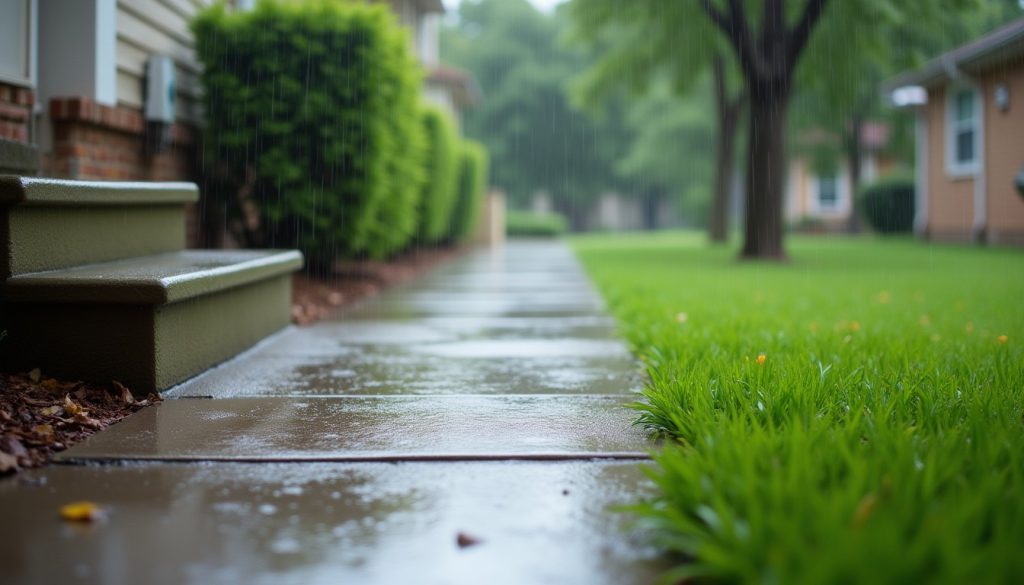
Bugs come into the house after rain because water floods their nests and burrows in the soil and mulch, and the wet surface lets them travel to your foundation. The usual suspects are ants, millipedes, pill bugs and sowbugs, earwigs and, in the South, American cockroaches from drains and sewers. Earthworms strand on driveways, termites and ants may swarm after warm spring rain, and mosquitoes follow about a week later. Most of the crawlers die or leave as the ground dries.
A heavy rain can turn a quiet house into a procession of visitors within a day. It looks like an infestation, but in most homes it is a short-lived migration of outdoor animals that will not survive long indoors. The useful questions are which animal you have, whether it can live inside, and which few cases are a real problem.
Which bugs come in after rain, and what each means
| What you see | Why rain moves it | Survives indoors? | What to do |
|---|---|---|---|
| Ant trails in the kitchen or bathroom | Colonies relocate from wet soil and seek refuge from flooding | Yes, some species nest indoors | Identify the ant, clean the trail, use bait rather than spray |
| Curled brown millipedes on floors and in the garage | Wet surfaces let them leave saturated mulch and litter | No, usually dies in 2 to 3 days | Sweep or vacuum; clear mulch from the foundation |
| Pill bugs and sowbugs at thresholds | They come indoors when conditions are moist | Needs high moisture; damp basements suit it | Sweep up; door sweeps; reduce damp at the wall |
| Earwigs in damp rooms | Wet seasons raise outdoor numbers | Poorly; little to eat | Vacuum; dry border at the foundation |
| Large cockroaches near drains | Heavy rain can push them from sewers and drains | Can, but rarely establishes in houses | Seal plumbing gaps; see the guidance below |
| Earthworms on the driveway or in window wells | Saturated soil, low oxygen, or surface migration | No, dries out | Nothing; they are harmless |
| Winged insects at windows in spring | Warm temperatures and rain trigger termite and ant swarms | Swarmers live about a day | Keep a sample; indoor termite swarmers need a professional |
| Mosquitoes | Rain hatches eggs in containers and puddles | Adults bite indoors and out | Empty standing water within a week |
The pattern behind the table is simple. Most of these animals live in damp soil, leaf litter and mulch, and they are limited by drying out. Rain does two things at once: it floods the spaces they live in and gives them a wet surface to travel across. When the ground dries, travel stops.
Ants after rain
Extension guidance links ant movements to wet weather directly. UC IPM says ants enter buildings seeking food, water, warmth and shelter, “or refuge from dry, hot weather or flooded conditions”, and that they “may appear suddenly in buildings” when weather changes. Texas A&M’s household ant guide says colonies may move indoors if the weather is “either abnormally hot and dry or very wet”, and notes that ant colonies can move from one site to another almost overnight.
The odorous house ant is a common example. University of Kentucky entomologists describe colonies that nest under mulch, stones and siding, forage indoors for food and moisture, and relocate “fast and often in response to changes in weather”. Outdoors it feeds heavily on honeydew from aphids and on nectar, and UC IPM notes that ants may turn up indoors when outdoor food sources become unavailable.
What helps: wipe up the trail with a detergent to remove the scent, remove spills and pet food, and trace the trail back to where it enters. UC IPM calls baits “a key tool” and the only insecticide type recommended in most situations, and warns that barrier sprays can make things worse by trapping ants indoors. Different species take different baits, so identify yours first with our ant identification guide. Winged ants appearing indoors are a separate signal: Kentucky notes an indoor swarm indicates a nest is present.
Millipedes, pill bugs and earwigs
Millipedes
Millipedes are the classic after-rain invader. Penn State describes migrations “often associated with cooler weather or following heavy rains”, and Mississippi State’s extension entomologist explains why: millipedes dry out so easily that only wet periods let them leave their habitat and wander. In the South the culprit is often the greenhouse millipede, which Mississippi State says can arrive in the hundreds or thousands during long wet, warm spells. Indoors they die within two or three days, according to Wisconsin’s insect diagnostic lab. Our full guide to millipedes in the house covers identification and prevention.
Pill bugs and sowbugs
These are crustaceans, not insects. Utah State extension says they require high moisture and come indoors “when moist conditions exist”, usually under thresholds and doors, and range from about a quarter to five eighths of an inch long. A dry living room does not suit them; a damp basement can. Our guide to woodlice and sowbugs explains what repeated sightings say about a basement.
Earwigs
Earwigs are more of a wet-season pest than a wet-day pest. Iowa State says they are rarely noticed except after prolonged wet weather, and Wisconsin says moist summers favour higher populations. The actual move indoors happens, Iowa State notes, especially in autumn or during prolonged dry weather, and UC IPM says they seek refuge indoors when it is too dry, hot or cold outside. So a rainy year often means more earwigs later, not necessarily on the day it rains. They eventually die indoors because there is little to eat. More in our earwigs guide.
Springtails, the exception
Springtails, the tiny jumpers in sinks and bathtubs, are often blamed on rain, but UC IPM says they invade homes when their outdoor environment becomes dry, and that they soon die indoors unless they find moisture. If they arrive around a rainy spell, the trigger is more likely the drying that follows. Their continued presence indoors, UC IPM adds, points to a moisture problem. See our guide to springtails.
The Pest Control Brief analysis of iNaturalist research-grade records, pulled October 2026, shows when people photograph and identify these animals across the US, as a share of everything recorded each month (yearly average 100). Pill bugs and sowbugs peak in spring, at an index of 152 in April. Millipedes rise to 128 in May. Earwigs peak later, at 192 in June. These are mostly outdoor sightings, so they show when the animals are active and noticed, not indoor infestation rates. In Texas, the common pill woodlouse was the second most-recorded taxon on our household pest list, with 20,366 records.
Cockroaches from drains and sewers
In the South, the large cockroach that appears after a storm is often the American cockroach, which UF/IFAS describes as averaging about 4 cm (1.5 in) long. It lives mainly in basements, sewers, steam tunnels and drainage systems, sometimes more than 5,000 to a single sewer manhole, and moves into homes from sewers through the plumbing. UF/IFAS states that it “is rarely found in houses; however infestations can occur after heavy rain”. Outdoors it also lives in moist, shady places such as woodpiles and mulch.
Seal gaps around pipes where they pass through walls and floors, and look at floor drains and utility sinks in basements and garages. A single cockroach near a drain after a storm is not the same as an infestation; repeated sightings, or cockroaches in kitchens rather than near drains, are worth a closer look. Our guides to palmetto bugs and cockroach identification help tell which species you have, which matters because the small German cockroach is a different problem and a job for a professional.
Earthworms on driveways and in the house
Worms in the house or on the driveway after rain are not a pest problem, but people ask why it happens. The honest answer is that scientists are not fully sure. A UW-Madison soil ecologist explains the oxygen idea: about half the pore space in soil is normally air, and when rain fills pores and burrows with water, oxygen diffuses about a thousand times slower, so worms surface to breathe. A University of Illinois extension entomologist is sceptical of drowning, noting worms survive hours in puddles, and favours migration and mating: saturated ground lets them travel further and faster than through soil.
Either way, worms that end up on pavement or indoor floors are stranded. The Illinois writer notes a few hours of ultraviolet light will kill them, as will drying out. They do not bite or damage the house, and they need no treatment.
Flying bugs after rain
Termite and ant swarms
Warm spring rain is a classic trigger for swarms. The University of Kentucky says termite swarmers are “triggered by warmer temperatures and rainfall”, and that winged termites emerging indoors “almost always” indicate an infestation warranting treatment. Indoor swarmers cannot damage wood and live only about a day, so sweep or vacuum them, but keep a few in a sealed bag for identification. Swarms from a stump or woodpile in the yard do not automatically mean the house is infested; swarmers emerging next to the foundation or from an attached porch are a stronger sign. Termites are a job for a licensed professional. Our guides to termite swarm season and termites versus flying ants cover identification.
Mosquitoes about a week later
Mosquitoes are the delayed effect. CDC explains that Aedes mosquito eggs stuck to container walls hatch when water “from rain or a sprinkler” covers them, and that an egg takes 7 to 10 days to become an adult. Those eggs can survive drying out for up to eight months. CDC’s advice is to empty and scrub, turn over, cover or throw out items that hold water once a week, which interrupts the cycle before adults emerge. After a hurricane or flood the scale is different; see our guide to pests after a hurricane or flood.
The first 48 hours after heavy rain
- Sweep or vacuum the crawlers. Millipedes, pill bugs and earwigs that are already inside are best removed by hand; indoor spraying does little, because more keep arriving while the ground is wet.
- Check door sweeps and thresholds. Most of these animals walk in at ground level. NC State recommends door sweeps on all exterior doors and caulk along the bottom edge and sides of thresholds.
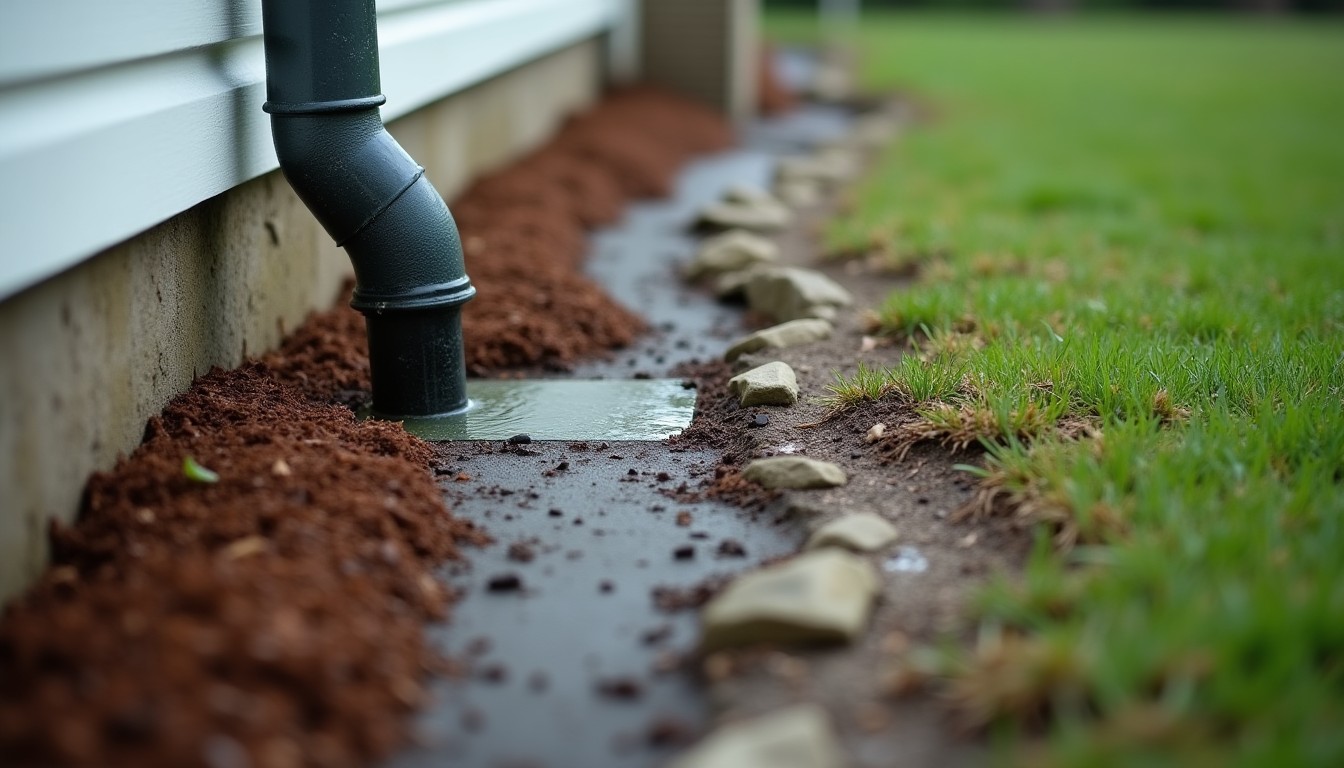
- Clear gutters and downspouts. Make sure water is carried away from the foundation, and fix leaking outdoor taps and air conditioner drip lines that keep the soil wet.
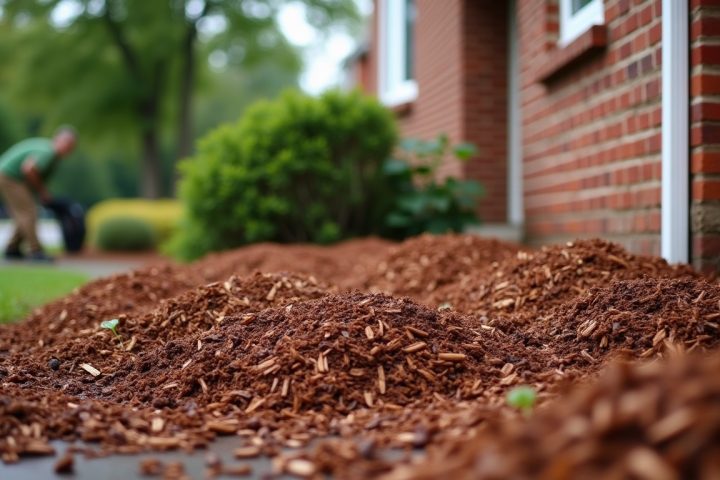
- Open a dry gap at the foundation. NC State suggests keeping mulch 6 to 12 inches from the wall, and Wisconsin recommends a clean, dry border such as gravel immediately around the foundation.
- Tip out standing water. Buckets, saucers, toys, tarps and clogged gutters can breed mosquitoes within the week.
- Bait, do not spray, for ants. And collect a sample of anything winged that appears indoors.
- Wait for it to dry. Mississippi State’s verdict on millipedes applies to most of this group: dry weather is the best cure.
If the same invaders return every wet spell, the long-term fix is drainage and exclusion, covered in our guide to pest-proofing your home. Rain can also affect a treatment you have booked, which our guide to weather and pest control explains.
Frequently asked questions
Why are there more bugs in my house after it rains?
Rain floods the soil, mulch and leaf litter where many small animals live and gives them a wet surface to travel across, so they move and often end up at the foundation and under doors. Ants may relocate colonies, millipedes and pill bugs wander, and American cockroaches can be pushed from drains. Most of these outdoor animals die or leave once the ground dries.
Why do ants come inside when it rains?
Extension sources say ants enter buildings seeking food, water and shelter, including refuge from flooded conditions, and that colonies of some species, such as the odorous house ant, relocate quickly when weather changes. UC IPM adds that ants may appear suddenly when outdoor food becomes unavailable. Clean up the trail and food sources, find where they are entering, and use a bait suited to the species rather than a spray.
Are millipedes after rain a sign of an infestation?
Not in the usual sense. Millipedes live outdoors in damp mulch and litter and wander after heavy rain, and Wisconsin’s diagnostic lab says those that get indoors die within two or three days from lack of moisture. Sweep or vacuum them, pull mulch back from the foundation and seal gaps under doors. Repeated live millipedes in a basement usually point to damp conditions.
Why are there worms in my house after rain?
Earthworms come to the surface during heavy rain, possibly because waterlogged soil is low in oxygen or because wet ground lets them travel further. Worms that end up on paving or indoor floors are stranded, and drying out and sunlight kill them. They do no harm. Sweep them outside; no treatment is needed.
What are the flying bugs in my house after rain?
In spring, winged termites and winged ants often swarm after warm rain. University of Kentucky entomologists say termite swarmers indoors almost always indicate an infestation, so keep a few in a sealed bag and have them identified. Ants have elbowed antennae and pinched waists; termites have straight antennae and equal wings. About a week after rain, mosquitoes from standing water are the other common flier.
Sources
- University of California Statewide IPM Program, Pest Notes: Ants (Publication 7411), Earwigs, and Springtails (Publication 74136, revised August 2025).
- Texas A&M AgriLife Extension, Managing Household Ant Pests, B-6183, B. M. Drees.
- University of Kentucky Department of Entomology, Ant Control for Householders, ENTfact-619; and Termites: Answers to Homeowner Questions, ENTfact-604.
- Penn State Department of Entomology, Entomological Notes NP-5: Millipedes, 2002, reviewed 2009; and European Earwigs.
- Mississippi State University Extension, Bug’s Eye View Vol. 3 No. 14: Greenhouse Millipede, 2017.
- University of Wisconsin Garden Facts XHT1108: Millipedes; and Wisconsin Horticulture, Earwigs.
- Iowa State University Extension and Outreach, Yard and Garden Encyclopedia: Earwig.
- Utah State University Extension, Nuisance Pests: Isopods (pill bugs and sowbugs).
- NC State Extension, Millipedes in Turf.
- UF/IFAS Extension, American Cockroach, Periplaneta americana, Featured Creatures EENY-141 (EDIS IN298).
- University of Wisconsin-Madison News, Curiosities: After rains, why do worms crawl out onto the pavement; and University of Illinois Extension, Home, Yard and Garden Newsletter, earthworms after heavy rain.
- Centers for Disease Control and Prevention, Life Cycle of Aedes Mosquitoes; and Preventing Mosquito Bites: Mosquito Control at Home.
- The Pest Control Brief analysis of iNaturalist research-grade records, pulled October 2026.