Springtails: Harmless, Everywhere and Gone in a Week
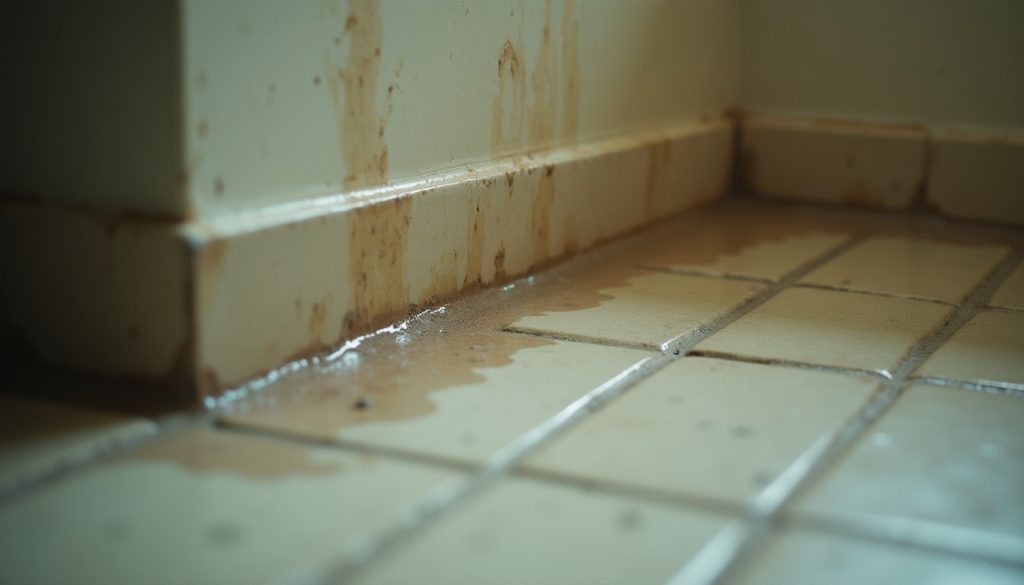
Springtails are one to three millimetre arthropods that cannot bite, carry no disease and damage nothing in a house. They are not technically insects. They appear indoors for one reason, moisture, and the ones already inside are dying: they cannot survive normal indoor humidity. Extension guidance is consistent that insecticide is close to pointless, with University of California IPM noting sprays are often no more effective than vacuuming. Fix the water and the problem ends on its own, usually within a week.
Springtails generate an outsized amount of anxiety for something that cannot hurt anyone, partly because they arrive in thousands and partly because of a persistent online claim that they infest human skin. That claim has one source, and that source does not hold up.
The jump, which is the genuinely remarkable part
Springtails do not jump with their legs. They carry a forked appendage called the furcula folded under the abdomen, held cocked by a catch called the tenaculum. Releasing the catch snaps the furcula down against the ground and throws the animal into the air.
A 2024 high-speed study measured what that produces in the globular springtail Dicyrtomina minuta, an animal one to two millimetres long: up to 102 millimetres horizontally and 62 millimetres vertically, leaving the ground in 1.7 milliseconds at a peak acceleration of 1,938 metres per second squared, while backflipping at around 280 rotations per second and peaking near 369. That is the fastest backflip measured in any animal.
A separate 2022 study found semiaquatic springtails right themselves in the air in under 20 milliseconds, the fastest aerial righting ever measured, landing the correct way up 85 per cent of the time.
Widely repeated figures of “20 centimetres” or “100 times body length” come from teaching material with no named species or method attached. The measured numbers above are better and more impressive anyway.
Not an insect, and it matters a little
Springtails are Collembola, six-legged arthropods placed outside the class Insecta. Their mouthparts are withdrawn into a pouch in the head, which is one of the features separating them from true insects. Colorado State and the University of Kentucky both state this directly, though several extension pages still call them insects informally and University of California IPM hedges to “insectlike arthropods”.
The practical relevance is small but real: products and advice written for insects do not necessarily transfer, and Colorado State notes springtails tend to be fairly resistant to most insecticides.
The skin claim, addressed directly
There is a persistent claim online that springtails infest human skin, scalp and hair, burrow in and lay eggs. There is no credible evidence for it. Collembola lack both the mouthparts to penetrate skin and the ovipositor structures to lay eggs in it, and the University of Kentucky states there have been no verified reports of springtails parasitising humans.
One 2004 paper reported finding Collembola in skin scrapings from 18 of 20 people diagnosed with delusory parasitosis. It has never been independently replicated, and its images were produced by manipulating photographs in image-editing software. We note that we were unable to fetch the university page making that assessment directly, as it blocks automated requests, so we relay it as a reported assessment rather than one we verified first-hand.
Delusory parasitosis is a recognised and genuinely distressing condition in which a person experiences the sensation of infestation without an arthropod cause. It deserves to be treated as a medical matter rather than a pest control one, and anyone in that situation is better served by a physician than by another treatment.
The only documented contact effect is rare skin irritation from handling large numbers directly, described by the University of Kentucky as very uncommon.
Why they are indoors
Most springtails have no tracheal system and breathe through a highly water-permeable cuticle, so they dry out fast and must stay somewhere very damp. Two opposite triggers push them into buildings.
Drying out. A wet spring builds a large population, then a sustained hot dry spell bakes the soil and leaf litter, and they move toward the humid, shaded conditions a building offers.
Saturation. Heavy rain or over-irrigation floods them out of the soil and onto surfaces and up walls.
Indoors they concentrate at water: bathtubs, washbasins, shower stalls, kitchen sinks, floor drains, damp basements and crawlspaces, wall voids and around leaking pipes. Potted houseplants with permanently wet soil are a common self-sustaining source.
Two situations account for a lot of calls. Swimming pools collect them in large numbers, where their water-repellent bodies float and coat the surface looking like pollen or scum; skimming and filtration handle it. And new construction is a predictable case: the concrete, masonry and plaster in a small house with a basement carry several tons of water, keeping indoor humidity high for months. That population dies off as the building dries, and needs no insecticide at all.
Springtail or flea?
| Springtail | Flea | |
|---|---|---|
| Bites | Never | Yes, usually legs and ankles |
| Size | 1 to 2 mm, mustard seed or smaller | About 3 mm |
| Body shape | Rounded or tubular | Flattened side to side |
| Body texture | Soft, crushes easily | Hard, difficult to crush |
| Colour | Variable; usually reads grey | Always dark reddish-brown |
| How it jumps | Abdominal furcula | Modified hind legs |
| Where they gather | At water and damp surfaces | On the pet and its bedding |
The fastest field test: no bite marks, a soft body that squashes, and insects congregating at water rather than on the animal, means springtails. Our flea life cycle guide covers the alternative if bites are present.
What to do
- Find and fix the water. Plumbing leaks, gutter discharge at the foundation, poor grading, condensation, an unvented crawlspace.
- Dry and ventilate. A dehumidifier and a fan resolve most indoor events, and University of California IPM notes a fan speeds it up.
- Let houseplant soil dry between waterings and do not leave standing water in saucers.
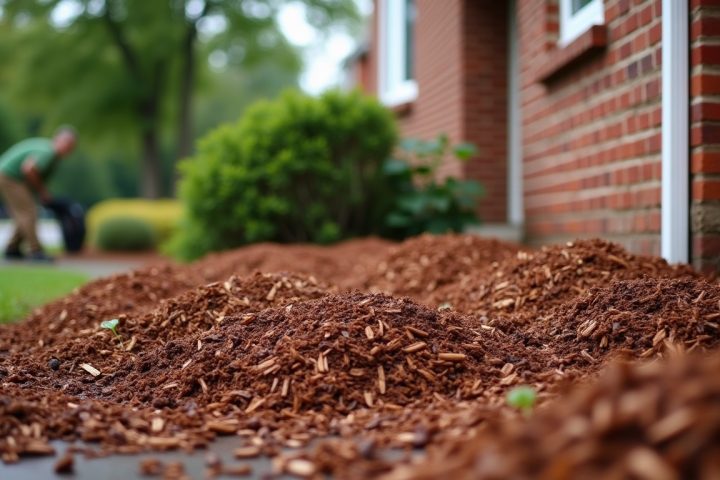
- Cut mulch depth to two or three inches and keep mulch and woodpiles at least a foot back from exterior walls.
- Vacuum the ones indoors. It is as effective as spraying, according to extension guidance, and leaves no residue.
- Never pour or spray insecticide down drains. University of California IPM is explicit on this; it does not solve the problem and contaminates water.
- Wait. Migrations usually last under a week, and the springtails trapped indoors die out.
A perimeter treatment is justified only for recurring sustained invasions, and only alongside the moisture correction. A springtail population that keeps coming back is a moisture diagnosis, the same principle set out in our moisture pests guide.
Frequently asked questions
Do springtails bite humans?
No. Multiple university extension sources state flatly that springtails do not bite or sting people or pets, spread no disease and damage no household furnishings. The only documented contact effect is rare skin irritation from handling large numbers directly, which is described as very uncommon.
Can springtails live in your skin or hair?
No. There is no verified case of springtails parasitising a human, and Collembola lack the mouthparts to penetrate skin and the structures needed to lay eggs in it. A single 2004 paper claiming otherwise has never been replicated and its images were reportedly produced by photo manipulation. The sensation of infestation without an arthropod cause is a recognised medical condition best addressed with a physician.
How do I get rid of springtails?
Remove the moisture. Repair leaks, improve drainage and grading, run a dehumidifier and fan in affected areas, let houseplant soil dry between waterings, and reduce mulch depth while keeping it back from the walls. Vacuum the ones indoors. Extension guidance is that insecticides are often no more effective than vacuuming, because fresh arrivals keep coming while conditions persist.
Are those tiny jumping bugs fleas or springtails?
If there are no bites, the body is soft and squashes easily, and they are gathering around sinks, drains or damp surfaces rather than on a pet, they are springtails. Fleas are about 3 mm, hard-bodied, flattened side to side, always dark reddish-brown, and they bite.
Sources
- Smith and Harrison, jumping performance in Dicyrtomina minuta, Integrative Organismal Biology 6(1):obae029, 2024.
- Ortega-Jimenez and colleagues, aerial righting in semiaquatic springtails, PNAS 119(46), 2022.
- University of California IPM Pest Notes 74136, springtails.
- Colorado State University Extension 5.602 and University of Kentucky Entomology ENTFACT-420.
- Ohio State University Extension ENT-52; Texas A&M Insects in the City.
- Hinkle, “Delusory parasitosis,” American Entomologist 46(1), 2000.